Best Automatic Transfer Switch Company Traits You Should Look For
2026-11-02
Choosing the right automatic transfer switch supplier is not just about hardware—it’s about reliability when every second counts. While many manufacturers promise seamless power switching, only a handful consistently deliver on safety, response time, and long-term durability. At SINGI, we’ve seen firsthand how the wrong choice can lead to costly downtime, equipment damage, and even safety hazards. So before you sign off on a purchase order, it pays to dig deeper than glossy spec sheets. In this guide, we break down the traits that separate dependable ATS companies from the rest—so you can make a decision with confidence, not guesswork.
Engineering Team That Actually Understands Your Power Setup
We don't hand you off to a generic call center or make you repeat your system specs three times. The engineers on our team have spent years working inside server rooms, telco closets, and industrial control panels. They know the difference between a NEMA 5-15 and a L6-30, and they won't ask you what a PDU is. From single-phase UPS units to three-phase rack power distribution, we speak the same language you do the moment you pick up the phone.
What does that mean in practice? It means when you describe a hot-swap power supply failure or a phase imbalance on a 208V feed, our engineer isn't searching a knowledge base for a matching script. They're already sketching out the likely culprits, the cable configurations to test, and the firmware version quirks that could be hiding behind the fault LED. We keep spare connectors, adapters, and test equipment at our desks so we can walk you through verification steps without guesswork.
And because power problems rarely follow a neat script, our team has direct access to the hardware schematics, load test data, and real-world failure logs collected from thousands of deployments. No tiered support maze, no 'have you tried rebooting' filler. Just an engineer who understands that losing the wrong phase or overloading a branch circuit isn't a theoretical exercise—it's your weekend on the line. That's the difference a dedicated, power-literate team makes.
They Test Switches Like a Power Outage Already Happened
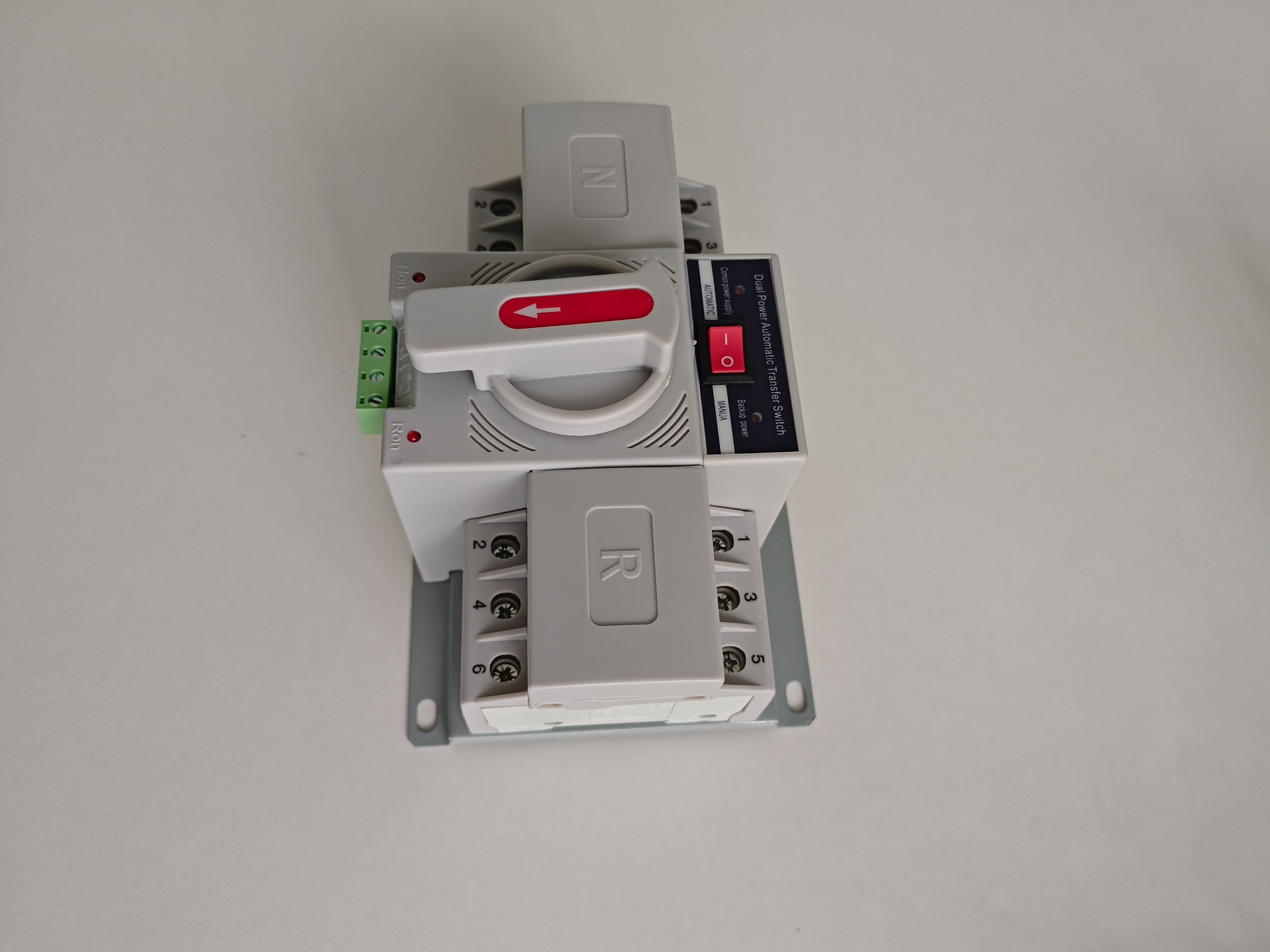
Walking into the test lab feels less like a routine inspection and more like stepping into the aftermath of a storm. Engineers don't just flip a switch and check if a light comes on; they simulate full blackout conditions, kill the main feed, and watch how every relay, breaker, and transfer switch behaves when the grid goes dark. It's a deliberate, almost theatrical exercise — the room goes quiet for a second, then the backup systems start clicking and humming as if they've been waiting for this moment all along.
What separates this approach from a basic continuity check is the refusal to treat power failure as a hypothetical. The team assumes the outage is real, that someone somewhere just lost a transformer, and every decision they make from that point has to stand up to that reality. Switches are thrown under load, not in a no-current vacuum. Voltage dips are measured at the exact millisecond the transfer happens, and any hesitation or chatter in the contacts is logged as a potential failure — because in a true outage, a half-second delay can mean the difference between a seamless failover and a cascading shutdown.
The result is a testing culture that doesn't just validate equipment; it builds a kind of muscle memory. Technicians learn to read the sound of a switch, the feel of a breaker handle, the smell of warm insulation after a simulated fault. By the time an actual blackout rolls through, the response is second nature. The switches don't get tested as if a power outage might happen — they get tested as if it already has, and the only thing left to do is prove the lights will stay on.
Custom Configurations Without the Runaround
Getting a product tailored to your needs usually starts with a ticket, a spreadsheet, and at least three follow-up emails. Here, the back-and-forth is stripped out. You pick a base setup, flip the toggles that matter to you, and watch the preview update on the same screen.
No one asks you to “describe your ideal workflow in 500 words.” The options are labeled in plain English, grouped by what they actually do, and show the impact of each choice before you commit. If a setting conflicts with another, the interface tells you right away instead of leaving you to guess.
Once you land on a configuration that fits, it saves as a reusable profile. Your team can load the same profile, tweak a single field, and create a variant without starting from scratch. That means custom doesn’t have to mean complicated — or slow.
Support That Picks Up When the Grid Goes Down
When the power fails for hours or days, most backup plans quietly fall apart. A generator needs fuel that may not be available. Battery banks drain faster than expected. But a support system built around people, not just hardware, keeps functioning. Think of neighbors who share a solar charger, a local repair shop that opens its doors after a storm, or a phone tree that still works when cell towers are overloaded. These human layers of support matter more than any single device.
Real resilience comes from knowing who to call, where to go, and how to help without waiting for official instructions. A community fridge running on a shared inverter, a retired electrician who volunteers to check wiring, or a church basement with a hand-crank radio all pick up the slack. The grid is invisible until it fails, but the support that replaces it must be visible, practiced, and personal. That kind of support doesn't need a manual, it just needs to be there.
Instead of relying on one big backup system, spread the load across small, local actions. Keep a printed list of contacts who can lend tools or shelter. Test your emergency plan with real people, not just on paper. The goal isn't to outlast the blackout alone, but to make sure no one has to. When the grid goes down, the strongest backup isn't stored in a battery, it's standing next to you.
Certifications Backed by More Than a Wall Plaque
Plenty of companies hang a framed certificate in the lobby and call it a day. Ours is different because it represents ongoing accountability, not a one-time achievement. The standards behind it require annual audits, documented procedures, and real consequences if we slip.
That means the plaque on our wall is less a trophy and more a visible reminder of active commitments. Every team member knows the criteria, and our clients can ask to see the latest compliance report anytime. If a requirement changes, we don't wait for the next audit cycle to adapt—we adjust immediately.
You won't find this level of rigor in a generic credential. It's built into how we handle data, train staff, and respond to incidents. The certification isn't the point; it's the evidence that the systems behind it are alive and well.
Clear Documentation That Doesn't Require a Translator
Good documentation reads like a conversation with a patient colleague, not a textbook. We strip out idioms, phrasal verbs, and culture-specific references that often trip up non-native speakers. Instead, you'll find plain vocabulary, short sentences, and a predictable structure. Each step starts with a clear verb—click, select, type—so the action is never ambiguous. When a term might be unfamiliar, it's explained right there in the sentence, not in a footnote.
Screenshots are annotated with arrows and callouts that match the text word for word. If the interface says 'Export', the doc says 'Export', not 'save a copy of your file'. This consistency eliminates guesswork. For more complex workflows, we include a brief 'why this works' note before the steps, so readers understand the context without needing to translate abstract explanations. The result is documentation that feels local, even when it's written only in English.
FAQ
Field record matters far more than a sprawling catalog. Look for a maker that can point to installations in facilities similar to yours and has stayed involved through commissioning, retrofits, and fault investigations. A shorter product range backed by real operational history beats dozens of untested designs.
It usually comes down to whether technical support is treated as a cost or a core function. Strong companies keep application engineers, not just sales staff, available for questions about coordination studies, breaker settings, and load sequencing. If you cannot get a direct line to someone who understands the firmware, walk away.
Ask for evidence from live fault testing, generator-to-utility transfer events, and prolonged brownout simulations. A trustworthy supplier shares test reports with actual waveforms, not just marketing claims. Also ask how their controls handle delayed generator start, frequency drift, and multiple re-transfer attempts.
Yes, and it is visible if you know what to ask. Request details on component sourcing, PCB conformal coating, thermal cycling during burn-in, and shelf life management for power semiconductors. Companies with disciplined production will show you traceable lot control and a clear process for scrap and rework.
UL 1008, IEC 60947-6-1, and regional utility acceptance carry real weight because they involve independent testing under load. CE marks and ISO badges alone do not prove transfer performance. Ask for certificates with the exact model numbers you are buying and check whether testing covered withstand and endurance ratings.
An automatic transfer switch rarely works in isolation; it needs correct setting adjustments, firmware updates, and occasional forensic analysis after trips. A nearby authorized service team can shorten downtime from days to hours. If a supplier cannot name technicians within your region, their product is effectively a box without support.
Conclusion
A transfer switch company worth your trust doesn't just sell hardware; it proves it has thought through the moments when power actually fails. Look for an engineering team that asks about your loads, phase balancing, and generator startup sequence rather than reading from a generic spec sheet. The best outfits test their switches under real fault conditions, with thermal imaging, load banks, and repeated transfers until the mechanism behaves like a second nature. Custom configurations should feel like a conversation, not a maze of change orders; every modification, from specific voltage thresholds to tailored delay timers, is handled without endless back-and-forth.
When the grid drops, support has to answer fast, with people who can walk you through diagnostics over the phone while the lights are still out. Certifications matter only when they reflect third-party endurance testing and field service history, not a framed certificate in a lobby. Clear documentation ties it together: wiring diagrams, maintenance logs, and commissioning checklists written in plain language so your own electrician can follow them without a translator. Together, these traits separate a company that simply stocks transfer switches from one that truly understands the risk of a failed transfer.
Contact Us
Contact Person: Jack
Email: [email protected]
Tel/WhatsApp: (+86) 13757759651
Website: https://www.singi.com