
Best Compact Substation Solutions for Modern Power Systems
2026-10-01
Space is no longer a luxury modern power systems can afford. As grids strain under urban density and renewable integration, the shift toward compact substations isn't just a trend—it's a necessity. Yet shrinking infrastructure without sacrificing performance demands real engineering depth. That's where Chang Song steps in, offering compact substation solutions designed for today's tight footprints and tomorrow's load growth. Below, we unpack what makes a compact substation truly reliable, safe, and future-ready.
Compact Substations: Clearing the Path for Dense City Grids
Dense urban grids have long struggled with the physical footprint of traditional substations, which demand large fenced plots that are nearly impossible to secure in built-up districts. Compact substations sidestep this constraint by shrinking the core equipment—gas-insulated switchgear, cast-resin transformers, and integrated protection systems—into enclosures that can slip into basements, under plazas, or even inside repurposed street-level kiosks. This shift from sprawling yards to modular pods changes where and how utilities can reinforce the network without waiting for rare open land.
Beyond saving space, the design of these units brings operational advantages that matter in congested environments. Because they are factory-assembled and tested before delivery, installation on site takes days rather than months, cutting through traffic disruption and public complaints that often delay infrastructure projects. Sealed enclosures also keep out dust, moisture, and salt spray, which lowers maintenance frequency and extends service life in coastal or industrial neighborhoods. For operators, that means fewer truck rolls and less exposure to live parts in tight quarters.
The real payoff emerges when compact substations are woven into a broader grid strategy. High-rise clusters, electric vehicle charging hubs, and district cooling plants all demand concentrated power in locations where a conventional substation would never fit. By deploying these smaller footprints in parallel with smart monitoring and remote switching, utilities can densify supply capacity incrementally, matching load growth block by block. In this way, compact substations clear the path not just for a single development, but for the continuous, layered electrification that dense city grids now require.
Heat, Noise, and Space: Engineering the Invisible Substation
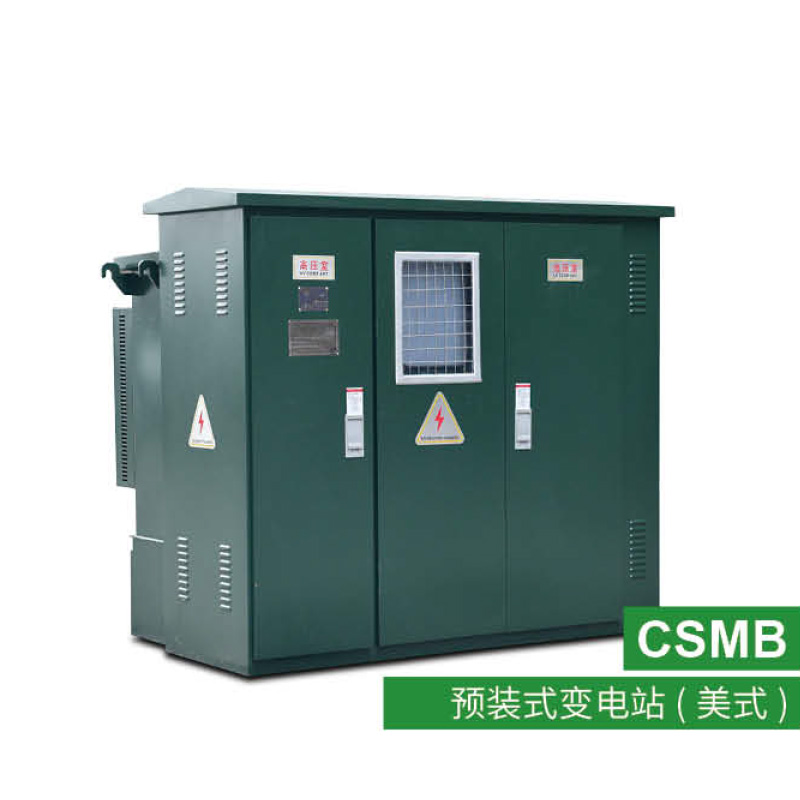
A modern substation often hides in plain sight behind a blank facade, but the real work is in shedding heat without letting the hum escape. Transformers and switchgear generate constant thermal load, so designers use natural ventilation stacks, buried ducts, or water-cooled heat exchangers that run almost silently. The goal is to keep internal temperatures stable while the outside world hears nothing but city ambience.
Noise control starts with the low-frequency drone of transformer cores and the rattle of cooling fans. Rather than adding bulky mufflers, engineers tune enclosure panels, isolate vibration with elastomeric mounts, and route airflow through labyrinthine baffles that absorb sound. Space is the final constraint: gas-insulated switchgear shrinks a hall-sized yard into a room no bigger than a parking spot, and underground vaults free up surface land. The result is an invisible substation that does its job without announcing itself.
Retrofit Without Rebuild: Compact Units for Aging Infrastructure
Aging water and wastewater plants often face a painful choice: tear down and start over, or limp along with outdated equipment. Compact retrofit units offer a third path. These skid-mounted systems—think membrane bioreactors, packaged chemical dosing, or modular clarifiers—slide into existing footprints without requiring major civil work. Operators avoid months of shutdown, and municipalities stretch capital budgets further. The trick is matching the unit's hydraulic profile to the legacy pipe network, not the other way around.
One often-overlooked advantage is process isolation. Rather than retrofitting an entire train, a compact unit can handle a specific side stream—high-strength filtrate, phosphorus polishing, or peak wet-weather flow. This targeted approach reduces risk: if the new technology underperforms, the core plant keeps running. Engineers who embrace this philosophy stop asking "how do we replace everything?" and start asking "which bottleneck hurts the most?"
The real innovation isn't just smaller equipment; it's smarter integration. Many compact units now ship with onboard PLCs and remote diagnostics, letting a 1970s-era plant gain modern control without rewiring every panel. Contractors appreciate that these systems arrive pre-tested, cutting commissioning time from weeks to days. For utilities with no room to expand and no appetite for a rebuild, retrofitting with compact units turns an aging liability into a phased, low-disruption upgrade path.
When Every Square Meter Counts: Design Trade-offs in Compact Switchgear
Shrinking a switchgear lineup to fit a cramped basement or an offshore platform often starts with a simple equation: fewer cubicles mean more revenue-generating equipment elsewhere. Yet the push to reclaim floor space forces hard choices in dielectric design. Air-insulated busbars that once enjoyed generous phase-to-phase clearance are now packed so tightly that surface irregularities on conductors become dominant sources of partial discharge. Engineers may switch to gas-insulated compartments or epoxy-encapsulated bus systems, but those alternatives bring their own burdens—sealed pressure vessels, gas handling procedures, and reduced flexibility for future extensions. The real question is not whether you can make the gear smaller, but whether the saved square meters justify the added complexity in manufacturing and onsite testing.
Thermal behavior is where compactness often exacts a quiet toll. A smaller enclosure leaves less air volume to absorb and move heat away from contact joints and current transformers. Natural convection paths shorten, and hot zones tend to form directly above the busbar joints. If the designer insists on fully passive cooling, the continuous current rating usually has to be derated—sometimes by 10 to 15 percent compared with a standard-width panel. Fitting forced ventilation or liquid cooling can restore the rating, but those systems consume auxiliary power, require filter maintenance, and introduce single points of failure. For a data center or metro substation where every ampere counts, that trade-off between footprint and thermal headroom becomes a critical specification discussion rather than an afterthought.
Maintenance access is the third variable that rarely survives compression without compromise. In a full-size switchgear room, a technician can open a breaker compartment and still have space to use a torque wrench or visually inspect bushing surfaces. In a compact design, the same operation may demand removing adjacent panels or using mirror-ended inspection tools. Some manufacturers address this with withdrawable modules and front-access cable terminations, but the interlocking mechanisms grow more intricate, and the bill of materials climbs accordingly. Over the equipment's life, those seemingly minor access constraints translate into longer outage windows and higher labor costs. In the end, the value of a saved square meter has to be measured against the accumulated operational friction it creates across two or three decades of service.
Fewer Moving Parts, Lower Risk: The Maintenance Story of Compact Units
Walk through most maintenance logs and the same culprits keep appearing: shaft misalignment, belt wear, seal leaks, and bearing grease intervals. A compact unit removes many of those entries by design. With the rotating assembly sealed and pre-aligned in one housing, there is no daily lube route to follow and no coupling guard to pull for inspection. The result is not just a smaller footprint, but a shorter list of things that can drift, leak, or break.
The practical payoff shows up in the work order queue rather than in glossy spec sheets. A compact drive that runs for two years without a wrench touching it changes how a plant schedules shutdowns. Instead of chasing worn seals or replacing belts every quarter, technicians can redirect their time toward process improvements. That shift from reactive calls to planned, low-frequency inspections is where the real cost reduction hides.
That said, the design does not remove maintenance entirely—it changes its nature. Access might be tighter, and spare parts sometimes need to come from a single source. The smart move is to treat the compact unit as a sealed subsystem: monitor vibration and temperature at the housing, keep the surrounding airflow clear, and resist the urge to open it up unless the data says something is drifting. For most sites, that discipline is a fair trade for cutting the moving-part count by half or more.
Grid Flexibility in a Box: Modularity Driving Future-Proof Power Systems
Think of a shipping container that arrives on a flatbed truck, gets wired into the existing substation within days, and immediately begins smoothing out voltage spikes and filling in solar lulls. That is the promise behind modular grid flexibility—a shift away from bespoke, multi-year infrastructure projects toward standardized, factory-built blocks of power electronics and storage. Instead of waiting for a new transmission line to clear permitting, utilities can drop a pre-configured unit at a congested node and have it operational before the next heat wave. This approach treats grid services like software patches: small, reversible, and easy to roll back if conditions change.
The real differentiation lies in how these modules communicate with one another and with legacy equipment. A single 2 MVA inverter container might be unremarkable on its own, but when a dozen of them are spread across a distribution feeder, they coordinate voltage regulation, phase balancing, and reactive power support without a central controller. Each unit ships with identical hardware and only a parameter file changes based on location. That means a technician trained on one module can maintain any of them, spares sit on a shelf rather than in a custom warehouse, and software updates propagate across the fleet like phone operating system patches. The result is a grid that upgrades incrementally instead of through painful, decades-long replacements.
Looking ahead, the modular model aligns neatly with the uncertainty of load growth and renewable penetration. A utility facing data center demand in one county and electric vehicle clustering in another can reposition modules seasonally or permanently without stranding assets. Failed components are swapped in hours, not months, because the power stage is just a drawer in a rack. This is not a theoretical pilot—early deployments in Australia and Texas have already shown that modular flexibility can defer a substation transformer upgrade by three to five years at roughly a third of the capital cost. As utilities grapple with aging infrastructure and extreme weather, the box becomes the most flexible tool in the toolbox.
FAQ
Space constraints and rising load demands push utilities toward designs that pack more capacity into a smaller footprint. Modern compact substations use gas-insulated switchgear and modular layouts to fit into basements or rooftop installations without compromising reliability.
Effective ventilation and heat dissipation are critical because reduced physical space can trap heat. Many designs now integrate forced-air cooling, low-loss transformers, and temperature-triggered fan controls to prevent hotspots and extend component life.
These units often come with flexible busbar arrangements and protection relays that accommodate bidirectional power flow. This makes it easier to connect solar arrays or battery storage at distribution level without building a full-scale outdoor switchyard.
Beyond voltage and capacity ratings, they need to evaluate harmonic levels from variable speed drives, available clearance for cable entry, and local environmental conditions like dust or humidity. Prewired and factory-tested designs reduce on-site surprises significantly.
Not necessarily. Many compact designs use arc-resistant enclosures and internal arc classification to redirect fault energy safely. The smaller internal volume can actually simplify containing and venting an arc if the unit is properly rated and maintained.
Modular sections allow capacity to be added in stages without a complete shutdown. A utility can start with two transformer bays and later add a third, or upgrade protection panels in parallel while existing feeders remain live.
Conclusion
Modern power networks are facing a squeeze—literal and figurative—as cities densify and substations compete with housing, retail, and public space. Compact substation solutions have moved from niche adaptations to essential infrastructure. By integrating gas-insulated switchgear, dry-type transformers, and factory-assembled enclosures, these units shrink footprints by up to 70% compared to conventional air-insulated yards. Dense urban grids gain not just physical space but also faster permitting and installation, since many models arrive pre-tested and ready for connection. The engineering push goes further than size: acoustic baffling, natural ventilation channels, and low-loss cores reduce heat and noise to levels that allow placement under office plazas or beside residential towers without complaint. Meanwhile, modular designs let utilities reconfigure feeders or add capacity without digging up streets—a kind of grid flexibility that used to require years of planning.
Aging infrastructure tells a parallel story. Rather than demolishing legacy substation buildings, utilities are retrofitting compact units inside existing envelopes, reusing cable trenches and protection schemes while replacing oil-filled breakers with sealed, maintenance-light alternatives. Fewer moving parts—vacuum interrupters, static protection relays, solid-insulated busbars—mean longer service intervals and lower failure rates. When every square meter counts, designers accept trade-offs: slightly higher upfront cost per MVA, tighter thermal margins, and more careful arc-flash containment. But the payoff is resilience without sprawling real estate. The best compact substation solutions don't just save space; they turn constrained city sites into quiet, reliable nodes that can absorb distributed generation and shifting load patterns. For utilities balancing urban growth, grid renewal, and public acceptance, these units are less a product category and more a strategic rethink of what a substation can be.
Contact Us
Contact Person: Tonglun Chen
Email: [email protected]
Tel/WhatsApp: 8618906642555
Website: https://www.cncsele.com