
Box-Type Substation Manufacturers: Engineering Compact Power Hubs for Modern Grids
2026-08-02
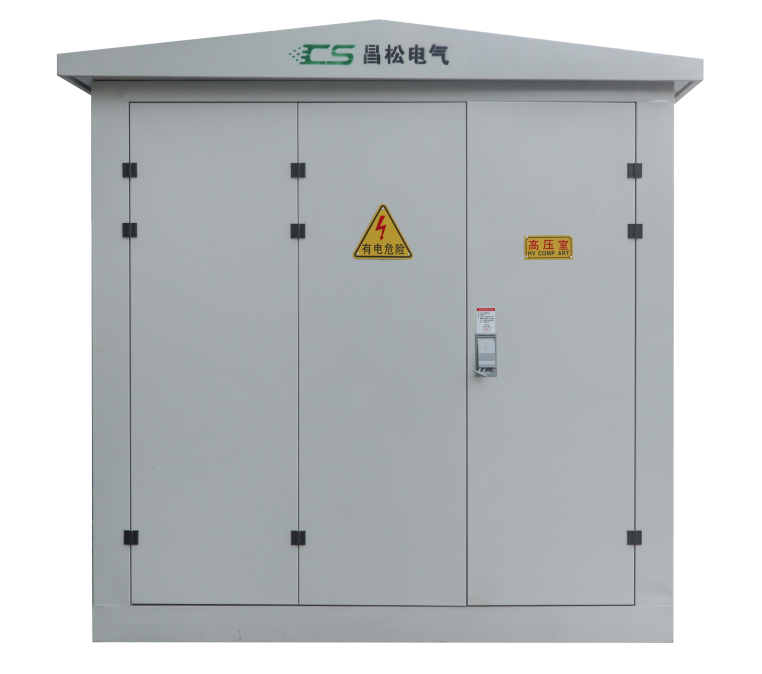
As modern grids evolve into smarter, more distributed networks, the demand for compact, reliable, and ready-to-deploy power solutions has never been greater. At the heart of this transformation are box-type substations—factory-assembled, weatherproof power hubs that streamline installation and reduce footprint without compromising performance. Behind every resilient unit is a manufacturer that understands the delicate balance between standardization and customization. Chang Song has quietly become a benchmark in this space, engineering substations that adapt to diverse environments, from urban infill projects to remote renewable sites. In this post, we'll explore what sets leading box-type substation manufacturers apart, the key design considerations shaping today's compact power hubs, and how innovative players like Chang Song are redefining grid flexibility for the 21st century.
The Rise of Prefabricated Power: How Box-Type Substations Redefine Grid Infrastructure
Traditional substation construction has long been a slow, site-intensive process—think months of civil works, on-site assembly, and weather delays. Box-type substations turn this model on its head. Built and tested entirely in factory-controlled environments, these compact units arrive on-site ready to connect. The shift isn't just about saving time; it's about removing unpredictability. When a data center needs to scale in weeks rather than quarters, or a renewable farm must tie into the grid before seasonal deadlines, prefabricated power solutions become the only viable path.
What truly sets box-type substations apart is their design philosophy of integration over fragmentation. Instead of coordinating separate transformers, switchgear, and protection systems from multiple vendors, engineers now deploy a single, harmonized package. This reduces points of failure, simplifies maintenance, and slashes the footprint—sometimes by half. Urban infill projects, where space is at a premium, suddenly find they can tuck substations into basements or rooftop enclosures without compromising capacity or safety.
Grid resilience gets a quiet boost, too. Because these units are modular and relocatable, utilities can rapidly restore service after extreme weather or equipment failure by dropping in a standby unit. Long-term, they enable a more distributed grid topology—smaller nodes placed closer to load centers, reducing transmission losses and enhancing voltage stability. It's a practical reimagining of power delivery, not through grand overhauls, but by making the nuts and bolts of the grid smarter, faster, and far less disruptive to deploy.
Inside the Compact Core: Design Innovations Driving Modern Substation Efficiency
The shift toward gas-insulated switchgear and solid dielectric materials has been pivotal in shrinking substation footprints without sacrificing reliability. By replacing air with pressurized SF₆ or eco-friendly alternatives, engineers have shortened insulation gaps dramatically, allowing high-voltage components to nestle closer together. This compactness isn't just about saving space—it simplifies cooling pathways, reduces material usage, and opens doors for modular factory assembly that slashes onsite construction time.
Digitalization threads through every layer of modern compact designs. Merging units and process bus architectures decouple control equipment from the switchyard, letting protection and monitoring hardware live in climate-controlled cabinets far from the heat and dust. Fiber-optic networks replace sprawling copper, while bay controllers and intelligent electronic devices share real-time data across standardized protocols. The result is a substation that fits into tighter urban sites and behaves more like a programmable node than a passive hub.
Thermal management has evolved beyond brute-force ventilation. Advanced computational fluid dynamics modeling guides the layout of busbars and enclosures, channeling natural convection to whisk heat away from critical joints. Where passive cooling falls short, variable-speed fans or compact liquid-cooled systems step in—quietly and only when needed. These targeted solutions maintain safe temperatures without the energy appetite or acoustic footprint of traditional cooling, keeping compact substations efficient and neighbor-friendly.
From Urban Jungles to Remote Outposts: Versatile Deployment of Containerized Power Hubs
A containerized power hub slips into places a traditional generator can’t. Tucked behind a high-rise construction site or wedged into a cramped alley for a street festival, these self-contained units deliver substantial electrical muscle without the permanent footprint. Their arrival is low-key—lifted off a flatbed and connected in hours—but the impact is immediate, feeding lights, tools, and sound systems while the city hums on around them.
Shift the scene thousands of miles away, and the same basic module is anchoring a remote mining camp or a scientific outpost at the edge of a glacier. Here, the challenge isn’t noise ordinances but raw isolation. The hub pairs with solar arrays or small wind turbines, stores excess in onboard batteries, and quietly takes over when the sun dips or the wind dies. No fuel convoys, no fragile supply lines—just steady power that lets crews focus on the work, not the logistics.
Bridging these extremes takes more than rugged hardware. It demands a design philosophy that treats power as a flexible resource, not a fixed utility. Containerized hubs get customized with climate controls for desert heat, reinforced shells for arctic gales, or advanced emissions scrubbing for urban air quality rules. The result is a power plant that fits in a shipping container yet can morph to match its surroundings, turning any patch of ground—from a multi-story parking garage to a dirt airstrip—into a functional energy node.
Beyond the Steel Enclosure: Smart Integration and Automation in Box-Type Substations
Modern box-type substations are shedding their image as passive steel containers and evolving into active grid nodes. Embedded sensors, edge computing units, and secure communication modules now allow these compact installations to self-diagnose faults, predict load patterns, and automatically reconfigure connections without human intervention. This shift from reactive maintenance to continuous operational intelligence not only stiffens grid resilience but also unlocks new efficiencies in energy distribution, particularly in urban and remote settings where real-time responsiveness is critical.
Automation reaches deeper than simple remote switching. Advanced platforms integrate weather forecasts, consumption analytics, and even local energy market signals to optimize voltage levels and phase balancing on the fly. Machine learning algorithms running locally can differentiate between a transient spike and a genuine fault, reducing nuisance trips and unnecessary site visits. These adaptive behaviors enable the substation to function as a semi-autonomous entity, coordinating with neighboring units to reroute power around bottlenecks or outages seamlessly, often before a control center operator even notices an anomaly.
The true leap forward lies in the seamless merging of physical hardware with software-defined controls. Virtualized protection relays, dynamic asset rating, and over-the-air firmware updates now transform what was once a static piece of infrastructure into a continuously improving service platform. Utilities can deploy new functionalities across fleets of substations with minimal disruption, while built-in cybersecurity frameworks safeguard these distributed intelligence hubs. As grids welcome more renewables and electric vehicles, smart box-type substations become the quiet orchestrators of stability, turning every enclosure into a strategic asset rather than just a point of connection.
Custom Engineering Excellence: Tailoring Power Solutions for Unique Grid Demands
Every grid has its own personality—shaped by geography, load patterns, and legacy infrastructure. Off-the-shelf solutions often fall short when faced with these quirks. That’s where custom engineering steps in, turning constraints into opportunities. We get hands-on with the details: voltage fluctuations in remote areas, harmonic distortions from industrial loads, or the need for seamless renewables integration. Instead of forcing a standard product into a non-standard situation, we design around the actual challenge.
The process starts with listening, not assuming. Our engineers spend time on-site, mapping out the unseen dynamics of your power network. From there, every transformer, switchgear, or control system is purpose-built—selected or crafted for the specific fault levels, ambient conditions, and future scalability you’ll need. It’s not just about meeting specs; it’s about building a solution that feels intentional, where each component earns its place.
The result is a power system that behaves like it was always meant to be there—quietly efficient, resilient against local stresses, and easy to live with day to day. No unnecessary complexity, no generic compromises. Just engineering that respects the uniqueness of your grid, delivered with a level of craft that makes the complex seem straightforward.
Sustainable and Scalable: The Future-Ready Advantages of Modular Substation Design
Modular substations represent a fundamental shift in how we approach energy infrastructure, moving away from monolithic, site-built installations toward flexible systems assembled from factory-prefabricated units. This approach directly supports sustainability goals by drastically reducing on-site construction waste, minimizing land disturbance, and enabling the use of advanced, eco-efficient materials and technologies that are difficult to implement in traditional builds.
Scalability is built into the very DNA of modular design. Utilities can start with a compact core and seamlessly integrate additional capacity—whether that's new feeders, transformer bays, or complete switchgear modules—as demand grows or generation sources evolve. This eliminates the costly and disruptive process of major overhauls, ensuring the substation can adapt to everything from gradual load increases to sudden shifts like the rapid integration of solar farms or EV charging infrastructure.
The future-ready nature of these systems extends further into lifecycle management. Modules can be individually upgraded, relocated, or repurposed with minimal downtime, extending operational life and deferring large capital expenditures. When combined with built-in intelligence for remote monitoring and predictive maintenance, modular substations become a resilient, long-term asset that aligns with the accelerating pace of grid modernization while keeping environmental and economic responsibility at the forefront.
FAQ
A box-type substation is a pre-assembled, factory-built unit that integrates transformers, switchgear, and control systems into a compact, weatherproof enclosure. Unlike traditional brick-and-mortar substations, they are modular, space-saving, and can be rapidly deployed with minimal civil works.
Urbanization and renewable energy integration demand flexible, space-efficient power distribution. Compact hubs can be placed closer to load centers, reduce transmission losses, and support the decentralization of modern grids without the footprint of conventional substations.
Leading manufacturers include ABB, Siemens, Schneider Electric, Eaton, and specialized firms like TGOOD and Crompton Greaves. These companies push the envelope in modularity, smart monitoring, and compliance with international safety standards.
These substations use robust enclosures rated for high wind, seismic zones, and temperature extremes. Features such as IP54+ protection, corrosion-resistant coatings, and advanced thermal management maintain internal conditions and prevent equipment failure.
Absolutely. Manufacturers offer tailored configurations for mining, oil & gas, railways, and renewable projects. Options include explosion-proof designs, specific voltage levels, and integrated SCADA-ready controls to match operational demands.
Digital twins for predictive maintenance, eco-friendly gas-insulated switchgear, and plug-and-play hybrid architectures are redefining efficiency. IoT-enabled sensors allow real-time load monitoring and remote fault isolation, minimizing downtime.
Installation is vastly simplified—typically a concrete pad and crane lift into place. Maintenance is streamlined through front-access compartments and modular components that can be swapped without de-energizing the entire unit, cutting mean repair time significantly.
Conclusion
As modern grids evolve, box-type substation manufacturers are engineering compact power hubs that redefine infrastructure. These prefabricated units integrate core components within weatherproof steel enclosures, enabling rapid deployment and minimal on-site assembly. Design innovations—such as advanced cooling, insulation, and modular layouts—boost efficiency and reliability while cutting footprint. From dense urban settings with space constraints to remote industrial outposts, these containerized solutions offer versatile installation options, overcoming harsh environments and logistical hurdles.
Beyond the physical build, manufacturers embed smart automation and IoT-enabled monitoring systems, turning substations into connected grid assets capable of remote control and predictive maintenance. Custom engineering tailors these hubs to specific demands, whether integrating renewable sources, backup systems, or unique voltage requirements. Their modular construction allows for seamless scalability—adding capacity as load grows—while supporting sustainability through reduced material waste and energy-efficient operation. This blend of innovation and adaptability positions box-type substations as future-ready cornerstones of resilient, green power networks.
Contact Us
Contact Person: Tonglun Chen
Email: [email protected]
Tel/WhatsApp: 8618906642555
Website: https://www.cncsele.com