

Bulk Dip Switch Exporter Guide for Reliable Component Sourcing
2026-09-13
Sourcing DIP switches in bulk shouldn’t feel like a gamble. Yet for many procurement teams, inconsistent quality, vague lead times, and zero accountability turn a routine order into a costly headache. That’s exactly why this guide exists — and why buyers who prioritize reliability keep returning to KEJIAN ELECTRONICS. In the sections ahead, we break down what to look for in a bulk DIP switch exporter, from packaging standards to testing documentation, so you can source with confidence instead of crossed fingers.
Cutting Through Supplier Claims Without a Site Visit
Most supplier audits fail long before any flight gets booked—because buyers accept polished PDFs and stock photos as proof. If you can't visit, start by forcing real-time evidence. Ask for a live video call on the supplier's own phone, not a scheduled desktop meeting. Have them walk to the production line, zoom in on a machine's serial number, and show a handwritten date code that matches today's date. The goal isn't to catch them lying immediately; it's to see whether their operation matches the scale and capability they claim.
Paper documents are easier to fake than people assume, but there are still ways to stress-test them. Request redacted export records from the last three months—bills of lading or customs declarations that show product code, quantity, and destination. Compare those against the supplier's stated monthly capacity. If they claim 50,000 units a month but their largest single shipment was 3,000, that gap needs a better explanation than "we have many customers." Check any certification directly on the issuing body's online database, using the certificate number, not the scanned file. A missing entry or expired scope is a clear red flag.
Outside verification usually tells you more than what the supplier hands you. Don't just call the references they provide; find former buyers through industry groups, trade forums, or LinkedIn posts about the same product. Ask those buyers about late shipments, quality disputes, and how the supplier behaved when something went wrong. Then run a small trial order with your own QC checklist, and ask for photos at each production milestone—raw material lot numbers, in-process checks, final packing. A supplier that pushes back on reasonable transparency is often hiding capacity problems, not trade secrets.
What Actually Breaks in a Dip Switch When Volumes Rise
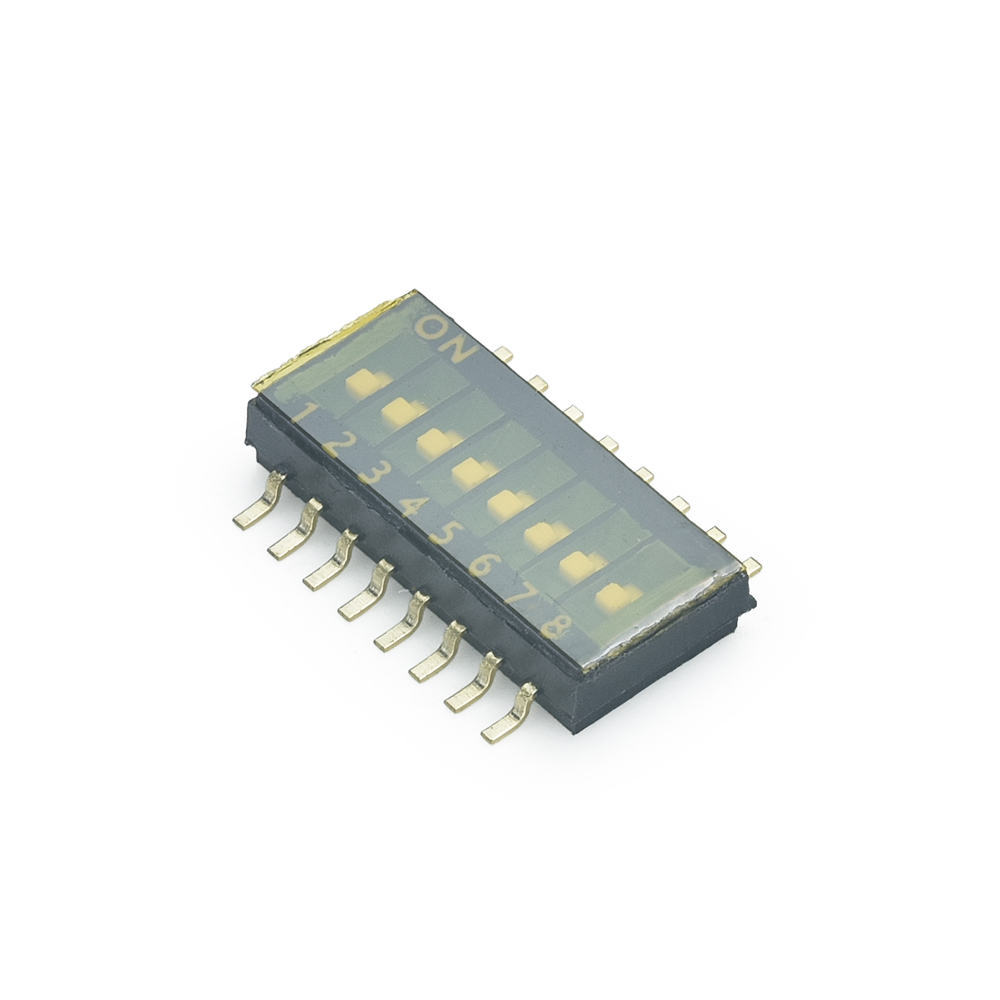
Most people assume a dip switch fails because the tiny metal contacts corrode or get dirty, but when cycle counts climb past a few thousand, the first thing to let go is usually the plastic actuator's pivot point. The actuator is a cantilever molded from a glass-filled nylon or similar resin, and each flip concentrates stress at the thin web where it hinges. With higher volumes—whether that means more units on the line or more field actuations per device—micro-cracks start at the gate mark or a sharp corner, then propagate until the lever snaps clean off or loses its spring return. Once that happens, even if the contacts still line up, the switch won't stay in the selected position, which reads as an open or intermittent connection far more often than a true contact failure.
Another weak point that shows up only when volumes rise is the solder joint between the switch body and the board. Dip switches are through-hole parts with relatively thin leads, and repeated toggling—especially by operators who press harder as production speeds up—transmits bending stress into the pins. Over thousands of cycles, the plating on the lead frame can crack where it exits the epoxy body, and the solder fillet can develop a circumferential crack that looks fine under a microscope until the board flexes. Contacts themselves might still test good on a bench meter, but under vibration or thermal cycling the cracked joint opens up. So the real failure often isn't the switch mechanism at all; it's the mechanical path from the button to the PCB, which only becomes obvious when the number of actuations or the assembly rate climbs past what the original design margin assumed.
Reading Between the Lines of a Factory Audit Report
A factory audit report often reads like a clean bill of health, but the real story is usually tucked into what the auditor chose not to emphasize. Look for missing sections: a report that praises equipment condition but never mentions maintenance logs or spare parts inventory is likely hiding a gap. Similarly, check whether the audit scope covers all production lines or just the showcase areas. If the sampling size for quality checks seems suspiciously small, the reported defect rate might be far better than reality.
Pay close attention to qualifiers and vague language. Phrases like “generally compliant,” “minor deviations were noted and corrected,” or “no major non-conformances” can mask systemic issues if the report doesn't spell out what the deviations were, who fixed them, and whether the fixes were verified later. A strong audit report names specific documents, dates, and responsible persons; a weak one hides behind adjectives.
Cross-reference the report's conclusions with the raw data tucked in the annexes. If the auditor claims strong supplier controls but the approved vendor list is outdated or missing several critical raw material suppliers, that's a red flag. Also note how long the auditor spent on site and whether they had unrestricted access to all shifts, including night operations. A report that feels too polished or avoids mentioning any follow-up actions often means the auditor either didn't dig deep or the factory was well-prepared for a superficial pass.
Negotiating Lead Times That Survive Peak Season
Most teams only start pushing for shorter lead times when the rush is already on. That’s the wrong moment. Instead, treat the negotiation as a year-round conversation: ask suppliers what it would take to reserve a small block of flexible capacity before demand spikes. Even a loose commitment—like agreeing to a minimum monthly volume or sharing a rolling forecast—can give you leverage when peak season hits.
Bring numbers, not just urgency. If you can show a supplier your past order swings and a realistic range for the next quarter, they’re far more willing to lock in priority scheduling. In return, be ready to accept tiered pricing or a slightly higher deposit; that trade often buys you a guaranteed slot on the production line when everyone else is scrambling.
Finally, build the agreement around what happens when things go wrong. Instead of a single delivery date, negotiate partial shipments or a short window with clear penalties for late arrivals. Warehousing a buffer of raw materials or finished goods at the supplier’s end can also smooth over the inevitable bottlenecks, so a two-week delay doesn’t cascade into a month of empty shelves.
Why Sample Approval Does Not Guarantee Bulk Consistency
The assumption that an approved sample guarantees the same result in bulk production is one of the most persistent myths in manufacturing. A sample is a single snapshot, often produced under ideal conditions: carefully selected materials, adjusted equipment, and an operator who knows it will be scrutinized. Bulk runs happen under different pressures—time constraints, tool wear, variations in raw material batches, and less individualized attention. Those differences compound quickly, turning a perfect prototype into a production line full of subtle deviations.
Even in well-run facilities, sampling itself introduces a statistical gap. A sample might represent the best possible outcome rather than the typical one. When you scale from a few units to thousands, the probability that some will fall outside the approved tolerance increases dramatically. Factors like temperature shifts during extended runs, inconsistent mixing, or slight changes in supplier batches can create drift that never showed up in a single, carefully controlled sample. Approval of that sample is not a quality guarantee—it's only a baseline for what's possible, not what's repeatable.
The real solution lies in validating the entire production process, not just the output of a single moment. Bulk consistency requires monitoring critical parameters throughout the run, testing at multiple intervals, and understanding how equipment behaves over hours, not minutes. Relying on sample approval alone is like judging a marathon by the first hundred meters. It creates false confidence and leaves you unprepared for the variability that inevitably appears when production scales.
Hidden Costs That Appear After Your Order Leaves the Port
Once the vessel leaves the origin port, most people assume the biggest freight costs are behind them. In reality, that's when a different set of charges starts ticking. Terminals at the destination rarely treat the free storage period the way you'd expect. The demurrage clock often begins the moment the container is discharged, not when you're notified. Weekends and public holidays still count against your free days, so a seemingly generous four free days can shrink to two actual working days. If there's any delay in customs clearance or trucking, those fees can compound quickly.
Customs holds create another layer of hidden expense. A routine inspection is one thing, but if your shipment gets flagged for an intensive exam, you'll pay for the exam facility, unloading and reloading the container, and storage while the cargo sits waiting. These fees are rarely itemized in advance because they depend on which agency examines the goods and how long the hold lasts. A single customs exam can add hundreds to thousands of dollars to a shipment that already seemed fully paid.
Then there are the costs that surface only when the trucker actually tries to pick up the container. Chassis shortages, appointment fees at the terminal, port congestion surcharges, and pre-pull charges to avoid demurrage can all appear on your final invoice without much warning. If the warehouse isn't ready or the delivery window closes, you'll also see waiting time or re-delivery fees. By the time the order reaches your door, the total can be 15 to 30 percent higher than the rate you locked in when the container left the port.
FAQ
Look for documented batch traceability and a willingness to share incoming inspection records. A dependable exporter answers questions about failure rates honestly and does not demand full payment before you can examine samples. If they hesitate to provide test data or only show polished marketing material, treat that as a warning sign.
Request golden samples from the current production line, not from an older batch. Test contact resistance, actuation force, and solderability under your own conditions. Also ask for the list of raw material suppliers they use; a stable supply chain usually means fewer surprises down the road.
Pitch, number of positions, actuator style, contact rating, operating temperature range, and termination type all matter. Do not assume standard values. Ask for a full datasheet and confirm that the part will survive your reflow profile if you use SMD versions.
Require traceability codes and date codes on every reel or tube. Have the exporter provide a written statement that parts are new and from authorized production. Randomly decap or cross-section a few units to check internal construction against the original design.
Custom actuator heights, colors, or markings can simplify your assembly, but they also tie you to one source. Start with a small pilot order, verify consistency across multiple lots, and keep a second source for standard parts as a backup.
Moisture barrier bags, desiccant packs, anti-static trays, and clear labels with part number, lot, date code, and quantity all point to a professional operation. Proper packaging prevents bent leads and oxidation during transit. Ask for photos of the exact packaging before dispatch.
Maintain buffer stock and negotiate a contract that allows partial shipments. Keep a direct line to a named contact at the exporter and ask for regular production updates. If possible, pick a supplier with local warehouse support or a track record of absorbing forecast changes.
Conclusion
When sourcing bulk dip switches, supplier claims rarely hold up under scrutiny. Instead of arranging a site visit, demand verifiable data: contact material composition, plating thickness, and solder heat resistance. Cross-check with at least two independent buyers who have used the same production line. As volumes climb, failures often stem from terminal coplanarity drift, internal slider wear, and mechanical shift after wave soldering—issues that sample runs never reveal. Factory audit reports need careful reading; watch for vague phrases like 'acceptable tolerance' or 'pending confirmation,' because those are where real risks hide. A clean scorecard on paper does not mean the line can hold those tolerances at 50,000 pieces.
Lead time negotiation must move beyond a supplier’s verbal promise. Pin them down to a weekly production schedule with penalty clauses tied to late shipment, because peak season erodes every buffer. Sample approval is not a guarantee: a different mold, a new reel of contact material, or a less experienced operator can shift the result. Bulk orders need agreed AQL sampling plans and rejection thresholds before the first reel is packed. And once the container leaves the port, hidden costs emerge—demurrage charges, tariff reclassification, bent pins from inadequate packaging, or customs holds due to paperwork errors. Assign responsibility for these in the purchase order, or they become your margin.
Contact Us
Contact Person: Anna lin
Email: [email protected]
Tel/WhatsApp: +86 13567768885
Website: https://www.kjele.com/