

Bulk Permanent Magnet Essentials: Types, Applications, and Sourcing Tips
2026-08-11
From wind turbines spinning in the distance to the tiny motors inside your earbuds, permanent magnets are the silent force behind countless modern innovations. But when you need them in large volumes, the landscape shifts dramatically—it’s no longer just about magnetic pull; it’s about consistency, sourcing strategy, and matching the right material to the job. Whether it’s neodymium for compact strength, ferrite for cost-driven durability, or samarium cobalt for high-temperature resilience, navigating the bulk magnet market can feel like a maze. At DAWA, we’ve seen how the right supplier partnership transforms bulk procurement from a gamble into a competitive advantage. In this guide, we’ll unpack the fundamentals of magnet types, dive into real-world applications, and share insider sourcing tips that help you secure quality without compromise.
Rare Earth vs. Ceramic: The Magnet Selection No One Talks About
When it comes to magnets, the conversation usually starts and stops with strength, but there’s a quieter, more practical side to choosing between rare earth and ceramic that rarely gets the spotlight. Rare earth magnets, like neodymium, pack a serious punch in a tiny package, making them the go-to for compact electronics and high-performance motors. But that strength comes with a catch: they’re brittle, prone to corrosion, and can lose their magnetism at temperatures where ceramic magnets don’t even break a sweat.
Ceramic magnets, often made from ferrite, don’t have the same raw power, but they’re surprisingly rugged. They handle heat and harsh environments without a hiccup, and they cost a fraction of what you’d pay for rare earth. Many engineers overlook this trade-off, reaching for rare earth out of habit even when the application doesn’t demand it. A magnetic latch on an outdoor gate, for instance, works just as well with ceramic—and it won’t rust away after a season of rain.
What often gets missed is how the choice can ripple through a design. Rare earth magnets may let you shrink a device, but the added cost and corrosion protection might eat up the savings. Ceramic, on the other hand, forces a bit more bulk but delivers reliability that doesn’t require coddling. It’s not about one being better; it’s about matching the magnet to the life it will actually lead, not just the spec sheet.
Why Your Bulk Order Might Be Ruined Before It Arrives
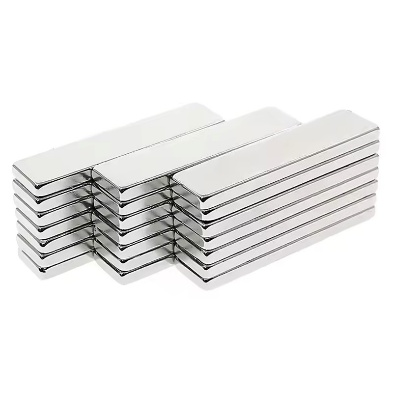
It’s a scenario that plays out more often than you’d think: a shipment that left the warehouse in perfect condition somehow arrives damaged, stale, or unusable. Bulk orders face unique risks during transit—vibration stress, condensation, careless stacking, or even temperature swings inside shipping containers. These aren’t rare mishaps; they’re routine hazards that can quietly degrade your goods long before you break the seal on the first carton.
Packaging that looks sturdy to the naked eye can fail under the repetitive jostling of freight travel. Corrugated boxes weaken with humidity, adhesive seals lose grip, and pallets shift inside trailers, crushing the lower tiers. When products are tightly bundled without proper dunnage, friction alone can wear through protective wraps. The damage often isn’t visible until unpacking, turning what should be a simple inventory restock into a claims headache.
Overlooking the logistics chain amplifies small vulnerabilities into big losses. A port delay can mean goods sit in a hot yard for days, degrading sensitive items. Cross-docking without climate control exposes products to condensation and mold. Without real-time condition monitoring, you discover the problem too late. The fix starts with recognizing that the journey itself is the most uncontrolled part of your supply chain—and designing packaging and routing choices to withstand that chaos, not just the loading dock snapshot.
Unexpected Places Where Permanent Magnets Outperform Everything Else
It’s easy to assume that permanent magnets are only useful in obvious places — fridge doors, speakers, and electric motors. But their most impressive applications often happen far from the spotlight, in environments where other technologies simply can’t compete. From deep-sea sensors that never need a battery change to medical implants that allow precise, cable-free control, permanent magnets shine brightest when reliability and compactness are non-negotiable.
Consider the realm of high‑vacuum systems, where lubricants evaporate and electrical contacts can arc. Here, magnetic couplings transfer torque through solid walls without any physical connection, eliminating leaks and contamination. In satellite attitude control, magnetorquers leverage Earth’s magnetic field to orient spacecraft without fuel, providing a maintenance‑free solution that works year after year in the harshest conditions imaginable. No electromagnet can match that blend of simplicity and endurance.
Then there are niche industrial safety devices — like magnetic lifters that secure multi‑ton loads without hydraulics, or self‑setting brakes that engage instantly when power cuts. These mechanisms rely on the unshakable grip of permanent magnets, performing flawlessly in settings where an electromagnetic failure could mean disaster. It’s in these unseen corners that permanent magnets quietly outclass all alternatives, proving that sometimes the most uncomplicated tool is also the most extraordinary.
The Sourcing Trick That Saves Thousands (Without Sacrificing Quality)
Most businesses fixate on finding the cheapest supplier, but the real savings come from rethinking how you engage with manufacturers. Instead of haggling over pennies per unit, shift your focus to production timing. Many factories run seasonal lulls when they're hungry for work. By aligning your orders with these slow periods, you can negotiate steep discounts without ever asking for a lower price. The factory benefits from keeping their lines running, and you get premium output at a fraction of the usual cost.
Another layer of this approach is consolidating your supply chain. Rather than sourcing materials and production separately, partner with a manufacturer that can handle both. This eliminates double markups and logistical friction. Pair that with long-term agreements that guarantee consistent volume, and you suddenly have leverage to demand better terms. The key is to become a client they don’t want to lose—not by being the biggest, but by being the most reliable and easiest to work with.
Finally, invest a little in your supplier’s capabilities. Providing molds, specialized tooling, or even training can slash per-unit costs dramatically over time. It sounds counterintuitive to spend money to save money, but when you control the means of production, you stop paying premiums for inefficiencies you never see. This turns a transactional relationship into a strategic one, where quality stays high because you’ve helped build the system that delivers it.
Is Your Supplier Secretly Selling You Factory Seconds?
You open a shipment expecting flawless products, but the boxes tell another story. Uneven stitching, off-color finishes, or packaging that doesn't quite match the sample photos—these subtle discrepancies often go unnoticed until complaints start rolling in. A supplier might rationalize it as a routine quality slip, yet persistent tiny flaws can point to a systematic downgrade: factory seconds sold as first-quality goods.
Experienced buyers learn to spot the quiet cues. Sudden price drops without transparent reasons, overzealous push for larger orders at steep discounts, or a reluctance to allow on-site inspections are rarely coincidental. In many industries, factory seconds slip into supply chains when demand spikes or when middlemen exploit weak oversight. The damage isn't just financial—it erodes trust with your own customers and muddies your brand reputation.
Protection starts with verification, not just in the paperwork but in the product. Random sampling upon arrival, comparing batch codes against production records, and building a feedback loop where customers can easily report inconsistencies create a safety net. The real tell is often buried in the details: a supplier who avoids questions about quality tiers or becomes defensive when you request a factory tour is one worth walking away from.
Beyond the Spec Sheet: Real-World Magnet Performance That Engineers Ignore
A magnet’s pull force on paper rarely matches what you get once it’s bolted into a machine. Spec sheets quote values at 20°C with perfect contact, but real assemblies run hot, have tiny air gaps from tolerances, and suffer from mechanical shocks that nobody catalogs. That N52 grade you paid extra for can drop below an N35’s effective strength after half an hour at 80°C—something the datasheet won’t flag unless you squint at the fine-print demagnetization curves.
Installation kills more magnets than operating conditions ever will. Press-fitting a sintered NdFeB into a steel housing introduces micro-cracks, and a single sharp impact can knock 5-10% off the remanent flux before the product even ships. Engineers obsess over peak energy product while ignoring the fact that standard grade magnets often settle into a “stabilized” state after the first few thermal cycles—a performance dip that’s reproducible but absent from any brochure.
Then there’s the self-demagnetization nobody talks about. A short magnet in an open circuit sees its own internal field opposing it, permanently weakening the pole faces. Stacking discs to gain length works until eddy currents in dynamic fields create localized heating that degrades the stack unevenly. The spec sheet gives you BHmax; it doesn’t whisper that your clever Halbach array might lose 15% of its flux density simply because the working point crept into the knee of the curve under pulse load.
FAQ
The most common types you'll encounter when buying in large volumes are neodymium (NdFeB), samarium cobalt (SmCo), alnico, and ferrite (ceramic) magnets. Neodymium magnets offer the strongest magnetic field for their size but are more sensitive to temperature and corrosion. Samarium cobalt magnets excel in high-temperature and harsh environments. Alnico magnets have excellent temperature stability and are often used in sensors and instruments. Ferrite magnets are the most cost-effective, widely used in motors, speakers, and everyday consumer products. Each type has distinct trade-offs in strength, temperature resistance, cost, and ease of manufacturing, so the choice really depends on your application's specific demands.
Start by clearly defining the operating conditions: what temperature range will the magnet experience, what mechanical stress or demagnetizing fields will it face, and what environmental factors like humidity or chemicals are present? Then consider the magnetic properties you need—such as remanence, coercivity, and energy product—and match them to the material's characteristics. For example, if you need high strength in a compact space and can manage temperature and corrosion protection, neodymium is usually the go-to. If you're dealing with high heat and need long-term stability, samarium cobalt might be better. Don't forget to think about the shape, coating, and magnetization direction, as these can significantly impact performance and ease of assembly.
Focus on supplier capabilities and consistency. Ask for full material certifications and magnetic property test reports, not just spec sheets. Check if the manufacturer has in-house testing equipment like BH tracers or flux meters. Look into their quality control processes—do they perform batch sampling or 100% inspection? Logistics matter too: how will the magnets be packaged to avoid damage and demagnetization during transit? Also, consider lead times and the supplier's flexibility with custom shapes or coatings. A reliable supplier should be able to provide technical support and help you optimize the magnet design for your application, not just sell you a commodity item.
Neodymium magnets are rare-earth magnets with much higher magnetic strength—often over ten times stronger than ferrite magnets of the same size. This makes them ideal for miniaturized designs and applications demanding high performance, like in electric vehicle motors or high-end audio equipment. However, they are more expensive, prone to corrosion without proper coating, and can lose strength above 80–150°C depending on the grade. Ferrite magnets, on the other hand, are made from iron oxide and strontium or barium carbonate. They are far cheaper, excellent at resisting corrosion, and can handle higher temperatures (up to 250°C), but their magnetic output is lower. You'll typically find ferrites in mass-market products like refrigerator magnets, loudspeakers, and small DC motors where cost is a primary concern.
Beyond the obvious consumer goods, bulk permanent magnets are integral to many industrial and technology sectors. They're used heavily in the automotive industry for sensors, actuators, and electric power steering, and in the renewable energy sector for wind turbine generators. In manufacturing, you'll find them in magnetic separators, lifting equipment, and holding fixtures. Electronics and telecommunications rely on them for speakers, microphones, and magnetic switches. Medical devices like MRI machines and surgical tools also use permanent magnets in significant volumes. Even the packaging industry uses magnetic closures for premium boxes. The list keeps growing as new applications in automation and clean energy emerge.
Yes, especially with rare-earth magnets. Mining and refining rare-earth elements can have significant environmental impacts, including radioactive byproducts and toxic chemical usage. Responsible sourcing means looking for suppliers who adhere to strict environmental standards and can provide transparency about their supply chain. Some companies are now working on recycling programs to recover neodymium from end-of-life products like hard drives and motors, which helps reduce the need for new mining. Ferrite and alnico magnets generally have a lower environmental footprint in terms of raw material extraction, but you should still consider the overall lifecycle, including energy used in manufacturing and the recyclability of the final component.
Conclusion
Rare earth magnets deliver unmatched strength for compact designs, but ceramic alternatives often surprise engineers with better thermal stability and corrosion resistance in harsh environments. The selection isn't always about raw pull force—real-world performance hinges on factors like temperature coefficients and demagnetization curves that spec sheets gloss over. In unexpected places, from medical implants to subsea robotics, permanent magnets outperform electromagnets by eliminating power needs and boosting reliability. Even in consumer electronics, the shift to thin-film magnet arrays has unlocked sleeker devices without sacrificing holding power. Engineers who ignore these nuances risk over-engineering or premature failure.
When sourcing in bulk, hidden pitfalls can sabotage your order before it arrives. Inadequate packaging during transit can chip brittle magnet edges, while inconsistent magnetization reveals factory seconds mixed into batches. The trick that saves thousands isn't cutting corners on material grade—it's auditing a supplier's quality control process and insisting on batch-level hysteresis graph testing. Some suppliers quietly substitute lower-coercivity materials, which look identical but fail under elevated temperatures. Building a direct relationship with manufacturers and verifying certifications often uncovers cost savings without ever compromising the magnet's integrity. Smart buyers also stagger deliveries and specify moisture-resistant coatings to extend shelf life, turning procurement from a gamble into a strategic advantage.
Contact Us
Contact Person: Kelvin Lo
Email: [email protected]
Tel/WhatsApp: 0769-88561131
Website: https://dawamagnetic.com/