Cement Grinding Aid Recommended List for Enhanced Performance
2026-09-03
Grinding cement isn’t just about crushing clinker—it’s about energy, particle size, and ultimately your bottom line. If your mill output is plateauing or your energy bills keep climbing, the right grinding aid can make a measurable difference. Below, we’ve pulled together a practical list of additives that actually enhance performance, including standout options from HAISEN’s lineup. Dig in and see which one matches your production goals.
The additive compatibility check most mill audits leave out
Most mill audits evaluate lubricant or process fluid compatibility by checking the base oil type and the primary additive package, but they rarely look at the secondary additives—anti-foam agents, demulsifiers, metal deactivators—as a system. These minor components can appear stable in a simple jar test, yet under actual operating conditions like high shear, elevated temperature, or water ingression, they compete for metal surfaces or react with each other. The result is often additive dropout, which shows up later as varnish, sludge, or unexpected filter plugging.
Another blind spot is the interaction between additives and the equipment itself. Auditors typically perform a short mixing trial to check for haze or separation, but they do not simulate how additives behave over weeks of circulation against filter media, elastomer seals, or painted surfaces. For instance, certain anti-wear additives can attack nitrile rubber seals, causing hardening or micro-cracking that only becomes apparent after the machine has run for several hundred hours. By then, the damage is already done, and the audit's pass/fail conclusion looks absurdly optimistic.
A third commonly omitted check is compatibility between additive packages from different suppliers. Mills often top up with a different brand of the 'same' fluid, assuming all universal formulations are interchangeable. In practice, dispersants or detergents from different manufacturers may use different alkaline reserves or carrier chemistries. Mixing them can trigger acid-base neutralization, drop the total base number, or generate insoluble soaps that deposit in coolers and bearing housings. This cannot be predicted from a typical product data sheet—it requires an accelerated aging test using the actual mix ratio found on site.
Why a one-size-fits-all grinding aid underperforms on mixed cements
Mixed cements bring together clinker with slag, fly ash, limestone or natural pozzolans, each having distinct surface chemistry and fracture behavior. A grinding aid designed for pure clinker usually relies on a specific set of polar functional groups to neutralize fresh surfaces and prevent agglomeration. When the same molecules meet slag or fly ash, adsorption becomes uneven—some particles get densely coated while others remain bare. This creates local variations in grinding efficiency, with coated particles sliding past each other and uncoated particles re-agglomerating, so the mill load never reaches a stable state.
The hardness difference is another overlooked issue. Blast furnace slag is often much harder to grind than clinker, while fly ash is already fine and tends to cushion the grinding media. A general-purpose grinding aid cannot selectively target the harder component or protect the softer one from overgrinding. As a result, the particle size distribution widens: coarse slag particles stay coarse, and fine fly ash is crushed into ultra-fines that later increase water demand and reduce early strength. The mill operator may compensate by grinding longer, but this only worsens the energy waste and coating problems.
Surface chemistry also affects how the blended cement behaves after grinding. The grinding aid residues can block active sites on slag or pozzolan particles, slowing their hydration or delaying the sulfate balance with clinker. In some cases, the additive adsorbs preferentially onto limestone filler, leaving the clinker surface unprotected during storage and causing premature hydration or lump formation. These side effects rarely appear in pure clinker grinding, but they become significant once several materials share the same mill and the same additive.
Signs your amine component is being under-dosed
One of the earliest hints that your amine component isn't pulling its weight shows up as a persistent tackiness on the cured surface. Even after the expected pot life and initial set window, the coating feels slightly sticky or leaves a faint residue when touched with a gloved hand. This isn't just a cosmetic annoyance—it points to incomplete crosslinking, where unreacted epoxy groups remain because there simply aren't enough amine groups to pair with them. In field tests, you might notice that tape applied to the surface pulls away with a subtle resistance, or that dust and debris cling to the finish long after it should have hardened.
Another sign emerges in the material's mechanical behavior rather than its surface feel. Under-dosed amine often leads to a film that remains soft or flexible when it should be rigid, especially in systems designed for high hardness or chemical resistance. You might see indentation marks from light pressure, or the coating may deform under a thumbnail instead of resisting. In some cases, the material develops a cloudy or hazy appearance due to phase separation—amine and epoxy that failed to fully react can create microdomains that scatter light. This cloudiness is often mistaken for moisture contamination, but if humidity controls check out, the amine ratio is the next place to look.
The most unambiguous signal, however, shows up during routine quality checks or adhesion testing. A properly crosslinked amine-epoxy network should deliver a crisp, cohesive failure when you perform a pull-off test or a crosshatch adhesion test. With insufficient amine, you'll often see adhesive failure at the substrate interface—the coating peels away cleanly, leaving the substrate bare—or the coating itself crumbles under moderate stress. Solvent rub tests may also reveal unexpected softening or dissolution, since the network density is simply too low to resist chemical attack. If you're seeing a combination of softness, tack, and poor solvent resistance, it's time to recalculate your stoichiometry and verify the amine equivalent weight of your hardener batch.
Ranking aid options by fineness target and clinker type
When selecting grinding aids for cement production, the fineness target combined with the clinker type dictates which chemical formulation will actually deliver measurable gains. Soft, reactive clinkers with a moderate Blaine target often respond best to amine-based additives that reduce particle agglomeration without over-grinding the brittle phases. In contrast, hard clinkers demanding a high fineness for early strength require a blend of glycols and alkanolamines, since the latter helps disperse the fine fraction that would otherwise coat the mill media and choke separator efficiency.
Ranking the options by these two criteria moves beyond generic product datasheets. A clinker rich in alite and low in free lime, paired with a target of 4,500 cm²/g, will see superior performance from a mid-range triethanolamine dosage, whereas the same additive may underperform on a high-C2S clinker aimed at 5,200 cm²/g. There, a polycarboxylate ether combined with a small amount of diethylene glycol tends to stabilize the grinding circuit and prevent the sharp drop in throughput that typically accompanies ultra-fine grinding.
Practical mill audits show that pairing the right aid with the intended fineness and clinker mineralogy reduces specific energy consumption by 8–14% while keeping the residue on 45 µm within specification. Rather than defaulting to a single all-purpose formula, operators who rank their options against these two variables achieve a tighter particle size distribution and more consistent strength development—without the need for trial-and-error campaigns that waste both time and clinker.
The shift from pure glycol to a blended ester in practice
In real-world applications, the transition from pure glycol to a blended ester rarely happens overnight. It typically begins with a series of controlled trials in smaller systems, where engineers observe how the new mixture affects heat transfer efficiency, viscosity, and material compatibility. Early adopters often discover that the ester blend performs differently during cold starts compared to steady-state operation, prompting adjustments to pump speeds and expansion tank sizing before full deployment is considered.
Maintenance teams also notice a shift in familiar routines. Whereas pure glycol requires simple topping up and occasional pH checks, blended esters demand closer attention to water content and acid number trends. Some facilities implement a staged conversion, running the blend in a secondary loop first, then gradually introducing it into the primary circuit. This approach reduces the risk of unexpected seal swelling or sludge formation, which sometimes appears when residual pure glycol interacts with the ester package.
Over time, the practical advantages become clearer: longer fluid life under moderate thermal loads, improved lubrication for pump seals, and reduced corrosion in mixed-metal systems. However, operators must weigh these benefits against the need for more frequent sampling and the possibility of higher initial cost. The shift, once completed, often leads to a revised preventive maintenance schedule and updated training for personnel who previously relied on familiar glycol-only characteristics.
Early strength without the usual cost jump: a dosing approach
Most contractors assume early strength has to mean a pricier mix. The default move is dumping in extra cement or reaching for a high-end accelerator, both of which add noticeable dollars per yard. A dosing approach starts from a different place: measure the actual retardation you are fighting, then use only enough of the right admixture to overcome it. In many pours, the real problem is not a lack of reactive material but a mismatch between the dose and the concrete temperature, cement fineness, or water reducer interaction.
The shift is from fixed dosage to staged adjustment. Begin with a low accelerator dose and monitor the slump retention and early temperature rise rather than relying on the supplier's generic curve. High-range water reducers often delay setting; a modest bump in the accelerator at the right time offsets that without pushing the bill up. Where specifiers allow, replacing a portion of the cement with a carefully chosen supplementary material can also sharpen early strength while keeping the total binder cost in check. The trick is to treat the admixture as a tuning knob, not a substitute for mix logic.
Field calibration closes the loop. Use maturity sensors or simple cylinder breaks at 12, 18, and 24 hours to map how the dose actually performs. Once you know the response curve for your local materials, you can shave the dose down to the minimum that still hits the stripping or loading deadline. It is not unusual to see the same early strength at 15 to 20 percent lower admixture cost than a blanket high-dose recipe, simply because the dosage now matches the pour conditions instead of overpowering them.
FAQ
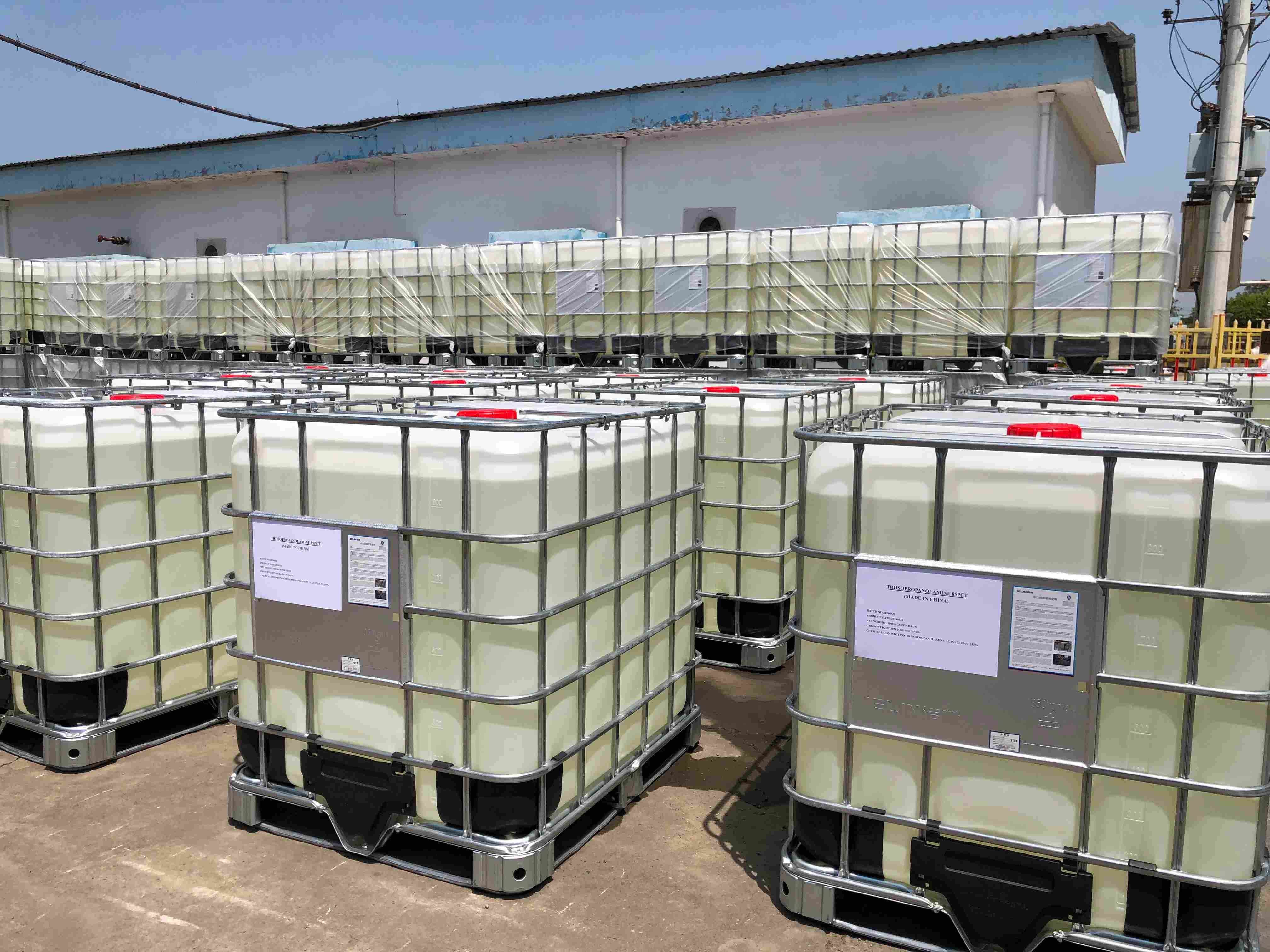
Most shortlists feature alkanolamines like triethanolamine (TEA) and triisopropanolamine (TIPA), often blended with glycols, lignosulfonates, or polycarboxylate ethers. TEA works well for early strength, while TIPA focuses on late-age strength and higher fineness. Some formulations add calcium chloride or nitrite salts, but those are less common due to corrosion concerns. The exact blend depends on the clinker composition and the mill type.
They adsorb onto fresh particle surfaces and neutralize electrostatic charges that cause agglomeration. This keeps particles from re-adhering to the grinding media, so the mill can keep reducing size instead of wasting energy on re-crushing. The result is fewer oversized particles, a steeper particle size distribution, and often a 10–20% drop in specific energy consumption, depending on the feed hardness and mill condition.
For high C3A clinker, a blend with a higher TIPA-to-TEA ratio tends to perform better. TIPA reduces the tendency of fine particles to pack and coat the mill internals, which is more pronounced with reactive C3A. Some plants also add a small amount of sodium lignosulfonate to improve flowability, but this can retard setting if overdosed, so the balance needs careful testing.
Common dosages run from 0.02% to 0.10% by weight of cement. Lower doses around 0.02–0.03% often handle standard fineness targets, while higher doses up to 0.10% are used when chasing Blaine values above 400 m²/kg or when the mill is severely underperforming. Exceeding 0.10% rarely gives proportional gains and can lead to strength reduction or storage issues.
No. A grinding aid cannot fix poor ball charge, worn liners, or bad air flow. It should be seen as a complement, not a substitute. Plants that get the best results first stabilize the mill circuit, then introduce the additive. The additive then helps maintain the improved throughput and fineness, but alone it cannot overcome mechanical bottlenecks.
Realistic gains include a 10–25% increase in mill output at the same fineness, or a 5–15% reduction in energy per ton. Early strength can rise by 2–4 MPa at 1 day, and late strength by 3–7 MPa at 28 days, depending on the chemistry and dosage. However, these numbers assume a well-maintained mill and consistent clinker quality.
Some grinding aids, especially those with high chloride content, can interfere with air-entraining agents or accelerate steel corrosion. TEA-based aids may slightly increase air content in concrete if overdosed. It is wise to run a trial with the concrete mix before fully switching. Many modern formulations are designed to be compatible with polycarboxylate superplasticizers, but verification is always needed.
Start by defining the main goal: more output, higher fineness, or specific strength targets. Then run lab-scale grindability tests with three or four candidates from the list. Pilot trials in the actual mill for at least 72 hours give the clearest picture. Finally, compare the cost per ton of cement produced against the energy savings and quality improvements. The best product is rarely the cheapest per liter, but the one that delivers the lowest total cost per ton.
Conclusion
Plant audits rarely check whether the chosen grinding aid actually coexists with the dispersants, retarders, or air-entraining agents already in the mix. That single omission can quietly cap mill output and alter particle size distribution even when the dosage on paper looks correct. On mixed cements—particularly those containing slag, fly ash, or limestone—a generic glycol-based aid often fails because it interacts differently with each component. The recommended list instead maps aid families to clinker chemistry and fineness targets, separating options for ordinary Portland clinker from those for high-blaine or blended cements. Amine under-dosing shows up as poor powder fluidity, a stalled Blaine increase, or a drop in early compressive strength despite normal mill feed; frequent checks of amine-to-glycol ratio are more reliable than total dosage alone.
In practice, several mills have moved away from pure glycol to blended esters. The shift isn't driven by raw cost per litre but by better grinding efficiency on harder clinker and a narrower particle size band, which translates to more predictable setting behaviour. For early strength gains without a steep cost increase, the list suggests a staged dosing approach: a small amine-rich fraction injected into the first chamber and a leaner ester blend in the second. This targets the coarser particles where amine activity matters most, keeping overall additive spend nearly flat while improving 1-day and 3-day strengths. The list's value lies less in naming products than in forcing a compatibility check, a realistic amine dosage floor, and a fineness-based ranking that fits actual mill conditions.
Contact Us
Contact Person: Sam Lee
Email: [email protected]
Tel/WhatsApp: 86-311-6617 8338
Website: https://www.horizonadmixtures.com/