

China Aromatic Carboxylic Acid Intermediate: Key Applications and Market Insights
2026-11-02
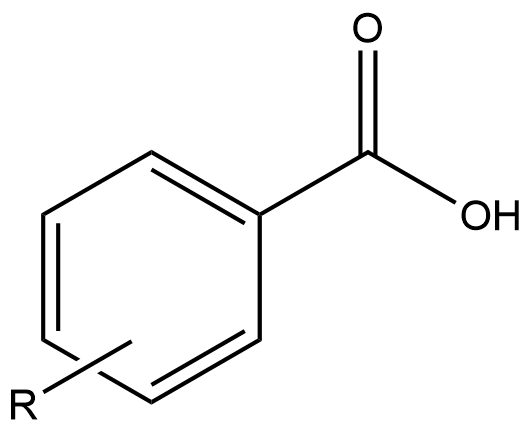
Behind many blockbuster drugs and high-performance agrochemicals lies a quiet workhorse: aromatic carboxylic acid intermediates. China dominates their production, yet navigating this market demands more than a supplier list—it requires insight into shifting capacity, pricing pressures, and quality consistency. In this post, we unpack the key applications driving demand and the market forces reshaping supply chains. Along the way, you'll see why partners like DSL Chemicals are moving from optional vendor to strategic advantage.
The Quiet Chemical Building Block Behind Everyday Materials
The milk jug in your fridge, the foam padding in your sneakers, the PVC pipes under your sink—none of them announce their shared origin. That origin is a colorless gas with a faintly sweet smell at high concentrations, a molecule small enough to be drawn on a napkin: two carbon atoms double-bonded, four hydrogens attached. Its name is ethylene, and though you'll rarely see it on a label, it's the quiet workhorse behind a staggering range of materials. Push it through a polymerization reactor, and those simple molecules chain together into polyethylene, the most widely used plastic on the planet. Shift the chemistry slightly, and the same backbone appears in polyester fabrics, antifreeze, and even the coatings on electrical wires.
What makes ethylene so indispensable isn't its sophistication but its simplicity. It can be cracked from ethane in natural gas or naphtha from crude oil, then recombined in thousands of ways. A dash of oxygen turns it into ethylene oxide, a stepping stone to polyester and de-icing fluid. A reaction with chlorine yields vinyl chloride, the precursor to PVC. None of these transformations are particularly elegant, but they are fast, cheap, and reliable—qualities that matter more in industrial chemistry than beauty. The result is a world quietly built on a molecule most people couldn't pick out of a lineup, and that obscurity, oddly enough, is a sign of success.
Why Pharma and Agrochemical Buyers Are Paying Closer Attention
Regulatory bodies across major markets have tightened requirements for impurities, residual solvents, and supply chain traceability. A single non-compliant batch can trigger costly recalls and damage a buyer's own product registration, so procurement teams now treat supplier audits as a core risk-control step rather than a box-ticking exercise.
Cost pressures have not disappeared, but the definition of value has shifted. Buyers increasingly calculate the true cost of a supplier relationship, including potential production downtime from late or inconsistent deliveries, rework expenses from off-spec material, and the reputational fallout if an upstream issue becomes public. This makes technical capability and process reliability just as important as the quoted price.
Sustainability commitments are moving from marketing language to contractual obligations. Pharma and agrochemical companies face direct scrutiny from investors, regulators, and large retail customers who demand evidence of responsible sourcing. Buyers therefore favor suppliers that can demonstrate measurable improvements in waste reduction, energy use, and worker safety without being pushed.
Eastern China’s Capacity Expansion Is Redrawing Supply Maps
The industrial corridors stretching from Shanghai to Hefei are no longer just manufacturing hubs—they are becoming gravitational centers that quietly reorder where components, chemicals, and finished goods move. New capacity in battery materials, specialty films, and precision tooling has shifted sourcing patterns away from long-established coastal ports toward inland clusters that offer tighter integration between raw material processing and assembly. For procurement teams, the old assumption that “east coast equals fastest” now needs constant recalibration, as second and third-tier cities in Jiangsu, Zhejiang, and Anhui have built enough scale to serve as primary supply nodes rather than overflow options.
What makes this shift different from previous waves of investment is the depth of vertical integration. A single industrial park outside Nanjing might now house precursor production, electrode coating, cell assembly, and recycling—all under separate ownership but linked by shared logistics and utility infrastructure. This co-location reduces freight distances by hundreds of kilometers, but it also creates a new kind of supply chain fragility: a disruption at one stage doesn’t just delay one supplier, it cascades through the entire local ecosystem. Buyers who once diversified across provinces are discovering that their “multiple sources” are now clustered within a fifty-kilometer radius, exposed to the same power constraints or environmental inspections.
The redrawn map also favors companies willing to renegotiate incoterms and inventory placement. Rather than shipping everything through Shanghai port, forward-thinking buyers are setting up consolidation hubs in Wuhu or Changzhou, where land costs are lower and trucking routes to inland assembly plants are shorter. This doesn’t just reduce landed cost—it changes lead-time math. A component made in Anhui can reach a factory in Hubei in a day by road, while the same item shipped from Guangdong might sit in port congestion for a week. For supply chain strategists, the key is no longer “where is the cheapest capacity,” but “where does capacity expansion create a new gravity well that pulls logistics, labor, and risk together.”
When Toluene and Xylene Prices Move, Margins Follow
The relationship between toluene, xylene, and downstream margins is rarely linear, but it is remarkably consistent. Both aromatics feed into a sprawling network of derivatives—solvents, coatings, polyester fibers, and fuel additives—so a shift in their price spreads quickly ripples through production economics. When toluene spikes, for instance, blenders and chemical producers face immediate cost pressure, squeezing the margin between feedstock and finished product. Conversely, a drop in xylene can widen margins for paraxylene producers, at least until supply adjusts. This dynamic creates a rhythm: feedstock prices lead, margins lag, but the correlation rarely breaks.
What makes this pairing especially sensitive is the shared upstream source. Naphtha reformers and steam crackers produce both aromatics simultaneously, so supply shocks often hit toluene and xylene together. Yet demand is uneven—toluene leans heavily into gasoline blending and TDI, while xylene's fate is tied to polyester via paraxylene. A regional refinery outage or a shift in gasoline blending economics can push toluene one direction while xylene drifts the other, temporarily distorting the usual margin relationship. Traders who track this divergence can spot arbitrage windows, but producers locked into fixed contracts often absorb the volatility.
Long-term, the margin story is about substitution and downstream flexibility. When toluene becomes too expensive relative to xylene, blenders substitute more xylene into gasoline or shift reformer severity to alter the output ratio. Meanwhile, integrated petrochemical complexes adjust their extraction units, favoring whichever aromatic offers a better netback. This built-in reactivity means margins rarely collapse entirely—instead, they compress and expand around a moving equilibrium. Understanding that equilibrium, and how quickly it can shift, is what separates reactive purchasing from strategic margin management.
Specification Creep: What Importers Now Demand on Paper
The term 'specification creep' gets thrown around in sourcing offices when a once-simple purchase order balloons into a multi-page technical dossier. Importers no longer stop at listing dimensions, materials, and colors. Their paper demands now routinely include full chemical safety data sheets, factory audit certificates, packaging recyclability breakdowns, and even signed statements about child labor policies. None of these have anything to do with whether the product itself works, but they have everything to do with whether the container gets cleared.
What's striking is how much of this added paperwork duplicates existing compliance work. A single shipment can require three different formats for the same test report because the importer's legal team, the retailer's vendor portal, and the customs broker each have their own template. The result is that suppliers spend more time filling in cells on spreadsheets than stitching or molding the actual goods. And every new season brings another form, another checkbox, another paragraph of fine print that someone in a distant headquarters decided was essential.
From Domestic Overcapacity to Global Price Anchors
China's industrial expansion over the past decades has repeatedly pushed certain sectors into overcapacity, where domestic supply far outstrips demand. Rather than cutting production, firms often look outward, flooding global markets with competitively priced goods. This outward thrust, initially a pressure valve for domestic imbalances, gradually reshapes price expectations worldwide.
The ripple effect is clearest in heavy industries like steel, cement, and solar panels. As Chinese exporters undercut local producers, international buyers begin to anchor their negotiations to the lower Chinese price points. Over time, these prices cease to be mere export quotes; they become the reference for contracts, futures, and investment decisions across continents.
What starts as a domestic mismatch thus matures into a global pricing mechanism. Rival manufacturers in other countries find their cost structures squeezed, while downstream industries benefit from cheaper inputs. The anchor, however, is not static—it shifts with Chinese policy adjustments, environmental crackdowns, or demand swings, leaving the rest of the world perpetually reacting to a price signal born of overcapacity at home.
FAQ
Purified isophthalic acid and trimellitic anhydride have shown notable growth because of their use in high-performance coatings and plasticizers. Meanwhile, pharmaceutical-grade derivatives such as 4-carboxybenzaldehyde continue to see steady pull from API manufacturers.
Access to integrated petrochemical feedstocks, mature oxidation technology, and lower capital costs per ton remain key advantages. Producers in coastal provinces also benefit from short logistics chains to major ports, reducing export lead times.
Pharmaceuticals account for roughly one-third of high-purity consumption, while agrochemicals and polymer additives each take significant shares. The remainder goes into dyes, electronic chemicals, and specialty resins, with exact proportions varying by specific acid type.
Wastewater containing aromatic acids and heavy metal catalysts is a primary concern, along with volatile organic compound emissions from oxidation units. Facilities that have invested in closed-loop recovery and catalytic incineration tend to operate more reliably during inspection campaigns.
Yes, particularly for high-purity grades used in contrast media and liquid crystal intermediates. Domestic producers have improved purification workflows, but some ultra-high-purity material still comes from Japan and Europe, leaving room for further substitution.
Domestic buyers often prefer monthly or quarterly pricing tied to feedstock indices, while export contracts may be fixed for longer periods with quality audits built in. Export business also places more weight on documentation and supply chain transparency.
Some buyers assume lower cost implies lower purity. In reality, many Chinese plants operate modern continuous oxidation units and can meet pharmacopeia standards. The key is not country of origin but verifying batch consistency and impurity profiles.
Feedstock price volatility, environmental policy enforcement in key provinces, and capacity additions for downstream polyester and polyamide chains. Any tightening of emission limits in Shandong or Jiangsu could shift supply availability faster than demand changes.
Conclusion
Aromatic carboxylic acid intermediates rarely make headlines, yet they quietly anchor the performance of coatings, resins, dyes, and specialty polymers. This same unassuming chemistry is now drawing sharper attention from pharmaceutical and agrochemical buyers, who rely on consistent impurity profiles and dependable supply for downstream synthesis of active ingredients and crop protection agents. Eastern China's rapid capacity expansion—especially in Jiangsu and Shandong—has redrawn the supply map, as new integrated facilities combine oxidation units with on-site purification and waste treatment. The shift is forcing incumbent producers in other regions to reconsider logistics, utility costs, and even their product slates.
Margins in this sector track toluene and xylene with little lag: when feedstock prices climb, downstream buyers feel the squeeze almost immediately, even if contract terms lag spot markets. Importers have also raised their documentation bar, demanding verified residual solvent levels, trace metal data, and precise isomer ratios that go well beyond older commercial grades. This combination of stricter specs and volatile raw materials has pushed the market away from chronic domestic overcapacity toward a more disciplined, globally anchored pricing structure. Chinese output no longer simply absorbs surplus; it increasingly sets reference points for contracts across Asia, the Middle East, and Latin America, giving buyers fewer places to hide from cost shifts.
Contact Us
Contact Person: Wei Zhang
Email: [email protected]
Tel/WhatsApp: 862163529955
Website: https://www.dslchem.com