

China Precast Concrete Buildings Are Transforming Modern Urban Construction
2026-11-16
Walk past a busy construction site in China today and the story is no longer just about scale—it is about speed, precision, and control. Precast concrete buildings are pushing urban construction away from unpredictable on-site work toward factory-made components that arrive ready to assemble, cutting timelines while raising quality. At the center of this shift, GETO is helping contractors move beyond outdated methods and adopt repeatable systems built for modern cities.
Why Chinese Cities Are Stacking Concrete Like Precision Parts
Walk past a high-rise site in Shenzhen or Nanjing and the rhythm feels less like wet concrete pouring and more like a truck assembly line. Walls arrive with conduits already embedded, floors show up with sleeves cast to the millimetre, and crews bolt the pieces together before the crane has even returned to the ground. The reason is straightforward: when a city adds millions of residents in a decade, casting every beam and slab on-site is too slow and too uneven. Factories give developers parts that fit the same way on the fortieth floor as they did on the fourth.
That shift also changes what 'quality' means. Instead of relying on a foreman's eye, builders now argue about tolerance stacks, curing records, and joint sealant that has to survive a typhoon. A panel made in a controlled plant can be checked with laser scanners before it ever reaches a traffic jam. On site, the job becomes less about forming and pouring and more about sequencing, lifting, and making sure each piece lands where the digital model said it should.
There is also a less obvious payoff: repetition. Once a city commits to a standard module, the same connection details, stair cores, and bathroom pods get reused across projects, which trims design time and lets suppliers keep production lines warm. That is why the approach keeps spreading beyond residential towers to schools, hospitals, and transit stations. It is not just concrete being stacked; it is a supply chain being assembled.
The Quiet Factory Shift Behind Faster High-Rises
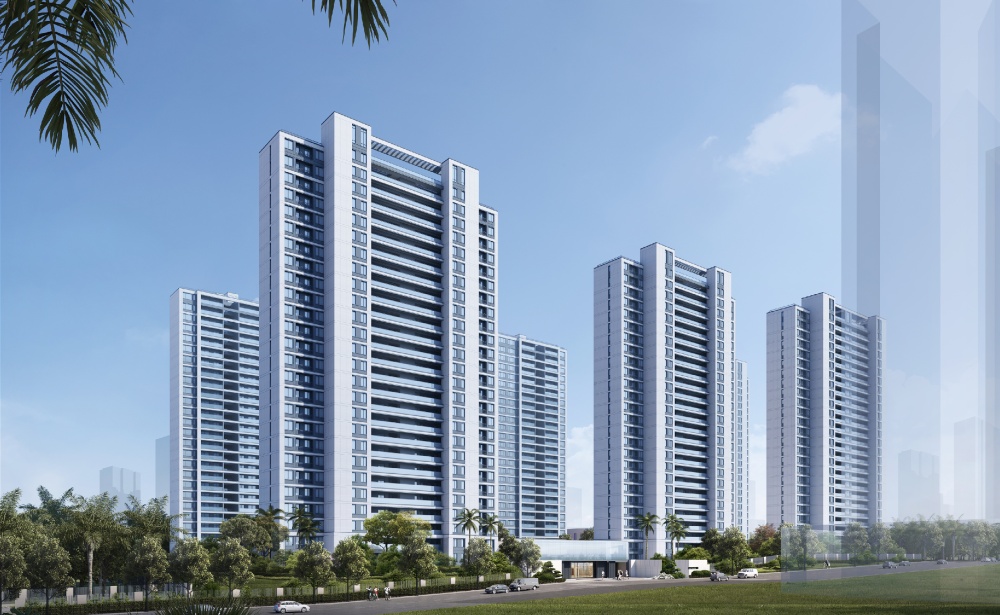
A decade ago, watching a tower climb past twenty floors meant accepting that most of the work happened out in the weather, piece by piece, with concrete poured and forms reset at the mercy of wind and rain. Today that same height arrives with a different rhythm. Whole wall panels, bathroom pods, and even pre-wired service risers are being assembled miles away under a roof, then trucked to the site and lifted into place like tightly machined parts. The shift rarely makes headlines, but it is quietly rewriting construction schedules across several cities.
What makes the factory approach faster is not simply doing the same tasks indoors. It changes the sequence. While the foundation is still curing, wall modules are already being fitted with windows, insulation, and conduit at a plant where cranes run on rails and quality checks happen at fixed stations. On site, crews trade days of formwork and scaffolding for hours of alignment and bolting. That overlap used to be impossible when every step had to wait for the previous one to dry or be inspected in place.
The result is not just speed on paper. Some high-rise projects have cut their structural cycles by a third or more, which means fewer months of traffic barriers, crane rental, and paying interest before tenants move in. But the quieter change may be cultural: it pushes developers and contractors to think of a building less as a bespoke event and more as a kit of carefully timed assemblies. That mental shift, more than any single machine, is what keeps the upper floors arriving sooner than the old calendar would suggest.
Concrete Components That Arrive With a Delivery Plan
When precast panels, beams, and columns show up with a delivery plan already attached, the site team gets something more valuable than a truckload of material: a sequence. Each component is tagged and staged according to the zone and lift schedule, so the crane crew doesn't have to hunt through stacks or shuffle pieces around. That kind of order quietly removes the usual morning confusion and keeps the critical path moving without extra phone calls.
The delivery plan also forces conversations that would otherwise happen too late. Fabricators confirm production dates against pour sequences, haulers route around weight limits and local traffic windows, and site supervisors adjust laydown space before the first trailer arrives. It becomes less about tracking individual pieces and more about managing the rhythm between the plant and the pour.
On complicated projects, this turns receiving from a reactive task into a planned handoff. Unloading times shrink, double handling drops, and the risk of weather damage or misplaced components goes down because nothing sits on site longer than it needs to. The concrete itself may look the same as any other delivery, but the plan behind it changes how smoothly the entire erection sequence unfolds.
How Precast Panels Are Cutting Weeks From Urban Timelines
Precast concrete panels are quietly rewriting the rules of urban construction schedules. Instead of waiting for concrete to cure on-site, weather permitting, crews now lift fully formed wall sections straight from a truck bed. A single tower floor that once needed two weeks of formwork, pouring, and waiting can now be enclosed in three or four days. The panels arrive with window openings, insulation, and even exterior finishes already in place, so the moment they are bolted onto the frame, several trades can move inside and start working immediately.
The real time savings come from overlapping work that used to happen in strict sequence. While the foundation is still being poured at the site, a factory thirty miles away is already casting panels for the tenth floor. That parallel production path removes the dead time that typically sits between structural milestones. On a mid-rise apartment project in a dense neighborhood, this approach has allowed the building to gain a full floor every week, instead of every ten to twelve days under traditional cast-in-place methods.
Developers are noticing that precast also softens the constant friction with city permit windows and noise restrictions. Fewer concrete trucks, less vibration, and almost no formwork waste mean neighbors complain less and inspectors sign off faster. For an urban timeline, those small daily gains stack up quickly, often pulling a month or more out of a schedule that was already tight. The panel itself is just concrete and steel; the real innovation is how it lets an entire project breathe.
Inside the Assembly Logic Redrawing Chinese Skylines
The phrase 'assembly logic' usually belongs in a factory manual, but here it describes something far more visible: the way Chinese cities stack, brace, and connect their towers. Walk through any major business district and you can trace the decisions made long before ground broke. Floor plates repeat, cores shift to open corner views, and sky bridges appear where wind loads or pedestrian flow demand them. These are not stylistic flourishes; they are structural arguments made in steel and glass.
What makes the logic distinctive is its tolerance for contradiction. A supertall might rise from a transit hub while its base flares outward to create shaded retail lanes. Another tower might cantilever over a preserved lane, its transfer trusses hidden behind a curtain wall that looks almost casual. The engineering is not hidden so much as absorbed into the building's daily behavior. You feel the logic when an elevator bank splits at the fortieth floor or when a plaza stays cool despite the afternoon sun.
This approach reshapes skylines less through singular icons than through repetition with variation. Developers refine a core strategy across multiple sites, adjusting setbacks, sky gardens, and podium heights to local codes and microclimates. Over time, the skyline becomes a record of those adjustments—like reading a family of buildings that share DNA but no identical face. The result is a kind of vertical urbanism that feels both engineered and improvised, which is precisely what makes it hard to copy.
From Curing Beds to City Blocks in Fewer Steps
The gap between a paver leaving a curing bed and a street that is ready to walk on used to be filled with extra moves. Blocks waited for strength, moved to storage, then traveled to the site, where they often sat again before installation. Each handoff added hours and chipped a few more edges.
That chain gets shorter when the curing bed is arranged to match the sequence of the block being built. Pavers are pulled in the order they will be set, labeled for their position, and loaded so the first ones off the truck are the first ones underfoot. It removes staging piles and repeat handling.
On a city block, the change shows up as a quieter, faster closeout. A crew can set a full run without sorting through pallets, and the barricades come down sooner. The line from curing bed to curb feels less like a series of stops and more like a single pass.
FAQ
Traditional on-site work relies heavily on formwork, rebar tying, pouring, and long curing periods, which makes progress sensitive to weather and labor. With precast, wall panels, floor slabs, columns, and staircases are produced in a factory, then transported to the site and assembled by crane. The construction site starts to work more like an assembly line than a wet trade workshop.
It comes from both policy pressure and a changing workforce. Fewer young workers want to do messy on-site concrete work, while cities are demanding shorter schedules, less dust, and lower noise. Factory production also makes it easier to control quality and reduces the number of workers needed on site. Many local governments now set minimum percentages for prefabricated building area.
Not necessarily. Early projects did lean toward repeated facades, but current molds and connection methods allow more variation. By combining different textures, colors, and window arrangements, architects can avoid a uniform look. Some projects mix precast panels with glass or metal cladding to break up the massing.
Factory conditions give better control over mix design, vibration, and curing, so panels tend to be more accurate and have smoother surfaces. However, the weak point often shifts to site joints. If grouting or sealing is done poorly at the connections, the overall structural integrity can still suffer.
Fabricating components off site cuts down on formwork waste, unused concrete, and common on-site debris. It also reduces dust and noise in dense urban areas. Some components can be disassembled and reused. On the other hand, transporting large panels creates emissions, so factory location and delivery routes have to be planned carefully.
Seismic performance is the biggest concern. The connections between precast elements must provide enough continuity and ductility, especially in high-intensity earthquake zones. Transportation limits, crane accuracy, skilled labor shortages, and weak coordination between design and construction also hold back wider use.
Some residential projects can cut the typical floor cycle from seven to ten days down to four or five days. Overall schedules may shorten by twenty to thirty percent, though that depends on component supply, weather, and crane availability. Because panels are made in parallel with foundation work, waiting time on site is reduced.
The trend is strongest in the Yangtze River Delta, the Pearl River Delta, and the Beijing-Tianjin-Hebei region, as well as large inland cities such as Chengdu and Wuhan. Precast elements are commonly seen in affordable housing, schools, hospitals, and some commercial residential projects, with local rules often tied to land sales.
Conclusion
China’s urban construction has started to behave less like a messy building site and more like a clean assembly line. Concrete wall panels, floor slabs, stairwells and balcony units are cast in controlled factory yards, cured under monitored conditions, then trucked across the city with sequence numbers that tell crews exactly when and where each piece belongs. The result is a skyline assembled from precision parts rather than poured in place. This shift does more than speed things up: it removes much of the weather delay, scaffolding clutter and material waste that usually slow down high-rise projects. On tight urban plots, where a tower can rise beside an occupied metro station or a busy shopping street, that predictability is often the difference between a workable schedule and a stalled one.
What makes the method stick is the quiet logistics behind it. A precast panel arrives not as a generic concrete block but as part of a delivery plan, matched to a floor layout and lifting sequence. Cranes place it, bolts and grout tie it in, and crews move to the next zone while traditional sites might still be setting formwork. Weeks disappear from urban timelines because the curing has already happened off-site, turning what used to be a long wet trade into a dry assembly process. City blocks now grow from curing beds through delivery routes to finished facades in fewer steps, with less rework and fewer surprise tolerances. The visual result is not a temporary prefab look but dense, precise housing and commercial towers that fit into China’s fast-changing urban fabric.
Contact Us
Contact Person: Quanhui Nian
Email: [email protected]
Tel/WhatsApp: 8618070545691
Website: https://www.getoglobal.com/