

China Prototyping Services Company Benefits That Go Beyond Lower Costs
2026-11-22
When sourcing prototyping services in China, the conversation usually starts with cost per part and ends there. That narrow focus misses the deeper advantages a well-connected manufacturing partner can bring to product development. ProtoMat builds its service around a different kind of value: faster design iteration, tighter tolerance control, and smoother handoff from prototype to production. In this post, we look beyond the obvious price advantage to see what truly separates a transactional shop from a prototyping partner worth keeping.
Tooling Feedback That Arrives Before You Finalize the CAD
Most design reviews still happen after the model looks complete, which means the most expensive discoveries arrive when you have already committed to a geometry. Here, the feedback loop is reversed. Draft a boss, adjust a wall thickness, or pick a draft angle, and the tooling constraints show up immediately as you work. It is less like running a check and more like having a moldmaker looking over your shoulder and pointing out the undercut before you build ten features on top of it.
The early warnings cover the details that usually stall a handoff—shutoff surfaces, ejection requirements, minimum radii, and areas where a parting line would become unnecessarily complicated. Because the feedback is tied to the current state of the model rather than a separate report, you can fix a problem while the sketch is still warm. That changes the rhythm of the work; instead of cycling between CAD and a DFM review, you make small corrections as you go and keep the design moving.
The result is not just fewer redlines later, but a model that already reflects how the part will actually be made. Tooling feedback stops being a gate at the end and starts behaving like a design input, which is where it belongs.
Material Sourcing Calls You Never Have to Make
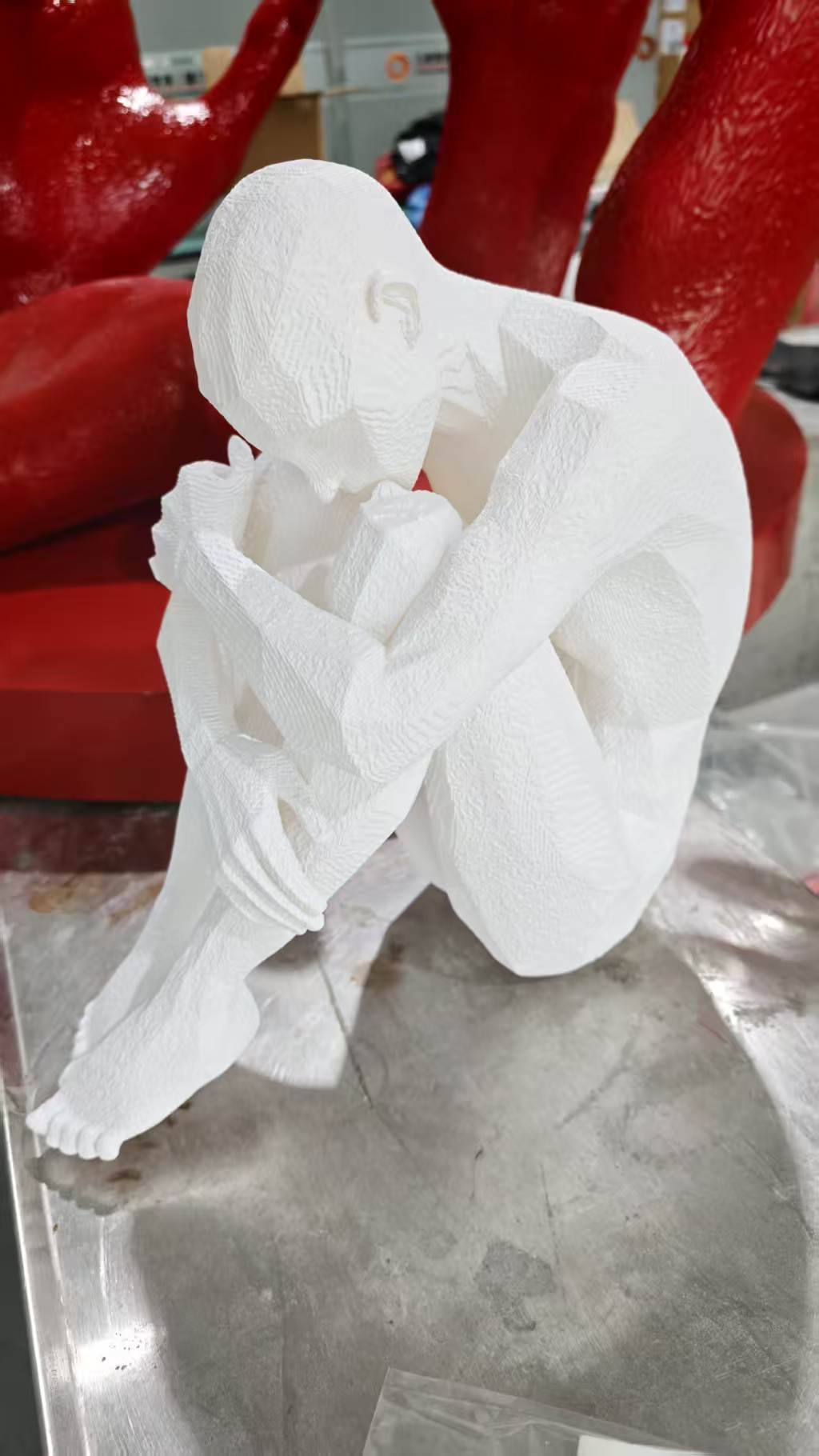
Most sourcing headaches start with a phone number you do not want to dial. The list of suppliers, the time-zone math, the half-remembered conversation from two weeks ago—none of it has to be your problem anymore. Material requirements can be matched behind the scenes while you keep your attention on what actually needs deciding.
Calling around for pricing, stock levels, and lead times eats more hours than anyone likes to admit. When those calls disappear, the workday stops being interrupted by missed rings and polite callbacks that never come. Specifications such as grade, finish, thickness, and quantity move directly into a system that connects you to realistic options, each one already checked for availability.
What used to take a dozen conversations now lands in front of you as a short list of workable choices. The real gain is not just speed—it is not having to repeat the same request until it loses meaning. You get that time back for the parts of the job that need judgment, taste, or a clear head.
Iteration Windows That Keep Moving After Your Team Logs Off
Most sprint boards freeze the moment the last person closes their laptop. This one doesn't. The window drifts forward on its own, quietly carrying unfinished threads into the next cycle before anyone has a chance to call a standup. It feels less like a deadline and more like a tide that doesn't care who stayed late.
What's stranger is how natural it becomes. You come back to find the iteration already shifted, the stale tasks nudged aside, the unfinished work re-slotted without ceremony. Nobody has to own the transition. The board simply moves, as if it has somewhere to be, and your team learns to work with a rhythm that doesn't pause for permission.
It's not about punishing people for logging off. It's about refusing to let the process stall just because the humans did. The window keeps sliding while you sleep, and by morning the next increment is already underway. You catch up, not the other way around.
Tolerance Realism You Get Before the First Tool Is Cut
Most tolerance discussions start and end with a number on a print. That number rarely survives contact with an actual setup. Before any cutter meets metal, the real question is whether the stated tolerance accounts for the stack of tiny shifts that happen in fixturing, spindle growth, and tool deflection. If those aren't modeled early, the first physical part becomes an expensive probe of where the assumptions were wrong.
A more useful approach is to treat the CAD model as a starting point, not a promise. Run the toolpath against the machine's actual thermal state, the holder's runout, and the material's tendency to spring back. This turns tolerance from a single pass/fail boundary into a predicted range. Seeing that range before cutting lets you move a hole, adjust a clamp, or change a tool length while the change is still cheap.
That early realism also changes conversations with design and quality. Instead of defending a number after parts fail inspection, you can show where the process will drift and why. The goal isn't a perfect simulation. It's a margin you can trust well enough to make the first cut with fewer surprises.
Design-for-Manufacturing Guidance Without the Consulting Invoice
Most design-for-manufacturing advice gets wrapped in layers of paid workshops and six-figure engagement letters. But the core principles aren't hidden behind a paywall. They live in the scrap bin next to the CNC mill and in the frustrated notes a machinist leaves on a drawing that calls for a 0.005 mm tolerance on a plastic boss. Start by walking your own floor with a printed cross-section of the part, not a slide deck. Ask the person who has to fixture it what would make the setup less stupid. That conversation usually replaces an hour of consultant jargon about “process capability indices.”
A practical DFM pass can fit on one page: wall thickness, draft angles, undercuts, and the longest tool reach each feature demands. List every radius and counterbore. If you can't find a standard cutter for that corner, redraw it until you can. The same goes for sheet metal — keep bend radii consistent with the die set already sitting by the brake press, not the theoretical minimum from a material data sheet. Good manufacturability is mostly about reducing the number of times a part has to be flipped, re-clamped, or sent back for a second operation. That insight doesn't require a invoice; it requires you to stop pretending the CAD model is the finished thing.
The trick is to bake these checks into the review before a design gets released, not after. A simple pass/fail list — no internal pockets narrower than 3x the tool diameter, no threads deeper than 2.5x diameter, no flat-bottom holes where a spot face will do — catches most of what a senior consultant charges for. Share that list with the shop that actually quotes the job. Their redlines are worth more than any generic DFM report, because they're tied to the specific machines, tooling, and people you already pay for. When the quote comes back clean the first time, you've saved more than consulting fees; you've saved the schedule.
A Path From Functional Prototype to Pilot Run Without Re-Quoting
The usual gap between a functional prototype and a pilot run shows up as cost drift. A prototype can pass every bench test and still carry hand-modified boards, quick-turn enclosures, and unqualified second sources. Those choices quietly break the assumptions behind the original quote. Teams that avoid re-quoting tend to treat the prototype as an early production unit, not a proof of concept. That means locking the PCB stack-up, using the same connector families, and validating the enclosure material before the pilot build is even scheduled.
Most re-quotes come from substitutions that were never meant to last. A machined bracket becomes a molded part, a hand-soldered sensor gets replaced by a pick-and-place friendly package, or a local fastener changes because the original size is not available at volume. Each swap changes cycle time, material cost, or yield, and those changes invalidate the supplier's cost model. The workaround is to bring DFM feedback into the prototype phase early enough that the functional build already reflects production tolerances and assembly sequence. When the contract manufacturer sees the same BOM, the same process notes, and the same test points from day one, the quote remains anchored to real manufacturing data.
The handoff becomes quieter when the engineering team freezes a minimum viable BOM and keeps a short list of approved alternates. Pilot-run pricing should be tied to the process parameters already proven during functional testing, not to a new set of assumptions discovered at the last minute. If a change is necessary, it gets costed immediately against the existing quote instead of being bundled into a surprise revision. That discipline keeps the path from prototype to pilot run as a continuation of the same build history rather than a fresh negotiation.
FAQ
Many run rapid tooling and low-volume production on the same floor, so the sample you approve is made with production-ready methods. That closes the gap between prototype and final part in a way a job shop quoting only the first article usually cannot.
Stronger suppliers bundle CNC, sheet metal, vacuum casting, and additive work internally. That is useful when a device needs a rigid housing, a clear lens, and metal inserts because one team owns the tolerances instead of three.
Straightforward CNC or SLA parts often ship within three to five business days. If you need cosmetic finishing, fit testing, or a small batch, plan for a week to ten days after the design for manufacturability review is signed off.
Look for a supplier that raises issues before cutting: wall thickness, undercuts, draft angles, or a tolerance that is tighter than the process can hold. That early feedback tends to save more time than a slightly lower unit price.
Many can move directly into pilot runs, soft tooling, or bridge production. Because the same team already knows the part, you avoid repeating setup work and re-explaining the design when volumes increase.
With established firms this is rarely a blocker. You usually get a dedicated English-speaking contact, overnight file reviews, and video updates. Some customers actually use the time difference to review parts in the morning while the supplier worked overnight.
Experienced shops take this seriously: they use access-restricted file servers, sign NDAs as standard, and will not post photos of your parts without permission. It is still smart to ask how files are stored and who can see them.
Many have quick access to a wide range of plastics, metals, and surface treatments because the supporting supply chain is dense. You can often get anodizing, bead blasting, silk screening, or PVD coating handled within days instead of queuing at an outside finisher.
Conclusion
The most useful surprises from a Chinese prototyping partner often happen well before money becomes the main topic. You send a CAD file that still has a few open questions, and the tooling team comes back with notes about draft angles, wall thickness, and ejection concerns that would otherwise surface only after steel has been cut. Nobody on your side spends an afternoon chasing resin suppliers or comparing metal stock; that sourcing work has already been folded into the quote and the schedule. Because the workshop runs on a different clock, an iteration requested at the end of your day can be machined, measured, and photographed by the time you open your laptop the next morning. Tolerance discussions also feel less like guesswork. You learn which dimensions will hold, which ones will drift, and where a small design change can save a lot of trouble before the first tool is made.
What makes the relationship stick, though, is that the advice does not arrive as a separate consulting line item. Design-for-manufacturing input comes from the same people who will machine or mold the part, so their suggestions are grounded in equipment, toolpath, and setup reality rather than theory. That continuity carries into the next stage. A functional prototype can move toward a pilot run without a new round of quotes, supplier qualification, or drawing reinterpretation, because the team already knows which features matter, which materials behave, and which inspection points need attention. Lower cost is nice, but the quieter advantage is having fewer handoffs and fewer late-stage corrections that would cost more in time than they ever saved on the unit price.
Contact Us
Contact Person: Joe
Email: [email protected]
Tel/WhatsApp: +8613799507208
Website: https://www.3dprotomat.com/