

China Sewer Jetting Machines Sourcing Guide for Industrial Buyers
2026-11-02
Sourcing a sewer jetting machine from China can feel like a gamble. Every supplier claims high pressure and rugged build, but too many industrial buyers find out the hard way that the unit quits when the job gets tough. This guide strips away the usual sales noise and focuses on what actually separates a workhorse from a warehouse regret. Along the way, you’ll see why AMJET keeps surfacing as a name buyers trust when downtime isn’t an option.
Pressure Claims That Fall Apart Without Flow and Nozzle Data
A pressure gauge reading can look impressive on paper, but without matching flow and nozzle specifications it tells you almost nothing about real-world performance. Two systems running the same PSI can deliver wildly different results depending on how much volume they push and through what orifice. One might produce a fine mist barely wetting the surface, while the other blasts a concentrated stream that strips paint. The numbers only start to make sense when all three variables are locked together.
Nozzle size acts as the gatekeeper between pressure and flow. A tiny opening chokes the stream down, raising pressure while starving the application of volume. Swap in a larger tip and the same pump suddenly loses its aggressive bite. That is why any claim built on pressure alone tends to crumble the moment you ask about gallons per minute or tip diameter. It is not that pressure is meaningless — it is simply incomplete as a standalone metric.
Field technicians learn this quickly when they switch equipment or even just change a worn nozzle. A rig advertised as 3000 PSI may underperform a 1500 PSI unit if the latter moves twice the water through a properly matched tip. Until the flow curve and nozzle chart are on the table, any boast about pressure is just a number shouting into the wind.
Why Two Identical Spec Sheets Can Differ by Five Years of Service Life
Two machines can roll off the same assembly line, match every line on a data sheet, and still follow wildly different paths in the field. The spec sheet captures measurable thresholds—tensile strength, coating thickness, nominal operating temperature—but it says nothing about the quiet variables that accumulate over time. How a component is stored before installation, the consistency of the power supply it feeds on, and the ambient microclimate around a single mounting bolt can each nudge the degradation curve. One unit might sit in a humidity-controlled warehouse for three months; its twin gets strapped to a pallet outdoors near a coastal salt spray. Same part number, same printed values, but the service clock starts ticking from different points.
Maintenance habits create another layer of divergence that no spec sheet can predict. A facility that replaces filters on a calendar schedule, even when pressure drop readings look fine, avoids the slow creep of efficiency loss. Another plant runs the same equipment with a run-to-failure mindset, stretching lubrication intervals and ignoring minor vibration shifts. The former sees seals and bearings outlast manufacturer predictions by years; the latter watches identical components fail early despite meeting every original specification. The difference is rarely a single dramatic event—it is the compound effect of dozens of small, invisible choices made by the people who touch the machine each week.
Even the original manufacturing batch matters more than the invoice suggests. Raw material lots vary within allowed tolerances, heat treatment cycles drift slightly with furnace load, and a new operator on the final assembly line may torque a dozen fasteners at the low end of the acceptable range. Two units built a week apart can carry subtle internal stress differences that only reveal themselves after years of thermal cycling. By the time the first crack appears or the first bearing starts to sing, the root cause is buried in a decision that never appeared on any drawing. Identical spec sheets guarantee identical potential, not identical fate—the service life gap is written by everything the data sheet omits.
The Frame and Pump Details Factory Photos Rarely Show
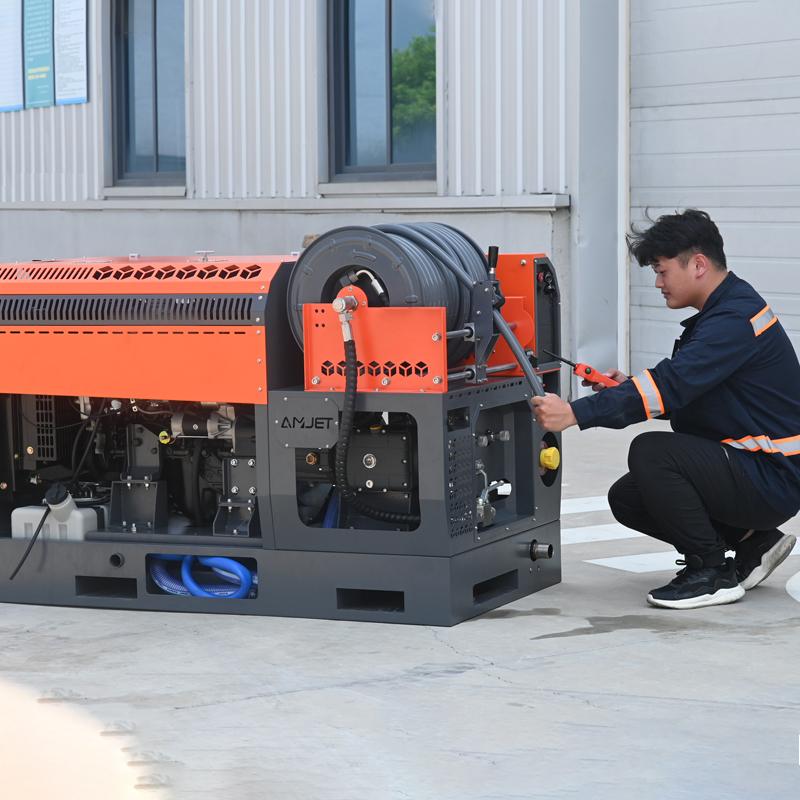
Factory shots tend to flatten the frame into a clean silhouette, but the real story is in the welds and the metal thickness where the tubes meet. There are often subtle reinforcements tucked behind the pump mounting plate — extra gussets or a thicker wall section that never makes it into the catalog render. The powder coat might look uniform from three feet away, yet underneath there's a zinc primer that only shows up if you scratch the edge of a bolt hole. These are the kinds of details that change how the whole unit holds up after a few thousand cycles.
The pump itself is even more opaque. A factory photo can't reveal the clearance between the piston and the cylinder bore, or whether the check valve spring was wound with a progressive rate to cut down on chatter. The seal material matters too — some builders use a softer compound that beds in quickly but doesn't tolerate heat, while others spec a stiffer lip that takes longer to break in but lasts far longer. None of that is visible from the outside, which is precisely why most marketing pages never mention it.
Look closely at the frame's mounting bosses and you might spot a slight misalignment that was corrected with a hand file before painting — a human touch that never appears in automated inspection data. The pump's inlet port often has a chamfer that factory photos crop out because it looks unfinished, but that chamfer is what prevents cavitation during rapid cycling. It's unglamorous, easy to overlook, and more important than the color of the housing.
Questions Worth Asking Before You Pay a Deposit
Before you hand over any money, pin down exactly what the deposit buys you. Does it lock in a price, a spot in a queue, or a specific piece of work? Ask whether the deposit sits in a separate client account or gets folded into the vendor's operating cash, and find out who holds it if the company changes hands. A quick email asking for the terms in writing can save you from arguing later about what was promised.
Also question what happens when either side wants out. Is there a cooling-off period, or are you committed the moment the transfer clears? If the project stalls through no fault of yours, do you get the full amount back or only a percentage? Listen for hesitation when you ask about past disputes—contractors who refund without drama tend to say so plainly.
Spare Parts Bundles That Prevent Six-Month Downtime
Waiting half a year for a single component isn't just an inconvenience—it's a quiet killer of production schedules and profit margins. Spare parts bundles flip that script by pairing the parts most likely to fail together in one shipment, so your maintenance team isn't left scrambling when a critical piece gives out. Instead of a six-month lead time on a lone bearing, you get a curated kit that covers the usual suspects: seals, gaskets, sensors, and wear items that tend to fail around the same time. The result is less idle machinery and fewer emergency orders that wreck your budget.
The real value shows up in unpredictable environments—think remote plants, offshore rigs, or facilities with limited supplier access. A bundle designed around your equipment's actual failure history doesn't just shorten downtime; it eliminates the guesswork. When every replacement part is already on the shelf, the conversation shifts from "how long until we're back online?" to "which morning shift should handle the swap?" That kind of readiness is hard to put a price on, but easy to feel in quarterly uptime reports.
Building the right bundle starts with data, not guesses. Look at your last two years of work orders and flag every part that caused more than a day of unplanned stoppage. Group them by machine type and failure pattern, then add the small consumables you always forget until it's too late. Bundles aren't about stocking everything—they're about stocking the right things in the right quantities, so a six-month wait becomes a non-issue.
Export Paperwork and Loading Checks That Save Weeks at Port
Getting cargo through a port smoothly often comes down to the unglamorous work done before the ship even docks. Export paperwork errors—wrong tariff codes, mismatched weights, missing certificates—are the silent culprits behind costly holds and demurrage fees. A disciplined pre-check of every commercial invoice, packing list, and bill of lading against the actual shipment can cut clearance time dramatically. Instead of relying on memory, use a simple checklist that mirrors the customs broker's requirements, and have a second pair of eyes review it while the container is still being loaded.
On the loading side, how goods are arranged and secured affects both safety and inspection speed. Port authorities and surveyors look for proper weight distribution, accessible labeling, and correct lashing points. A quick but thorough loading check—verifying seal numbers, photographing each tier, and confirming hazardous material placards if applicable—can prevent rework that eats up days. The trick is to treat these checks as part of the normal workflow, not as an afterthought. For example, tie the paperwork verification to the moment the forklift sets the last pallet in place, rather than waiting for the truck to leave the warehouse.
What separates fast-moving shipments from those stuck in limbo is rarely big strategy; it's the habit of catching small discrepancies early. A container with one wrong digit in the HS code can sit for a week while emails bounce between shipper, forwarder, and customs. But when export teams build loading checks that include a final document-to-cargo match, they often shave entire weeks off the port stay. Over time, these practices compound—fewer inspections, fewer storage charges, and a reputation for clean paperwork that makes every subsequent shipment move faster.
FAQ
Look beyond glossy brochures. A dependable supplier usually has a dedicated production line for high-pressure pumps, can provide a detailed bill of materials, and will let you tour the factory before payment. Ask for video of machines running at 2,000+ psi on actual clogged lines, not just a demo loop.
Don't just check the brand. Request the pump's performance curve and ask which internal components are imported versus locally made. Chinese factories often use Italian or German ceramic plungers and seals, but some cut corners with lower-grade stainless steel. A good test is to ask for a 30-minute continuous run at maximum rated pressure with temperature readings.
For North America, ensure the machine has CE or UL-compliant control panels if applicable, but more importantly ask for the pump's pressure test report from a third party. For EU buyers, full CE documentation including noise and vibration tests is a must. Never accept a supplier's claim of self-certification without independent verification.
Yes. Beyond FOB price, factor in anti-dumping duties if your country has them on certain pressure washers, plus the cost of replacing substandard hoses and nozzles. Many buyers report that factory-supplied hoses fail within 200 hours, so budget for upgrading to a reputable aftermarket hose before first use.
Use an inspection company like SGS or Bureau Veritas for a pre-shipment check. Specifically ask them to run the machine at rated pressure for 20 minutes, measure the actual flow rate, and verify the engine or motor serial number matches the order. A small inspection fee saves thousands in disputes.
Most offer a one-year warranty on the pump and frame, but shipping parts back to China is impractical. Negotiate a spare parts kit included in the container, and request video call support for troubleshooting. Better suppliers maintain a WhatsApp or WeChat group with an English-speaking engineer during your business hours.
For most industrial buyers, buying the complete package from one factory is safer because the pump, engine, and frame are matched and tested together. Assembling separately only makes sense if you already have a reliable engine source and are ordering more than 20 units, where you can save 15-20% but take on integration risks.
Conclusion
Too many buyers get burned by looking only at pressure numbers. A pump rated at 5000 psi means little if the flow rate and nozzle size aren't matched—without that data, you can't estimate actual cleaning impact. Two machines with identical spec sheets might look the same, but one could use thicker steel, better welds, and a name-brand pump, giving it five extra years of service life. Factory photos rarely show the frame's reinforcement points or whether the pump is mounted with proper vibration isolation. Ask for close-up shots of those areas before trusting a glossy brochure.
Before sending any deposit, there are questions worth asking: What's the real production lead time? Will they run a wet test with video proof? What exactly does the warranty cover? A spare parts bundle might seem like an upsell, but if a high-pressure seal or nozzle fails and you wait months for a replacement, downtime will cost far more than the extra box of parts. Also, don't overlook export paperwork and loading checks. Confirm the commercial invoice, packing list, and any certificates match the actual shipment. A few careful photos of the machine strapped inside the container can save weeks of arguing at the port.
Contact Us
Contact Person: Mike
Email: [email protected]
Tel/WhatsApp: +86 19545555505
Website: https://www.amjeting.com/