China Steel Pallet Manufacturers: Delivering Strength and Sustainability
2026-06-12
When it comes to steel pallets, strength and sustainability are non-negotiable. China’s manufacturing landscape is brimming with options, but finding a partner that truly delivers on both counts can be challenging. Enter Lanyuda—a name that's redefining what reliable steel pallet solutions look like. In this post, we'll dive into why Lanyuda stands out, and how their approach to durability and eco-friendliness is setting new standards. Curious? Let's unpack.
The Backbone of Modern Logistics: China’s Steel Pallet Revolution
A quiet transformation is reshaping how goods move across China’s sprawling supply networks. For decades, wooden pallets were the unglamorous workhorses of logistics, but their drawbacks—splintering, mold, and a short lifespan—pushed the industry toward a more resilient alternative. Steel pallets, once considered overkill for all but the heaviest loads, are now becoming the standard. Their adoption isn’t just about durability; it’s a response to the mounting pressures of speed, hygiene, and sustainability that define modern freight.
What makes steel pallets so pivotal is their seamless fit with automated warehouses and robotic handling systems. Unlike wood, they maintain precise dimensional consistency, eliminating the jams and misreads that plague high-speed sorting lines. Their non-absorbent surfaces comply with stringent food and pharmaceutical safety standards, while their fire resistance and ability to endure extreme temperatures open doors for sectors where failure isn’t an option. In a country where e-commerce demands are unrelenting, this reliability translates directly to fewer bottlenecks and lower total cost of ownership.
China’s steel pallet surge also mirrors a broader industrial pivot toward circularity. Manufacturers are pooling these assets through sophisticated tracking and leasing models, cutting waste and resource consumption. The pallets circulate in closed-loop systems, returned, inspected, and reused—sometimes hundreds of times—before being recycled. This approach not only slashes the need for timber but also positions Chinese logistics as a benchmark for others seeking to blend toughness with environmental sense. It’s a pragmatic yet often overlooked revolution, carried silently on the shoulders of steel platforms.
Engineered for Endurance: Why Steel Outperforms Traditional Materials
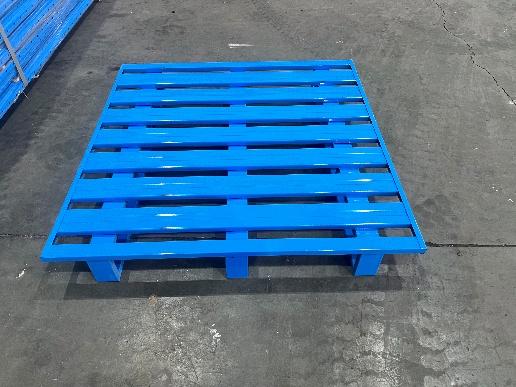
Over centuries of industrial evolution, steel has cemented its reputation not by chance, but through a fundamental material advantage: fatigue resistance and impact tolerance that plastics, wood, and even aluminum struggle to match. While polymers can crack under repetitive stress and wood succumbs to rot or insect damage, steel’s crystalline microstructure dissipates energy across countless load cycles without accumulating catastrophic damage. This inherent toughness means bridges sway in storms, heavy machinery starts and stops thousands of times, and vehicle frames absorb road vibrations—all without the material crying uncle. It’s not simply about being hard; it’s about staying whole when everything else crumbles.
Beyond raw strength, steel’s endurance is rooted in its predictability. Engineers rely on consistent yield points and well-understood fatigue limits, which allow for safety margins that are virtually impossible with organic or composite substitutes. A wooden beam’s load capacity varies with moisture and grain direction; a carbon-fiber panel may hide delamination until failure. Steel, by contrast, bends before it breaks, giving ample warning. That visible deformation is a language of distress that maintenance crews and operators learn to read, preventing catastrophic failures. Such transparency turns an already resilient material into one that actively communicates its condition—a trait no modern synthetic can fully replicate.
Perhaps the most overlooked advantage is steel’s endurance in harsh environments when paired with modern coatings or alloying. Salt spray, chemical exposure, and extreme temperatures degrade many alternatives rapidly: composites become brittle, aluminum pits, and timber swells. Steel with zinc, chromium, or nickel additions forms self-healing patinas that slow corrosion dramatically, while duplex systems combine galvanic and barrier protection. Even in failure, a corroded steel member often retains enough cross-sectional area to carry loads until scheduled replacement, buying precious time. That ductile grace under environmental attack makes it not just a survivor over short bursts, but a champion of lifecycle performance where durability is measured in decades, not seasons.
Green from the Ground Up: Sustainable Practices in Steel Pallet Production
The shift toward greener manufacturing isn’t just a trend—it’s a necessary evolution, and steel pallet production is no exception. Every stage of creating a steel pallet, from raw material selection to final assembly, now prioritizes environmental impact. Using high-recycled-content steel reduces the need for virgin ore extraction, while modern electric arc furnaces consume significantly less energy than traditional blast furnaces. These choices lower the carbon footprint before the pallet even takes shape.
Once in use, steel pallets far outlast their wooden counterparts, slashing the demand for frequent replacements. They resist moisture, pests, and rough handling without chemical treatments, eliminating the need for fumigation or preservatives that can harm ecosystems. Their inherent strength means fewer materials are consumed over the pallet’s lifespan—a durability that directly translates to less waste in landfills.
End-of-life handling further cements their eco-credentials. Steel is infinitely recyclable without quality loss, so a retired pallet can re-enter the production cycle as new steel. This closed-loop system keeps resources in use indefinitely, aligning with circular economy principles. By considering every phase—from the ground up—manufacturers are transforming a humble logistics tool into a sustainable asset.
Custom Solutions for Every Industry: Versatility in Design
Every sector comes with its own set of demands—healthcare requires sterile precision, retail thrives on visual appeal, and manufacturing demands robust durability. Our approach doesn't rely on one-size-fits-all templates. Instead, we shape each design from the ground up, adjusting materials, layouts, and functionality until they feel native to the environment they'll serve. This means a clinic's signage system might integrate antimicrobial surfaces and intuitive wayfinding, while a pop-up store solution focuses on modularity and rapid assembly without sacrificing brand identity.
Behind this adaptability lies a deep bench of cross-industry insight. We've spent years studying how different spaces influence human behavior, from the calm needed in a law office to the energetic buzz of a co-working hub. That knowledge feeds into every project, allowing us to propose unexpected material pairings or structural tweaks that elevate a standard brief into something tailor-made. The result isn't just a product that fits—it's one that actively enhances how the space is used.
Versatility also means keeping an eye on the long term. Industries evolve, and so do their physical needs. We build in room for adaptation—components that can be swapped out, surfaces that can be refreshed, systems that can scale. This future-proofing turns initial designs into lasting investments, cutting down on waste and repeated overhauls. Whether it's a hospitality chain expanding globally or a local clinic updating its look, the design language stays consistent yet flexible enough to absorb change.
Quality Unmatched: The Rigorous Standards Behind Chinese Manufacturing
Walk into any modern Chinese factory today and you'll find something most outsiders don't expect: a near-obsessive dedication to precision. It's not just about churning out goods anymore. From automotive parts to smartphone components, every millimeter matters. Automated inspection systems powered by AI scan for microscopic flaws that the human eye would never catch. Meanwhile, teams of engineers huddle over data from every stage of production, tweaking variables most manufacturers wouldn't bother measuring. The result? Products that don't just meet international standards—they often set new ones.
But the real secret isn't just technology. It's a culture that has moved far beyond the old "good enough" mindset. Workers on the assembly line are encouraged to stop the entire line if they spot something off—a practice once reserved for Japan's legendary factories. Training programs now emphasize critical thinking over rote repetition, turning operators into problem solvers. And it shows in the numbers: defect rates have plummeted to levels that would have seemed impossible a decade ago. This human-machine partnership creates a quality control loop that gets tighter every single day.
Then there's the raw material rigor. Suppliers face unannounced audits, and batches are rejected with a relentlessness that keeps the whole chain on its toes. Testing labs within factories run everything from salt-spray corrosion tests to extreme temperature cycling, simulating years of wear in just weeks. It's a demanding, almost punishing approach. But when a product comes off the line with a "Made in China" label, it now carries a weight of reliability that rivals any manufacturing powerhouse in the world—proof that the country's quality revolution isn't just a slogan, but a daily reality.
Future-Forward: How Innovation Drives the Next Generation of Steel Pallets
The steel pallet industry is undergoing a quiet revolution, one that redefines durability and intelligence in material handling. Advanced alloys and precision manufacturing are yielding lighter yet stronger designs, while embedded IoT sensors now track location, temperature, and load stress in real time. This isn't just about incremental improvement—it's about creating a connected, adaptive infrastructure for global supply chains.
Innovation also addresses long-standing pain points: ergonomics and sustainability. Modular, foldable frames reduce return-shipping costs dramatically, and new powder-coating techniques extend lifespan without toxic solvents. These pallets are no longer passive steel trays; they’re active tools that cut waste, prevent product damage, and integrate seamlessly with automated warehouses. The result is a lower total cost of ownership that makes the switch from wood or plastic a strategic no-brainer.
Looking ahead, generative design algorithms are optimizing beam patterns for specific loads, while self-healing coatings promise to eliminate minor corrosion before it starts. The next generation will not only carry heavy loads but also communicate with forklifts and conveyors, forming the backbone of truly autonomous logistics. Steel pallets are shedding their old image as heavy, dumb, and unchanging—and stepping into a role as critical enablers of Industry 4.0.
FAQ
China's steel pallet producers combine advanced manufacturing techniques with cost efficiency, offering robust products that meet international standards. Their ability to handle large-scale orders without compromising on quality, along with continuous investment in automated production lines, gives them a competitive edge. Many also provide end-to-end services including design, fabrication, and logistics support.
Steel pallets are a greener long-term choice because they are fully recyclable, have a longer lifespan, and reduce demand for timber. Unlike wood, they don’t require chemical treatments for pests, minimizing toxin release. Their durability means fewer replacements and less waste, and at end of life, the steel can be melted down and reused indefinitely without loss of properties.
They are a staple in heavy-duty sectors like automotive, metal processing, and chemical manufacturing, where loads can be extremely heavy or corrosive. Food and pharmaceutical industries also favor them for hygiene—steel resists bacteria and is easy to sanitize. Additionally, any operation with automated storage and retrieval systems benefits from their consistent dimensions and structural stability.
Customers can specify dimensions, load capacities, deck styles (solid, mesh, or perforated), and coatings like hot-dip galvanizing or powder coating for corrosion resistance. Many manufacturers also offer custom reinforcements, anti-slip surfaces, RFID tag integration, and color coding. Even fully bespoke designs to fit unique handling equipment or product geometries are common.
Reputable factories follow strict protocols including raw material verification, in-process welding inspections, dimensional checks, and load testing to meet standards like ISO 8611. They often hold certifications such as ISO 9001, and some conduct third-party audits. Continuous monitoring via automated inspection systems and traceability of each pallet batch are also widespread practices.
Higher strength-to-weight ratio allows for thinner yet stronger designs, reducing material use without sacrificing durability. Their resistance to impact, fire, and weather lowers repair and replacement frequency. Over time, companies save on downtime, product damage, and insurance costs. In automated warehouses, consistent performance also cuts maintenance on racking and conveyor systems.
Conclusion
China's steel pallet industry has quietly reshaped global logistics, fusing grit with eco-conscious design. These pallets aren't just tough—they shrug off rust, impacts, and years of heavy loads that would splinter wood or warp plastic. Behind that resilience lies a production ethos that pairs rigorous testing with cleaner methods: recycled steel, low-emission furnaces, and a closed-loop mindset that turns scrap into tomorrow's pallets without missing a beat. It's a quiet revolution where strength and sustainability aren't trade-offs but partners, ensuring every pallet that rolls off the line is built to outlast and outgreen.
Look closer and you'll see more than brute force. Chinese manufacturers thrive on tailoring designs for odd-shaped cargo, automated warehouses, or hygienic cleanrooms—each solution drawn from deep industry dialogue. The real edge, though, is a refusal to stand still. From smart pallets that whisper real-time inventory data to anti-microbial coatings and lighter alloys that cut freight emissions, innovation isn't a bullet point; it's the daily rhythm. What emerges is a product that carries not just goods but a commitment: enduring quality, adaptive engineering, and a cleaner footprint that stretches far beyond the factory gate.
Contact Us
Contact Person: Johnny
Email: [email protected]
Tel/WhatsApp: +86 18151010686
Website: https://lydstorage.com