

China Three Phase Vibration Motor Selection Tips for Industrial Buyers
2026-11-02
Ever ordered a three phase vibration motor from China that looked perfect on paper but struggled on the line? The issue is rarely the factory—it's usually the selection criteria. Industrial buyers get buried in voltage and RPM charts while overlooking the operational details that truly decide reliability: mounting tolerance, enclosure rating, and how the motor handles continuous vibration. Guangling has turned those field failures into a practical screening checklist. The tips below give you a straightforward way to compare Chinese suppliers and avoid a costly mismatch.
Match Excitation Force to Your Actual Load, Not Guesswork
Most setups fail because the chosen exciter is either oversized or undersized for the real load dynamics. Actual mass distribution, stiffness changes, and damping under operating conditions alter the impedance the exciter must overcome. Guessing from a catalog or a previous project rarely works. Measure the driving-point accelerance or FRF first, then back out the required force spectrum across the test band.
If direct measurement is impossible, use a validated finite element model or a simplified lumped-parameter model to estimate resonance and anti-resonance locations. Near a resonance, very little force may be needed to reach target acceleration. At an anti-resonance or in a stiff high-frequency region, the required force can spike sharply. That nonlinear relationship cannot be inferred from static weight or a single nominal rating.
The goal is to overlay the exciter's available force curve with the actual load demand curve, not the headline maximum thrust. Keep a 20 to 30 percent margin for boundary condition drift and material nonlinearity. Avoid going too large, because an oversized actuator reduces control resolution and wastes power. Matching the force to the measured load puts energy where it matters and eliminates the trial-and-error loop.
Choose the Right Number of Poles for Your Feed Rate
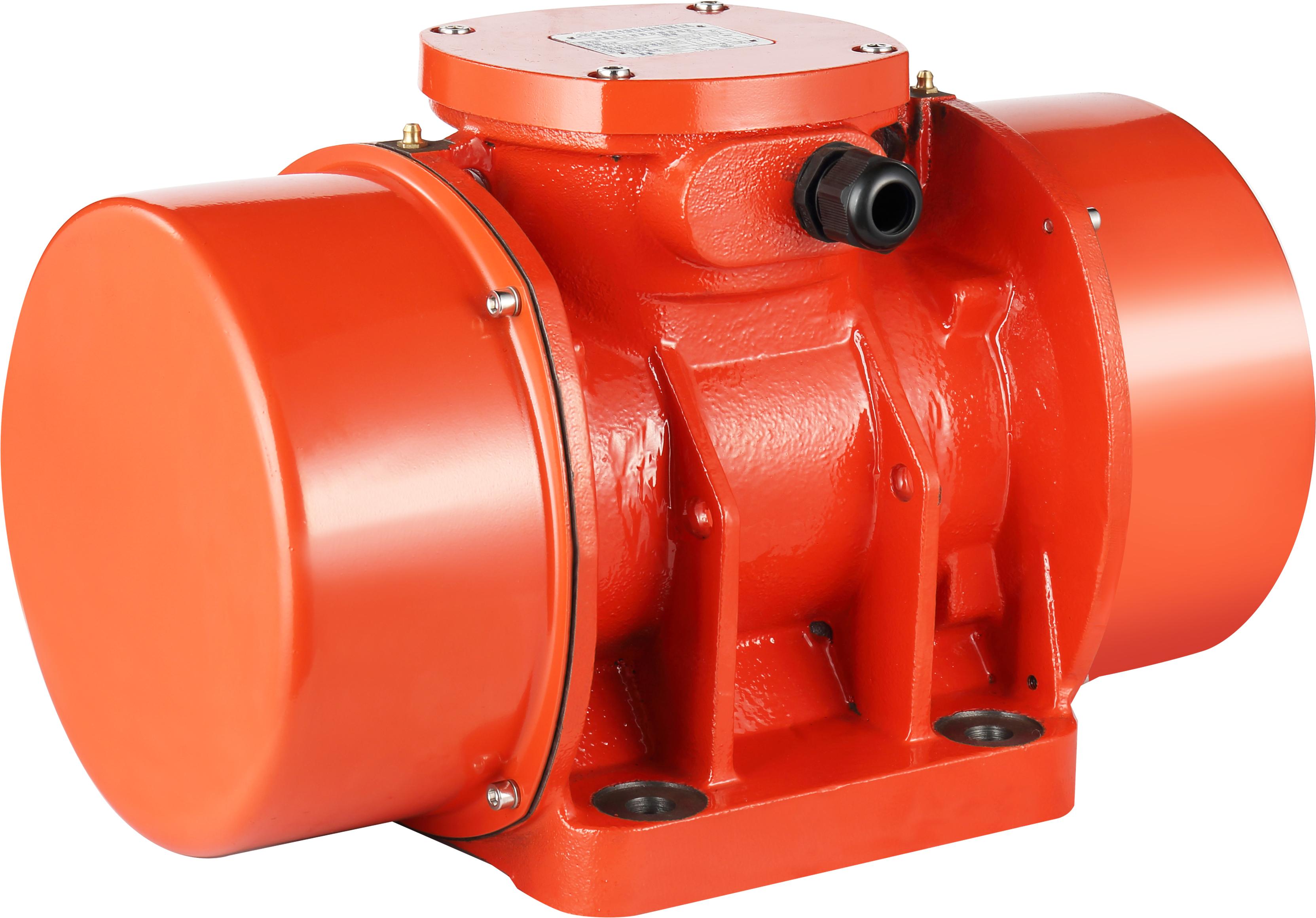
The number of poles in an electric motor directly sets its synchronous speed, which in turn dictates the achievable feed rate for your machinery. A motor with fewer poles spins faster at a given frequency, so if your process demands a rapid feed, you'd lean toward a 2-pole or 4-pole design. On the other hand, more poles reduce the base speed but boost torque, which suits applications where you need a slower, steadier feed without straining the drive.
It's tempting to just pick a high-speed motor and use a gearbox to dial in the feed, but that approach often adds cost, noise, and maintenance headaches. Matching the pole count to your target feed range from the start keeps the drivetrain simpler. For example, a conveyor running at 10 meters per minute might perform best with a 6-pole motor paired with a modest reduction, whereas a precision positioning table that rarely exceeds 0.5 meters per minute could benefit from an 8-pole or even 10-pole motor to avoid excessive gear reduction.
Feed rate isn't the only factor, of course. You also need to consider the torque required at that speed, the duty cycle, and how much speed variation you can tolerate. But getting the pole count right is a foundational step. It narrows down your options, prevents oversized inverters, and keeps energy consumption in check—all without resorting to trial-and-error swaps on the factory floor.
Check How Chinese Suppliers Handle Heat and Dust in Real Conditions
Instead of relying on lab data alone, many Chinese suppliers now run accelerated heat and dust trials right on the factory floor. You'll see conveyor belts loaded with power tools being baked under infrared lamps while fine sand is blown across them for hours. Operators check for thermal shutdown, bearing wear, and seal leakage on the spot, not in a distant R&D center.
Some facilities in Guangdong and Zhejiang have built dedicated environmental chambers that can hit 55°C and inject talcum-fine dust at high velocity. The goal is simple: catch weak solder joints or clogged air intakes before a customer in Riyadh or Phoenix does. Technicians rotate units every 20 minutes and record failure times on a whiteboard—old-school but brutally effective.
A few export-focused suppliers even send sample batches to outdoor test racks in Xinjiang or Inner Mongolia, where summer heat and blowing grit are free and relentless. They bring back dusty units, tear them down, and post photos in the QC area so every worker sees what happens when a seal fails. It's not fancy, but it closes the gap between a spec sheet and a construction site.
Specify Voltage, Frequency, and Insulation Class Before You Quote
Voltage, frequency, and insulation class are not interchangeable details—they define the operational limits of the equipment you're pricing. A transformer rated for 480V at 60Hz with Class F insulation will behave differently under load than one built for 400V at 50Hz with Class H, even if they look identical in a catalog. Skipping these specifications early means risking a quote that's either technically invalid or dangerously under-rated for the site conditions.
When you're gathering data for a quotation, treat these three values as a matched set. Voltage determines the winding ratio and core design; frequency affects losses and cooling requirements; insulation class dictates allowable temperature rise and expected service life. For example, a motor specified for 230/460V dual-voltage operation needs both frequency and insulation class confirmed before you can select the correct overload protection or recommend a variable frequency drive. Without that, your quote might assume a standard that the customer never intended.
The practical habit is simple: put voltage, frequency, and insulation class on the first line of every request for quote. If the customer doesn't know the insulation class, ask for the ambient temperature and duty cycle instead—these will point you to the right class. It's far cheaper to clarify now than to re-quote after the purchase order arrives with a different frequency or a higher ambient rating buried in the fine print.
Question the Trade-Off Between Cheap Units and Bearing Life
The assumption that a cheaper bearing unit automatically lowers total cost often falls apart once you account for how these parts actually fail. Budget housings tend to pair softer races with thinner seals, making them far more vulnerable to contamination and misalignment. Instead of saving money, you end up scheduling unexpected line stoppages, paying overtime for repairs, and possibly damaging surrounding equipment when a bearing lets go.
That said, there are situations where an inexpensive unit makes sense. If the machine runs only a few hours a month under light, steady load, you might never approach the fatigue limit of even a modest bearing. The problem is that many buyers treat published load ratings as gospel without checking whether those numbers reflect their own mounting conditions, temperature swings, or vibration levels. A cheap bearing that survives in a clean, low-speed test can fail quickly on a dusty production floor.
A more useful way to compare options is to estimate cost per operating hour over the expected service life. Ask the supplier for L10 life data at your actual load and speed, then factor in labor rates for replacement and the cost of downtime. In many cases, moving up to a mid-range or premium bearing adds only a small percentage to the machine cost but doubles or triples the service interval. The real trade-off isn't just unit price versus life span; it's whether the premium buys reliability where it matters, or whether you're overpaying for performance you'll never use.
Confirm Factory Testing and After-Sales Support Before You Commit
Too many buyers wait until after the deposit clears to ask how the machine was validated. A short call with the production manager can reveal whether the unit you're buying was run through full-load testing, calibrated against known samples, or simply assembled and boxed. Ask for the specific test parameters and the pass/fail thresholds. If they can't produce those numbers on demand, treat that as a red flag—not a minor paperwork delay.
After-sales support often gets promised in broad strokes: "we offer full technical assistance." But what does that actually mean when a drive fails at 2 a.m. or a spare part isn't in stock? Clarify the response time, whether remote diagnostics are included, the cost of replacement parts after the warranty window, and who exactly answers your call. A vendor with a dedicated service engineer will say so immediately; a vendor with a generic hotline will stall.
Don't settle for a verbal assurance. Ask for the support terms in writing, including escalation paths and realistic turnaround targets. If the factory has a track record of post-installation follow-ups, ask for examples. The goal isn't to interrogate your supplier—it's to make sure that once the machine arrives, you won't be left debugging it alone.
FAQ
Three phase motors deliver smoother torque and handle frequent starts better, which matters when you are shaking a hopper or screen all day. They also avoid the capacitor and centrifugal switch that often fail on single phase vibrators.
Start with the bulk density of your material and the total vibrating mass. Most Chinese suppliers list force in kN, so work out the required force as roughly 30-50% of the total weight for free-flowing powders and up to 100% for sticky or dense materials.
IP66 is the practical minimum for heavy dust and IP67 or IP69K makes sense if the area gets hosed down. Don't accept IP55 just because the price is lower - fine powder will eventually chew through the seals.
Ask for the type test report, insulation resistance test, and vibration amplitude curve for your exact model. CE or ISO9001 alone tells you little about motor quality; a legitimate factory will share its own QC data without hesitation.
Request a sample and check the winding resistance balance across all three phases - it should be within 2%. Also look for Class H insulation and ask for a surge test report to catch weak turn-to-turn insulation.
Always specify the frequency your plant actually runs on. A 50Hz motor run at 60Hz spins faster and pulls more current, which can burn windings or throw off the force output. If your site uses 60Hz, make that a line item in the purchase order.
For a non-stock voltage like 575V or a special mounting flange, expect 25-35 days from deposit. Standard 380V/50Hz models usually ship in 7-10 days, but custom windings add at least two weeks because the stator is wound to order.
Conclusion
Buyers sourcing three phase vibration motors from China should start by measuring the real load instead of trusting catalogue numbers. A motor that looks powerful on paper may be underloaded or overstressed once installed on a feeder, screen, or hopper. Match the excitation force to the actual material weight and flow behaviour, then choose the pole count based on the feed rate you need—two-pole units run faster with smaller amplitude, while four or six-pole designs deliver slower, deeper strokes. Equally important is how the supplier handles heat and dust in real working conditions. Ask for winding temperature rise data, bearing sealing details, and examples from similar dusty or high-vibration environments, because a motor that survives a clean test bench can fail quickly on a foundry floor or quarry.
Before requesting quotes, specify the exact voltage, frequency, and insulation class, since many Chinese factories default to 380V/50Hz Class F unless told otherwise. Also question the trade-off between low price and bearing life. Cheap units often use smaller bearings or lighter housings, which raises replacement costs long before the motor pays for itself. Finally, confirm what factory testing is actually performed—rotor balancing, no-load current, vibration limits—and how after-sales support works for warranty claims or spare parts. A supplier that can show test reports and a clear response path is worth more than a few dollars saved on the initial order.
Contact Us
Contact Person: ZHUO
Email: [email protected]
Tel/WhatsApp: 86-576-86320988
Website: https://www.cnguangling.com