

Coordinate Measuring Machine Supplier: What Should You Ask Before Committing?
2026-11-21
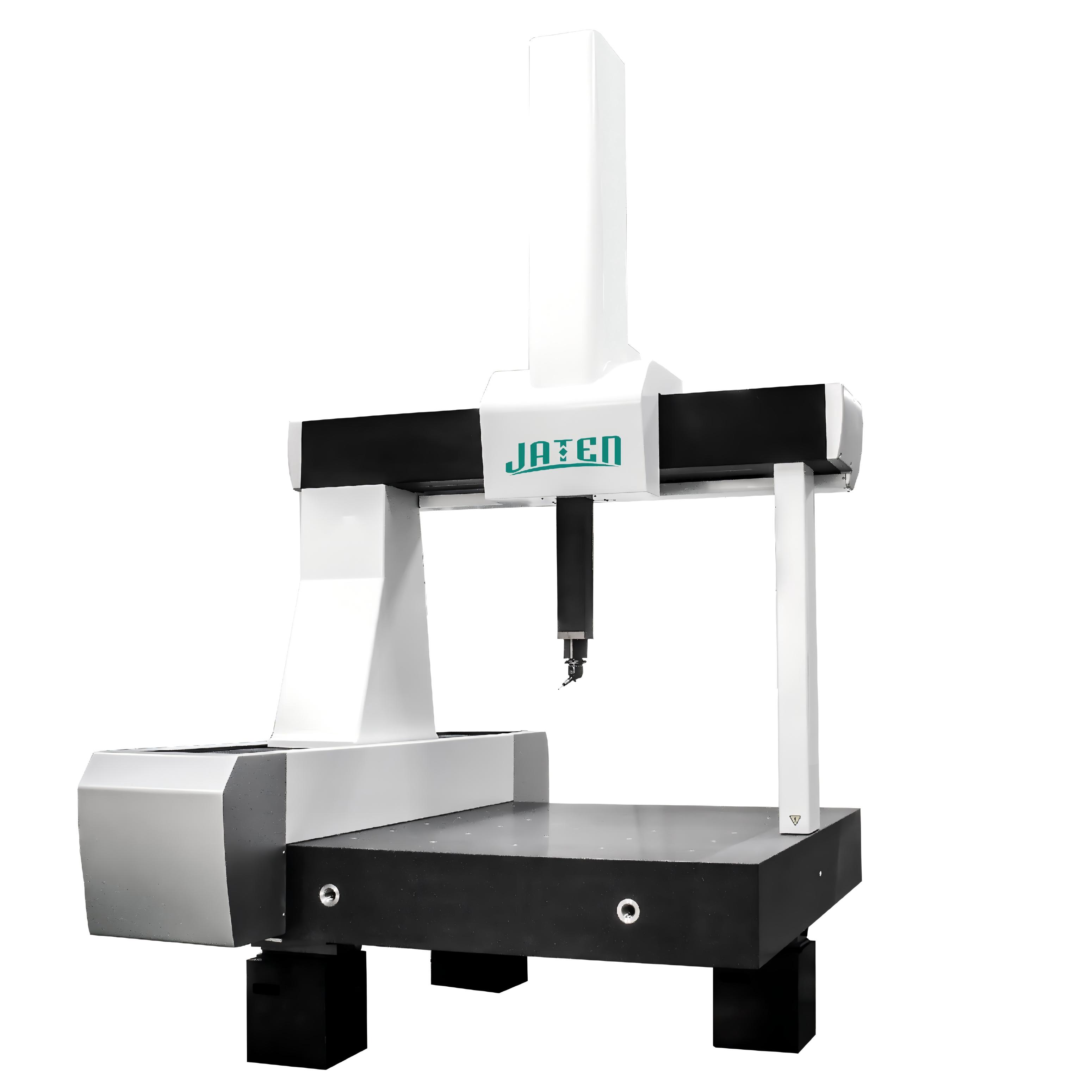
A coordinate measuring machine is a long-term investment, but the supplier’s answers often matter more than the spec sheet. Accuracy, uptime, support, calibration, and software fit can all look identical in a proposal—until the machine is on your floor. Before you commit, you need questions that reveal the difference between a vendor and a partner. At JATEN, we’d rather hear the hard ones early.
Prove accuracy on the part your current system can't measure
Accuracy isn't about pretending the blind spots don't exist. The more honest move is to isolate the thing your current setup can't score automatically and build a separate check for it. If tone, intent, or edge-case logic fall outside the model's range, pull a small sample and have someone review it against a fixed rubric. That gives you a number for the part of the work that usually stays invisible.
One practical method is to treat the unmeasured slice as its own evaluation set. Keep a running log of cases where the automated system returns low confidence or skips a judgment, then score those cases by hand at regular intervals. Track how often the manual result contradicts the system's surrounding output. Over time, that disagreement rate becomes the accuracy signal you couldn't get directly.
You don't need full coverage to earn trust. You need a clear boundary around what is and isn't verified, and a repeatable way to shrink that boundary. When someone asks how good the system is, point to the measured parts with confidence and describe the unchecked portion with an actual error range. That beats a blanket accuracy claim that quietly ignores the gap.
What happens when the line goes down at midnight?
Midnight outages rarely feel accidental. In plenty of networks, that is the exact moment maintenance windows open, backup jobs start, or old session records get purged. If the line drops without notice, the first thing to check is whether the router is still trying to negotiate with a distant server that has already gone quiet. Lights keep blinking, packets queue up, and nothing useful reaches the other side.
On the customer side, it can look like a billing fault or a physical cut, but the timing often points to an automated process. Reconnection attempts may hammer the same dead path until a timeout forces a new route. Meanwhile local devices keep retrying in the background, burning through batteries and leaving logs full of half-open connections. A quick restart may not help if the far end is deliberately offline.
What changes by morning is usually not the cable but the schedule. The system that dropped the line might restore it once a sync job finishes, a certificate rotates, or an overnight audit completes. If the outage repeats at the same hour, that pattern matters more than any single error message.
Let your inspectors run the software before you commit
Reading a diff tells you what changed, but it rarely tells you whether the change actually works. Before a commit lands, have the person reviewing it pull the branch and run the software. A five-minute manual pass often catches broken startup sequences, missing migrations, or UI states that look fine on paper but fall apart in a browser.
This habit also shifts review from pure static analysis toward shared responsibility for runtime behavior. If the inspector cannot get the feature running, that is not a reviewer being difficult; it is a signal that the commit is not ready. The rule does not need to be complicated: build it, run it, click through the affected flow, then approve.
Teams that adopt this usually stop merging code that only works in theory. The overhead is small compared to debugging a broken main branch later, and it naturally improves setup documentation because every inspector becomes a fresh pair of eyes on the local run path.
Training that survives after the vendor walks out the door
Most vendor-led training collapses the moment the contract ends because it treats your team as spectators rather than builders. The sessions are polished, the slides are crisp, and the follow-up folder is full of PDFs nobody opens twice. What actually sticks is the messy, repeated practice of making mistakes in a low-stakes environment, then fixing them without a safety net. If your staff only knows how to follow a scripted workflow, they don’t own the skill—they rent it.
A more durable approach shifts the focus from tool mechanics to problem-solving habits. Instead of memorizing which button to click, people learn to ask what the system is supposed to accomplish and how to recover when something breaks. Document your internal workarounds, record short walkthroughs in your own words, and rotate the person responsible for onboarding new hires. That way the knowledge stays distributed across the team instead of concentrated in one expert who might leave next quarter.
The real test is simple: six months after the vendor is gone, can a new employee get up to speed using only the materials and mentors inside your organization? If the answer is no, the training was never completed—it was just an event. Build your own reference library, schedule regular refresher sessions led by internal staff, and treat every support ticket as a chance to document one more edge case. What survives is not the vendor’s curriculum but the living, imperfect knowledge your team creates for itself.
References from shops making parts like yours
Shops that already make components similar to yours tend to talk about the work differently. Instead of listing equipment, they mention how a certain bore stayed round after clamping, why they switched from a three-jaw to a mandrel on a thin-walled part, or what happened when a batch of castings arrived a few thousandths oversize. Those details usually tell you more than a polished capability list.
A reference from a shop producing closely related parts is useful because the problems line up. They can describe holding a flatness callout across a plate that wanted to bow, or how they kept burrs out of a cross-hole that was already hard to reach. If they have dealt with the same material and the same lot-to-lot variation, the conversation quickly moves past general promises and into the realities of your part.
When you talk with these shops, ask what they would change if they ran the job again. A shop that has made parts like yours will usually have an answer without reaching for a script. That kind of honesty, coming from someone who has already faced your tolerances and your delivery pressure, is hard to fake.
Costs that won't appear in the first quote
The initial figure usually covers only what a contractor can see on the day of the walkthrough. You are not looking at line items for pulling permits, renting a waste bin, or paying disposal fees for the old cabinets and carpet that get hauled away. Those charges are real, but they tend to live in the second or third version of the estimate.
Some of the biggest surprises come from what hides inside the walls. Once a crew opens up a bathroom or kitchen, they may find corroded pipes, outdated wiring that no longer meets code, or framing that needs reinforcement. Fixing those issues adds materials and labor that no honest contractor can predict from a surface inspection.
Even visible choices can shift the price after the first quote. If the allowance for tile, counters, or lighting is set at a basic level, the moment you pick something heavier, handmade, or imported, the difference gets added back in. Ask for a written breakdown of what the quote assumes, so those later additions do not feel like they came from nowhere.
FAQ
Request a guaranteed uncertainty figure for your own temperature range, humidity swings, and typical floor vibration. A CMM that passes spec in a metrology lab may lose repeatability near heat treat, a roll-up door, or a forklift aisle. If the supplier hesitates to put that number in writing, treat the lab spec as a best-case scenario rather than a promise.
Ask for records tied to the exact serial number, not a brochure example. You want to know who performed the last full calibration, which reference standards were used, and whether any axes or probes needed adjustment. A supplier that can show a clear service trail is usually more reliable than one that only talks about how new or popular the model is.
Have them demonstrate a realistic part file from start to finish: importing a CAD model, aligning the part, reporting measurements, and exporting the data your team actually uses. Training should cover your operators at your location, not just a one-day generic class. Ask whether future software updates are included for a set period or billed separately.
Get a clear response time in writing, including whether service is handled by factory-trained employees or a local subcontractor. Ask how long typical parts take to arrive and whether critical spares are kept in your region. A lower purchase price matters little if every breakdown means a week of downtime waiting for a technician.
Do not rely on a standard demonstration block or a simple prismatic part. Bring a few parts that have tight tolerances, thin walls, or challenging datum features. Run them on the actual machine model you are considering and compare the results with your current inspection methods. This will reveal more about real capability than any datasheet.
Ask for a three-year cost breakdown: annual calibration, service contract, software maintenance, probes, air supply requirements, and typical power consumption. Some machines look affordable upfront but require a dedicated air dryer or temperature-controlled enclosure that was not included in the quote. Have the supplier list what is included and what is considered an extra.
Look beyond today's part mix. Ask whether the measuring volume can be extended, whether a rotary table or laser scanning head can be added later, and whether the software licenses allow extra seats without a full repurchase. A machine that perfectly fits current work may become a bottleneck if the next project has larger or more complex parts.
Ask for references in your industry or with a comparable shop environment, not just a generic list. Contact them and ask about uptime, repeatability after a few years, service quality, and what they wish they had known before buying. If a supplier is reluctant to connect you with current users, treat that as a warning sign.
Conclusion
Before signing with a coordinate measuring machine supplier, push for proof that goes beyond the demo room. Have them run a part your current system struggles with and show actual inspection data, not a polished brochure. If accuracy claims only hold up on simple geometries, that should raise questions. You also need a straight answer about support when things break at midnight. A vendor who cannot explain their emergency response path, spare parts availability, or remote diagnostics is handing you downtime risk, not a measurement solution.
Let the people who will use the software daily sit down with it before any commitment. If inspectors find it clunky or slow in the first twenty minutes, that friction will not disappear after training. Ask how training is built to stick: are there written guides, recorded sessions, and follow-ups, or does the knowledge leave with the installer? Talk to shops making parts like yours and ask what they wish they had known. Finally, dig into costs that the first quote hides such as calibration, air requirements, annual service, software licenses, and fixturing. The real price of a CMM is rarely the number on the purchase order, and a supplier who is open about those numbers is already easier to trust.
Contact Us
Contact Person: Volien
Email: [email protected]
Tel/WhatsApp: +86 18029161762
Website: https://www.jatentech.com/