

Crystal Velvet Printed Carpet: Which One Is Good?
2026-08-30
Picking the right crystal velvet printed carpet feels trickier than it should—some look plush but flatten within weeks, others fade after one wash. So which one actually holds up? Before you click “buy,” let’s cut through the noise. At Senseco, we’ve tested enough options to know what separates a standout from a letdown.
Why Some Crystal Velvet Carpets Feel Almost Weightless
The secret lies in the fiber itself. Crystal velvet carpets are often made from ultra-fine polyester or microfiber strands that are far lighter than traditional wool or cotton. Each filament is hollow or textured to trap air, creating a plush feel without the mass. When you lift one, the low-density pile and airy structure mean there's simply less material per square foot, so the weight seems almost negligible.
Another factor is the backing. Many lightweight crystal velvet rugs use a thin, flexible latex or woven synthetic base instead of heavy jute or rubber. This reduces overall weight dramatically while still keeping the carpet flat and stable. The combination of a slim backing and air-rich surface fibers makes the entire piece easier to fold, carry, or even drape over furniture without strain.
Finally, the construction method plays a role. Instead of dense, tightly packed loops, crystal velvet often features a looser, high-pile weave with more space between tufts. That open structure allows the carpet to feel fluffy and soft, yet because there are fewer yarns per inch, the total weight stays low. It's a deliberate balance of loft and lightness that modern manufacturing has perfected.
Print Sharpness: The First Tell of a Good Carpet
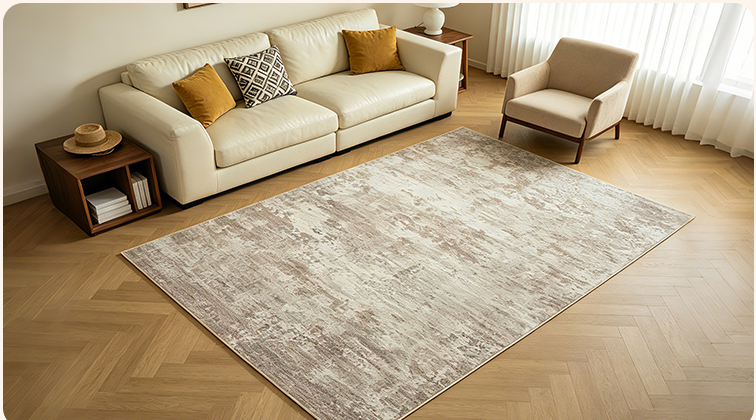
Walk up to any carpet and your eye will land on the pattern before anything else. If the lines look soft or blurry, that's a warning sign. Sharp, crisp edges mean the yarns were tensioned properly and the loom was dialed in. It's the kind of detail you can't fake with a thick pile.
Think of it like focusing a camera lens. A carpet with poor print sharpness never quite comes into focus, no matter how far you back up. On a well-made piece, every motif stands out cleanly against the background, with no bleeding or fuzziness along the borders. This clarity comes from using high-twist yarns and keeping the weave density consistent.
Fiber Density Clues You Can Spot Before Buying
Run your fingers against the nap and watch how quickly it springs back. In denser fabrics, individual fibers are packed tightly enough that they resist easy separation, and the surface feels almost uniformly firm rather than fluffy or airy. If you can press down and see the backing through the strands, that’s usually a sign the manufacturer stretched the material too thin.
Flip the item over and inspect the weave or tufting pattern from the underside. With higher fiber density, rows sit close together and the knots or loops look compact, not spaced out with gaps you could poke a fingertip through. A quick pinch test also helps: grab a small section and rub it between your thumb and forefinger. Sparse construction will feel thin and may even reveal the base fabric after a few passes.
Finally, compare weight and thickness in your hands. Dense fiber usually adds noticeable heft without relying on thick individual strands—many thin, tightly packed fibers can outperform a few bulky ones. Hold two similar items side by side; the one with better density often looks slightly flatter at the surface but feels more substantial when folded or draped.
Making Bold Patterns Work in Small Rooms
A common fear with bold patterns is that they’ll swallow a compact space, but the opposite often happens when you commit to one dominant motif. Choose a large-scale print in two or three closely related tones rather than a riot of colors. In a small bedroom, a single wall of oversized florals or geometrics gives the eye a clear focal point, and the room feels curated instead of cramped.
Scale matters more than square footage. Pair a loud wallpaper or upholstery with plenty of negative space—think bare floors, simple window coverings, and furniture in solid, muted finishes. This contrast lets the pattern breathe and keeps the room from turning into a funhouse. If you’re nervous, start small: an accent chair, a headboard, or even the inside of a bookshelf can carry the pattern without dominating every inch.
Lighting changes everything. A bold pattern in a dim hallway or powder room can feel heavier than intended, so add warm, dimmable fixtures or position a mirror across from the patterned wall to bounce light and visually push the walls outward. When the pattern is well lit, the small room stops feeling like a compromise and starts feeling like a deliberate design choice.
The Underside Tells You More Than the Top
A polished surface rarely concedes its history. Turn it over, though, and the underside becomes a quiet confession: the rough plane of a drawer bottom never meant for display, the stray thread anchored beneath a collar, the uneven grain hidden under a tabletop. These are not flaws in the usual sense. They are the residue of decisions made when no one was watching, and they often reveal more about the maker’s patience than the visible face ever could.
The same principle holds far beyond wood and cloth. Pay attention to what a person or system tries to keep out of view—the footnotes, the back channels, the patches stitched behind the curtain—and you’ll find the actual logic holding the whole thing together. The top tells you what it wants to be. The underside tells you what it had to become.
Washing Without Fading: What Actually Works
The first step to keeping dark denim and bright tees from fading is to stop overwashing them. Most clothes don't need a full cycle after every wear unless they're visibly soiled or smell. When you do wash, turn everything inside out so the friction from the drum hits the inner seams rather than the outer dye. Cold water is non-negotiable; hot water opens up fibers and lets dye escape much faster.
A mild, dye-free liquid detergent works better than powders, which can leave abrasive residue on fabric. Skip the fabric softener and dryer sheets entirely—they coat fibers and can actually dull colors over time. If you're dealing with new items that bleed a lot, add half a cup of white vinegar to the rinse cycle. It won't leave a smell, but it helps set loose dye and remove detergent buildup.
Drying is where most fading accelerates. High heat is brutal on color, so either line dry in the shade or use the lowest tumble setting. If you must use a dryer, take clothes out while they're still slightly damp and hang them to finish. Sunlight might feel natural, but direct UV exposure will bleach fabric faster than almost anything else.
FAQ
Crystal velvet is a soft, dense pile fabric with a subtle sheen that makes printed patterns look sharper and richer. It also feels plush underfoot, so it works well in bedrooms and living areas where you want comfort without going for a shaggy look.
Look for carpets that use heat-transfer printing instead of basic surface printing. The dye penetrates deeper into the fibers, so colors resist fading and don't crack easily when the rug is folded or vacuumed. A quick rub test with a damp cloth can also reveal if the ink bleeds.
Not really. The density of the pile and the quality of the velvet fiber change the feel a lot. A higher stitch count gives a smoother, more luxurious texture, while cheaper versions might feel thin or develop flat spots quickly in busy areas.
It can be, if you pick one with a short, tight pile and a non-slip backing. The smooth surface makes it easier to wipe up spills, and pet hair doesn't get tangled as easily as in loop piles. Just avoid very plush versions if you expect heavy claw traffic, since those can snag.
That depends on the room. Large rectangular rugs anchor a seating area well, while round ones soften corners in small spaces or under dining tables. If the print has a bold centered motif, make sure the size lets the full pattern show rather than hiding it under furniture.
Regular vacuuming with a brushless suction head keeps dust from dulling the sheen. For stains, blot with a mild soap solution and cold water, then air dry flat. Avoid hot water and harsh scrub brushes because they can distort the velvet fibers and fade the printed pattern.
Mid-range options usually offer the best balance between softness and print clarity, often costing more than basic polyester rugs but less than wool. If a price seems too low for a large size, the pile is probably thin and the print may wear off within a year.
Conclusion
A good crystal velvet printed carpet rarely feels flimsy in your hands. The ones that seem almost weightless often skip on the dense fiber pile that gives these carpets their plush, light-catching texture. Before you buy, press your palm into the surface and watch how quickly it springs back: slower recovery usually points to lower fiber density, which also dulls print sharpness. Crisp, clean lines in the pattern are a non-negotiable sign of quality, because blurry edges mean the printing process was rushed or the pile too thin to hold fine detail. If you're working with a smaller room, don't shy away from bold motifs—just anchor them with a simpler border or choose a scaled-down version so the room feels curated rather than crowded.
Flip the carpet over before deciding. A tightly woven, even backing with no loose threads or glue patches tells you the manufacturer cared about more than just the face. The underside often reveals fiber density better than the top: sparse backing holes or visible mesh are red flags. When it comes to cleaning, ignore harsh bleach and hot water. Cold water, a mild detergent, and a gentle hand wash or delicate machine cycle keep the crystal velvet's sheen and printed colors from fading. Air dry flat, and you'll get years of vivid pattern instead of a washed-out rug that looks tired after three washes.
Contact Us
Contact Person: Ivy Yin
Email: [email protected]
Tel/WhatsApp: +86 18519681805
Website: https://www.sensecomarketing.com/