

Custom Karate Shin Guards: Your Ultimate Guide to Protection and Comfort
2026-08-16
You step into the dojo, ready to drill your best combinations—but halfway through, your shin guards slip, rub, or shift just enough to break your focus. Standard sizes rarely match the unique curve of your legs, and every adjustment costs you a second of reaction time. Custom karate shin guards solve this, but not all custom gear is created equal. This guide cuts through the noise to show what truly matters for protection and comfort, and why PandaWin Sports has become the go-to for fighters who refuse to settle for 'good enough'.
The Real Reason Standard Shin Guards Can't Keep Up
Standard shin guards are built around a shape that few legs actually match. The hard shell sits over the tibia, but it rarely follows the curve of the muscle and bone, so the guard ends up floating or pressing at odd angles. Once a player sprints, cuts, or slides, that mismatch gets worse. The guard shifts up, drops down, or twists sideways, and the athlete is left adjusting it mid-play instead of staying locked in.
The bigger issue is that these guards were never designed for the way the modern game actually delivers impact. A traditional plastic shell absorbs blunt force in a straight line, but real collisions arrive with rotation, shear, and follow-through. That means energy gets passed into the leg instead of being dissipated by the guard. Add in straps that lose tension and sleeves that stretch out after a few washes, and you have a piece of equipment that looks protective but stops working when it matters most.
Measuring Your Legs for a Glove-Like Fit
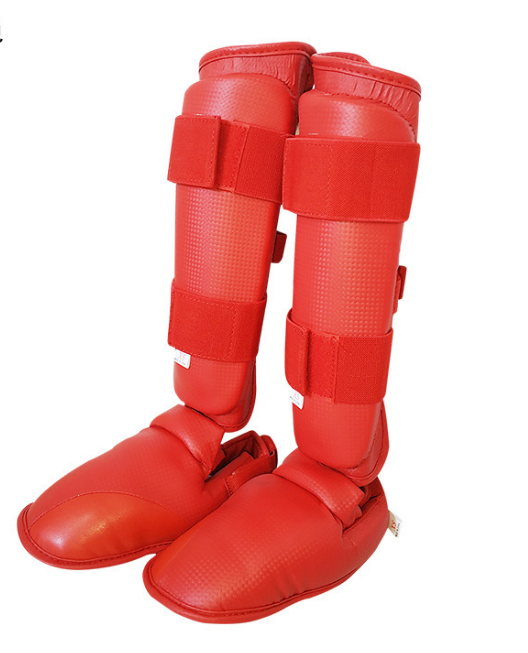
Getting a truly glove-like fit starts with forgetting the idea that your usual size is enough. Fabric behaves differently across brands, and your legs change throughout the day due to fluid shifts and muscle engagement. Instead of relying on a single number, take three separate measurements at the ankle, the fullest part of the calf, and just below the knee. Keep the tape snug but not tight, and always measure over bare skin or the thinnest layer you plan to wear.
Stand with your weight evenly distributed and have someone else do the measuring if possible. Bend your knee slightly when measuring the calf to capture the muscle at its working circumference—this prevents that pinching feeling when you move. Write down each number immediately; guessing later almost always leads to a fit that's either too loose at the ankle or too restrictive up top.
If one leg measures larger than the other, which is surprisingly common, build the fit around the larger leg. Most makers can taper the other side, but adding extra room after the fact is far harder. A glove-like fit isn't about squeezing—it's about matching your contours closely enough that the material moves with you instead of fighting against you.
Foam, Leather, or Both: Choosing Materials That Work
Foam gets a bad rap for feeling cheap, but the right density and contouring can make it the unsung hero of long sessions. Leather looks sharp, yet it turns into a sweaty, slippery mess in the wrong climate. The real question isn't which one wins—it's what your body actually does while you sit, and whether the material helps you forget the chair is there at all.
Start by mapping your daily rhythm. Are you planted for eight hours, shifting rarely, or do you roll between tasks, leaning forward and twisting? Foam with a slow recovery cradles static postures, while firmer grades support constant movement without feeling like a trampoline. Leather, on the other hand, demands a controlled environment: cool air, low humidity, and a tolerance for that first crisp touch before it warms up. Pair it with ventilation or perforation and it stops fighting you.
Mixing both often works better than committing to one. A leather seat face with foam bolsters gives you edge durability and easy wipe-downs, while keeping pressure points off the seams. Or go all-foam on the backrest where breathability matters more than looks. The trick is to ignore trends and test materials against your own fidgeting, temperature swings, and cleaning habits—because a material only works when it stops being the thing you notice.
Padding Density: Finding the Sweet Spot Between Impact and Mobility
Padding density is rarely a one-number answer. Cram too much foam into a midsole and you get a marshmallow that swallows every landing but kills any sense of ground feel. Go too thin and your joints start filing complaints after the first mile. The real work happens in that middle zone, where the material compresses just enough to take the sting out of impact without turning every step into a balancing act.
What often gets overlooked is how density interacts with movement patterns. A heel striker needs a different distribution than someone who lands midfoot, even if the overall stack height looks similar. That's why some brands tweak density in small zones rather than across the whole platform. The goal isn't maximum cushioning or maximum responsiveness—it's the highest amount of both that still lets your foot behave naturally.
Finding that balance takes more than lab numbers. Real-world testing on uneven pavement, sudden stops, and long descents usually reveals what a pressure plate can't. When the density is right, you stop noticing the padding entirely. That invisibility is the sweet spot, and it's different for every runner.
Strap Systems That Won't Slip Mid-Kata
There’s a particular frustration that comes with adjusting a loose strap right as you’re moving through a sequence—your focus splits, your form falters, and the rhythm of the kata breaks. The best strap systems for kata training rely on low-profile, dual-adjustment designs that distribute tension evenly across the fabric instead of cinching at a single point. Look for wide, lightly padded straps that sit flat against the body and close with a locking buckle or a hook-and-loop panel cut on the bias, which resists the twisting forces of rapid turns and deep stances.
Another detail that matters more than it seems is the backing material. A strap lined with a fine silicone print or a dense, brushed mesh will grip the uniform without creating friction burns or catching on loose threads. Some practitioners also cross the straps in an X pattern across the back before securing them at the waist; this small adjustment shifts the load away from the shoulders and keeps everything from riding up during the final move of a kata. It’s not about tightening harder—it’s about letting the strap work with your movement instead of against it.
Maintenance Habits to Keep Custom Guards Feeling New
Most people think a quick rinse under tap water is enough, but that only removes surface grit. Instead, soak your custom guard in cool water with a drop of mild dish soap for about ten minutes, then use a soft-bristle toothbrush to gently scrub along the edges and deep grooves where plaque likes to hide. Avoid hot water entirely—it can warp the material and ruin the snug fit you paid for.
After cleaning, skip the towel and let it air dry on a clean, flat surface. Storing it while still damp invites bacteria and a sour smell that never really goes away. If you carry it in a case, make sure the case has ventilation holes and gets wiped out weekly. A surprising trick is to place a small silica gel packet inside the case, but keep it away from the guard itself to absorb residual moisture.
Every couple of weeks, give your guard a deeper refresh by soaking it in a mixture of equal parts white vinegar and cool water for twenty minutes. This breaks down mineral buildup and brightens the material without harsh chemicals. After soaking, brush it lightly again and rinse well. If you notice any rough spots or a change in transparency, that's your cue to replace it rather than trying to scrub it back to life.
FAQ
Custom guards are built around your leg's exact contours, so you don't get the slipping or tight spots that come with generic sizes. The padding sits where you actually take hits, and the straps follow your movement instead of fighting it.
Grab a flexible tape measure and take three key numbers: the circumference around the thickest part of your calf, the length from just below the knee to the top of your ankle, and the width across your shin bone. Send those along with any notes about previous fit issues, and a good maker will adjust the pattern accordingly.
Full-grain leather or heavy-duty synthetic leather are the top choices for the outer shell because they resist cracking. Inside, look for closed-cell foam like EVA or Poron that absorbs impact without packing down. Avoid anything with open-cell foam if you train more than twice a week.
Yes, and it's usually the little details that make the difference. A custom maker can position the ankle padding lower, add a breathable mesh panel behind the knee, or use a neoprene sleeve that doesn't chafe. Those tweaks keep you focused on technique instead of adjusting gear between rounds.
If you've struggled with fit, irritation, or guards shifting during kicks, the extra money pays for itself quickly. Standard sizes are built for average legs, and most people aren't average. Custom guards last longer because they're worn correctly from day one, so you replace them less often.
Ask how they handle revisions if the first fit isn't perfect, what foam density they use for your training style, and whether they can add grip lines on the inside to stop sliding. A transparent maker will explain their padding layers and give you a clear timeline.
After each session, wipe them down with a damp cloth and let them air dry out of direct sunlight. Never leave them in a gym bag overnight. Once a month, condition the leather or synthetic shell lightly, and check the straps for fraying before it becomes a tear.
Conclusion
Most off-the-shelf shin guards fail because they treat leg shapes as an average, leaving gaps around the ankle or squeezing the calf mid-kata. A proper custom fit starts with measuring not just length but the circumference at three points—ankle, mid-calf, and just below the knee—along with noting any asymmetries between legs. This data lets the maker contour the guard so it moves with your shin rather than against it. Materials matter just as much: a full-grain leather shell resists abrasion from repeated floor contact, while a closed-cell foam liner disperses impact without breaking down after a few sparring sessions. The trick is pairing the right foam density with the leather thickness so the guard never feels like a bulky brace.
Padding density is where many custom guards go wrong. Too soft and a hard roundhouse leaves bruises; too firm and you lose the ankle flexion needed for deep stances. Aim for a mid-density foam around 60–70 shore C in the strike zone, tapering to a softer layer near the edges for comfort. Strap systems should use wide, low-profile hook-and-loop closures that cross diagonally over the calf—this distributes tension and stops the guard from rotating during rapid direction changes. To keep custom guards feeling new, wipe them down after each session with a damp cloth, avoid direct sunlight when drying, and check the stitching around the straps monthly. A little care extends the life far beyond what standard gear offers.
Contact Us
Contact Person: Fei Xu
Email: [email protected]
Tel/WhatsApp: +8618631245578
Website: https://www.pandawinsports.com/