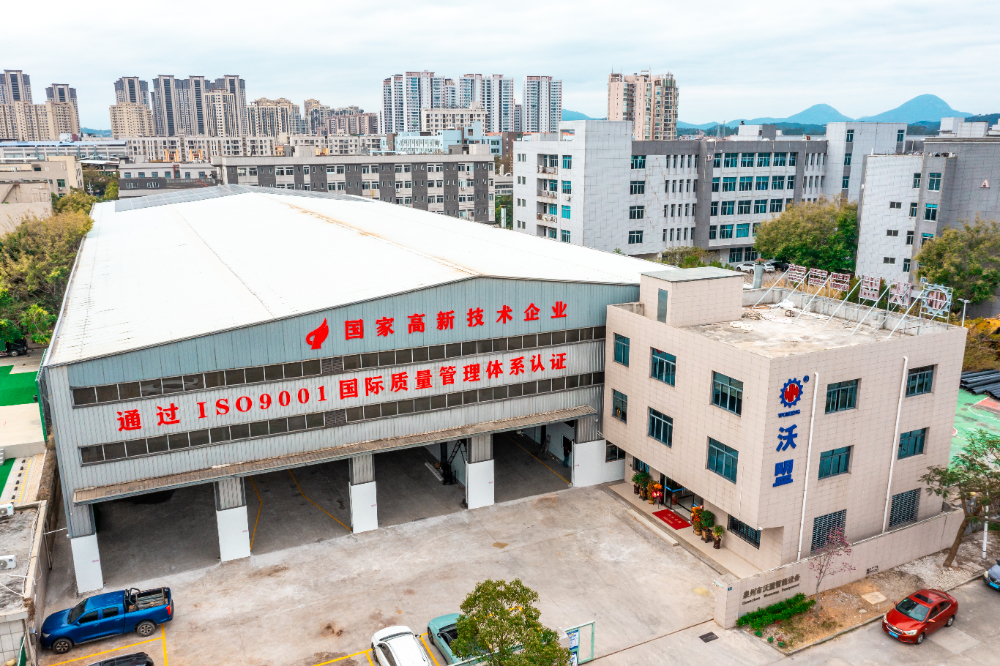

Diaper Machinery in China: Unveiling the Future of Hygienic Production
2026-05-06
In a world where hygiene and efficiency converge, China's diaper machinery industry is undergoing a quiet revolution. From high-speed production lines to smart automation, the sector is redefining what it means to produce hygienic products at scale. At the heart of this transformation lies Womeng, a brand that embodies precision and innovation. But what does the future hold for this rapidly evolving sector? Join us as we explore the trends, challenges, and breakthroughs that are shaping tomorrow's diaper production—and how Womeng is leading the charge.
Beyond Automation: Cognitive Factories for Diaper Lines
Beyond automating repetitive tasks, cognitive factories integrate adaptive intelligence directly into diaper production lines. These systems learn from real-time sensor data to adjust material tension, adhesive application, or folding precision without human intervention. The result is fewer defects and faster changeovers between different diaper sizes or designs.
Instead of rigid programming, cognitive factories employ digital twins and predictive analytics to anticipate maintenance needs and raw material shortages. Machine vision paired with deep learning instantly detects microscopic flaws in absorbent layers or leg cuffs, rejecting faulty units before they reach packaging. This shift transforms the line from a mechanical process into a self-aware production ecosystem.
Workers on cognitive lines shift from manual oversight to strategic roles, interpreting analytics dashboards and training models rather than reacting to alarms. The factory continuously evolves, refining its own parameters through reinforcement learning to hit sustainability targets like reducing waste or energy use. This isn’t just automation; it’s a leap toward resilient, self-improving manufacturing.
Green Chemistry Meets Machinery: Eco-Friendly Absorbents
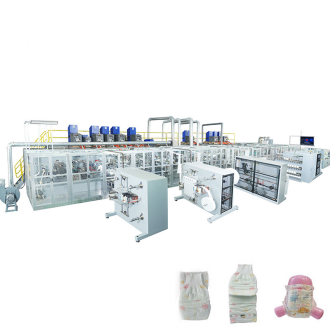
The convergence of green chemistry principles with advanced machinery is redefining how we produce absorbent materials. Traditionally, absorbents relied on synthetic polymers or resource-intensive processing, but new approaches integrate renewable feedstocks and energy-efficient manufacturing. For instance, cellulose-based fibers derived from agricultural waste can be mechanically refined and chemically modified using solvent-free reactions, drastically cutting down on toxic byproducts. The machinery itself plays a crucial role—high-precision extruders and ultrasonic reactors enable controlled functionalization at lower temperatures, preserving the material’s structural integrity while minimizing energy consumption. This synergy not only reduces the environmental footprint but also results in absorbents that are biodegradable and safer for both users and ecosystems.
Mechanical innovation goes hand in hand with chemical ingenuity. Modern equipment like supercritical CO2 dryers and reactive extrusion systems allows chemists to create porous networks without volatile organic compounds. Imagine a production line where plant-based polymers are foamed using water vapor and mechanical shear, yielding lightweight absorbent structures that rival synthetic sponges. By tuning process parameters—such as screw speed or nozzle design—manufacturers can dial in properties like absorption rate and reusability. This fine-grained control, inspired by biological systems, transforms bulky feedstock into high-performance materials with minimal waste, effectively closing the loop in material design.
Perhaps the most compelling advance lies in the machines themselves being designed with circularity in mind. Continuous-flow reactors now combine extraction, modification, and shaping in a single, compact unit that recovers solvents and recycles heat. For instance, a single apparatus can take raw chitosan from shrimp shells, deacetylate it mechanically, and spin it into nanofibers that capture oil spills—all without harsh alkalis. Such integrated systems not only shrink factory footprints but also enable local production using regionally available biomass. The result is a new class of absorbents that are as gentle on the environment as they are tough on spills, embodying a philosophy where the cleaner the process, the cleaner the product.
Engineering the Next-Gen Core: Speed and Precision
The next-generation core shatters old performance ceilings by rethinking instruction pipelining from the ground up. Wider decode stages and a deeply reordered execution engine allow it to churn through more instructions per clock cycle without burning extra power. Branch prediction has been tightened to a near-clairvoyant level, feeding the execution units with a steady stream of valid work instead of stalling on mispredictions. The result is a snappy, responsive feel that scales from lightweight mobile tasks to heavy number-crunching.
Precision isn't just about raw throughput—it's about delivering results exactly when and where they're needed. The new core integrates a redesigned cache hierarchy that slashes latency on critical data paths, ensuring the execution engine rarely waits idle. Enhanced prefetching algorithms learn memory access patterns on the fly, hiding the gap between processor and memory speeds. Fine-grained clock gating and power management keep the pipeline laser-focused, avoiding the timing jitter that can blur the line between precise computation and almost-right answers.
What truly sets this core apart is how speed and precision reinforce each other. The same optimizations that reduce instruction latency also shrink the window for speculative errors, tightening the feedback loop between prediction and correction. Tightly coupled hardware monitors continuously tune the pipeline in real time, adapting to workload shifts without software intervention. This harmony means you get a core that not only races through benchmarks but also maintains unwavering accuracy under real-world, chaotic conditions.
Tailor-Made Lines: The Shift to Flexible Production
Manufacturing is moving away from rigid assembly lines toward production systems that can adapt in real time. Instead of retooling entire plants for a single product, factories now use modular machinery and reprogrammable robots to switch between product variants with minimal downtime. This shift allows manufacturers to respond quickly to market trends without sacrificing efficiency.
Advances in digital controls and sensor technology underpin this flexibility. Machine learning algorithms predict maintenance needs while adjustable jigs and fixtures reduce changeover times. Workers collaborate with cobots that handle repetitive tasks, freeing them to oversee custom adjustments. The result is a production environment where personalization doesn’t compromise speed.
For businesses, the benefits extend beyond operational agility. Short-run capabilities mean companies can test niche products without massive inventory risk. Customer-specific modifications become feasible without exponential cost increases, fostering stronger client relationships. As supply chains grow more unpredictable, the ability to pivot production priorities on the same line has become a strategic advantage.
Eyes on the Line: How Vision Systems Ensure Perfection
Picture a production line where thousands of components stream past each minute. Human eyes tire, attention wanders, and minor defects slip through. Now imagine that same line watched over by cameras and algorithms that never blink. Vision systems catch flaws invisible to the naked eye—microscopic cracks, subtle color variations, or misalignments thinner than a hair. They work at speeds that would blur human perception, transforming quality control from a bottleneck into a seamless, relentless guardian of consistency.
What makes these systems truly remarkable is their adaptability. Through machine learning, they aren't just programmed with rigid rules—they learn from experience. A bakery's vision system can remember the exact golden-brown hue of a perfect croissant, adjusting for seasonal flour variations. In electronics, they differentiate between harmless dust specks and critical soldering defects, reducing false rejections. This intelligence evolves with every batch, turning the line into a self-improving ecosystem where perfection isn't a target but a habit.
Beyond inspection, these eyes-on-the-line weave a fabric of traceability. Every product that passes through carries a digital fingerprint—a record of when it was made, which materials were used, and how it measured against the ideal. When a anomaly appears, engineers don't just fix one unit; they trace back to the exact moment and condition that caused it, preventing a trickle of errors from becoming a flood. It's not just about catching mistakes; it's about understanding them so deeply that they never happen twice.
End-to-End Excellence: Streamlined Diaper Manufacturing
Achieving seamless diaper production demands more than just assembling components—it calls for a synchronized process where every stage, from raw material intake to final packaging, operates in harmony. By refining each step, manufacturers eliminate bottlenecks that otherwise lead to waste and downtime, crafting a workflow where absorbent cores, elastic strands, and soft topsheets converge without interruption.
Real-time monitoring plays a quiet but crucial role, feeding back data that lets lines self-adjust on the fly. Slight variations in material tension or adhesive application are caught before they escalate, ensuring consistent product integrity run after run. This vigilance transforms what could be a reactive scramble into a steady, predictive rhythm, reducing scrap and rework while keeping output volumes high.
Ultimately, streamlined manufacturing isn’t about cutting corners—it’s about building intelligence into the process so that complexity becomes invisible. Operators spend less time troubleshooting and more time optimizing, while the end product meets exacting standards for comfort, absorbency, and fit. The result is a production line that feels less like a machine and more like a cohesive system, delivering reliable quality without the usual friction.
FAQ
A combination of robust domestic demand, strong government support for advanced manufacturing, and intense market competition is pushing Chinese firms to constantly refine their technology. Many companies now invest heavily in R&D to create faster, more reliable equipment that meets both local and international standards.
Producers are integrating closed-loop systems that minimize human contact with materials, along with real-time sterilization monitoring. Some newer lines feature UV-C sanitization stages and automated contamination alerts that go well beyond conventional quality checks.
Vision inspection systems now detect microscopic defects at full production speed, while servo-driven actuators allow micron-level precision in elastic application. The real game-changer is adaptive AI that adjusts parameters on the fly when raw material characteristics shift slightly.
Chinese manufacturers have closed the technology gap dramatically in the last five years, often delivering comparable performance at 30-40% lower capital cost. Beyond price, their after-sales service networks are now genuinely responsive, with remote diagnostics teams available around the clock.
New designs reclaim process waste like trim and rejected cores directly back into the raw material stream without degrading fiber quality. Energy recovery systems capture heat from embossing units, and some models have reduced water consumption in adhesive preparation by over 60%.
Machine learning algorithms now predict maintenance needs before breakdowns occur, dramatically reducing unplanned downtime. Production scheduling has also become demand-responsive, with lines automatically adjusting output based on real-time inventory levels in the warehouse.
At speeds exceeding 800 pieces per minute, even minor tension variations in nonwoven materials can cause random misalignments. Engineers have developed self-correcting rollers and laser-guided web steering that react within milliseconds to keep everything perfectly centered.
Conclusion
China's diaper machinery sector is entering a new era where cognitive factories go beyond simple automation, embedding real-time analytics and self-optimizing algorithms into production lines. These intelligent systems integrate green chemistry, pairing energy-efficient drives with eco-friendly absorbent materials that minimize environmental impact without sacrificing performance. At the heart of this evolution, next-generation core forming units achieve unprecedented speed and precision, ensuring uniform fluff distribution and SAP integration even at high throughputs. This technical leap is matched by a shift toward tailor-made, flexible lines that allow manufacturers to seamlessly switch between diaper sizes, styles, and features, meeting diverse market demands with minimal downtime.
Meanwhile, advanced vision systems act as unblinking quality guardians, inspecting every component in real time to guarantee flawless output. End-to-end excellence is realized through streamlined processes that connect raw material handling to final packaging, reducing waste and human intervention. Together, these innovations are unveiling the future of hygienic production in China—where smart, sustainable, and highly adaptable machinery delivers superior diaper products that cater to both local and global consumers, setting a new benchmark for the industry.
Contact Us
Contact Person: Jessie Lai
Email: [email protected]
Tel/WhatsApp: 86-188594442931
Website: https://www.wm-machinery.com