

Eco-Friendly Polyurethane Sandwich Panel Production Line Drives Sustainable Construction Innovation
2026-08-19
The construction industry has long wrestled with a tough trade-off: build faster and cheaper, or build greener. A new breed of polyurethane sandwich panel production line is erasing that compromise. Developed by YI ZHOU TECHNOLOGY, this eco-friendly system slashes waste and energy use while producing high-strength insulated panels that meet modern sustainability standards. In this post, we'll explore how it's driving the next wave of sustainable construction innovation.
A Continuous Line That Keeps Scrap Out of the Landfill
Walk past the end of a busy packaging line and you might notice something missing—the scrap bin. At a growing number of plants, edge trim, skeleton waste, and off-spec pieces never make it to a landfill-bound container. Instead, a continuous conveyor or air system feeds them straight into a grinder or shredder that sits just a few meters from the production floor. Within minutes, the material is reduced to a uniform size and piped back into the process as regrind.
The beauty of this setup is that it never interrupts the main line. Diverters and small guide rails automatically separate usable scrap from dust or contaminated pieces. The clean scrap travels in a steady stream to a mixing station where it's blended with virgin resin at a carefully controlled percentage. Because the ratio stays consistent, the final product doesn't suffer from weak spots or color swings. And the plant cuts its raw material purchases without any change in output quality.
Landfill savings add up quickly. A single extrusion or stamping line can generate several tonnes of clean scrap per year—material that would otherwise be buried or, at best, shipped off-site for recycling. By keeping that material in constant motion and feeding it back into production, the operation treats scrap as an ingredient rather than a disposal problem. It's less about advanced machinery and more about redesigning the flow so that nothing usable stops moving toward the dump.
Recycled Polyols and Scrap Foam Find a Second Life in the Core
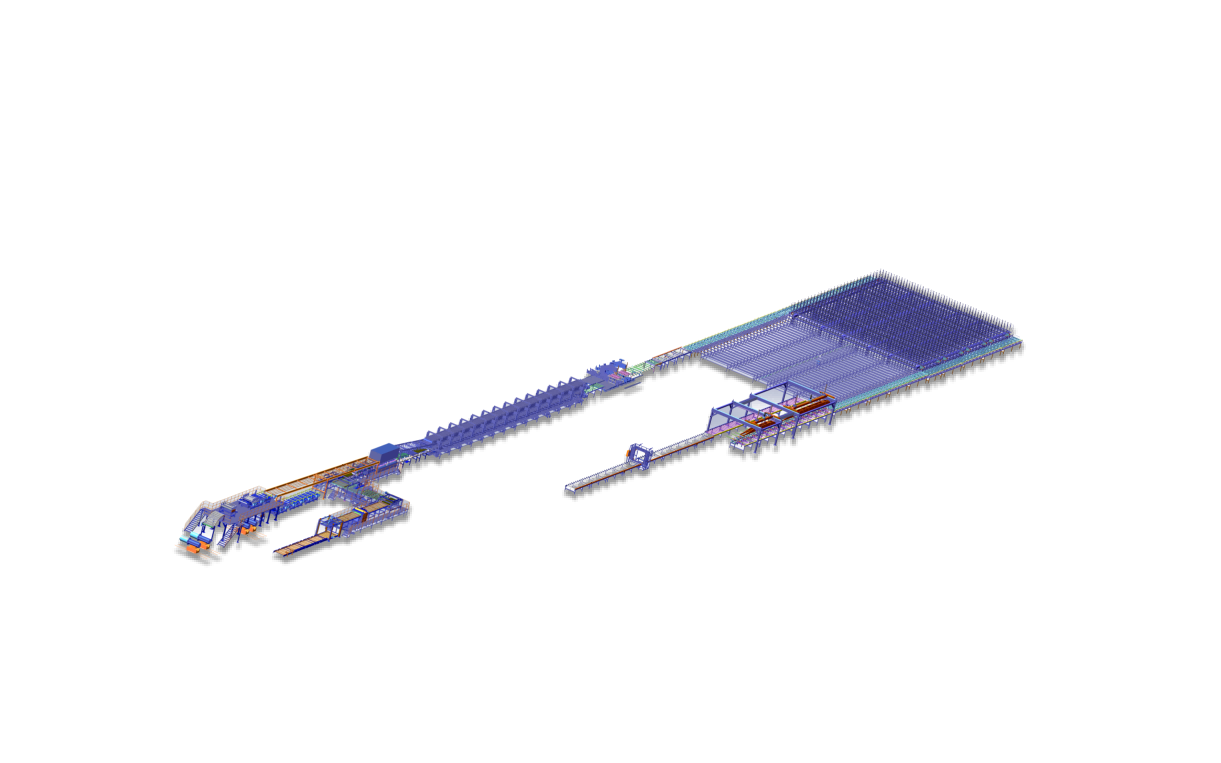
Polyurethane foam manufacturers have long treated production offcuts as unavoidable waste, but a shift is underway. Instead of sending trims, blocks, and rejected parts to landfill, recyclers are recovering the polyol backbone through chemical processes like glycolysis and acidolysis. These reclaimed polyols, once filtered and stabilized, return to the blending tank alongside virgin materials. The result is a foam core that carries a meaningful percentage of its own history—without sacrificing cell structure or load-bearing performance.
Scrap foam from end-of-life mattresses and furniture follows a similar path. After shredding and density separation, the flexible foam enters a reactor where heat and catalysts break the long polymer chains back into liquid polyol. Blended into new formulations, this recycled stream feeds directly into the core pour, the densest and most load-intensive layer of a cushion or mattress. Engineers adjust isocyanate ratios and surfactant packages to accommodate the slight variability of the recycled feedstock, turning what was once a disposal cost into a domestic raw material source.
Low-GWP Blowing Agents Take Over Where CFCs Left Off
The phase-out of CFCs left a gap in foam insulation and manufacturing that wasn't easy to fill. Early replacements like HCFCs still carried environmental baggage, but low-GWP blowing agents have since stepped in with a clearer mandate: cut global warming impact without sacrificing cell structure, thermal performance, or processing ease. This shift didn't happen overnight, but the chemistry has matured enough that formulators can now choose from hydrofluoroolefins, methyl formate, or water-blown systems depending on the foam type and end-use requirements.
What makes these newer agents notable is that they deliver insulation values close to what CFCs once offered, while carrying a global warming potential that's often less than 1 or in the low double digits. For rigid polyurethane and polyisocyanurate foams, this means builders and appliance manufacturers no longer have to trade energy efficiency for compliance. The transition also pushed equipment suppliers to rethink mixing and storage, since some low-GWP options are mildly flammable or require higher pressure handling—details that separate a smooth conversion from a costly retrofit.
In practice, low-GWP blowing agents have moved from niche alternatives to default choices in many regions, driven as much by regulation as by raw performance. Spray foam, XPS board, and integral skin applications each lean on different molecules, but the common thread is a departure from the high-GWP legacy of HFCs. For an industry once defined by CFC chemistry, the current landscape looks less like a compromise and more like a genuine upgrade—one that keeps foam functional while cutting the climate penalty to a fraction of previous levels.
Waste Heat Recovery Turns the Plant Into Its Own Energy Source
Most manufacturing plants bleed energy in the form of heat that drifts out of exhaust stacks or gets flushed away by cooling towers. That thermal outflow, often dismissed as a nuisance, holds enough potential to run compressors, pumps, or even feed electricity back into the plant grid.
Capturing it starts with a heat exchanger or a waste heat boiler placed in the flue gas path. From there, an organic Rankine cycle unit can turn moderate temperatures—say, 250°C to 400°C from a cement kiln or a glass furnace—into shaft power without extra fuel. Some plants pair this with thermal storage to smooth out production swings.
The result is a plant that partially fuels itself, trimming purchased energy by double digits in some industries. Beyond cost, it cuts carbon intensity and insulates operations from grid price spikes, making the factory less of a load and more of a local power node.
Lighter Panels, Fewer Trucks: The Logistics Side of Greener Building
Every pound trimmed from a wall panel ripples outward in ways that rarely show up on architectural drawings. A standard precast concrete slab might weigh close to four thousand pounds, demanding a flatbed and a crane schedule that tightens as soon as traffic slips. Swap that slab for a composite sandwich panel with a foam or mineral core, and the same truck can carry twice the square footage. The math is quietly persuasive: half the trips means half the diesel burned, half the tire wear on residential streets, and a site delivery window that no longer needs to be choreographed around rush-hour bans. Builders who make the switch often notice the savings first in their fuel invoices, then in the reduced need for wide-load permits and escort vehicles. It is a logistics decision disguised as a materials choice.
The downstream effects are just as telling. Lighter panels allow smaller cranes or even telehandlers to handle the placement, which shrinks the on-site footprint and lets crews work in tighter urban lots where a full-size crawler crane would never fit. Fewer heavy deliveries also mean less compaction on temporary access roads, less dust from repeated passes, and fewer opportunities for a delivery truck to idle while waiting for a previous one to unload. When a project shifts from forty truckloads of cladding to twenty, the neighbourhood experiences a quieter, less disruptive construction period. It is the kind of benefit that never appears on a sustainability brochure, but residents notice it immediately.
Getting there requires more than just picking a lighter product from a catalogue. Connection details, handling tolerances, and lifting points need re-evaluation because a panel that flexes differently also swings differently in the wind. Yet once those details are resolved, the logistics advantage compounds across a project portfolio. A developer who standardises on lightweight envelope systems can negotiate better freight rates, schedule deliveries with narrower windows, and reduce the number of vehicles that enter and leave the site each day. In an industry where every sustainability claim is scrutinised, the stark fact remains: the greenest mile is often the one that never gets driven.
Why Builders Are Choosing Panels That Lock In Insulation for Decades
Builders are increasingly turning to insulated panels that hold their thermal performance over many years because long-term consistency removes a major headache from project planning. Traditional insulation can settle, absorb moisture, or degrade under temperature swings, forcing owners to revisit walls or roofs within a decade. Panels engineered to lock in insulation eliminate that guesswork, letting contractors confidently specify a product knowing the R-value on day one will still be there twenty or thirty years down the line.
Another driver is the reduced responsibility on future maintenance. When a panel's core is sealed against air and water intrusion, it prevents the slow decline that plagues batt or loose-fill insulation. This means fewer callbacks for builders, fewer complaints from occupants about cold spots or rising energy bills, and a cleaner reputation for standing behind their work. The upfront cost may be higher, but the absence of remedial work makes the economics favorable over the life of a building.
Finally, many builders see these panels as a way to future-proof structures against shifting energy codes and client expectations. With insulation locked in, the building envelope performs predictably, allowing mechanical systems to be sized accurately from the start. That precision cuts waste, improves comfort, and gives owners a tangible long-term asset—a home or commercial space that stays efficient without ongoing intervention.
FAQ
It uses a pentane-based blowing agent instead of ozone-depleting chemicals, which cuts greenhouse gas emissions during foaming. The line also recaptures waste heat from the curing ovens and feeds it back into panel preheating, reducing overall energy draw by roughly twenty percent.
The panels produced have a closed-cell polyurethane core with very low thermal conductivity, so buildings need less energy for heating and cooling. The steel facings are fully recyclable, and scrap from edge trimming is ground and reused in non-structural core layers rather than being sent to landfill.
Yes. The metering unit and double-belt press adjust continuously for core densities from 38 to 60 kg/m³ and panel thicknesses from 40 to 200 mm. Operators can switch between steel, aluminum, or fiber-reinforced facing coils without changing the main conveyor path.
Inline infrared cameras scan the foam surface for voids and density variations every 150 milliseconds. A laser profilometer checks dimensional accuracy after cutting, and any panel outside ±0.5 mm tolerance is automatically flagged for secondary finishing rather than being shipped.
It can be configured as a modular system. A startup might begin with a single daylight press and manual stacking, then add automated mixing and cutting stations as volume grows. The control software uses the same interface across all modules, so staff training time stays low.
Panels can be produced with intumescent coatings or mineral wool edge details that achieve Euroclass B-s1,d0 ratings. The foaming process is tuned to eliminate residual isocyanates, and the final panels meet EN 14509 requirements for factory-made sandwich panels.
The mixing heads need flushing after every shift to prevent isocyanate crystallization. The double-belt release film is replaced roughly every 2,000 linear meters. Annual calibration of the temperature sensors and density meters takes about one working day and is included in the standard service contract.
Yes. The control system can accept load-shedding signals from on-site solar or wind generation, ramping down auxiliary heaters during peak production hours. In some installations, solar thermal collectors preheat the water used for panel conditioning, cutting gas consumption by another twelve percent.
Conclusion
The shift toward eco-friendly polyurethane sandwich panel production is changing how the construction industry approaches both manufacturing waste and long-term building performance. Instead of relying on batch processes that generate offcuts and rejected foam, modern facilities run a continuous line where trim and edge material are captured and reintegrated, keeping scrap out of landfill. Recycled polyols and reclaimed foam particles find their way into the panel core, reducing dependence on virgin petrochemical feedstocks without compromising structural integrity. At the same time, blowing agents with low global warming potential have replaced older CFC-based systems, cutting the carbon footprint of the insulation itself.
Beyond raw materials, these production lines recover waste heat from curing ovens and exothermic reactions, redirecting it to preheat incoming chemicals or warm the factory floor. The resulting panels are also lighter per square meter while maintaining high thermal resistance, which means fewer trucks and less fuel for delivery to construction sites. Builders increasingly choose these panels because the closed-cell polyurethane core locks in insulation value for decades, preventing thermal drift and reducing heating and cooling demand over the building's life. Taken together, these advances turn a simple sandwich panel into a practical tool for sustainable construction, one that addresses both embodied energy and operational efficiency without asking builders to sacrifice performance.
Contact Us
Contact Person: Sophia Jiang
Email: [email protected]
Tel/WhatsApp: +86 17367381818
Website: https://yzwelding.com/