

Gearless Flexo Press Supplier: Choosing the Right Partner for High-Quality Printing
2026-11-16
Every flexo printer knows the moment a job goes from acceptable to exceptional—it’s rarely the ink or the substrate. It’s the press. If you’re in the market for a gearless flexo press, you’re not just buying a machine; you’re choosing a partner whose engineering will either elevate your print quality or quietly cap it. That’s where HuiPeng enters the conversation—not with generic claims, but with a track record of solving the real alignment, tension, and registration headaches that keep operators up at night. This guide cuts through the spec-sheet noise to help you evaluate suppliers on the details that actually determine high-quality output.
The Real Difference a Gearless Flexo Specialist Brings to Your Floor
A gearless flexo specialist doesn't just swap out gears for servos. They recalibrate how your operators think about repeat lengths and registration. On the floor, that shows up as fewer manual adjustments, less fighting with backlash, and a press that holds color-to-color registration through speed changes. It's a different conversation when someone who has spent years on gearless machines can walk to the console and explain why a job that used to take two hours to set up now takes thirty minutes—without relying on trial and error.
What you notice quickly is that the specialist doesn't treat the press as a collection of components but as a system where plate cylinder runout, anilox pressure, and re-register timing all interact. They tend to set impression by reading the printed dot rather than chasing dial indicators. That leads to shorter make-ready times and fewer stops for cleaning plates mid-run. The real difference is in the details: knowing when a bounce issue at high speed is coming from a worn sleeve adapter rather than the plate itself, and fixing that before it becomes a pattern of rejects.
Over time, that expertise changes the floor's rhythm. Operators stop compensating for mechanical drift and start trusting the repeatability of the machine. A gearless flexo specialist also brings a working knowledge of troubleshooting harmonics and servo tuning that general press crews often lack. You end up with less downtime, cleaner screens, and a better understanding of why a particular job runs best at a certain tension and speed. It's not magic—it's just the accumulated judgment that comes from working with machines where the gear train isn't hiding your problems.
Supplier Red Flags That Show Up in Print Quality
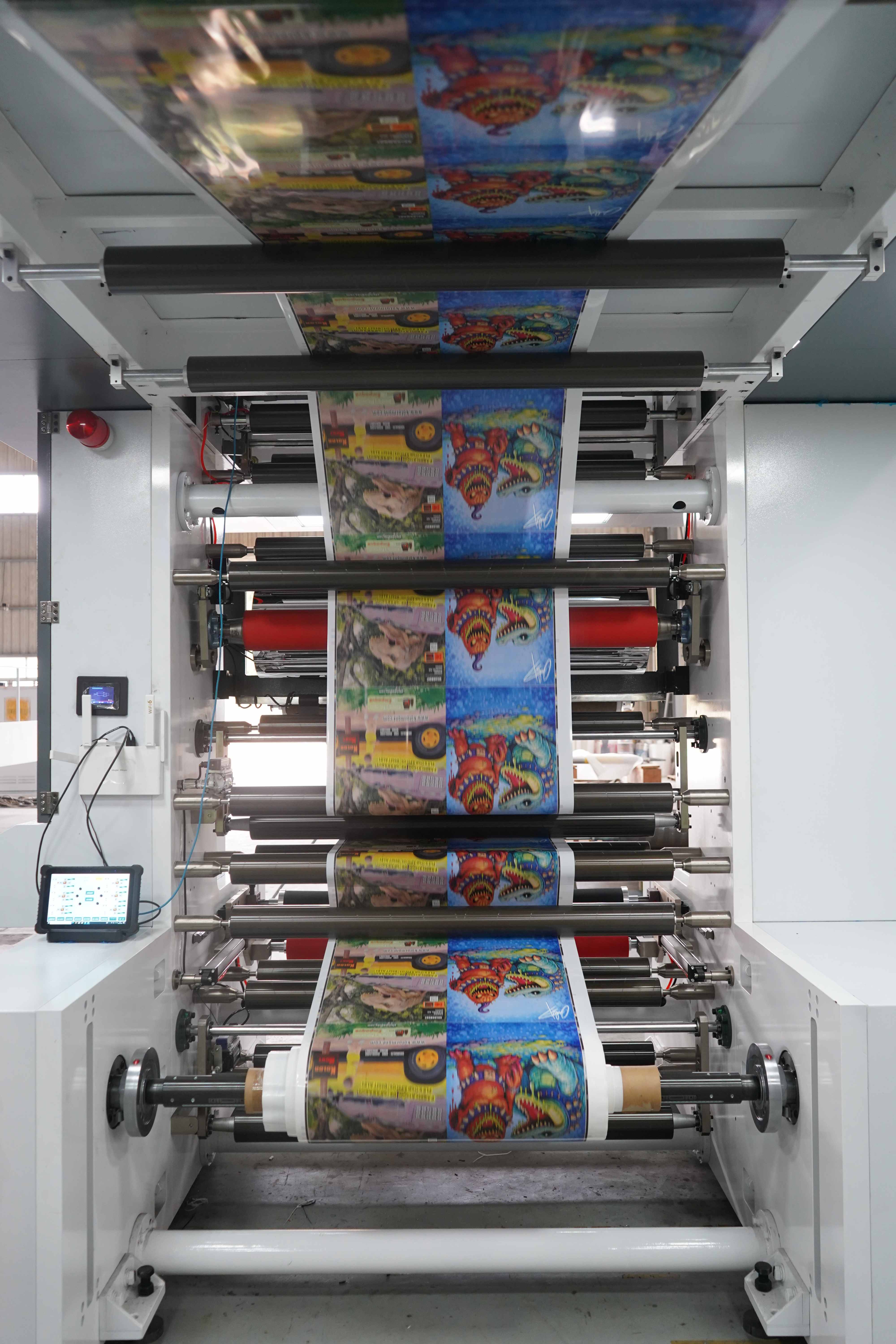
Print quality is one of the few places where a supplier's shortcuts become impossible to hide. When you start seeing color shifts across the same run, fuzzy text that should be crisp, or uneven ink coverage on solid areas, these aren't random hiccups. They usually mean the shop is either running outdated equipment without proper calibration, or they're stretching ink and plates beyond their intended limits to save cost.
Look closely at the edges of small type and thin lines. If they show a noticeable halo or double image, the registration is slipping—often due to worn rollers, poor plate mounting, or rushed setup between jobs. Another tell is inconsistent gloss or matte patches on coated stock, which can signal improper drying temperatures or cheap varnish substitutions. Even subtle banding in large flat color areas points to printhead or roller defects that a decent QC pass should have caught.
When you spot these issues, ask the supplier for the press check sheets or color density readings for that run. A capable factory keeps those records without prompting. If they act surprised, blame the artwork, or promise it won't happen again without a concrete change in process, treat that as a sign of weak internal controls. Print defects rarely exist in isolation—they're almost always downstream of a management decision to cut corners.
Why Registration Precision Starts with Your Press Partner
Registration precision isn’t something you fix downstream with software tweaks or plate adjustments alone. It begins long before the first sheet runs, in the relationship you build with your press partner. A partner who understands your exact registration tolerances, substrate behavior, and finishing constraints can pre-empt the small mechanical drift that becomes visible misalignment on press. When your press partner takes ownership of cylinder pressures, gripper timing, and blanket condition from the very first setup, every later correction becomes a whole lot smaller.
The real difference shows up in how your press partner communicates. Instead of waiting for a registration error to appear in a proof, a strong partner flags subtle shifts during makeready — a slight bounce in the feeder, an uneven impression squeeze, a paper stretch pattern that varies by grain direction. These aren’t dramatic discoveries; they’re quiet observations that keep a job from sliding out of tolerance. That level of attention can’t be automated or written into a checklist. It comes from experience and from caring about the final sheet as much as you do.
Ultimately, registration precision is a shared habit. When your press partner treats every impression as a moving, breathing thing rather than a static image, you stop chasing errors and start preventing them. That’s why the question isn’t just “which press?” but “who’s running it, and how do they think about fit?” Choose a partner who sweats the microns, and your own prepress and proofing work gets lighter — because the press becomes the most reliable instrument in the room.
Customization Without Compromise: Finding a Flexo Builder That Fits
Customization in flexo printing often gets reduced to a choice between off-the-shelf convenience and a long list of engineering compromises. The right builder refuses that trade-off. They start by mapping your actual production runs—substrate variability, repeat lengths, ink systems—then adjust frame geometry, dryer capacity, and web path to match. What you end up with is a press that handles your everyday work without constant operator workarounds.
A fit that matters goes beyond the spec sheet. Ask how a builder handles changeovers, plate sleeves, and future expansion. Some shops need narrow web agility for short runs, others require wide web stability for high-volume packaging. A builder worth considering will walk you through past builds similar to yours and point out where they made deliberate design decisions, not just where they bolted on another option.
Long-term support is where customization either proves itself or falls apart. The useful kind of custom flexo press doesn't lock you into a single supplier for every consumable. It uses standard interfaces where possible and leaves room for retrofits. Before you sign, talk to the engineers who would actually build your press—not just the sales team—and ask what they would change if they were running it in your plant for a week.
Long-Term Partnership Metrics: Uptime, Repeatability, and Ink Savings
Uptime rarely gets the attention it deserves until a line stalls. We track it in minutes, not percentages, because a 99% figure hides the Tuesday afternoon when three hours vanished to a sensor fault. Our print partners see the difference in their shift reports: fewer emergency calls, more predictable maintenance windows, and operators who trust the equipment to finish a run without babysitting.
Repeatability means the same red on Thursday as on Monday, no matter who is running the press. We standardize calibration steps and lock down settings after the first approved sheet, so a night crew can match a day crew's output without guesswork. That consistency shows up in reduced remakes and shorter client approval cycles.
Ink savings are not just about buying cheaper cartridges. Optimized ink restriction and better transfer efficiency can cut consumption by double digits on long runs, without washing out color density. One packaging converter measured 14% less ink per job after switching to our densitometry targets, and the savings paid for the service agreement within two quarters.
What Top Printers Ask Before Signing with a Gearless Press Supplier
They rarely accept the spec sheet at face value. Instead, they ask for logged data from actual production runs—how much does register drift after six hours at full speed, and what happens when you switch from 40-lb. text to 12-pt. board mid-shift. A few will even request a trial with their own plates and stock, just to see if the servo response holds up under their specific tension profiles. If the supplier can’t produce real numbers and only points to lab results, the conversation usually ends there.
Cost questions go far beyond the purchase price. They want to know the real cost per thousand impressions after factoring in energy draw, sleeve changes, and the frequency of servo amplifier replacements. Many ask for the names of three existing users who run similar work mixes, then call those shops directly to ask about hidden downtime and whether the press’s claimed waste reduction actually showed up on the P&L. If a supplier hesitates to share customer contacts or tries to steer the visit to a demo center, that’s a red flag.
Support and future-proofing also come under scrutiny. Top printers ask how many local field engineers are available within a two-hour drive, what the average parts delivery time is for a failed drive card, and whether remote diagnostics can access the press without opening a security hole in their plant network. They also press for details on software upgrade paths: will a controller update three years from now still work with today’s servo motors, or will they need to replace half the drive system? Those answers often decide the deal more than print speed or color gamut.
FAQ
Look beyond the machinery itself. A solid supplier will walk you through their engineering process, offer print samples from actual jobs, and be upfront about ink and substrate limitations. They usually have a track record of presses still running well after a decade.
Gearless presses eliminate the backlash and vibration that geared systems can introduce, especially at higher speeds. That means tighter registration, cleaner screens, and fewer adjustments between jobs. In practice, you'll notice sharper text and more consistent solids on tricky films or labels.
Ask how many technicians they have in your region, what their average response time is for urgent issues, and whether they stock critical parts locally. A good supplier will give you straight answers, not just promises. Remote diagnostics capability is also worth confirming.
Usually yes, if you're running long jobs or high-value work. The initial premium often comes back through less waste, faster changeovers, and fewer rejections. But don't assume price equals quality—request a live demo and speak with current users before committing.
A supplier that can adapt the press to your specific needs—such as wider web widths, special drying systems, or inline finishing—will save you from costly workarounds later. Ask them to show drawings and simulations early, not just a standard brochure.
Request a trial run using your own materials and artwork, not just their standard demo job. Also ask for references from converters who do similar work. If possible, visit a facility where their presses have been running for at least three to five years.
Beyond the base price, examine training fees, installation charges, spare parts pricing, and energy consumption. Some suppliers quote low upfront but charge heavily for proprietary parts or software updates. Get a detailed total cost of ownership estimate for five years.
Because downtime in label or packaging production is extremely expensive. A local team can reach you quickly, understand regional power and environmental conditions, and often provide faster spare parts. Remote support helps, but it can't replace someone on-site when a drive or sensor fails.
Conclusion
A gearless flexo specialist changes what happens on your floor in subtle but measurable ways. You notice fewer web breaks during acceleration, tighter color-to-color fit on long runs, and less operator intervention to chase register drift. Those improvements come from direct-drive servo control and tension loops designed around your specific substrates—not from a generic press layout. When print quality problems appear, look past the plate and anilox: banding, gear marks, or repeating length variations often point back to supplier shortcuts in frame rigidity, bearing preload, or drive tuning. Registration precision is not a spec you dial in on press; it starts with a partner who understands how dancer roller response, nip pressures, and repeat length interact before the first job runs.
Customization without compromise means the builder adapts the web path, dryer capacity, and impression settings to your repeat range and ink chemistry rather than forcing you into standard widths or fixed drying zones. That kind of fit matters more than a long options list. Over time, the supplier relationship shows up in uptime, repeatability, and ink savings. Uptime means scheduled wear parts arrive before you need them and fault diagnostics don't require a call-back loop. Repeatability means the tenth job of the week runs at the same registration as the first. Ink savings come from fine metering control and stable dot gain across speeds. Before signing, top printers ask pointed questions: Can I see three reference sites running similar substrates at production speeds? How do you handle servo firmware updates without shutting down a shift? What is your actual mean time to replace a print cylinder sleeve? The answers reveal whether you're buying a machine or building a partnership.
Contact Us
Contact Person: Isaias
Email: [email protected]
Tel/WhatsApp: 86-13868693129
Website: https://www.hpflexo.com/