

Gold Plating Production Line Exporter: Advanced Solutions for Reliable Surface Finishing
2026-08-28
When surface quality can make or break a product, the choice of production partner matters more than ever. That's why global manufacturers are turning to Junda for gold plating production lines that blend precision engineering with everyday reliability. As a dedicated exporter of advanced surface finishing systems, Junda has earned a reputation for solving the toughest coating challenges—whether it's achieving uniform micron-level thickness or maintaining throughput under demanding schedules. This article takes a closer look at the technology, support, and real-world results behind Junda's lines, and why they are increasingly the first call for businesses that refuse to settle for 'good enough'.
Precision Plating Starts With These Underrated Design Choices
Most engineers focus on tank chemistry and current density when chasing plating uniformity, but the geometry you draw in CAD often matters more. A sharp internal corner will plate thin at the root and thick at the tip, no matter how carefully you dial in the rectifier. Simply adding a 0.5 mm radius to that corner changes the local electric field enough to keep the deposit within a few microns of flat — a tweak that costs nothing but a few seconds of design time.
Drainage holes are another quiet workhorse. Plating solution trapped in a blind pocket drips out later, leaving streaks or alkaline residue that nobody notices until assembly. Position a small vent at the highest point of the cavity, and the part comes out clean without extra rinsing steps. It feels like overkill on the drawing, but on the shop floor it prevents the kind of cosmetic rejects that stall a batch for a day.
Finally, watch your racking contact points. A heavy part hung from a thin thread or a recessed boss will swing, arc, and plate unevenly. Design a flat, generous pad somewhere non-cosmetic — even a temporary one you machine off later — and the current distribution across the whole surface becomes far more predictable. These aren't glamorous choices, but they beat trying to compensate with brighter additives or longer plate times.
How Export Packaging Impacts Equipment Longevity
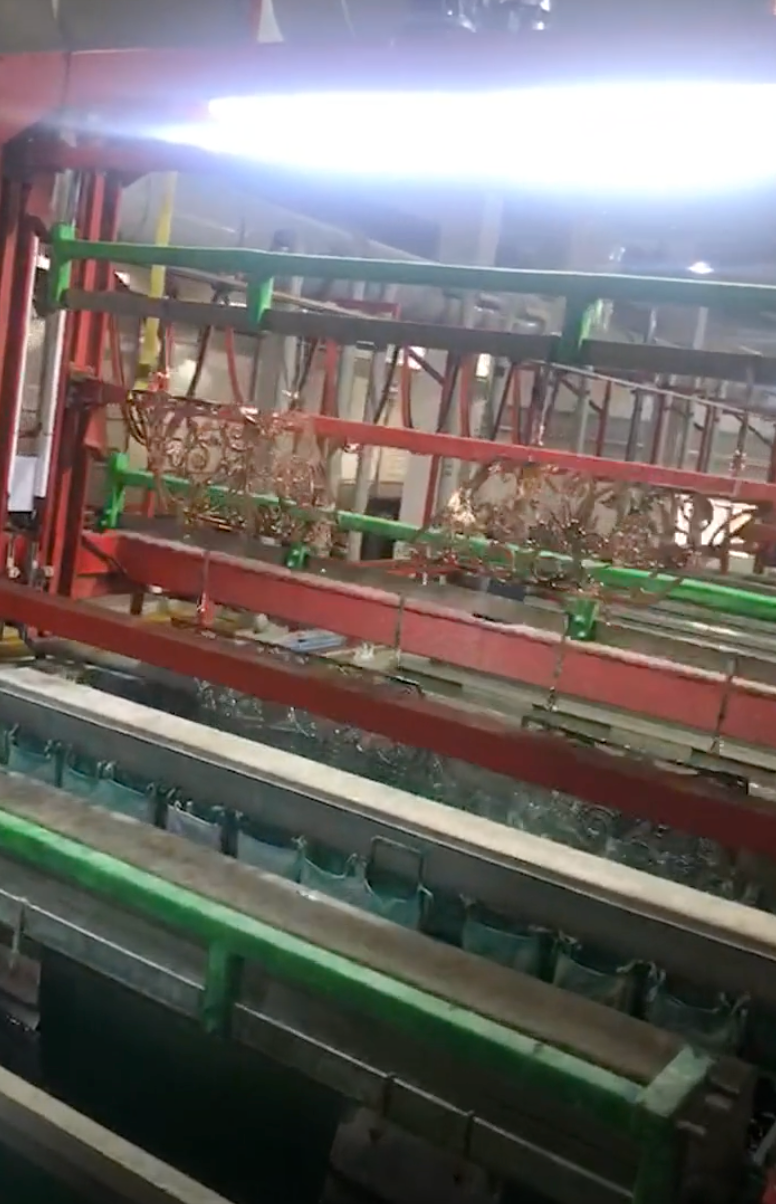
When a machine leaves the factory floor, its journey is often longer and rougher than the one it will make during years of service. Vibration, humidity shifts, salt spray, and careless handling all conspire before the equipment is ever switched on at its final destination. Export packaging is not just a crate; it is the first line of defense that determines whether components arrive aligned, seals intact, and electronics dry. A well-designed export package absorbs shock, blocks moisture, and resists the stacking pressures of container ships, directly extending the working life of the equipment inside.
Poor packaging shows up later as premature bearing wear, corrosion on exposed metals, or hairline cracks in castings that failed under transit stress. Even minor shifts inside a crate can cause micro-fractures in hydraulic fittings or misalignment in precision assemblies, problems that may take months to surface. By contrast, packaging that uses custom cradles, desiccants, and vapor-phase inhibitors keeps internal stresses near zero and humidity below the dew point, so the equipment starts its operational life without hidden damage. That head start translates into fewer early failures and a longer service interval before the first major overhaul.
In many cases, the cost difference between basic blocking and bracing versus engineered export packaging is a fraction of one unplanned outage. Equipment that arrives in factory-new condition, with lubrication systems uncontaminated and control panels unaffected by condensation, simply runs longer. Smart buyers and OEMs treat packaging as part of the asset's reliability strategy, not as an afterthought, because every hour of downtime avoided later is a direct return on the packaging decisions made before the first mile of transit.
Custom Line Layouts for Tight Production Floors
Fitting a full assembly line into a compact facility often means rethinking the straight-line assumption. Instead of forcing every station along a single conveyor, we break the sequence into U-shaped or L-shaped cells that follow the natural flow of material and operators. This approach shortens walk distances, keeps shared tooling within arm's reach, and leaves just enough aisle clearance for carts and maintenance. The result looks less like a textbook plant and more like a workspace tailored to the actual dimensions of the floor.
Adjustable frames and bolt-together stations let us shift a line overnight when product mix changes. Rather than pouring new foundations or rewiring fixed positions, we reuse the same base modules in a different order. On very narrow footprints, vertical buffer racks and overhead conveyors move work-in-progress upward instead of outward. That keeps the floor open for people, not piles of half-finished units.
Keeping Gold Thickness Consistent Across Every Rack
Every electroplating line has its own rhythm, and keeping gold deposition uniform from rack to rack is less about chasing a single magic number and more about reading what the bath tells you. When rack density shifts or parts change geometry, the current distribution quietly drifts, and before you know it, one end of the rack is wearing a heavier coat than the other. The trick is to map those hot and cold zones not by guesswork, but by pulling a few sacrificial coupons from different positions and measuring them against the same baseline. Once you know where the bath favors deposition, adjusting anode placement or tweaking pulse parameters becomes a deliberate move rather than a shot in the dark.
Then there is the matter of solution movement and temperature creep. Even with perfectly balanced racks, gold thickness will wander if the agitation pattern stalls or the heater overshoots during busy shifts. What works on a Tuesday morning can fall apart by Thursday afternoon, simply because the filters have loaded up and the flow rate has dropped a few liters per minute. That is why consistent thickness starts with boring, repeatable checks: verifying pump output at the start of every run, logging bath level before each rack goes in, and resisting the urge to chase brightness with uncontrolled additives. The plating solution does not reward heroics; it rewards keeping the variables boringly steady.
A practical way to lock in consistency is to treat each rack as a small experiment rather than another unit in the queue. Number the racks, note their position relative to the anodes, and compare the measured gold thickness against the target with a simple run chart. Over time, the chart will reveal whether the drift is systematic, like a shadowing effect on the lower row, or random, like a loose contact on one flight bar. With that visibility, you can move from reacting to bad parts to preventing them, whether that means repositioning thieves, swapping out worn contacts, or rotating rack orientation through the bath. The goal is not a perfect number every time, but a tight band that your measurements can actually hold.
The Role of Anode Placement in Reliable Surface Finish
Anode placement shapes the electrical field between the anode and the workpiece, and that field directly controls where metal ions deposit. A slight shift in anode angle or distance can push current toward sharp edges while starving recessed areas, leaving you with uneven thickness, burned corners, or dull patches. Reliable surface finish starts with mapping that field—using auxiliary anodes or non-conductive shields to redirect current where the part actually needs it, rather than where it naturally concentrates.
Practical rack design often treats anode positioning as a fixed parameter, but it should be adjusted for each part geometry. For tall or complex profiles, spacing the anode unevenly or adding a conforming anode can smooth out the deposition rate across the entire surface. Even a 10 mm move can change local current density enough to turn a rough, nodular edge into a clean, uniform coating. The goal is repeatable geometry: locked-down anode distances, consistent tank loading, and periodic checks for anode passivation or shape wear.
When anode placement drifts from the validated setup, operators usually see telltale signs: thin coverage near the rack contact, heavy buildup on lower edges, or a milky haze where current density drops too low. These are not random defects; they are symptoms of a misaligned electrical field. Tightening the placement tolerances and documenting anode positions per part number is not overkill—it is the difference between a finish that passes inspection once and one that passes every time.
Troubleshooting Common Gold Plating Bottlenecks in High-Volume Shifts
In high-volume shifts, most gold plating slowdowns trace back to a handful of recurring culprits rather than exotic failures. When line speed drops or rack after rack comes out dull or thin, start with the bath's metal concentration and pH. Gold baths run hot and see heavy drag-out, so replenishment rates that worked on a single-shift schedule often fall behind by mid-morning. Check the specific gravity and gold content against the control panel before touching the rectifier; a bath that has drifted 0.2 g/L below target will force longer dwell times and create exactly the kind of bottleneck that looks electrical but is chemical.
Another common choke point is the rectifier and bus connection under sustained load. High-volume shifts mean more parts per hour, which pushes contact points and cables harder than any bench test. Look for hot spots on bus bars, loose clamps, or signs of arcing at the rack tips. Even a 0.3 V drop across a poor connection can increase plating time by 15–20 percent and produce uneven thickness that triggers rework. Fix the mechanical connection before adjusting current density.
Finally, watch the pre-plate rinse and activation steps. In a rush to hit shift targets, operators often shorten rinse times, pulling cyanide or nickel drag-in into the gold bath and poisoning it. The result isn't a sudden failure; it's a gradual loss of efficiency that compounds through the day. Set rinse timers to be non-negotiable, and audit drag-out rates at shift changes. When the bath is healthy and the circuit is clean, throughput recovers without adding tanks or staff.
FAQ
We provide fully automated and semi-automated lines for rack plating, barrel plating, and selective plating. Each system is configured around your part size, throughput targets, and required deposit specifications, so you get a line built for your actual production conditions rather than a one-size-fits-all package.
The key is in the rectifier control and anode placement. We use pulse plating with dynamic current distribution and custom shielding for challenging shapes. Combined with real-time thickness monitoring on the line, this reduces variation to within a tight tolerance band even on parts with deep recesses or sharp edges.
Most of our export projects go to electronics, connector manufacturing, aerospace, medical device, and luxury goods producers. Each sector has different requirements for purity, hardness, and color, so the line design changes accordingly, for example, hard gold for wear parts versus soft gold for wire bonding.
Yes, we often build mixed-mode lines that include both rack and barrel stations in one sequence. The transport system switches automatically between carriers, so you can run small precision parts in barrels and larger components on racks without investing in two separate lines.
We focus on three areas: robust tank construction with double-wall containment, redundant heating and filtration loops, and a control system that logs every parameter for traceability. That means less downtime, fewer rejected batches, and a line that holds its calibration over years of continuous use.
Yes, we send a commissioning team to your site for mechanical installation, electrical hookup, and process validation. Training covers both operation and maintenance, and we leave behind detailed documentation plus remote support access for the first year of production.
Every line we export includes an integrated rinse water recycling module and a closed-loop dragout recovery system. The wastewater treatment unit is sized specifically for your gold bath chemistry and local discharge limits, so you can install the line without a separate environmental retrofit.
It depends on the automation level and tank count, but generally we deliver in 18 to 24 weeks from final drawing approval. We keep critical components like rectifiers and pumps in stock, which shortens the build phase compared to sourcing everything after contract signing.
Conclusion
Precision plating rarely hinges on a single dramatic change. More often, it comes from a handful of overlooked decisions made before the first rack enters the bath. Simple design choices, like how parts are fixtured or where contacts sit, shape current distribution long before anode placement becomes a variable on the floor. Tight production spaces don't have to force compromises either. A line laid out around existing columns or low-clearance areas can still deliver stable, repeatable results, provided the anode geometry and rack spacing are tuned to match the actual flow path of the electrolyte. This is where an exporter with hands-on retrofit experience adds real value, adjusting each layout to the quirks of the building instead of shipping a one-size-fits-all footprint.
What happens after the line is built matters just as much. Export packaging directly influences whether frames, rectifiers, and anode baskets arrive straight and sealed, and poorly blocked crates or missing desiccant are often the hidden cause of startup delays. Once in production, keeping gold thickness consistent across every rack means monitoring current density at the extremes, not just the average, and making small anode position changes rather than chasing thickness with chemistry alone. For high-volume shifts, the usual bottlenecks tend to cluster around pitting near high-current zones or edge burning on mixed loads. Addressing those through better shielding, revised contact points, and staged load patterns tends to hold thickness tolerance better than slowing the whole line down.
Contact Us
Contact Person: hayyr
Email: [email protected]
Tel/WhatsApp: 8613082110525
Website: https://www.jundaelectroplating.com