

High Containment Valve Supplier Selection Guide for Maximum Safety
2026-08-24
Picture this: a routine maintenance check uncovers a hairline crack in a containment valve. No alarm sounds, no sensor triggers—just a silent risk that could escalate into a full-blown safety incident. The difference between a close call and a catastrophe often comes down to one decision: who supplies your high containment valves. This guide is built for engineers and procurement leads who refuse to gamble with maximum safety. It strips away marketing fluff and focuses on the selection criteria that matter—pressure ratings, seat leakage, fugitive emissions, and traceability. And when it comes to proven performance, AVM consistently sets the standard worth matching.
Where Leakage Risks Hide in High Containment Valve Design
High containment valves are often judged by their ability to seal under pressure, yet the most dangerous leak paths rarely announce themselves through obvious gaps. Instead, they hide in the quiet compromises of design—where a stem meets its packing, where a body joint flexes under thermal cycling, or where a bellows seal’s welded diaphragm develops microcracks after a thousand actuations. These failure points don’t follow a predictable timeline, and they don’t respect the boundary between routine operation and catastrophic release.
One of the most overlooked zones sits inside the bonnet area, where fugitive emissions can migrate along the stem thread and accumulate in dead spaces long before a sensor picks them up. Rotating stems, especially those with rising profiles, wear against graphite packings unevenly, creating a spiral pathway that opens only when the valve is mid-stroke. Similarly, body gaskets that look robust on a drawing can lose compression set after exposure to aggressive media, leaving a hairline channel that opens under pressure fluctuations rather than static load.
The real challenge is that leak detection often lags behind leak formation. By the time a monitoring port registers an unacceptable rise, the valve may have already contaminated a secondary containment zone or compromised a batch process. Designers who focus only on rated leakage at the seat often miss the cumulative effect of secondary seals, drain connections, and instrument tap-offs—each one a potential slow leak that becomes a compliance issue only when someone audits the entire boundary, not just the obvious sealing surfaces.
Material Choices That Survive Your Most Aggressive Solvents
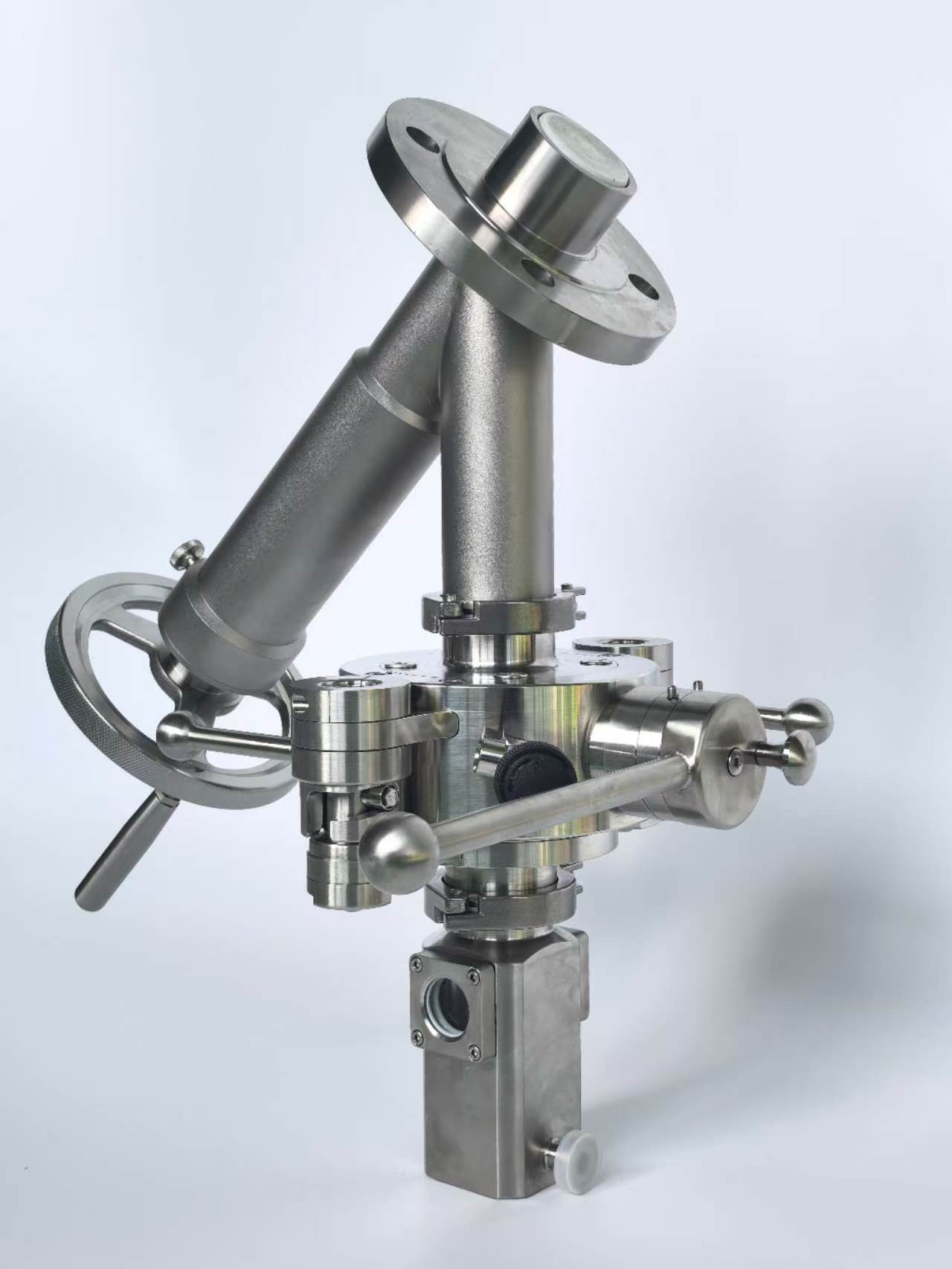
When your process involves harsh solvents like dichloromethane, tetrahydrofuran, or concentrated acids, most standard materials will swell, crack, or dissolve within hours. The key is to look beyond generic plastics and opt for fluoropolymers such as PTFE or PFA. These materials offer near-universal chemical resistance because their carbon-fluorine bonds are incredibly stable, leaving no weak points for aggressive solvents to attack. While they come at a higher cost, the long-term savings from avoiding leaks, contamination, or part replacement are substantial.
Another often-overlooked option is certain grades of polypropylene or high-density polyethylene for less extreme but still aggressive solvents like xylene or dimethylformamide. They won't handle everything, but they can be a budget-friendly compromise if you validate compatibility with your specific solvent blend. For metal components in solvent-heavy environments, stainless steel alloys with high molybdenum content, such as 316L or Hastelloy C-276, outperform standard 304 stainless by resisting pitting and crevice corrosion that chloride-containing solvents can trigger.
Don't forget about elastomers and seals. Viton (FKM) works for many hydrocarbons but fails badly with ketones and esters, while Kalrez (FFKM) can survive almost anything you throw at it, though at a premium price. The real secret is to test small samples under your actual working conditions—temperature, pressure, and solvent concentration all shift the compatibility picture. A quick soak test over 48 hours will tell you more than any generic compatibility chart ever could.
Why Standard Leak Tests Fall Short for Potent Compound Handling
Standard leak tests—pressure decay, vacuum hold, or bubble emission—were built around gross containment failures. They're perfectly adequate for detecting a cracked housing or a loose clamp, but they fall silent when the leak is just a few micrograms per minute. For a potent compound with an occupational exposure limit in the nanogram range, that tiny leak isn't minor; it's enough to push a room above its safe handling threshold. Passing such a test can be worse than failing, because it creates a false confidence that the equipment is clean and contained.
The real problem gets sharper when you look at how these tests are run. Most are performed on a cold, empty system, with no powder, no agitation, and no temperature swings. But during actual handling, a split butterfly valve flexes as it opens, a glove stretches and relaxes, and a filter housing heats up from air displacement. These movements create transient gaps that don't exist on the test bench. So a containment system can sail through a standard pressure decay test in the morning and leak API into the operator's breathing zone by afternoon—simply because the test never simulated the conditions that matter.
There's also a mismatch in the leak-detection media. Helium or air are the typical tracers, and their molecular behavior is nothing like a micronized potent compound. Helium will find the smallest capillary path and scream through it, while a larger, stickier API particle may clump, sorb onto the surface, or get caught in a tortuous path. The result is a test that says "no leak" for helium but still allows the compound to migrate through the same seal under real use. Without matching the tracer to the compound's actual physical properties, standard leak tests are essentially answering the wrong question.
Maintenance Access Without Breaking the Containment Boundary
Maintenance teams often face a frustrating paradox: the very systems they need to service are sealed off for good reason. Whether it's a pharmaceutical cleanroom, a high-voltage substation, or an isolated industrial network, the containment boundary exists to protect what's inside from outside contamination or interference. Simply opening a door or plugging in a laptop can undo hours of environmental control or compromise logical segmentation. The real challenge isn't just getting access—it's getting access without turning the boundary into a suggestion.
Practical solutions usually hinge on designing access paths that never directly bridge the two sides. In physical environments, pass-through chambers and glove ports let technicians manipulate equipment while the barrier remains structurally intact. For digital systems, jump servers with strict session recording and one-way data diodes allow maintenance commands to flow in while preventing any data from leaking out. Some facilities go further by using remote robotic tools that operate entirely within the contained zone, controlled through sealed fiber-optic links. The key is that every maintenance action has a predefined, auditable path that respects the boundary's original purpose.
A well-designed maintenance strategy treats the containment boundary not as an obstacle to be worked around, but as a design constraint that shapes how tools and procedures are built. Instead of asking "how do we get in?" the better question is "what can we do from outside, and what absolutely requires physical presence?" Often, the answer reduces the need for entry to a bare minimum—replacing a worn seal via a glove port, updating firmware through an isolated maintenance VLAN, or using drone inspection inside a hazardous vessel. The result is a system where maintenance happens routinely, yet the boundary never loses its integrity because it was never really broken in the first place.
Reading a Supplier's Cleanroom Practices Beyond the Certificate
A certificate hanging on the wall tells you only that a cleanroom passed an audit at one moment in time. Spend an hour walking the floor instead, and you will see what actually happens between inspections. Watch how operators enter the gowning area: do they follow the posted sequence without shortcuts, or do they pull on gloves before the face mask? Check whether pass-through chambers are used consistently or propped open for convenience. These small deviations rarely make it into a formal report, but they reveal how deeply the cleanroom culture is embedded in daily work.
Ask to see the environmental monitoring data for the past six months, not just the summary table. Pay attention to trends that sit within spec but drift upward. A supplier that notices a slow rise in particle counts and has already adjusted cleaning frequency or HEPA filter maintenance is far more reliable than one that waits for an excursion to react. Also request the log of non-conformance reports tied to the cleanroom. How many were opened, how quickly were they closed, and did any corrective actions address root causes rather than just retrain operators?
Finally, look at how change is managed. When a new material or piece of equipment enters the cleanroom, is there a formal risk assessment before use? Ask a line operator what they would do if they noticed a torn gown or a dropped vial. The speed and clarity of their answer often tells you more about the cleanroom's true state than any third-party certificate ever could. Certificates prove capability; daily habits prove reliability.
The True Cost of Downtime When a Valve Loses Containment
A valve that loses containment doesn't just leak product—it halts entire process lines. Operators often assume a quick patch or seal replacement will restore operations, but the real expense accumulates quietly: overtime labor, emergency procurement, and the scramble to reroute flow. Every hour the valve stays isolated, revenue that was already booked slips further out of reach. For continuous processes like chemical blending or steam distribution, a single packing failure can curtail output for days, not hours.
Beyond immediate production losses, downtime from a containment breach triggers a chain of secondary costs. Maintenance teams get pulled from preventive work to handle the failure, shrinking overall equipment reliability. Safety permits, environmental reporting, and clean-up efforts add administrative burden that rarely appears in standard cost models. In many plants, the true figure runs three to five times higher than the direct repair bill—because the plant isn't just fixing a valve; it's absorbing the shock of unplanned shutdown across every connected system.
What makes this downtime especially painful is its predictability. Valves that lose containment usually show early signs—minor weeping, harder actuation, slight stem corrosion. Ignoring those signals until a full breach occurs converts a manageable repair into a production emergency. Smart operators now track mean time between failures for critical valves and schedule replacement during planned turnarounds. Treating containment as a leading indicator, not an afterthought, keeps downtime costs from spiraling into a quarterly earnings surprise.
FAQ
Look beyond marketing claims. A safety-focused supplier will share detailed leakage test data under your actual process conditions, offer material traceability down to the raw forging, and have field engineers who discuss sealing performance before quoting a price. If they lead with containment guarantees and follow with documentation, that is a stronger signal than a glossy brochure.
Prioritize ISO 15848-1 fugitive emissions certification, API 624 or ISO 15848-2 for type testing, and compliance with ASME B16.34 for pressure-temperature ratings. For pharma or sterile applications, look for FDA-compliant materials and cleanroom assembly records. Certifications matter most when the supplier can show the test report rather than just the certificate number.
It is the difference between a valve that lasts a decade and one that becomes a leak path within months. The right supplier will ask about your media, temperature cycling, and trace contaminants, then suggest options like Hastelloy C-276, duplex stainless, or PTFE-lined internals with corrosion allowances. Beware of any supplier that defaults to 316 stainless without asking questions.
Look for dual-seal designs with a primary bellows seal and secondary packing, or live-loaded packing with a leak detection port. For critical gas, metal-to-metal shutoff plus soft seat backup reduces fugitive emission risk. The supplier should be able to explain how the stem seal behaves during thermal swings, not just at room temperature.
Request third-party fugitive emission test reports from an independent lab, ideally with the supplier's valve serial number on the document. Ask for a random sampling test option on your order, or ask if they allow witness testing at their facility. A confident supplier will not hesitate to let you observe a helium mass spectrometer test.
At minimum, they should offer torque or tensioning data for the stem seal, spare part kits with certified material traceability, and periodic re-testing services. Stronger suppliers provide on-site fugitive emission monitoring and recommend seal replacement intervals based on actual cycle counts rather than a fixed calendar date.
Usually yes, if the alternative exposes workers or the environment to toxic leaks. The upfront cost difference is often less than the cost of one leak event involving emergency response, product loss, or regulatory penalties. However, verify the premium is tied to real design upgrades like better stem sealing and test documentation, not just a brand name.
Start with the supplier's proven platform and ask for modifications only where necessary, such as a special flange drilling or exotic trim material. Custom designs should still use the supplier's standard sealing technology that has existing fugitive emission test data. For custom orders, insist on a first-article test before full production, and keep lead time flexible enough for proper validation.
Conclusion
Selecting a high containment valve supplier demands more than comparing datasheets; it requires examining where failures actually begin. In many designs, the most dangerous leak paths sit not in the primary seal but in the stem packing, bonnet joints, and actuation interfaces that get overlooked during routine audits. Materials need to be matched to the real solvents and potent compounds in your process, because a gasket that handles one aggressive chemical may swell or crack with another. Standard leak tests, often designed for utility-grade valves, rarely challenge the low-level emissions or cyclic stress that potent compound handling creates. So the supplier should be able to explain not just a test number, but the test method, duration, and what they do when a valve is borderline.
Maintenance access is another place where containment is quietly compromised; if you need to break the boundary to replace a seat or inspect a seal, every intervention becomes a risk event. Look for suppliers whose designs let you service internal components without exposing operators or opening the line to atmosphere. Beyond certifications, ask to walk the cleanroom or see assembly records: how are components cleaned, how is contamination controlled during build, and what happens when something is out of spec. Finally, remember that the true cost of a valve that loses containment is not just the replacement part; it is the line shutdown, the decontamination, the batch rejection, and the regulatory reporting that follow. A supplier who treats these hidden costs as their own problem, and who designs for maintainability and honest testing, is worth more than a catalogue of impressive specs.
Contact Us
Contact Person: Ananda
Email: [email protected]
Tel/WhatsApp: 8619016718200
Website: https://www.wzaomi.com