

OEM High Containment Valve Solutions for Critical Process Safety
2026-11-16
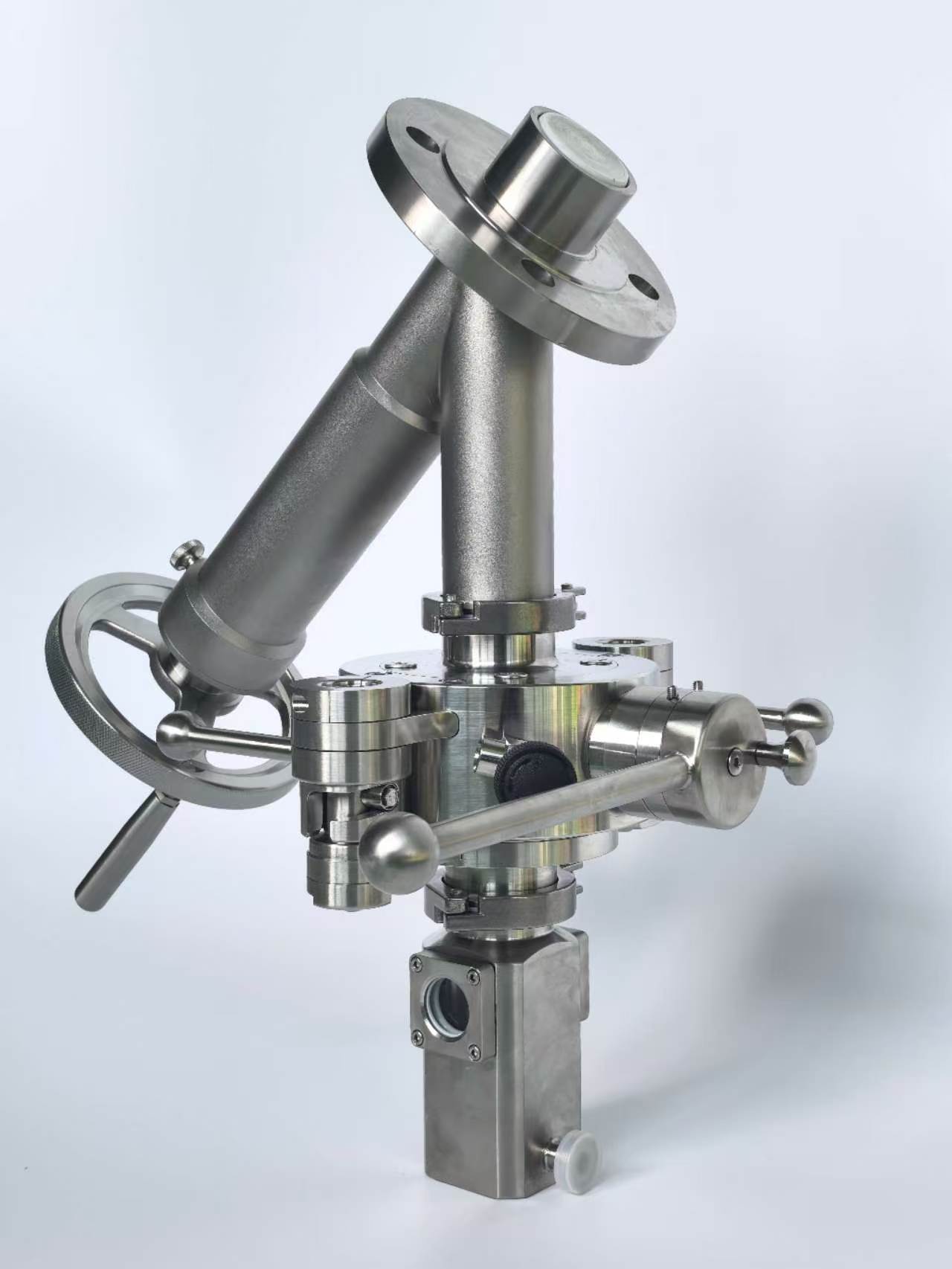
When handling potent compounds or toxic intermediates, even a minor leak can escalate into a serious safety incident—and no two production lines face exactly the same containment challenge. That’s why off-the-shelf valve technology often falls short in critical process environments. AVM specializes in OEM high containment valve solutions engineered around your specific process safety requirements, from custom flange dimensions to tailored actuation and sealing systems. In this post, we’ll explore how purpose-built containment valves can close the gap between generic hardware and the uncompromising demands of high-risk chemical, pharmaceutical, and fine chemical operations.
Rethinking Valve Containment for Critical Process Safety
The conventional approach to valve containment in critical process environments often treats leaks as a nuisance to be managed rather than a systemic design flaw. Yet when fugitive emissions escape from stem seals or body joints, the failure isn't simply mechanical—it's a breakdown in how containment was prioritized from the start. Rethinking containment means moving beyond periodic torque checks and packing adjustments, toward valves engineered with zero-leak intent. Double block and bleed arrangements, live-loaded packing systems, and bellows seals become not add-ons, but foundational assumptions. The question shifts from “how often do we inspect?” to “what does it take to make leakage physically implausible?”
This rethinking also demands a closer look at material compatibility under real operating stress. A valve that passes a factory hydrostatic test can still fail in service if thermal cycling, vibration, or corrosive media degrade the sealing interface. Forward-thinking facilities now use finite element analysis to model stem deflection and seal relaxation, selecting containment geometries that maintain integrity after tens of thousands of cycles. In refineries and chemical plants handling toxic or flammable fluids, the cost of containment failure is measured in human lives and environmental liability, not just lost product. That reality forces engineers to treat every potential leak path as a controllable variable—and every valve as a system, not a component.
The payoff of this mindset is measurable. Plants that adopt stricter containment standards report fewer unscheduled shutdowns, lower fugitive emission inventories, and a measurable drop in maintenance hours spent chasing elusive drip points. But perhaps the more significant shift is cultural: when valve containment is rethought as a process safety function rather than a mechanical afterthought, it gets included in hazard analyses, risk assessments, and operator training from day one. That integration is what separates a facility that merely meets regulatory thresholds from one that genuinely protects both its workforce and the surrounding community.
Why Custom OEM Geometry Matters in High-Risk Streams
In fast-moving water where rocks shift and debris hides under the surface, a one-size-fits-all hull shape can turn a routine crossing into a rescue. Custom OEM geometry takes the guesswork out of how a boat will react when it hits a submerged log at an angle or gets pushed sideways against a boulder. By tailoring the rocker profile, chine placement, and transom height to the specific flow patterns of a given river class, builders can create a hull that braces predictably instead of catching an edge. It's the difference between skimming over a pour-over and getting spun into a strainer.
Standard hulls often prioritize flatwater stability or easy manufacturing, which means compromise in turbulent streams. Custom geometry lets you move volume exactly where it's needed—more lift in the bow for punching through hydraulics, a sharper entry for slicing into eddies, or a wider stern for quick acceleration when dodging sweepers. These aren't abstract tweaks; they translate into fewer braces, less energy spent correcting, and a boat that feels like it reads the current with you. When every second counts in high-risk water, a hull that responds the way your instincts expect is not a luxury.
The real proof shows up after a long day of Class IV drops and tight must-make moves. A custom hull doesn't just survive the river—it anticipates it. The subtle rocker curve that lets you pivot on a rock instead of sliding off, or the slightly softened chine that releases cleanly from a side surf, comes from knowing the exact stream you paddle. That kind of precision is impossible to get from a mass-produced mold. For anyone who runs high-risk streams regularly, investing in custom OEM geometry is less about performance gains and more about building a boat that won't put you in a bad spot when the river stops giving you options.
Stem and Seat Sealing That Holds Up Under Pressure
The stem and seat interface often gets overlooked until a valve starts weeping at the packing or the seat shows uneven wear. Here the sealing approach uses a two-stage contact pattern that keeps the mating surfaces aligned even when thermal cycling tries to shift them. Instead of relying on a single soft lip, the design pairs a resilient primary seal with a secondary metal shoulder that catches any bypass before it reaches the stem threads.
Under pressure reversals and rapid opening strokes, many seals fold or extrude because the clearance gap opens slightly at full load. This assembly controls that gap by limiting stem deflection and keeping the seat retainer locked against the body shoulder. The seat itself is machined to a controlled flatness, so the contact band stays narrow and consistent—less torque loss, less galling, and no need to over-tighten just to stop a drip.
After assembly, every unit is cycled at rated pressure while the stem is backseated and the seat is pulsed with a light gas. That catches slow leaks that only show up after the seal takes a set. The result is a stem and seat package that holds line pressure without needing constant adjustment, which matters more in hard-to-reach installations where a small leak can turn into a shutdown.
Navigating Material Compatibility for Aggressive Media
Understanding the chemical nature of aggressive media is the starting point for navigating material compatibility. Different media cause distinct effects on polymers, metals, or elastomers—such as swelling, corrosion, or degradation—so a one-size-fits-all approach fails. For example, concentrated sulfuric acid may be safe for certain stainless steels at room temperature, but raising the temperature or altering concentration can rapidly trigger pitting. Similarly, ketone solvents dissolve many plastics aggressively, while PTFE remains inert. The first step is always to consult detailed compatibility databases and verify actual operating conditions including temperature, pressure, and whether the medium contains impurities or mixed components.
Relying only on static charts is insufficient for real-world complexity. When selecting materials for contact with aggressive media, conduct small-scale immersion tests that mimic actual exposure and record mass change, dimensional stability, and surface condition. Many combinations that appear compatible can develop slow stress cracking or leach out contaminants over long-term contact, which short-term tests miss. Regular inspection of seals, linings, and pipe joints in equipment can detect early signs of material degradation, preventing sudden failures that cause downtime or leaks. Ultimately, treat material selection as a dynamic process—combining field feedback with laboratory data—to reliably manage the challenges posed by aggressive media.
Validation Testing Beyond Standard Leakage Checks
Most teams stop at basic leak detection, but that only proves a container doesn't drip under static pressure. Real-world failures come from thermal cycling, vibration, and material fatigue that standard checks never simulate. We push validation into those neglected corners: repeated expansion and contraction at junction points, flexing at hose connections under load, and prolonged exposure to operating fluids at temperature extremes. These steps expose slow weepage, seal compression set, and micro-cracking that would otherwise surface weeks after deployment.
Another overlooked area is negative pressure. A system that holds fluid at positive pressure can still draw in air or contaminants when vacuum conditions occur during cool-down or pump cavitation. Our validation applies alternating positive and negative pressure cycles while monitoring for internal contamination and material collapse. We also test for compatibility with common cleaning agents and accidental fluid mixing, since real service environments rarely match the lab's single-fluid assumption.
Finally, we measure performance after accelerated aging, not just on fresh assemblies. O-rings lose elasticity, plastic housings creep, and metal fittings work-harden after thousands of thermal shocks. By pre-aging components and then running the full leak and structural test suite, we catch failures that standard protocols miss entirely. This approach treats validation as a prediction of long-term behavior rather than a snapshot of a brand-new part.
Retrofit Strategies for Aging Valve Infrastructure
Older valve installations often suffer from seat wear, stem leakage, and obsolete actuation. A practical retrofit begins with a field audit that ranks each valve by criticality, cycle count, and leak history rather than replacing units wholesale. This triage lets maintenance teams focus upgrades on points where a single failure can shut down a whole line or create a safety hazard.
Common retrofit paths include swapping internal trim to modern soft-seat or dual-seat designs, adding live-loading to the packing gland, and replacing manual operators with smart electric or electro-hydraulic actuators. Where the body and flanges are still sound, these upgrades can restore tight shutoff and control precision at a fraction of new valve cost. In some cases, installing a compact gearbox or spring-return handle converts an old quarter-turn valve into an automated fail-safe unit without cutting pipe.
The real challenge is managing obsolescence. Many aging valves have odd face-to-face dimensions or legacy flange drillings, so off-the-shelf retrofits do not always fit. Machine shops can fabricate adapter spools or stem extensions, but the lead time must be planned into a shutdown window. A good practice is to keep a small stock of retrofit kits for the most failure-prone valve models and train in-house crews on packing adjustment, torque settings, and leak testing. This turns a reactive emergency into a controlled, scheduled upgrade.
FAQ
A high containment valve is designed to prevent any escape of potent or toxic process media during transfer, charging, or discharge. In OEM equipment, these valves integrate tightly with isolators, gloveboxes, or closed processing lines, using features like split-body designs, inflatable seals, and continuous liners to maintain containment integrity even during connection and disconnection.
They combine passive and active isolation. Passive elements include full-bore elastomer liners and metal-to-metal sealing faces that leave no crevices where powder can accumulate. Active elements may involve vacuum-assisted split valves that draw airborne particles inward before the halves separate. This layered approach keeps airborne concentrations well below occupational exposure limits.
Typically charging reactors, discharging filter dryers, milling, and tablet press feed lines. Any point where dry powder or slurry transfers between vessels creates a containment breach risk. High containment valves are placed at those interfaces to allow closed transfer without breaking the product-contact boundary.
Hastelloy C-22, 316L stainless steel with electro-polished surfaces, and PTFE or EPDM liners are frequent choices. Surface finish below 0.4 µm Ra minimizes particle adhesion, and elastomers chosen for chemical compatibility with solvents or potent compounds. The valve body may be passivated or coated to resist cleaning agents like hydrogen peroxide vapor.
Many designs support retrofit with adapter plates that match existing vessel flanges and glovebox ports. However, achieving certified containment often depends on the mating half being precisely aligned. Retrofits are feasible when the equipment has compatible port dimensions and the OEM is willing to validate the assembly, otherwise a purpose-built integration is cleaner.
Standard practice uses surrogate powder testing with a tracer like lactose or riboflavin, followed by surface sampling and airborne particle monitoring. Some manufacturers also run microbial ingress tests or helium leak tests for gas-tight variants. The validation report should document no detectable tracer above a defined limit on external surfaces after repeated connect-disconnect cycles.
Inflatable seals and split-body gaskets need periodic replacement based on cycle counts or visual inspection. Valves should be leak-tested after any seal change. Lubricants must be compatible with cleanroom requirements and product residues. Scheduled tear-down with HEPA-filtered vacuum cleaning prevents powder buildup in dead spaces.
An OEM-specific solution accounts for port geometry, actuation interface, and cleanability within your exact machine envelope. Generic valves often force compromises in ergonomics or containment line-up, leading to longer maintenance or added adapter stack-ups. A tailored valve integrates with existing control systems and validation documentation, reducing engineering time on site.
Conclusion
Rethinking containment starts with recognizing that off-the-shelf valve designs rarely survive the combined effects of thermal cycling, solids impingement, and fugitive emission limits in critical process streams. Custom OEM geometry becomes the foundation—not merely a fit adjustment—because port contours, body flow paths, and stem alignment directly influence local velocity and wear patterns. In high-risk services, standard stem and seat sealing arrangements fail prematurely when differential pressures fluctuate or media polymerize at the seat interface. A properly specified OEM solution addresses these failures at the design stage: live-loaded packing, pressure-assisted seat rings, and tight dimensional control around the stuffing box allow the stem to seal reliably through repeated actuation, while the seat maintains shutoff without relying on excessive closing torque that would otherwise gall or deform the internals.
Material compatibility is not a lookup-table exercise when aggressive media include wet chlorine, mixed acids, or abrasive catalyst fines. The body, trim, and soft goods must be evaluated together—elastomer swelling can be as detrimental as metal corrosion. Beyond routine API 598 or ISO 5208 leakage checks, meaningful validation involves cycle testing under actual thermal gradients, particulate loading, and low-emission packing measurement per ISO 15848 or equivalent. For aging installations, retrofitting existing valves with OEM-designed stems, seats, and packing cartridges often restores containment margins without replacing entire piping assemblies. Rather than treating each valve as a commodity, plants gain process safety by specifying OEM containment packages that fit existing envelopes while upgrading the specific failure points documented in service.
Contact Us
Contact Person: Ananda
Email: [email protected]
Tel/WhatsApp: 8619016718200
Website: https://www.wzaomi.com