
OEM Telescopic Mast: How to Choose the Right Custom Solution for Your Needs
2026-11-16
When a standard telescopic mast just won't cut it, the real challenge begins: translating your specific operational demands into a custom OEM solution that actually works. From mobile communication to surveillance and beyond, every application brings its own load, height, and environmental constraints. That's where getting the choice right matters—and where Homall Industry Limited has spent years refining the art of tailored mast engineering. But how exactly do you move from a vague requirement to a mast that performs flawlessly in the field? In this guide, we break down the key factors to consider before you commit.
Why “One Size Fits All” Rarely Works for Telescopic Masts
Telescopic masts are deployed across wildly different environments, from desert heat that warps metal to arctic cold that makes grease seize. A mast engineered for a coastal surveillance station might buckle under the sand-laden winds of a mining site, while a heavy-duty military variant would be absurd overkill for a temporary weather sensor. The belief that a single design can handle every terrain, load, and duty cycle ignores how quickly environmental variables expose weak points in seals, locking collars, and cable routing.
Payload requirements alone destroy any universal standard. A lightweight camera needs a mast that prioritizes quiet, vibration-free extension, whereas a communications array demands stiffness to prevent signal drift during gusts. Mixing those priorities often yields a compromise that excels at neither. For example, a mast with extra-thick walls for antenna stability will be exhausting to hand-carry over rough ground, and its weight will demand a heavier vehicle mount—a cascade of trade-offs that no single specification can resolve.
Maintenance realities further fragment the market. A rural broadcast tower might only be serviced twice a year, so it needs corrosion-resistant alloys and tool-free locking mechanisms. In contrast, a disaster-response mast gets packed and unpacked weekly, worn by operators who value speed over fussy alignment marks. Designing for one lifecycle simply fails the other. The result is that successful mast programs almost always evolve into families of models—each tuned to a narrow band of conditions—rather than betting on a mythical do-everything design.
The Questions That Reveal Your True Height and Load Requirements
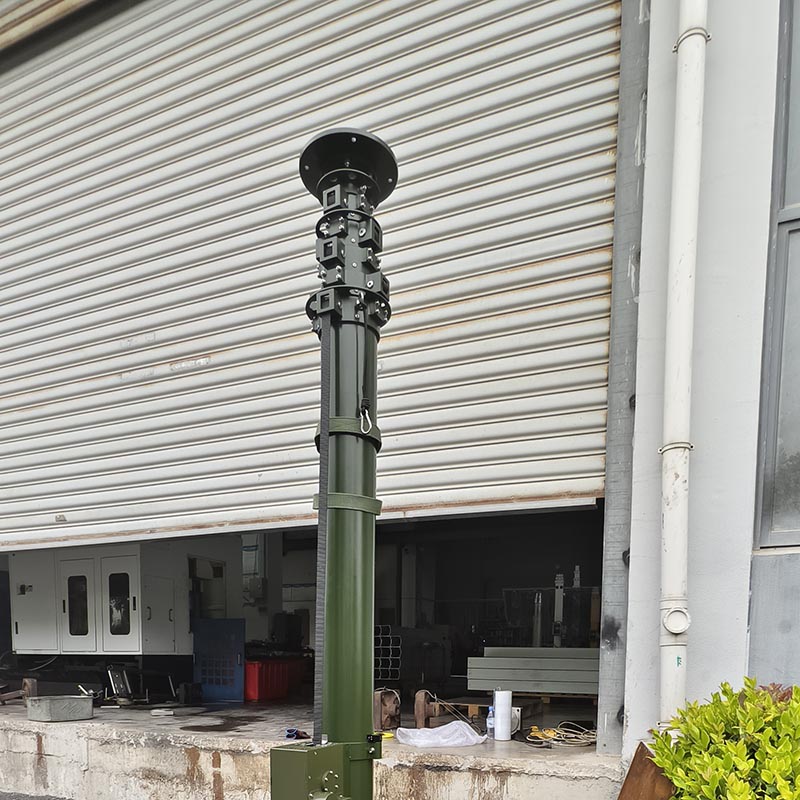
Most spec sheets tell you a machine's maximum lift height and rated capacity, but they don't mention the doorway that's two inches too low or the floor plate that flexes under a full pallet. These are the questions you have to ask before the equipment arrives, because the answers change what actually fits and what merely looks good on paper.
Start with clearance: what's the exact height from finished floor to the lowest pipe, light fixture, or beam in every aisle the equipment will travel? Then look down—can the slab handle the point load of a fully loaded unit rolling across an expansion joint? If you're using a forklift, check the right-angle stacking aisle width and whether the mast will tilt back without hitting a sprinkler head. And don't assume every pallet is the same; a 48-inch-deep load with a shifted center of gravity can cut your safe capacity by a third even though the weight hasn't changed.
Once you have those numbers, compare them against the derating chart and the actual turning radius, not just the brochure picture. The goal is to find the gap between the advertised limits and your daily reality—because that gap is where damaged racks, scraped ceilings, and expensive downtime usually come from.
Materials and Coatings: Matching the Mast to the Job Site
Coastal job sites throw salt spray and constant moisture at any structure, so the mast material has to shrug off corrosion without constant upkeep. Aluminum holds up well here, and a marine-grade alloy adds extra resistance, though it can drive up cost. Stainless steel is another solid choice for high-salt areas, but it's heavier and pricier, so it only makes sense when the extra strength is actually needed. For inland sites with mild weather, a quality carbon steel mast with a tough coating system often does the job for far less money.
Coatings matter as much as the base metal. A hot-dip galvanized finish works great for steel in wet or industrial environments—it bonds to the surface and heals small scratches over time. Powder coating gives you more color options and a smooth, even look, but it can chip under impact or UV exposure if not applied correctly. Anodizing aluminum creates a hard oxide layer that resists wear and corrosion, though it limits your color palette to metallic tones. Match the coating to the specific abuse the mast will face, not just the climate.
Sometimes the job site throws curveballs, like airborne chemicals from a nearby plant or abrasive dust from a quarry. In those cases, a simple painted finish fails within a year, while a thicker, multi-layer coating or a more resistant alloy pays for itself quickly. Think about maintenance access too—if the mast is hard to reach, choose a material and coating that barely needs attention. A slightly higher upfront cost for the right combination often avoids repeated service trips and premature replacement down the line.
Drive Choices That Affect Speed, Power Draw, and Reliability
The drive you pick isn't just a storage component—it shapes how your system feels day to day. Spinning hard drives with high RPM platters can deliver quick sequential reads, but they pull more current and run hotter, which often leads to wear on bearings and a higher chance of mechanical failure over time. Meanwhile, lower-RPM drives sip power and stay quiet, yet they lag behind when you need to load large batches of files quickly.
Solid-state drives flip that trade-off. They draw far less power under load and have no moving parts, so shock and vibration rarely cause issues. But not all SSDs are equal: cheaper models with older controllers might throttle under sustained writes, dropping speed drastically, while drives with better thermal design and over-provisioning hold up longer under heavy use. That reliability gap often shows up only after months of daily operation, when flash wear starts to outpace the firmware's management.
For mixed workloads, enterprise-grade SATA or SAS drives add features like power-loss protection and higher endurance ratings, but they cost more and may draw more idle power than consumer alternatives. The real decision comes down to matching the drive's characteristics to your access patterns: random small reads favor fast flash, sequential bulk writes might still favor high-capacity HDDs, and always-on systems need drives rated for 24/7 operation with lower heat output to avoid early failures.
Integration Details That Make or Break a Custom Build
Every custom build lives and dies by how its parts talk to each other. A perfectly machined bracket means nothing if the wiring harness chafes against a sharp edge, or if the ECU can't read the new sensor because the ground path is shared with a noisy component. The best builders spend hours dry-fitting everything before final assembly, checking clearance, routing harnesses away from heat sources, and using proper connectors instead of soldering everything solid. It's the unglamorous stuff that keeps a project from turning into a roadside flamethrower.
One overlooked detail is connector selection and pinning. Cheaping out on generic spade terminals or mismatching wire gauge to the current draw creates hot spots that corrode over time. Builders who take the extra step to use weather-sealed connectors, label every wire, and document the pinout with a simple hand sketch save themselves weeks of troubleshooting later. The same goes for fluid routing — a braided line that rubs against a suspension arm will fail in a thousand miles, no matter how fancy the fittings look at the car show.
Finally, integration isn't just physical; it's about how the system behaves after the key turns. A custom fuel system that works fine on a dyno might starve the pump during hard cornering if the pickup isn't baffled correctly. An aftermarket ECU that isn't tuned for cold start enrichment will leave you stranded on a winter morning. The builds that last are the ones where every modification was tested as part of the whole, not as an isolated upgrade.
How to Vet a Mast Supplier Beyond the Spec Sheet
A spec sheet tells you the mast will stand up to wind load, but it won't show you how the supplier behaves when things go wrong. Pick up the phone and ask about a past failure—any decent fabricator can recall a project where a weld cracked or a shipment arrived late. Listen for whether they own the mistake or blame the client. That single conversation reveals more than a dozen tolerance charts.
Visit the shop floor if you can, and don't let them steer you to the showroom. Watch how raw tube is stored, whether jigs look maintained, and whether the workers actually use the inspection gear sitting on the shelf. If the finished masts are stacked with bare metal touching bare metal, that's your answer on corrosion care before you even ask.
Finally, ask for references from customers who don't buy in huge volumes. Big accounts get the white-glove treatment; small buyers see the real process. Call one and ask what surprised them after the order closed. The answer—good or bad—usually points to how your own project will actually go.
FAQ
Start with the total extended height and the number of sections you can physically fit into the retracted length. That ratio drives most of the design, so don't lock in a manufacturer until you've walked through your stowage space and deployment constraints.
Think about the highest point you need to reach plus a safety margin for uneven ground or unexpected obstacles. If you're mounting cameras, antennas, or sensors, add at least 10-15% extra height so you're not forced into a redesign if field conditions change.
Aluminum works well for lightweight portable setups, but if you're near saltwater or in a high-corrosion area, consider anodized or powder-coated options. Stainless steel adds weight but makes sense for permanent installations where maintenance access is limited.
Manual locks are fine for occasional use, but frequent or automated raising and lowering calls for a positive locking system that doesn't rely on friction alone. Ask about the lock's cycle rating and whether it can be serviced in the field without special tools.
A lot more than most people think. Your payload isn't just the device on top; it includes cables, ice, wind load, and any off-center mounting brackets. Choose a mast rated for at least 1.5 times your expected static load so you don't end up with a wobbly or unsafe setup.
Look for flexibility in base plates, side mounts, and vehicle or trailer integration. A good OEM partner will ask about vibration, shock, and the exact mounting surface before recommending a standard bracket or designing a custom collar.
Yes, most manufacturers offer anodizing, powder coating, or chemical film finishes. Specify your color and corrosion requirements early because the finish can affect tolerances, especially on sliding sections with tight clearances.
Stick close to proven tube diameters and standard section lengths where possible. Custom features like specialized end caps or drive systems add time, so ask the supplier which dimensions they already have tooling for and build your design around those.
Conclusion
Off-the-shelf telescopic masts often disappoint because they ignore the specific demands of your vehicle, payload, and operating environment. Before settling on a mast, pin down your actual extended height under wind load and the weight of antennas, cameras, or sensors you plan to mount. Aluminum, steel, and composite options each respond differently to salt spray, vibration, and extreme temperatures, so the coating choice matters as much as the base metal. Drive systems also vary widely, with electric actuators offering quiet and precision while hydraulic or pneumatic drives trade speed for power draw and maintenance. Getting these basics wrong leads to unstable deployments or premature wear.
A custom OEM build makes sense only when integration is thought through from the start. Consider cable routing, mounting brackets, locking collars, and how the mast stows for transport. Ask suppliers for real load-deflection data, cycle-test results, and examples of similar deployments rather than polished spec sheets. A reliable partner will walk you through failure points and suggest design changes that simplify field service. By matching the mast's materials, drive, and integration details to your actual job site conditions, you avoid the hidden costs of re-engineering later and end up with a system that stays dependable for years.
Contact Us
Contact Person: Ryan
Email: [email protected]
Tel/WhatsApp: +85259582726
Website: https://www.robomast.com/