

Plywood Die Board Laser Cutting Machine Factory: Where Precision Meets Productivity
2026-11-02
Precision in a plywood die board is not a luxury; it’s the difference between a line that runs and a line that stops. Inside ADEWO’s laser cutting machine factory, that standard is engineered into every beam path, drive system, and software command. We’re pulling back the curtain on how this balance of accuracy and speed gets built—so you can see why your next die board run might need a different kind of supplier.
Precision Starts with the Right Laser Beam
Every cutting, marking, or measurement task hinges on one often-overlooked detail: the laser beam's fundamental characteristics. Beam quality, wavelength stability, and mode structure aren't just datasheet trivia—they determine how sharply a edge is defined, how cleanly material is removed, and whether the result meets spec the first time. A poorly matched beam forces you to compensate with slower passes, higher power, or post-processing cleanup. Choose correctly, and the beam itself becomes the fine-tipped instrument that turns approximate work into exact results.
Consider spot size and depth of focus. A truly precise setup demands a beam that stays tightly collimated over the working distance, so tiny variations in part height or thickness don't blur the focal point. Thermal drift, lens aberrations, and even back-reflections can quietly erode repeatability long before you see obvious flaws. Selecting a laser with a clean Gaussian profile and low M² value isn't about chasing specs for their own sake—it's about removing invisible variables that force rework or compromise tolerances.
In practice, this means matching the laser's wavelength and pulse characteristics to the material's absorption and damage threshold. A beam that's too energetic for the task creates heat-affected zones, micro-cracks, or unwanted charring. One that's too weak forces multiple passes, each introducing alignment errors. The right beam sits in the sweet spot: enough peak power to act instantly, yet gentle enough to leave surrounding material untouched. That balance is what separates a process that merely works from one that reliably hits within microns.
How We Keep Plywood Die Board Production Moving Fast
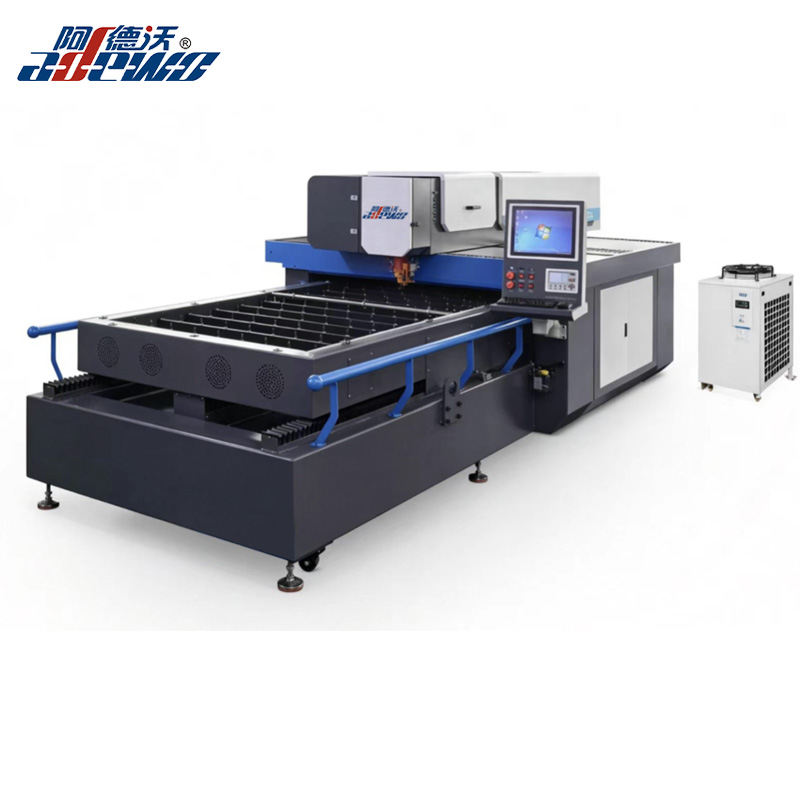
Keeping plywood die board production moving fast isn't about cutting corners—it's about building a workflow that removes waiting time at every stage. We start by staging raw sheets and cutting templates side by side, so the laser never sits idle while someone hunts for the next job. Our team works in small batches, which lets us spot material flaws or design mismatches before they ripple through a full run.
The real speed comes from how we handle the in-between steps. Instead of letting hand-finishing become a bottleneck, we rotate two operators per station: one clears cut boards while the other starts knocking out waste and checking slot widths. That overlap might only save a few minutes per board, but across a hundred boards a day, it turns into hours we can put back into tight deadlines.
We also treat maintenance as part of production, not a pause in it. Daily checks on lens alignment, air pressure, and belt tension happen during shift handoffs, so the machine is ready to cut the moment the next job is loaded. When a rush order comes in, we don't panic—we just follow the same sequence, which has been tightened enough to absorb the extra load without falling behind.
Custom Die Board Cutting Without the Extra Tooling Costs
Most cutting processes still lean on physical dies that have to be machined, stored, and eventually replaced. With custom die board cutting, that entire layer of expense simply disappears. You send the file, the machine reads the contours, and the blade follows the path — no waiting on a die maker, no per-shape tooling charges, and no warehouse space taken up by racks of steel rule dies.
That shift changes how projects get quoted. Instead of amortizing a die across thousands of units just to make the numbers work, you can cut ten pieces or ten thousand without a setup penalty. Short runs, packaging prototypes, point-of-sale displays, and one-off samples all become economically realistic. Adjustments are just a matter of editing a vector file, not ordering a new die and hoping the revision fits.
The real advantage shows up when designs start to vary. Tabs, fold lines, perforations, and unusual outlines no longer carry a tooling surcharge. Each sheet can even be cut differently if the job calls for it. That kind of freedom used to belong only to large-volume production; now it sits on the same table as a standard cutting job, with the same turnaround time and a fraction of the upfront cost.
The Quality Control Steps Behind Every Die Board We Ship
Every die board that leaves our shop passes through a series of checks that start long before the first cut. Raw plywood sheets are measured for thickness and moisture content, and any sheet that falls outside our accepted range is set aside. It might sound overly cautious, but a warped board will create nothing but problems downstream, so we would rather catch it early.
After the laser cutting, each kerf is compared against the CAD file to verify alignment and depth. We walk critical contours with a fine-tooth comb, looking for clean edges without scorching or overcutting. Then comes the hand assembly, where blades are seated and height consistency is checked across multiple points using a dial indicator.
Finally, every finished board undergoes a test impression on sample stock. This reveals whether cutting rules penetrate fully and whether creasing channels are set at the right depth. We also check for any loose rule or die board strip placement before the board is wrapped and loaded for shipment. Only when each of these checkpoints is clear does the board get signed off.
Laser Cutting Systems That Handle the Thickest Plywood
Plywood thickness has always been the quiet killer of clean cuts. Most laser cutters top out around 12 mm, and even then, edge charring and glue-line burnback leave you sanding for hours. But steps up in tube wattage alone won't fix that. What sets the real heavy-duty machines apart is how they pair a larger spot size with high-pressure air assist and a longer focal lens. When the beam's waist is stretched, the cut kerf widens just enough to vent smoke and resin vapor before they condense back onto the veneer. That is why a 150 W CO2 system with a 4-inch lens will out-cut a 300 W machine running a standard 2-inch lens on 25 mm birch plywood.
The second piece nobody talks about is the honeycomb table. On thick stock, the underside of the cut needs somewhere for the beam to go after it exits the material. If you are cutting directly on a flat aluminum slat, that reflected energy bounces straight back into the plywood and scorches the bottom veneer. A deep-cell honeycomb lets the beam dissipate into open air, while still supporting the sheet. Some fabricators go further and add a sacrificial MDF or acrylic grid under the workpiece. Do that, and you can drop your cutting speed by 15 to 20 percent without losing edge quality—a trade-off that feels counterintuitive until you see the bottom face come out as clean as the top.
Finally, do not judge a thick-plywood laser by its maximum rated thickness. That number comes from a single straight-line cut on a fresh lens, a clean sheet, and a patient operator. In a production shop, you need a system that holds focus across a full 4x8 sheet, compensates for slight warping with an autofocus probe, and runs a chiller that keeps the tube temperature below 20°C for hour-long jobs. Look for machines with a motorized Z-axis and a bed size at least 300 mm larger than your actual stock in both directions. That extra room lets the beam start and stop off the material, which prevents the edge blowout that plagues small-format cutters. If a manufacturer cannot tell you the beam diameter at the focal point for a 3-inch lens on 18 mm plywood, walk away.
Why Factory Direct Support Makes a Difference for Die Makers
When a die maker hits a snag on the floor, waiting days for a distributor to relay questions back to the manufacturer can stall an entire production line. Factory direct support eliminates that middle step. You get answers from the people who actually designed and built the dies—engineers who know the tolerances, the heat-treat specs, and the wear patterns. That direct line often turns a potential shutdown into a ten-minute phone call.
There's also a cost angle that rarely shows up on a purchase order. Distributors mark up service and replacement parts, and their technical knowledge can be hit or miss depending on who answers the phone. Factory direct teams typically offer flat-rate or warranty-backed support, and because they see the full lifecycle of their dies across many shops, they spot recurring issues faster. A die maker benefits from that accumulated knowledge without paying a middleman for it.
Long-term, factory direct relationships tend to produce better dies. Feedback from the shop goes straight into the next design revision, not lost in a distributor's notes. When a die maker can say 'this relief angle chips after 20,000 hits' and the factory actually changes the CAD file, everyone wins. That kind of loop is rare when you're buying through a third party, which is why many experienced die makers insist on factory direct support from day one.
FAQ
The machine is built primarily for plywood used in die boards, but it also handles MDF, acrylic, and birch laminates. The laser parameters adjust automatically based on material thickness and density, so you don't need to re-tune settings between jobs.
Traditional methods rely on mechanical blades or manual cutting, which leaves burrs and slight offsets. Laser cutting uses a focused beam with positioning accuracy down to ±0.05 mm, producing clean edges and repeatable slots for rule insertion. That tight tolerance means less hand finishing and faster assembly downstream.
Yes, almost every order involves some level of customization. The factory offers bed sizes from 1300x900 mm up to 2500x1300 mm and laser tube power options ranging from 150W to 300W. If you work with unusually thick plywood or need to cut multiple sheets at once, the engineering team can adjust gantry speed, assist gas pressure, and focal length accordingly.
Shops often report cutting cycles reduced by 40-60% because laser cutting eliminates secondary trimming and sanding. With auto-focus and material recognition, the machine can run unattended for long batches, especially overnight. One client we track managed to increase daily die board output from 120 to 210 boards without adding staff.
Plywood density can vary between suppliers and even between sheets. The control software uses real-time feedback from a capacitance sensor to adjust laser power and cutting speed on the fly. Additionally, the factory runs a 72-hour burn-in test on each machine with sample materials you provide, so you see actual cut quality before shipment.
The factory provides remote video guidance during installation, and if you're within a reasonable travel distance, a technician can be on site. Operator training typically takes two days: one for basic operation and maintenance, another for advanced nesting software and troubleshooting. After that, phone and email support is available for the life of the machine.
Plywood produces resin fumes and fine particulate when cut. The machine comes with a sealed cutting chamber and a dual-stage fume extraction system: a pre-filter for larger particles and an activated carbon filter for volatile organic compounds. The factory also includes an automatic fire suppression system triggered by temperature sensors near the cutting head.
Conclusion
Precision on a die board starts long before the first cut—it starts with the beam itself. Not every laser suits dense, resin-heavy plywood; we match wavelength, spot size, and pulse characteristics to the board’s thickness and glue lines. That’s why our systems can slice through the thickest sheets without charring or wandering kerf. And because the cutting path is driven by software rather than physical dies, custom layouts don’t require new tooling. You send the vector file, we adjust the laser parameters, and the same machine that handles standard rule slots can produce a one-off prototype or a full production run with identical edge quality.
Keeping production moving fast isn’t about rushing the beam—it’s about removing bottlenecks around it. Our factory pairs high-speed gantry motion with automated material loading and real-time power compensation, so the laser never slows down when plywood density shifts mid-sheet. Every board that leaves the floor passes a series of checks: kerf width on sample slots, rule retention force, and dimensional verification against the customer’s CAD file. If something drifts, it gets corrected before shipping, not after. Buying factory direct also means die makers talk to the people who designed the optics and motion system. A support call doesn’t end in a script; it ends with a parameter change or a replacement part shipped the same day. That combination of tight quality control and direct engineering access is what turns precision into daily throughput.
Contact Us
Contact Person: KAELYN LEE
Email: [email protected]
Tel/WhatsApp: +86 15012673758
Website: https://www.china-adewo.com