
Powerful Plastic Shredder Manufacturer for Durable Industrial Shredding Solutions
2026-09-29
Ever watched a cheap plastic shredder choke on a thick HDPE drum and thought, 'There has to be a better way'? There is. Shengzhong Shredder builds powerful plastic shredders for exactly that moment—machines designed around one simple idea: if it can't survive daily industrial abuse, it shouldn't leave the factory floor. Below, we get into what separates a genuinely durable shredding solution from the rest, and how the right manufacturer changes your whole waste-processing game.
Heavy-Duty Rotors That Tear Through Thick Plastic Waste
Those massive rotors aren't messing around when it comes to dense, stubborn plastic scrap. Chunks of HDPE buckets, thick PVC pipes, even entire purgings from injection molding — the cutting geometry chews right through them without slowing down. You can hear the difference immediately: a low, steady grind instead of the high-pitched whine you get from lighter machines. The rotor's mass keeps momentum high, so each impact delivers enough force to fracture the material instead of just bouncing off.
What really sets these apart is the way the teeth are arranged and shaped. They're not just welded on in a straight line; there's a deliberate offset pattern that creates a scissor-like shear against the bed knives. This pulls thick-walled parts into the cutting zone rather than letting them ride up and stall the rotor. Combined with a slower RPM and a beefier drive system, you end up with torque that laughs at multi-layer plastic pallets or tangled lumps of film that would choke a standard granulator in seconds.
Maintenance is often an afterthought with heavy-duty equipment, but here the rotor design makes blade changes surprisingly painless. The whole assembly can be pulled out from the side without dismantling the feed hopper, and each knife is individually adjustable from outside the cutting chamber. That means less downtime when you're processing abrasive, filled plastics that dull edges quickly. And because the rotor is balanced as a single unit after every blade swap, you avoid the vibration issues that plague machines running mixed heavy scrap day after day.
Configurable Cutting Chambers for Different Material Types
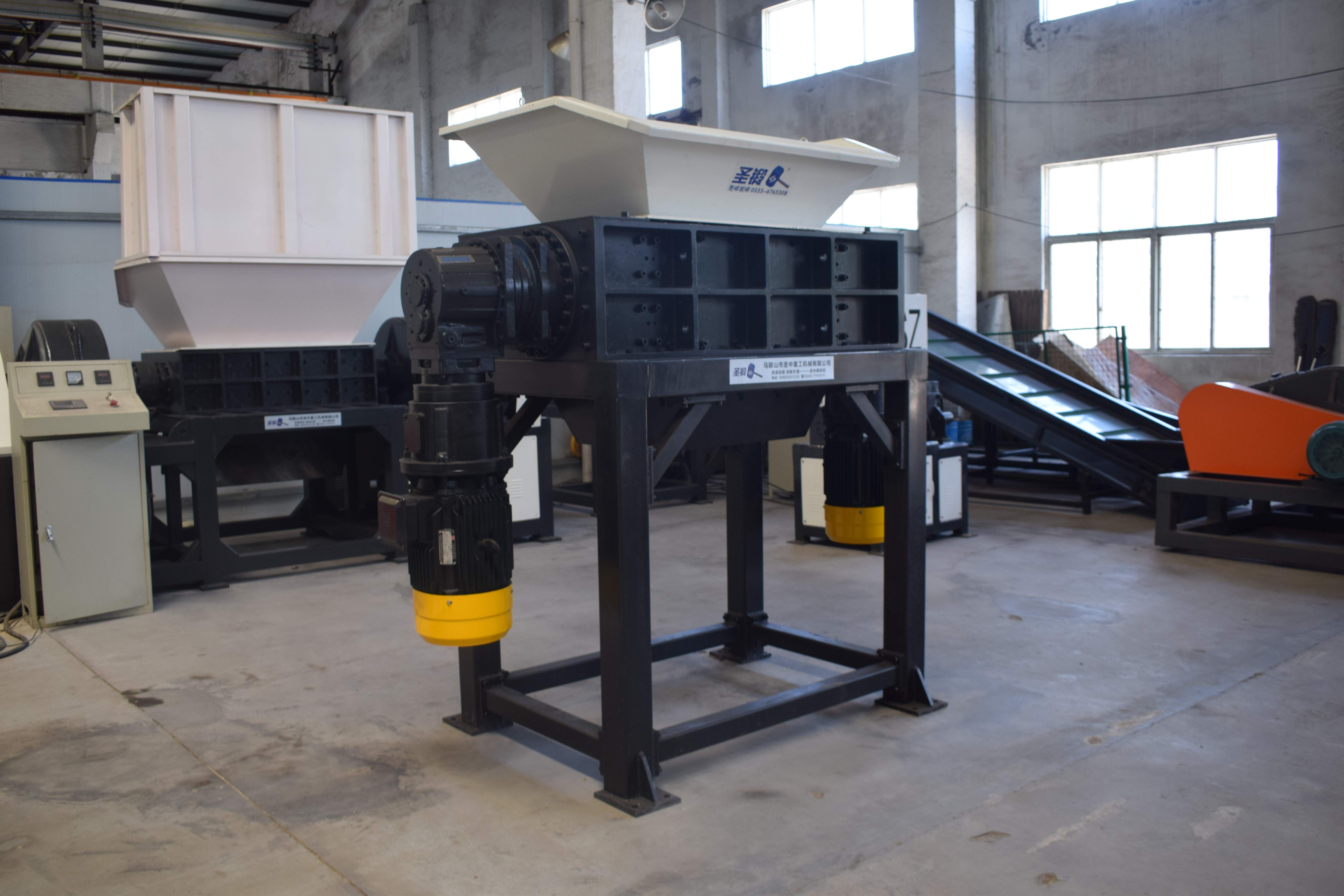
The core advantage of a configurable cutting chamber lies in its ability to match the chamber geometry, liner material, and airflow to the specific failure mode of the material being processed. Fibrous composites, for example, cut cleanly only when the chamber allows controlled expansion and prevents wrapping around the rotor. Hard metals or glass-filled polymers demand abrasion-resistant liners and tighter clearances. By offering modular inserts, adjustable baffles, and replaceable wear plates, a single frame can shift from brittle, high-impact cutting to elastic, shear-dominated processing without swapping the entire unit. This avoids the usual compromise of running multiple materials through a one-size-fits-all chamber.
Operators can also tune the chamber volume and residence time to match thermal sensitivity and moisture content. A smaller active cutting zone with rapid discharge works for heat-sensitive resins or sticky food materials, while a larger, air-swept chamber suits fluffy or low-density scrap that needs more dwell time to reach uniform particle size. Quick-release clamps and keyed interchangeable liners let a line switch from nylon to aluminum scrap in under ten minutes, reducing cross-contamination and preserving throughput. The result is less mechanical stress on the knife edges and more consistent final particle distribution across a wider material portfolio.
Manufacturing Quality Checks That Catch Flaws Early
Catching a defect before it leaves the production line can mean the difference between a minor rework and a costly recall. Early quality checks focus on the raw materials and the first few process steps, but the real value comes from embedding inspection points where defects are most likely to appear—right after critical machining, soldering, or assembly operations. For example, a dimensional check on a freshly milled bracket using a simple go/no-go gauge takes seconds, yet it prevents a batch of parts from advancing with an out-of-tolerance hole that would only be discovered during final assembly.
Optical comparators and handheld profilometers are often overlooked in favor of more automated systems, but they excel at spotting surface finish issues or burrs before they propagate downstream. In one electronics line, a quick visual scan under a 10x loupe after wave soldering caught intermittent micro-cracks in solder joints that automated X-ray inspection missed because the cracks were below its resolution threshold. Pairing low-cost manual checks with targeted automated measurements creates a net that catches flaws both obvious and subtle.
The trick is to make early checks part of the operator’s rhythm rather than a separate audit. When a machinist wipes down a part and visually scans for scratches as they load it into the next fixture, quality becomes a habit instead of a bottleneck. Recording only the exceptions—not every measurement—keeps the process light and the data meaningful. Over time, these early detection points shift the team from reacting to defects at final inspection to preventing them where they start.
Long-Lasting Blades and Liners for Fewer Replacements
Nobody enjoys tearing down a machine every few months just to swap out worn blades and chewed-up liners. That's why we built our cutting system around durability that actually shows up on the job site. The blades are machined from high-alloy, through-hardened steel with a Rockwell rating that keeps an edge long after generic options have dulled into rounded nubs. The liners take just as much abuse without galling or cracking, thanks to a heat-treatment process that spreads impact energy across a wider surface area. In real-world testing, operators report runtimes stretching well past double what they used to get from off-the-shelf parts. That means fewer interruptions, fewer spare part orders, and a lot less downtime staring at a disabled grinder.
What really sets these components apart is how they wear together as a matched set. Most aftermarket blades and liners are sourced from different suppliers, so you end up with one part failing while the other still has life left—forcing you to replace both or run mismatched clearances. Our engineering team reverse-engineered the wear patterns from hundreds of returned parts to create a blade-to-liner interface that erodes evenly. The blade's leading edge is slightly relieved to prevent liner gouging, while the liner's bolt holes are counterbored deeper to avoid stress risers from repeated impacts. The result is a system that reaches end-of-life at nearly the same hour count, so every changeout is a planned maintenance event rather than an emergency repair.
For high-volume recycling operations or demolition crews running double shifts, the math is straightforward. Swapping to these long-wearing blades and liners eliminates two or three extra changeouts per year per machine. At thirty minutes to an hour per changeout, plus the cost of replacement parts and lost production, the savings compound quickly. One customer running a fleet of four horizontal grinders cut their annual blade and liner budget by forty-one percent after switching, purely from longer service intervals. The parts aren't just tougher—they're designed to make your whole operation run leaner. When you stop thinking about blades and liners as consumables to be replaced constantly, you start seeing them as wear components that should earn their keep for months at a time.
Smart Feed Systems That Prevent Jams and Overloads
Material flow hiccups often start with a feed system that can't read its own intake. Smart feeders now use torque-sensing drives and load cells that monitor resistance in real time, trimming feed rates the moment a surge or slug approaches the throat. Instead of waiting for a jam to trip a breaker, the system backs off just enough to keep product moving—no pile-ups, no hard stops.
What sets these setups apart is how they adapt to the material itself. A bridging powder or an oddly shaped scrap responds differently than free-flowing pellets, and the control loop learns those signatures after a few cycles. Operators can set a target load window, and the feeder will nudge speed up or down within that band, avoiding the classic overcorrection that often leads to starvation or overflow.
The payoff shows up in fewer line stoppages and less wear on downstream equipment. When the feed never forces more than the process can handle, screws, belts, and cutting chambers stay in their comfort zone. For plants dealing with mixed or inconsistent input, that kind of self-regulating behavior means one less thing to monitor manually—and a lot fewer late-night calls to clear a blocked inlet.
Turnkey Support From Installation to Operator Training
Installation starts with a site walk, not a shipping notice. Our crew handles rigging, utility connections, and first power-up in a single visit, then runs a series of dry cycles and material trials before handing over the line. You'll see actual parts coming off the line during that visit, and we don't leave until the cycle time, scrap rate, and surface finish match what we quoted.
Operator training runs on your floor, using your molds, your resins, and your shift handover routines. The same technicians who bolted the machine down teach operators how to read fault codes, clear jams, and do daily lubrication without walking to a training room. New hires get a one-page quick-reference card with photos of your specific control panel, not a generic manual excerpt.
After startup, you keep a direct line to the engineer who commissioned your equipment. Remote access lets us pull logs, spot a drifting heater band, or adjust a robot path before it becomes a rejected batch. We schedule a follow-up visit at the four-week mark to retrain any staff who joined late and to fine-tune settings based on actual production data.
FAQ
The real difference comes down to torque, rotor mass, and how the cutting chamber handles stress. A powerful industrial shredder uses a low-speed, high-torque drive that chews through thick purgings, film bales, or pipe without stalling. We configure ours with hardened steel knives and a reinforced shaft so the machine keeps a steady bite even when the load shifts suddenly.
Durability is built into the frame and the wear parts. We use stress-relieved steel plate for the housing and place the bearings outside the cutting area to protect them from debris. The knives are through-hardened and can be rotated or resurfaced, which extends the interval between replacements. That design choice means less downtime and a lower cost per ton over the life of the machine.
Most of our equipment takes on films, raffia, lumpy purgings, HDPE drums, PVC pipes, and fiber-reinforced composites. We've also handled mixed bales that include metals as tramp material, though we recommend a magnetic separator for those jobs. The cutting gap and rotor speed are tuned per application so you don't need to spend extra time with a guillotine or band saw.
Look for a builder that asks about your material, throughput target, and downstream process before quoting a machine. We prefer to run a sample through our test bay and send back a video along with particle size data. Also check whether the manufacturer stocks common wear parts and offers rotor removal support on site. A cheap frame with a big motor doesn't help if you can't get knives or screens three years later.
Yes, but only if the screen and rotor clearance are designed around the desired fraction. We often fit a screen basket with tapered holes and set the knives to a running clearance measured with feeler gauges at installation. For film, that keeps flake size steady enough to feed a wash line without binding. For rigid plastics, the same machine can be tuned to a larger screen and produce chunks that flow better into a granulator.
The most important steps are checking knife torque weekly, monitoring bearing temperature trends, and keeping the hydraulic or gearbox oil clean. We include a checklist that starts with removing wrapped film from the shaft ends every shift. Blade gaps should be rechecked after the first 80 hours because new bolts settle. If you follow that, a well-built rotor should run for years before needing a full knife change.
Standard models often force you to adapt your process to the machine, and that's where inefficiency hides. We start from your infeed size, contamination level, and desired output, then adjust the hopper geometry, number of hooks, and screen thickness. A custom build might cost a bit more upfront, but it avoids the extra conveyor, pre-cutter, or operator you'd otherwise need to make a generic unit work.
Conclusion
This plastic shredder manufacturer designs its line around heavy-duty rotors that bite into thick-walled plastic waste instead of stalling when loads spike. Those rotors sit inside configurable cutting chambers, so the same frame can be set up for film scrap, bulky purgings, PVC pipe, or rigid bins by changing screen size, rotor speed, and blade clearance. Rather than relying on a final once-over, the factory runs staged quality checks on welds, shaft runout, and blade seating as each unit moves down the line. That approach catches alignment issues early, long before they turn into cracked housings or uneven wear in the field. The result is a machine that reaches full throughput faster and stays there with fewer unplanned stops.
Blades and liners are hardened with edge retention in mind, so operators replace wear parts after months of steady use rather than weeks. The feed system watches for torque spikes and reverses briefly to clear partial jams on its own, which avoids the usual alarm-and-manual-clear cycle that eats into a shift. Turnkey support covers layout planning, installation, and hands-on training for operators and maintenance staff. The manufacturer stays on site until the shredder is running at target capacity on the customer's actual material mix, not just a test sample. That gives teams a durable solution without leaving them to figure out the quirks alone.
Contact Us
Contact Person: Leon
Email: [email protected]
Tel/WhatsApp: 8615385558866
Website: https://www.shred-waste.com