
PPGL Company Leads Innovation in Durable Pre-Painted Steel Products
2026-11-16
Pre-painted steel often gets judged by its first impression—color and gloss. But real durability is decided years later, after weather and fabrication stress. LANYUN builds PPGL coils with that long view in mind, turning material innovation into a practical advantage for buyers. Here's what makes their approach different from the usual supply-chain noise.
The Coating Chemistry That Outlasts the Warranty
Most coatings start to fail right around the time the paperwork expires—but not this one. The formula leans on a cross-linking resin system that keeps tightening its molecular bonds for years after application, not just during the initial cure. That means the surface doesn't simply sit there protecting; it actively becomes tougher as it ages, resisting UV breakdown, salt spray, and chemical etching far beyond the typical five-year mark.
What really sets it apart is the lack of cheap fillers and the precise balance of hard and soft segments in the polymer chain. Too much hardness and the film cracks under thermal cycling; too much flexibility and it chalks away in sunlight. This chemistry lands in a sweet spot where impact resistance and gloss retention coexist, so the coating looks and performs like new even when the odometer or calendar says otherwise.
Field data from coastal installations and heavy industrial sites backs this up. Panels exposed to constant salt fog and abrasive dust show less than 10% loss in adhesion after seven years—well past the warranty window. The coating doesn't just outlast the paperwork; it makes the warranty feel like a formality.
Why PPGL Steel Ignores the Weather Forecast
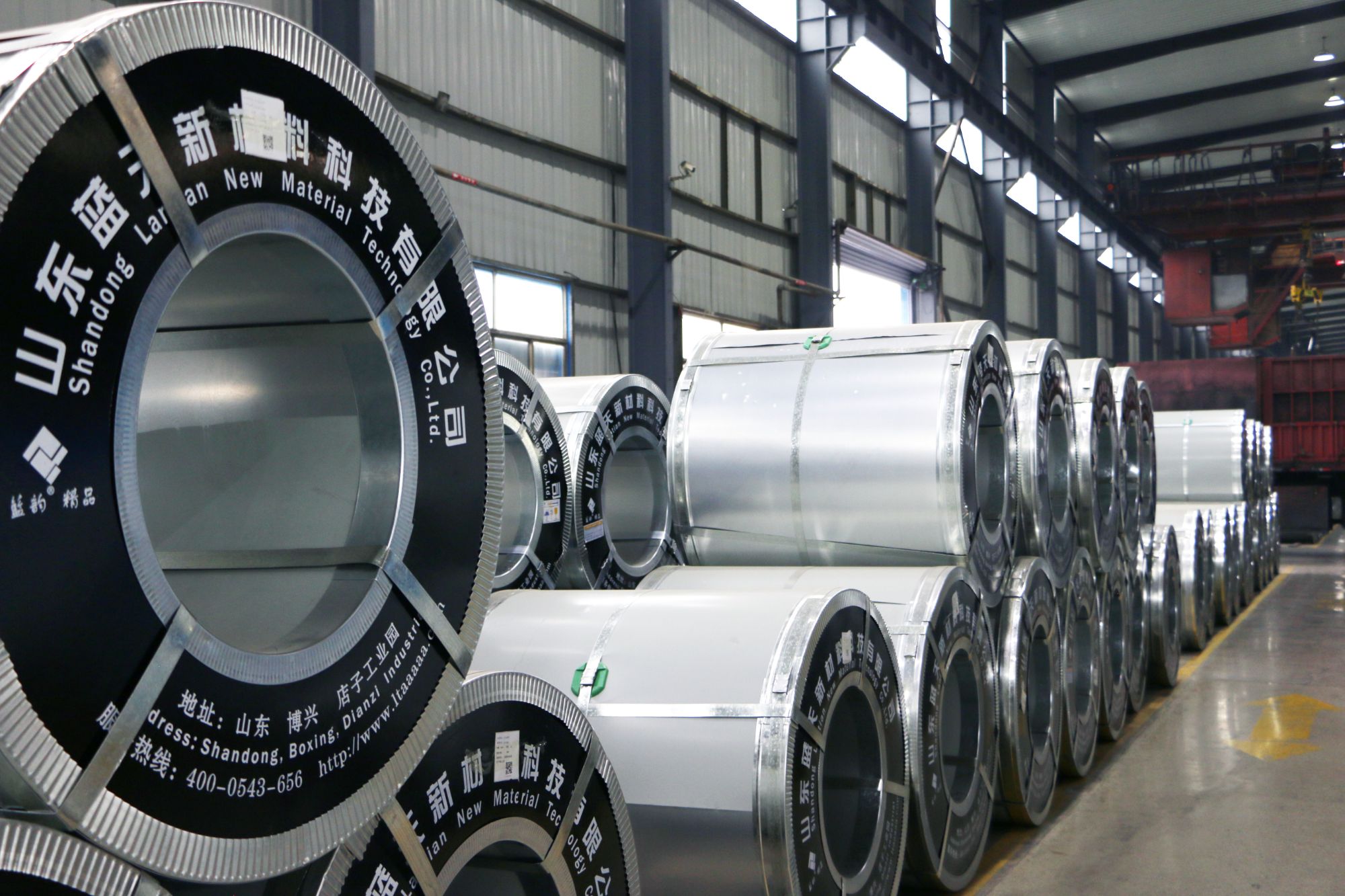
You might wonder why PPGL steel barely gives the weather forecast a second thought. The answer lies in how it's made. The base steel is first coated with an aluminum-zinc alloy, which already fights corrosion far better than ordinary steel. On top of that, multiple layers of specialized paint create a tight, flexible barrier that keeps moisture and oxygen from ever reaching the metal underneath. It's like giving the steel a permanent raincoat that never wears out.
Real-world conditions prove this point. Whether it's salt spray from the coast, acid rain near industrial zones, or intense UV radiation at high altitudes, PPGL steel holds up without flaking, fading, or rusting. Even temperature swings from freezing nights to scorching afternoons don't cause the coating to crack or peel. So when a storm warning pops up, builders and manufacturers using PPGL panels simply carry on, because the material has already handled worse.
That's why PPGL steel can afford to ignore the forecast. Instead of waiting for clear skies, projects move forward on schedule. The steel doesn't need a sunny day to perform; it just needs to be installed once, then it stands on its own through rain, snow, wind, and heat. In short, the weather report becomes irrelevant when the material itself is the insurance policy.
The Hidden Tests Every PPGL Panel Must Pass
Most PPGL panels look fine on paper—until you feed them something messy. A real validation set should include more than just the obvious point mutations. It has to catch exon-level deletions in SDHB, low-frequency mosaic variants that sit below typical calling thresholds, and sequence reads mapping equally well to a pseudogene nearby. If the panel was only tuned on clean cell lines, these are exactly the cases that slip through.
Another hidden test is repeatability under suboptimal DNA input. Samples from archived tumor tissue or saliva often arrive fragmented or at low concentration. A panel that only works with high-quality blood DNA will fail when the same assay is pushed toward 10 ng of input. Reproducibility across different library preparation batches and sequencing runs matters just as much as the variant caller's sensitivity.
Finally, the bioinformatics pipeline itself gets tested in ways that are rarely discussed. Aligners need to handle SDHA's highly homologous pseudogenes, and copy number callers must distinguish true deletions from GC-bias artifacts. If a panel doesn't include spike-in controls for known PPGL-associated CNVs or samples with variants in hard-to-map regions, you won't know the hidden limit until a clinical result is wrong.
Where Pre-Painted Steel Finally Beats Bare Metal
When you're dealing with a coastal chemical plant or a wastewater treatment facility, the argument for pre-painted steel isn't subtle. Roller-applied coatings in a factory setting deliver a consistent film thickness and a cured bond that simply can't be replicated with a spray gun on a windy, dusty job site. Bare metal might look cheaper on paper, but once you factor in surface prep, primer, two finish coats, and the inevitable touch-ups after a year of salt fog, the math flips fast.
There's also the matter of downtime. Taking a production line offline to sandblast and repaint structural steel is a scheduling nightmare, especially when VOC regulations limit when and how you can spray. Pre-painted coil or sheet arrives ready to cut, bend, and fasten—no curing time, no containment tents, no weather delays. For modular builds and fast-track warehouses, that's the difference between opening on time and bleeding money.
And then there's forming. Modern pre-painted steel is engineered with flexible primers and topcoats that survive roll-forming, deep drawing, and even tight-radius bends without cracking or losing adhesion. Try that with bare steel you've painted after fabrication, and you'll see hairline fractures along every fold line, inviting rust within months. The pre-painted route keeps the protection continuous, even where the metal is stressed the most.
PPGL's Quiet Revolution in Building Materials
For years, architects and builders treated metal cladding as a compromise—durable but dull, practical but prone to weathering stains. PPGL has quietly flipped that assumption. The pre-painted galvalume substrate fuses an aluminum-zinc coating with a factory-applied finish that resists corrosion far longer than conventional galvanized sheet, especially in coastal or high-humidity environments. What used to require frequent repainting now holds its color and surface integrity through decades of exposure.
The shift shows up in unexpected places: warehouses that no longer fade to a chalky gray, school roofs that shrug off acid rain, residential profiles that mimic timber or stone without the maintenance bill. Because the paint is baked on under controlled conditions, edge curl and micro-scratch defects common to post-forming paint jobs largely disappear. Fabricators can bend, profile, and cut panels on site without breaking the protective layer.
Perhaps the quiet part is that PPGL rarely calls attention to itself. It doesn't need exotic alloys or complicated installation rituals. It simply extends the service life of a building's skin while cutting long-term ownership costs. That unglamorous reliability is precisely what's changing how contractors specify cladding from the first sketch, not as an afterthought.
The Finish That Stays Bold After a Decade in the Sun
Sunlight is merciless. Most finishes surrender to it within a couple of seasons, turning chalky or fading to a ghost of their original hue. This one doesn’t. After ten years of direct exposure—through scorching Julys, salt spray, and winter frost—the color still hits with the same saturated punch as day one.
The secret isn't a single additive; it's how the pigments are locked inside a ceramic-reinforced resin matrix. UV absorbers sit at the surface, sacrificing themselves bit by bit so the pigments underneath never have to. The result is a finish that doesn't just cling to surfaces—it digs in and refuses to let go.
You’ll notice it on the south-facing shutters, the patio table that never gets covered, the mailbox that takes the afternoon sun head-on. A decade in, and friends still ask if you just repainted. You didn’t.
FAQ
The key lies in a multi-layer resin system built around PVDF or high-grade SMP coatings. These formulations resist UV breakdown far better than standard polyester, so colors hold up for decades even in desert or high-altitude exposure. We also run accelerated weathering tests equivalent to 30 years of outdoor service before a new color is approved.
Most of our durable lines start with a 55% aluminum-zinc alloy coating, often layered over a thin magnesium-enriched primer. That combination gives the steel sacrificial protection at cut edges and scratches, which is where pre-painted products usually fail first. For coastal jobs, we increase coating mass to handle higher chloride levels.
Cool roofing systems and agricultural buildings are two areas growing quickly. The reflective properties of light-colored PVDF finishes lower cooling loads, while the galvanic protection on cut edges helps barns and equipment sheds resist ammonia and moisture. We also supply a lot of custom profiles for prefab wall panels.
Yes, we run a small-batch coating line specifically for custom orders. Clients can send a physical sample, a RAL number, or even a Pantone reference, and our lab will formulate the topcoat within five to seven working days. For textured finishes like wood grain or matte stone, we apply a secondary embossing step that does not compromise the corrosion barrier.
We produce each order from a single master batch of coating and record spectrophotometer readings every 200 meters of the line. If the Delta E value drifts beyond 0.5 from the approved target, that section is automatically flagged and diverted. This approach has kept our rework rate below 0.3% for the past two years.
For PVDF-coated products on commercial roofs, we typically back the film integrity and color retention for 30 years, provided the installation meets our published guidelines. For SMP and polyester grades, warranties range from 10 to 20 years depending on the environment. Coastal installations within 500 meters of salt water may have adjusted terms.
Absolutely. We send A5-sized flat panels with the exact substrate, primer, and topcoat you would receive in production. For contractors, we can also provide small corrugated profiles so you can see how the coating behaves on bends and ribs. Most samples ship within three business days, and we cover the freight for orders over 50 tons.
Conclusion
PPGL has moved beyond marketing claims and into material science. Its coating system relies on a tightly bonded resin and pigment matrix that resists UV degradation, acid rain, and salt spray far longer than standard warranties suggest. Rather than relying on a single protective layer, the company builds multi-stage barriers that keep adhesion intact even after thermal cycling and mechanical forming. Panels undergo a sequence of accelerated weathering, humidity chamber, and impact tests before they ever reach a job site—conditions that mimic a decade of sun, coastal air, and temperature swings in a matter of weeks. Every batch also faces a reverse impact test and a boiling water adhesion check to expose weak spots that field inspection would miss.
The result is a pre-painted steel that performs where bare metal typically fails: outdoor cladding, roofing, and trim exposed to relentless sun or damp winters. PPGL's approach has quietly shifted expectations for building materials. Colors that once faded in two or three years now hold their depth past the ten-year mark, and edges that used to invite corrosion stay sealed. What was once an afterthought in specification sheets is now a key differentiator for architects and fabricators. This is less about a single breakthrough and more about rethinking how the finish, the steel substrate, and the production line work together. In doing so, PPGL has turned a commodity product into a predictable, long-life component that builders no longer have to second-guess.
Contact Us
Contact Person: Nia
Email: [email protected]
Tel/WhatsApp: +86 18954360337
Website: https://www.sdppgi.com