

Precision Metal Bracket Vendor Selection Tips for Engineers and Buyers
2026-11-22
Choosing a precision metal bracket vendor can look straightforward on a drawing, but the real differences surface in tolerances, finishing, and repeatability. This guide walks engineers and buyers through the selection factors that prevent costly rework and delayed builds—and highlights why BOSI is worth a closer look.
Where Tolerance Risk Actually Hides
The most dangerous tolerance risk rarely shows up as an out-of-spec part. It sits inside the stack-up that passes every individual check but drifts when temperature, load, and wear move together. A bore, a shaft, a seal, and a retaining ring can each sit comfortably within their stated limits, yet the assembly still binds after a few hundred cycles because the combined spread was never examined under realistic conditions.
Measurement handoffs hide another slice of the problem. One team validates with a coordinate measuring machine in a climate-controlled lab, while the supplier checks the same feature with calipers on a shop floor. The numbers agree on paper, but they are not measuring the same thing in the same state. That gap quietly absorbs margin, and by the time the mismatch appears, the tolerance budget has already been spent.
Change control offers a deeper hiding spot. A substitute resin, a reshuffled operation sequence, or a fixture that has been "temporarily" adjusted often passes a narrow first-article review. The risk does not announce itself at the initial approval; it waits until production variation, tool wear, and operator shifts accumulate. If the change does not force a re-examination of the full stack-up, the original tolerance study becomes a false comfort.
What the Shop Floor Reveals Before the First Quote
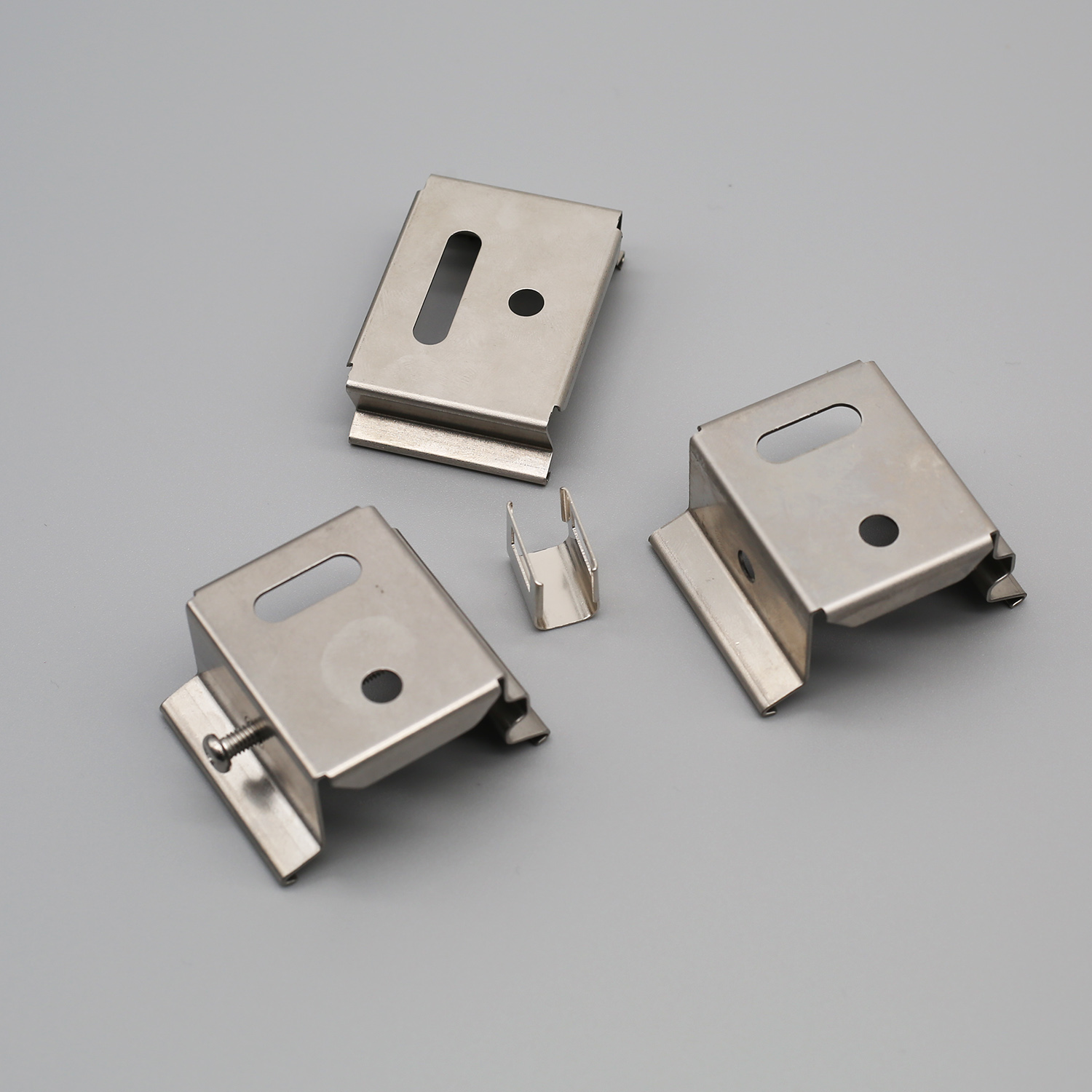
Walk any production bay long enough and a quiet inventory writes itself. Tooling carts parked in the wrong lanes, raw stock stacked where finished parts will need to pass, a gauge resting face-down on a grimy bench. These details never make it into a formal capability sheet, yet they speak plainly about whether a shop can hold tolerance before a single number is put on paper.
The first quote is often treated as a math problem: cycle time, material, burden rate. But the floor tells you who actually owns the process. You will see it in how an operator checks a fixture, how a supervisor walks past a leaking air line without slowing down, how quickly a fork truck clears a blocked aisle. Price follows competence, not the other way around.
A machinist who keeps three different deburring tools within arm's reach isn't being tidy; that is institutional memory. A rack of rejected parts sitting unmarked near shipping is not a mistake awaiting review; it is a habit that will eventually find its way into your order. You don't need a spreadsheet to read that room.
Process Control Beyond the Paperwork
Most teams treat process control as a folder full of signed forms and a checklist nobody reads after onboarding. That approach crumbles the moment a real deviation happens. Real control lives in how people react when the documented procedure no longer matches the situation on the floor, and whether they feel safe enough to stop work instead of improvising silently.
The difference shows up in small moments: a sensor reading drifts past its normal band, a batch behaves oddly during mixing, or a shift handover glosses over an unrecorded adjustment. When process discipline is only paper-deep, those signals get buried. When it goes beyond paperwork, the team treats every anomaly as information rather than inconvenience, and the procedure becomes a starting point for judgment rather than a cage.
Building that depth means shifting focus from signatures to sense-making. It asks operators to describe what they actually see, supervisors to ask questions before assigning blame, and engineers to update the written process based on what the floor has learned. That loop, not the binder on the shelf, is what keeps a process stable when conditions change.
From Prototype to Production Without a Reboot
Moving from an early prototype to a live environment usually forces a hard cutover: stop the process, swap binaries, restart everything, and hope nothing breaks. The appeal of skipping the reboot is not just speed. It keeps in-memory state, open connections, and accumulated context intact, which matters when the service holds long-lived sessions or caching layers that would take minutes to rebuild.
In practice this shift depends on smaller, more disciplined changes. Instead of replacing a whole process, teams swap out modules, adjust routing rules, or flip a feature flag while traffic keeps flowing. Errors become easier to isolate because the blast radius is narrower, and a bad change can be rolled back without dropping a single request.
The difference is most visible when a system has real users attached. A long-running process can accept new code, warm up its caches, and start serving the next request in the same breath. That removes the artificial gap between “prototype” and “production,” leaving a deployment that feels less like a launch event and more like an uneventful step forward.
Cost Drivers That Never Appear in the First Quote
A first quote rarely includes the cost of getting people and equipment into a space that was never designed for construction traffic. Mobilization, crane time, temporary protection, rubbish removal, and the slowdown that comes from working around someone else's operating hours often get added only after the job is awarded. Even something as small as parking for a crew in a dense area can turn into a daily line item.
The same pattern holds with paperwork and supply realities. Permit expediting, overtime tied to noise restrictions, specialized insurance, bond riders, and delivery charges for materials that show up late or require a second truck all ride on top of the original estimate. When lead times slide, labor gets compressed, and that compression is rarely reflected in the first number a client sees.
Communication Habits That Predict Delivery Performance
The strongest predictor is not how often someone talks, but whether their updates remove ambiguity before it costs time. Drivers and coordinators who confirm dock assignments, pallet counts, and receiver hours in short bursts tend to hit tighter windows. They rarely say “should be there soon.” They give a gate number, a revised ETA, and the one missing item that could stall the handoff.
The habit of naming a problem while it is still small matters even more than staying positive. High performers mention a flat tire, a backlogged dock, or a missing seal code before it becomes a failed delivery. They also ask one extra question at pickup, such as whether the order is temperature-sensitive or whether a signature is required. That small habit cuts repeat calls and keeps the day predictable.
Silence after a drop-off is another signal. Reliable operators close the loop with a photo, a timestamp, and a short note only when something deviates from the plan. That restraint keeps channels clean and makes actual exceptions stand out.
FAQ
Look at how they discuss tolerances. A precision shop will ask about feature relationships, datum schemes, and whether ±0.05 mm is needed on every edge or only on mounting holes. General fabricators often quote the part without questioning tolerances, which usually leads to fit problems later.
Request process capability data from a similar bracket, not just a sample. Ask for Cp or Cpk values from a recent run, and have them walk you through how they measure critical features. If they hesitate on either point, their tolerance claims are likely broader than their inspection records.
Brackets often carry load or mate with other precision components. If a batch arrives with an unverified alloy or temper, it can pass dimensional checks but fail in service. Ask for mill certs tied to heat or lot numbers, and check how the shop labels and separates raw material on the floor.
Ask what bending and forming methods they use, how they control springback on tight radii, and whether they have in-house wire EDM or fineblanking if the design requires it. Also ask for photos of similar parts they produce, not generic facility shots.
Treat the gap as a signal to dig, not a bargain. Ask the lower-priced vendor to explain their process assumptions, fixture strategy, and inspection plan. If they cannot identify where they saved cost, you are probably looking at different interpretations of the drawing rather than real efficiency.
They can be where precision dies. A bracket may be blanked accurately but then tumbled too aggressively or plated unevenly, shifting hole sizes and edge condition. Ask who performs secondary work and whether critical dimensions are checked before and after finishing.
When the design is still changing, when lead time matters more than unit price, or when you need quick feedback on manufacturability. Local suppliers also make it easier to resolve tolerance disputes face-to-face without shipping sample parts back and forth.
Send a small pilot batch of 20 to 50 pieces with the same material, finishing, and inspection requirements as production. Then measure them independently or have a third-party lab check key features. The pilot is less about the parts themselves and more about how the vendor communicates when something drifts.
Conclusion
Most bracket failures trace back to areas that never show up on a standard inspection report. Engineers and buyers should look closely at how a vendor manages tolerance stack-ups across bending, hardware installation, and plating, because a drawing can be fully compliant while the assembly still binds or drifts under load. Visiting the shop floor before requesting a quote often reveals more than any capability matrix: the condition of fixtures, how in-process measurements are taken, and whether operators actually understand the critical dimensions. Process control is less about the presence of certificates and more about what happens between checks—tool wear triggers, cleaning schedules, and reaction plans when drift starts. A supplier that can move from prototype to production without changing tooling, setup logic, or measurement methods saves months of requalification and avoids the subtle dimensional shifts that appear after volume ramps.
The first quote rarely exposes the real cost drivers, so it pays to ask about secondary operations, deburring time, batch size assumptions, and packaging for fragile features. Vendors that can explain those variables before an order is placed tend to be the ones who control them later. Communication habits also deserve as much weight as machining capability. A shop that raises tolerance conflicts early, confirms changes in writing, and gives realistic lead times based on current capacity will probably perform better than one that promises everything and clarifies nothing. Choosing a precision bracket supplier, then, is less about comparing line-item prices and more about reading how a vendor thinks, measures, and communicates when a part is not yet in production.
Contact Us
Contact Person: Kristy Wu
Email: [email protected]
Tel/WhatsApp: 8613826954049
Website: https://www.dgbosi.com/