Roller Hearth Furnace Company Solutions That Boost Industrial Heating Performance
2026-08-17
Industrial heating often faces a hidden bottleneck: how to maintain uniform temperature and throughput without ballooning energy costs. A roller hearth furnace company that truly understands this dilemma can turn a production line into a competitive advantage. At THINKING-LONG, we approach each system not as a generic box of burners, but as a tailored thermal ecosystem — designed to move your parts smoothly, heat them evenly, and cut waste. In this blog, we’ll unpack the engineering choices and real-world results that separate a good roller hearth furnace from a great one. Whether you’re hardening steel, sintering ceramics, or annealing non-ferrous metals, the right partner can make every zone count.
Tighter temperature uniformity without the usual overshoot
The usual overshoot problem comes from letting the heater run at full output until the probe reads the target. Heat stored in the walls and ducting then keeps pushing the air temperature higher after the setpoint is reached. This unit takes a different approach: the ramp logic tracks how quickly the workspace gains heat and begins tapering power several degrees before the target. That residual thermal energy is used to coast into the setpoint, giving a flat top to the heat-up curve instead of a spike.
Even temperature distribution is handled mostly by the air path. Supply air moves at low velocity through perforated ducts, spreading heat across each shelf without creating fast, uneven drafts. Return openings are balanced to pull air out of stagnant corners, and the sensors sit in the return stream where the load actually sees the temperature. This placement gives the controller a stable, representative reading, so it does not overreact to the heating element's local warmth.
The combined effect shows up during long soaks and repeated ramp cycles. The spread across the usable space stays within a narrow band, and the display no longer climbs past the limit right after the heater cycles off. Operators can rely on the first reading instead of waiting for the temperature to settle back down.
Modular hearth sections that arrive ready to connect
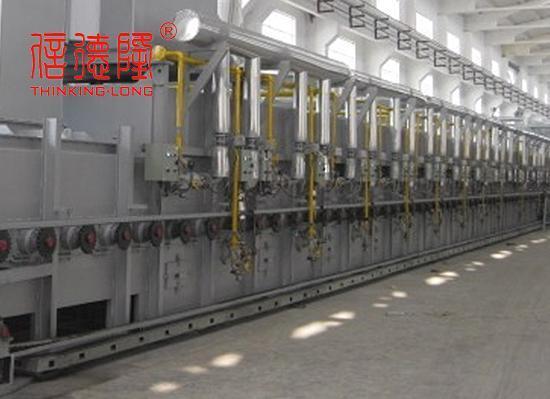
Each hearth module comes with its connection hardware already fitted, so there’s no guesswork on site. The sections align along factory-machined edges and lock together with a few turns of a wrench. You won’t need to trim panels, mix adhesives, or wait for sealants to cure.
Because the pieces ship as a coordinated set rather than raw slabs, the grain pattern and edge profile stay consistent from one end to the other. That matters when the hearth wraps around a corner or steps down to a floor level transition. The joints are designed to stay tight through seasonal shifts, with just enough flex to avoid hairline cracks.
Installation is closer to assembling furniture than doing masonry. If the layout changes later, the sections can be disconnected and re-sequenced without breaking the finish. That makes it a practical choice for renovations where the final fireplace position isn’t locked in until late in the project.
Burner tuning matched to your actual load profile
Most burner adjustments are based on a generic test cycle, not what your system actually does day to day. That leads to wasted fuel, uneven heat, and unnecessary wear. Instead, we measure the real load profile — how demand rises, peaks, and falls in your specific operation — and tune the burner to match it. The result is a combustion setup that feels less like a guess and more like it was built for your process.
A burner that’s tuned to your load profile doesn’t just run smoother; it also avoids the constant cycling that shortens component life. Rather than chasing “perfect” settings from a manual, we look at your burner’s actual behavior under varying loads and adjust air-fuel ratios, turndown, and staging accordingly. This keeps the flame stable even when demand shifts abruptly, so you get consistent output without over-firing or under-firing.
The real difference shows up on your fuel bill and in maintenance logs. When the burner matches how you actually operate, there’s less soot buildup, lower excess air, and fewer unexpected shutdowns. It’s not a one-size-fits-all calibration — it’s a tuning that respects your unique load pattern, so you’re not paying for heat you don’t need or losing efficiency when demand changes.
Roller materials picked for thermal cycling, not just temperature rating
Many design guides stop at maximum operating temperature when choosing roller materials, but that snapshot ignores the real killer: repeated expansion and contraction. A roller that survives a single heat soak can still crack after a few hundred cycles if its microstructure doesn't accommodate dimensional shifts. Engineers who chase thermal cycling performance look beyond the datasheet's redline, favoring alloys and composites with low coefficient of thermal expansion mismatch against the shaft and housing.
For aggressive duty, plain carbon steel often falls short because its thermal fatigue resistance pales next to duplex stainless or nickel-based alternatives. Even ceramic rollers, despite high hardness, can spall under rapid quenching unless the grade is engineered for thermal shock. The winning material pair typically balances thermal conductivity, phase stability, and surface treatment, so heat flows through without creating steep local gradients that drive microcracking.
Field evidence from kiln and furnace applications shows that rollers selected purely for temperature rating tend to fail at stress risers like keyways or weld zones. By contrast, rollers whose material was vetted through thermal cycling tests, such as alternating immersion or controlled air quenching, routinely outlast their static-rated counterparts. That extra due diligence pays off in fewer unplanned line stoppages and less frequent roller replacement, especially in processes where ramp rates vary daily.
Recipe-driven controls that reduce operator guesswork
Instead of relying on memory or trial-and-error, modern systems embed exact parameters directly into each step. A press of a button loads the right temperature, timing, and sequence for a given task, leaving nothing to chance. This takes the pressure off the operator and keeps results consistent across shifts and skill levels.
What makes this approach practical is that the recipes are editable but locked behind clear permissions. Supervisors can fine-tune a process once and know that every subsequent run follows the same path. Operators no longer need to interpret vague instructions or make on-the-fly adjustments that could drift from the intended outcome.
The real value shows up in reduced waste and fewer reworks. When the system already knows the sweet spot for a given material or product, the operator simply confirms the selection and lets the controls do the rest. That kind of guided operation shortens training time and makes even complex equipment feel straightforward.
Access panels positioned where your crew actually needs them
Most access panels end up in spots that look fine on a blueprint but make zero sense once you're kneeling on gravel with a flashlight in your teeth. Ours are placed from the perspective of someone who has to open them at 2 a.m. during a weather delay, not someone checking boxes on a floor plan. If a filter, valve, or wiring junction gets touched more than once a season, the panel is right there — at hip height or within a short reach from a stable stance.
That means fewer removable covers buried behind ductwork or tucked under a stair stringer. The layout follows the actual service routine: filter swaps, sensor checks, and cable pulls happen in the same zones where techs already stand. You won't need a ladder for a ten-second inspection, and you won't have to unbolt a half-dozen unrelated parts just to reach the one you came for.
It's a small shift in design thinking, but it changes how crews work. Quick access becomes the default, not a negotiation. The panel is there because the job is there.
FAQ
It's a continuous furnace where materials move through on powered rollers, allowing steady temperature profiles and higher throughput. Manufacturers choose it when they need consistent heating for long parts, tubes, or plates without manual loading between cycles.
We focus on precise zone control, uniform heat distribution, and faster ramp-up times. By tuning burner placement and airflow, the furnace holds tight temperature tolerances, which reduces rejects and speeds up production.
Steel, aluminum, ceramics, and heat treatment shops see the biggest gains. Anyone processing long or flat products—like bars, tubes, or sheet—gets better straightness and metallurgical consistency compared to static furnaces.
Yes. Our designs include adjustable roller speeds and multi-zone temperature profiles, so switching from stainless steel to aluminum often requires only a recipe change, not hardware modifications.
A big one. We use regenerative burners, better insulation, and waste heat recovery to cut fuel consumption. Many customers report 15-25% lower energy use per ton after upgrading to our roller hearth systems.
We use high-temperature alloy rollers with water-cooled bearings and automatic lubrication. The drive system is designed for low thermal expansion stress, and our service team provides predictive maintenance schedules to avoid unplanned downtime.
We offer modular furnace lengths, adjustable roller spacing, and variable speed drives. For high-volume operations, we can add automated loading/unloading and integrated quench zones to keep the line moving.
Roller hearths generally provide more uniform support and fewer contact marks on flat products. Walking beam furnaces can handle heavier, irregular shapes, but for plates and tubes, roller hearth gives better temperature uniformity and surface quality.
Conclusion
Roller Hearth Furnace Company starts from a practical problem: most furnaces can hit a setpoint, but they struggle to hold a tight uniformity band without overshooting after every load change. Their approach ties burner response directly to the measured thermal profile, so as the line ramps toward target, the control loop flattens the curve before the temperature climbs too far. This removes the typical spike that forces operators to manually trim cycles or accept inconsistent product. Instead of shipping a welded shell that invites field rework, the furnace arrives in modular hearth sections that are pre-assembled, pre-piped, and pre-wired, ready to connect on site with minimal alignment work. Burner tuning is then matched to the actual load profile—part mass, spacing, and line speed—rather than a generic factory curve, so the firing rate adjusts to what is really inside the furnace.
Roller material selection goes beyond the simple temperature rating. The company evaluates how each roller alloy behaves under repeated thermal cycling, because failures usually come from oxidation, creep, or fatigue after thousands of gradient shifts, not from a one-time peak temperature. That means rollers are chosen for how they hold dimensional stability and surface finish over months of service, not just what the datasheet says. On the operator side, recipe-driven controls store proven heating curves for each part family, so the crew selects a recipe instead of guessing ramp rates and soak times. Access panels are positioned where technicians actually need them—next to burners, thermocouples, and roller bearings—so routine inspection and repair do not require crawling through unused zones or pulling apart sections that should stay sealed. The result is fewer unplanned stops, fewer scrapped loads, and a furnace that behaves the same way on Tuesday as it did on Monday.
Contact Us
Contact Person: Qian Xijun
Email: [email protected]
Tel/WhatsApp: 8613961736750
Website: https://www.thinkinglong.com/