
Semi-Automatic Dry Type Transformer Benefits for Modern Power Systems
2026-11-16
Power systems are changing faster than the maintenance schedules built around them. That’s where semi-automatic dry type transformers are starting to earn their place—not as a niche upgrade, but as a practical answer to the growing demand for safer, lower-maintenance infrastructure. By pairing the natural advantages of dry insulation with control features that reduce manual intervention, they help modern grids and industrial networks stay responsive without adding operational burden. XIAOPAI is one of the names pushing this shift forward, and the benefits are worth a closer look.
Why Semi-Automatic Dry Type Units Fit Tight Urban Substations
In dense urban districts, a substation often has to squeeze into a basement, a podium level, or a leftover corner between parking ramps. Semi-automatic dry type units suit these sites because they drop the bulky liquid-filled tank and the associated fire barriers, oil containment pits, and wide clearance zones. The insulation system itself carries the electrical stress, so the equipment can be placed closer to walls and other services without forcing the developer to give up rentable floor area or redesign the building core.
The operating environment also changes when a transformer sits near offices, residences, or retail spaces. Dry type units tend to produce less low-frequency noise and do not require an external cooling liquid circuit, which simplifies ventilation and reduces the chance of leaks. A semi-automatic control arrangement keeps routine operations, such as tap changing, alarm handling, and switching sequences, within a compact control panel, so maintenance staff can work in tighter aisles and respond faster during abnormal conditions.
For city utilities and building owners, the benefit is often practical as much as technical. Shorter installation runs, fewer civil works, and simpler approvals help keep a retrofit or new build on schedule. In places where street access is limited and outages carry heavy costs, these units provide a quieter, cleaner, and more compact path to reliable distribution without demanding the space that older equipment would need.
Oil-Free Cooling and the Safety Difference It Makes
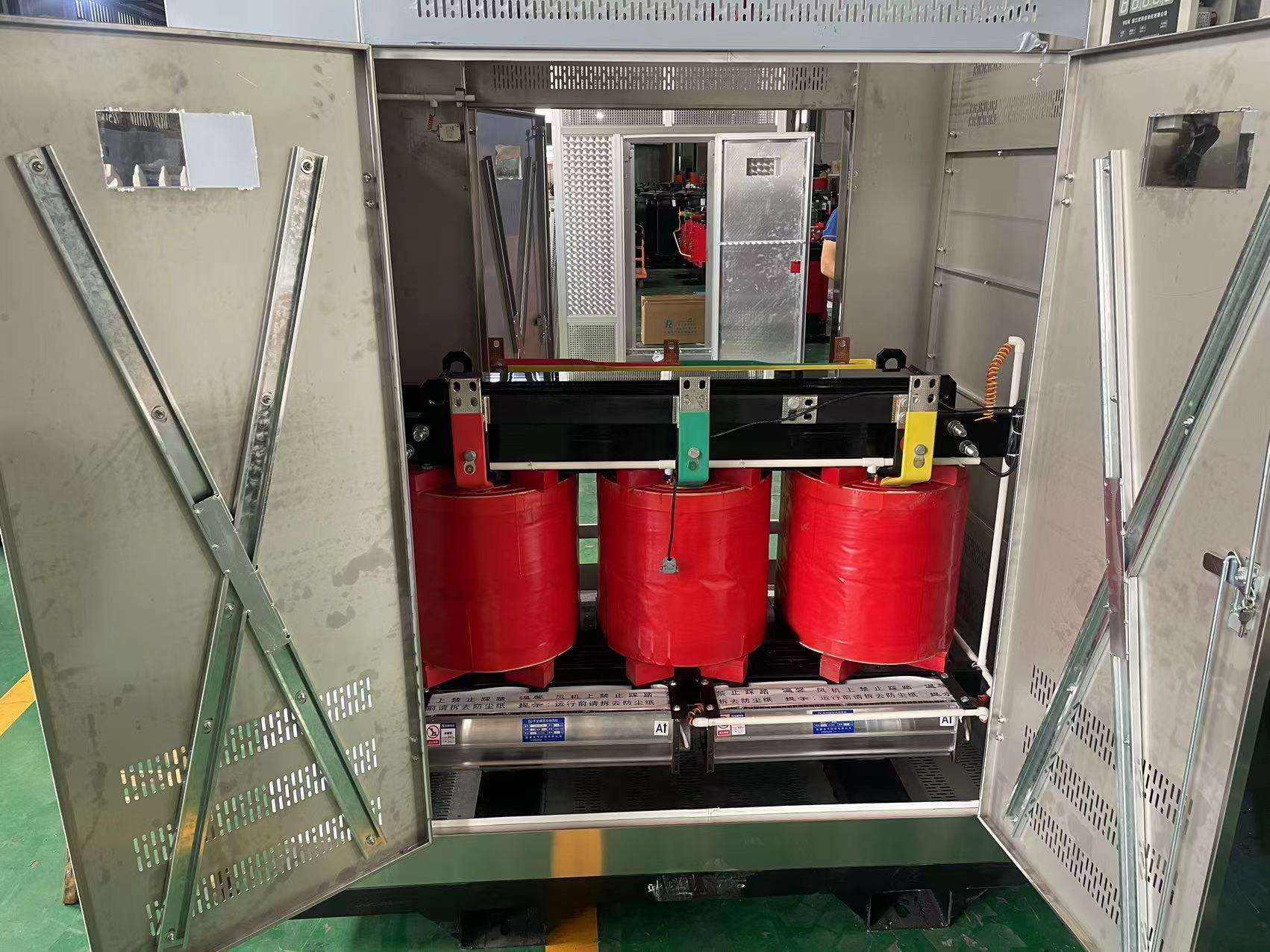
Once the oil is taken out of the cooling loop, the workspace itself starts to feel different underfoot. There is no thin film gathering on walkways, no mist settling on nearby equipment, and no slick residue left behind after a hose check or a filter change. For the people working around the machine, that removes one of those slow-building hazards that rarely gets reported until someone slips or a surface smolders. The absence of hot lubricant also makes routine service less tense: fewer burn risks, fewer soaked rags to dispose of, and less chance of a pressurized leak catching a nearby heat source.
From a fire-safety view, the difference is just as direct. Oil-soaked insulation, pooled lubricant inside a cabinet, or residue baked onto a discharge line can turn an ordinary electrical fault into a sustained fire. An oil-free design strips away that fuel and leaves fewer paths for a small failure to spread. It also simplifies what happens after an incident or a leak, because cleanup does not involve hazardous oily waste or special handling. In sensitive settings such as food processing, pharmaceutical production, or electronics assembly, that same absence of oil removes a contaminant that would otherwise require constant verification. The practical benefit is quieter than it first appears: fewer things to slip on, fewer things to burn, and fewer substances to clean up when something goes wrong.
Routine Inspections Without the Usual Labor Burden
Most inspection workflows still assume someone has to walk the floor, clipboard in hand, ticking boxes and squinting at gauges. That assumption quietly eats hours every week—hours that rarely show up in a single budget line but add up fast across multiple sites. The shift isn't about replacing people with cameras or sensors; it's about removing the low-value motion. Fixed mount points, automated readings, and exception-based alerts mean the routine check happens in the background, not on someone's schedule.
What changes first is the definition of a normal round. Instead of verifying that everything is still working, teams only step in when a measurement drifts outside its band. That flips the labor equation: the expensive human attention goes to the two or three points that actually need a decision, while the other forty-seven checks finish themselves. Maintenance leads often describe the same result—fewer interruptions, fewer missed intervals, and a record that fills itself without a second data entry pass.
There is a practical detail worth noticing here. The usual burden isn't just the walking; it's the rework when a paper form gets lost, or when a reading is transcribed wrong, or when someone skips a step because Friday afternoon got busy. Removing that friction tends to improve consistency more than any motivational poster ever could. The inspection still happens. It just stops feeling like a chore somebody has to remember.
Indoor Installation Freed by Low Fire Risk
The low heat output changes how freely a unit can be placed indoors. It no longer needs to be treated as a fixed heat source with rigid clearances, so recessed corners, bookshelf alcoves, and spaces near window seats become realistic options without adding fireboard or shielding.
Everyday materials around the installation stay comfortable to the touch, which means fabrics, shelving, and wall finishes do not need to be selected around a demanding temperature range. Wiring can take simpler paths, and the final position can follow the room's visual flow rather than a strict safety offset from surrounding objects.
That sense of freedom also reduces last-minute design changes. When layout choices are driven by how people move through the room instead of a list of fire-safety distances, the result feels more natural and far less like the space was planned around a restriction.
Voltage Stability When Renewable Feeds Fluctuate
A cloudy afternoon over a feeder with high solar penetration can reshape the voltage profile in seconds, not minutes. When a passing cloud cuts output from a rooftop array, the local voltage dips before the feeder's slower regulation equipment has time to react. The reverse happens just as quickly when the cloud clears and inverters push current back into a network that was not designed for such abrupt reversals.
Inverter-based resources can respond faster than traditional tap changers, but speed alone does not solve the problem. If reactive power settings are too aggressive, inverters can fight each other or override the feeder's voltage regulators, creating a new set of oscillations. The issue is not only the size of the voltage swing; the rate of change and the uneven distribution of fluctuating generation across phases also matter for relay margins and power quality.
Some utilities now tune local volt-var curves with wider deadbands and softer slopes during high-variability hours, while adding modest communication links so neighboring inverters do not work at cross purposes. This allows the feeder to absorb cloud transients with reactive power as a buffer, rather than chasing each fluctuation with mechanical equipment. Getting the settings right is delicate: too little response leaves customers exposed to voltage excursions, while too much can push the feeder toward resonance or hunting between devices.
The Low-Noise Maintenance Profile Behind Longer Service Life
Quiet operation is rarely treated as a headline specification, but it often reveals how a machine ages. When a drive train, fan assembly, or pump runs with reduced acoustic output, the causes usually include lower vibration amplitudes, tighter alignment tolerances, and better structural damping. Those same conditions reduce the micro-impacts that gradually loosen fasteners, fret mating surfaces, and damage bearing raceways. In practice, the equipment spends less time working against itself, allowing components to approach their intended fatigue life instead of failing early from accumulated mechanical stress.
The maintenance profile follows a similar pattern. Low-noise designs frequently depend on sealed lubrication paths and stiffer housings that keep out dust and moisture, which translates into fewer oil changes, less contamination-related wear, and longer intervals between inspections. Service work also becomes less reactive because technicians are not chasing new squeaks, rattles, or rub points after every operating cycle. Over years of use, the savings in replacement parts and labour can outweigh a modest price difference at purchase, simply because the equipment is not slowly hammering itself into premature replacement.
There is also a compounding benefit once the equipment is installed alongside other machinery. Lower emitted noise generally means less structure-borne energy moving into floors, mounts, and adjacent systems. That protects nearby equipment from secondary vibration and makes it easier for maintenance crews to identify genuine faults by ear or with handheld sensors, since the baseline is not buried under broadband rumble. The result is a quieter, more predictable operating environment where service life extends across both the original asset and the systems connected to it.
FAQ
They reduce routine manual work while still allowing direct operator control when needed. That balance lowers labor demands and suits facilities that don't keep a large electrical maintenance crew on site.
It manages repetitive tasks like cooling fan activation and voltage tap adjustments based on load or temperature readings. A technician can still intervene for unusual conditions, so human oversight remains without constant manual input.
They use air or resin-based insulation instead of oil, so there is no flammable liquid to leak or fuel a fire. The semi-automatic controls also limit how often staff need to open energized compartments, which reduces arc flash and contact risks.
Those locations often have strict fire codes and limited space. Semi-automatic dry type transformers can be installed closer to the load, don't need oil containment, and operate safely in areas where a liquid-filled unit would create additional risk.
There are no oil samples to test or filter, and the monitoring system can flag insulation temperature trends or cooling issues early. Maintenance becomes more about periodic inspection and cleaning than constant manual adjustment.
Many designs use higher thermal insulation classes and can tolerate occasional overloads when cooling is managed properly. For harmonics, specifying a suitable K-factor and reinforced windings helps prevent hot spots and premature aging.
The expected load profile, ambient temperature, humidity, and whether the semi-automatic control protocol will integrate with the existing building management or SCADA system. Noise levels also matter if the unit will sit near occupied areas.
The upfront price can be higher, but there are no oil containment, leak cleanup, or fluid testing costs. Lower fire risk may reduce insurance premiums, and the drop in routine manual labor often pays back over the equipment's life.
Conclusion
Modern power networks are pushing more equipment into dense urban locations, where space, fire codes, and noise limits leave little room for conventional designs. Semi-automatic dry type transformers address this by removing oil from the cooling equation entirely, which lowers fire risk enough to permit indoor installation close to occupied spaces. That oil-free construction also changes the day-to-day reality for maintenance crews: fewer fluid checks, no leak containment, and simpler visual inspections mean routine work no longer requires the same labor burden. In tight substations, the smaller footprint and reduced clearance requirements translate into more usable floor space and faster project approval.
The operational side matters just as much when renewable generation causes frequent voltage swings. These units hold output within tighter limits during fluctuating feeds, helping distribution equipment avoid unnecessary stress. Their semi-automatic controls take over routine adjustments that would otherwise demand operator attention, which is particularly useful in substations that are not staffed around the clock. At the same time, the low-noise profile supports longer service life by reducing mechanical wear and making installations more acceptable in mixed-use buildings. Rather than treating safety, maintenance, and stability as separate upgrades, semi-automatic dry type transformers combine them in one practical package that fits the way modern grids are actually being built.
Contact Us
Contact Person: Kellen Chen
Email: [email protected]
Tel/WhatsApp: 8613806536768
Website: https://www.cnxiaopai.com