

Semiconductor Air Compressor Manufacturer Delivers Precision and Purity
2026-08-06
In semiconductor manufacturing, air quality can make or break yields. Seize Air delivers the precision and purity required to safeguard your processes, setting new standards in compressor technology. Read on to learn how our solutions are shaping the future of chip production.
Crafting Contaminant-Free Air for Wafer Fabrication
In semiconductor fabrication, wafers are incredibly sensitive to airborne contaminants—particles, chemical vapors, or even static electricity. A single nanoparticle can ruin a device, dragging down yields. That’s why maintaining an ultraclean air supply isn't just a goal; it's a foundational requirement for the fab.
Meeting this demand means deploying heavy-duty filtration systems, from HEPA and ULPA filters to activated carbon adsorbers, all working together to trap particles and molecular impurities. Cleanroom standards like ISO Class 1 push these systems to their limits, with high airflow rates and precise humidity control thrown in to keep everything in check. Even the materials used inside the cleanroom are scrutinized, because off-gassing from a seemingly harmless piece of furniture can compromise an entire batch.
How Precision Pressure Control Prevents Microscopic Defects
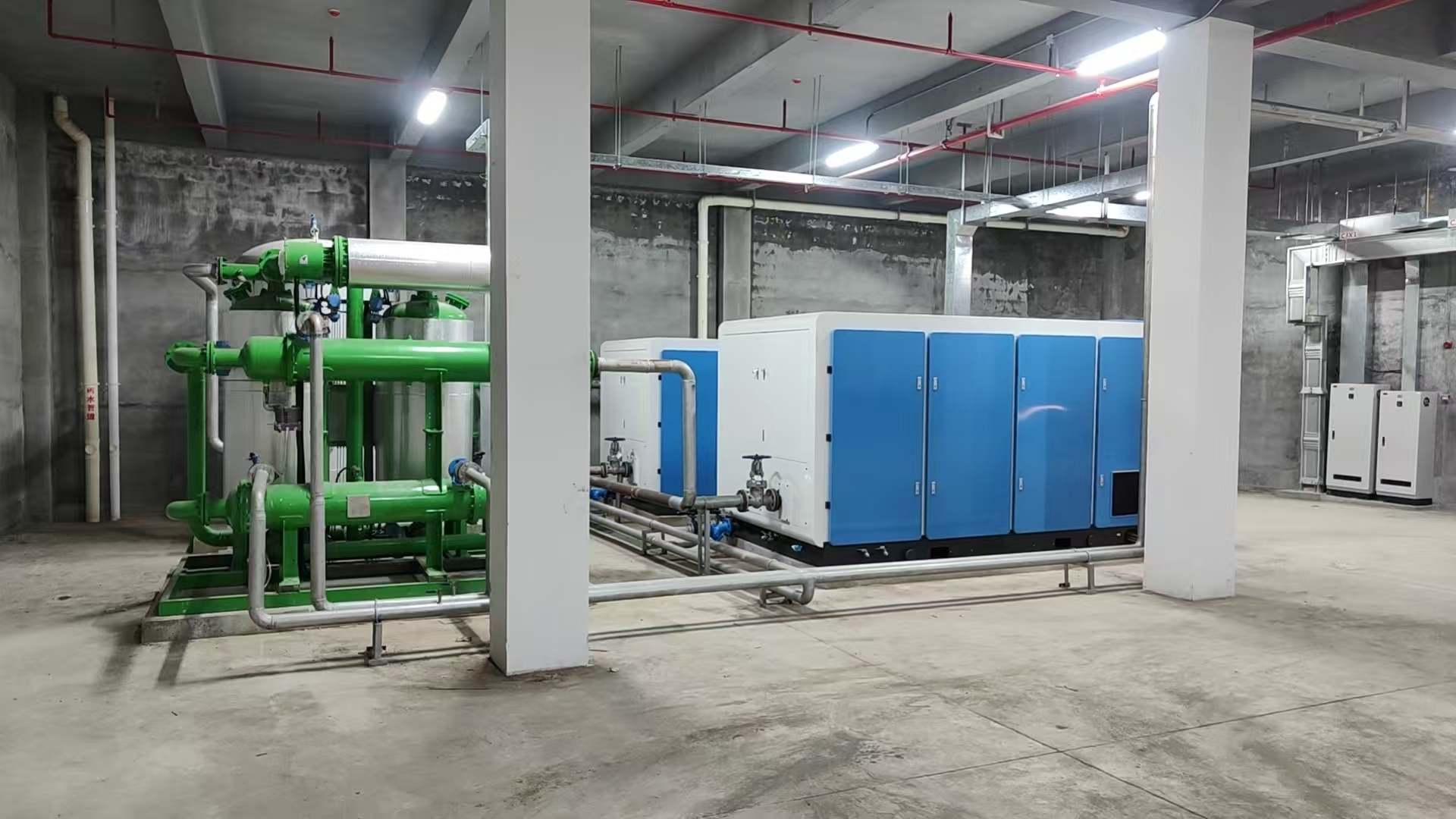
In manufacturing processes like injection molding or semiconductor fabrication, even the slightest fluctuation in pressure can introduce microscopic defects—voids, warping, or internal stresses that compromise product integrity. Precision pressure control acts as a guardian, maintaining a steady force throughout the cycle. By dynamically adjusting pressure in real time, the system prevents material from solidifying unevenly or trapping air, ensuring a homogeneous structure from the core to the surface. This level of control is not just about consistency; it’s about literally molding perfection at a scale invisible to the naked eye.
The key lies in closed-loop feedback mechanisms that monitor cavity pressure thousands of times per second. When sensors detect a deviation, the controller instantly modulates the hydraulic or electric drive to compensate, keeping the pressure within a tolerance band narrower than a human hair. This swift response eliminates the formation of micro-voids that often occur during the packing phase, where even a 1% pressure drop can lead to sink marks or incomplete filling. Manufacturers leveraging such precision can avoid costly post-processing inspections and rework, effectively building quality into every part from the start.
Beyond preventing defects, precise pressure control unlocks the ability to work with advanced, high-viscosity materials that are notoriously difficult to mold. These materials require a delicate balance: too much pressure causes flash or burns, while too little results in short shots. With adaptive algorithms, the system can fine-tine the pressure profile to match the material’s unique flow characteristics, achieving thin-wall features and intricate geometries without compromising structural integrity. In essence, it transforms pressure from a blunt tool into a surgical instrument, enabling innovation in fields ranging from medical devices to aerospace components.
The Hidden Role of Oil-Free Compression in Sub-5nm Yields
As chip geometries shrink below 5 nanometers, the margin for error collapses. Yield rates now hinge on controlling contamination at levels once considered negligible. Oil-free compression enters the picture not as a headline innovation but as a quiet enabler. By eliminating even trace oil vapors from compressed air used in wafer handling and lithography, fabs remove a persistent source of organic film defects that can scramble nanoscale patterns. It’s a subtle shift, but one that often spells the difference between a functional chip and scrap.
What’s less discussed is how oil-free technology stabilizes processes beyond cleanliness. Traditional oil-lubricated compressors introduce subtle pressure pulsations and humidity spikes as lubricant degrades. In sub-5nm fabrication, such micro-fluctuations translate into dose errors during extreme ultraviolet lithography or non-uniform etching. Oil-free systems sidestep this wear-related drift, offering a steadier baseline. Engineers report fewer ghost signatures in metrology data and a tighter distribution of critical dimensions, both of which quietly lift yield ceilings.
Yet the real leverage comes from reducing unplanned interventions. Every time a filter bank needs replacing or a condensate separator gets serviced in a conventional system, the cleanroom risks particle ingress. Oil-free compression drastically cuts those maintenance events, leaving the production floor less disrupted. Over a quarter, that accumulates into a measurable uptick in wafer output—not through a single breakthrough, but by removing the little failures that nibble away at yield. In the sub-5nm world, that stealthy contribution often separates market leaders from the pack.
Certified Cleanroom Compatibility Without Compromise
Achieving true cleanroom compatibility isn’t just about meeting a checklist—it’s about delivering performance that holds up under strict protocols without forcing you to sacrifice functionality. Our solution undergoes rigorous testing and certification to ensure it operates within ISO-classified environments, from particle emission to outgassing controls, so you can integrate it with confidence in pharmaceutical compounding, semiconductor fabrication, or biotech research.
We’ve moved beyond surface-level claims by designing materials and finishes that actively resist particle shedding and chemical interaction. Every component—from seals to chassis—is selected not only for low particulate generation but also for resilience against repeated sterilization cycles. The result is a product that maintains its certified status over time, rather than just passing a one-time lab test.
What sets this apart is the refusal to treat cleanroom readiness as an afterthought. Instead of limiting your workflow with clunky add-ons or restricted settings, we’ve built compliance into the core architecture. That means you get the speed, precision, or connectivity you need without administrative headaches, allowing your team to focus on the science, not the spec sheet.
Why Consistent Dew Points Define Semiconductor Reliability
In semiconductor fabrication, moisture is more than a nuisance—it’s a yield killer. Consistent dew points across cleanrooms and process tools aren’t just a spec to meet; they’re the bedrock of predictable oxidation rates, photoresist integrity, and defect prevention. When dew point drifts, even slightly, the amount of water vapor available to react with sensitive materials changes, turning a finely tuned process into a lottery.
The real menace lies in the invisible variability. A spike in moisture might go unnoticed until device failures surface weeks later during reliability testing. From hazing on wafers to corrosion of aluminum interconnects, inconsistent dew points introduce latent damage that escapes inline inspection. By controlling this single parameter tightly, fabs eliminate a vector of random defects, ensuring every die sees the same environmental conditions—batch after batch, tool after tool.
Ultimately, reliability isn’t achieved through heroic end-of-line testing; it’s engineered into the process at the molecular level. Stable dew points mean stable surface chemistry, which translates to transistors that don’t degrade unpredictably over time. For processes pushing into single-digit nanometer nodes, where even monolayers of water can shift device characteristics, this consistency shifts from best practice to absolute necessity.
Energy-Efficient Systems That Slash Carbon and Costs
Modern facilities are rediscovering that the cheapest kilowatt-hour is the one never used. Smart lighting systems with occupancy sensing and daylight harvesting cut electricity bills by up to 40% while making workspaces more comfortable, and high-efficiency HVAC units with variable speed drives maintain precise temperatures using a fraction of the energy of older constant-speed models. These upgrades pay for themselves surprisingly quickly, often within two to three years, and then keep delivering savings long after the initial investment is recouped.
Industrial operations see even more dramatic results when they install real-time energy monitoring platforms that flag wasteful patterns and automatically adjust equipment schedules. A chilled water plant that used to run flat-out can now modulate pump speeds based on actual cooling demand, slashing both peak power charges and overall consumption. On the factory floor, smart motor controllers and compressed air leak detection systems turn invisible waste into measurable cost reductions, with many sites reporting double-digit drops in their carbon footprint within the first year of deployment.
FAQ
Even the tiniest trace of oil, moisture, or particles can ruin microchip yields. The air that touches wafers must be completely oil-free and filtered to levels far stricter than typical industrial applications.
It’s about delivering exactly the right pressure and flow, with negligible fluctuation, across long production runs. Even slight deviations can alter etch rates, deposition uniformity, or lithography accuracy.
Multi-stage filtration, desiccant dryers, and catalytic converters strip out hydrocarbons. Every unit is rigorously tested for particulate and condensate before installation.
Absolutely. They’re engineered for 24/7 operation with minimal vibration and noise. Components like air ends and motors are selected for durability, and the design prioritizes easy access for routine checks.
Maintenance is surprisingly straightforward, thanks to modular layouts. Consumables like filters and separator elements need periodic replacement, but the intervals are long—often 8,000 hours or more—reducing downtime.
Yes, they’re offered in a range of configurations, from compact packages for tight spaces to large central systems. We often help plan piping and redundancy for future capacity increases.
General suppliers may not grasp the contamination risks and precision needs unique to chip making. A focused manufacturer builds every machine with semiconductor-grade materials and controls from the ground up.
Conclusion
In semiconductor fabrication, even a single microscopic particle can ruin a wafer, making air purity paramount. This manufacturer’s oil-free compressors eliminate hydrocarbon contamination entirely, delivering air that meets the strictest ISO 8573-1 Class 0 and 1 standards. Unlike standard systems that rely on lubricated components, their designs ensure that the air stream stays completely free of oil aerosols and vapors—critical for preventing defects in sub-5nm processes. Advanced precision pressure control maintains fluctuations within ±0.1 bar, preventing vibrational disturbances that could misalign lithography tools or cause uneven etch rates, directly boosting yields.
Certified for cleanroom compatibility without concessions, these systems operate with low particle emission and minimal outgassing. Integrated refrigerant and desiccant dryers achieve ultra-low, consistent dew points down to -70°C, safeguarding process stability and preventing moisture-related defects. The hidden benefit is energy efficiency: variable-speed drives and optimized cooling circuits reduce power consumption by up to 35%, slashing both carbon footprint and operational costs. By fusing contaminant-free air, unwavering pressure control, and reliability-enhancing humidity management, this manufacturer enables semiconductor fabs to achieve higher chip yields while meeting sustainability goals.
Contact Us
Contact Person: Mia
Email: [email protected]
Tel/WhatsApp: +86 19821985894
Website: https://www.seize-air.com