

Stationary Oven Carousel Rotomolding Machine Supplier Selection Tips for Industrial Buyers
2026-11-02
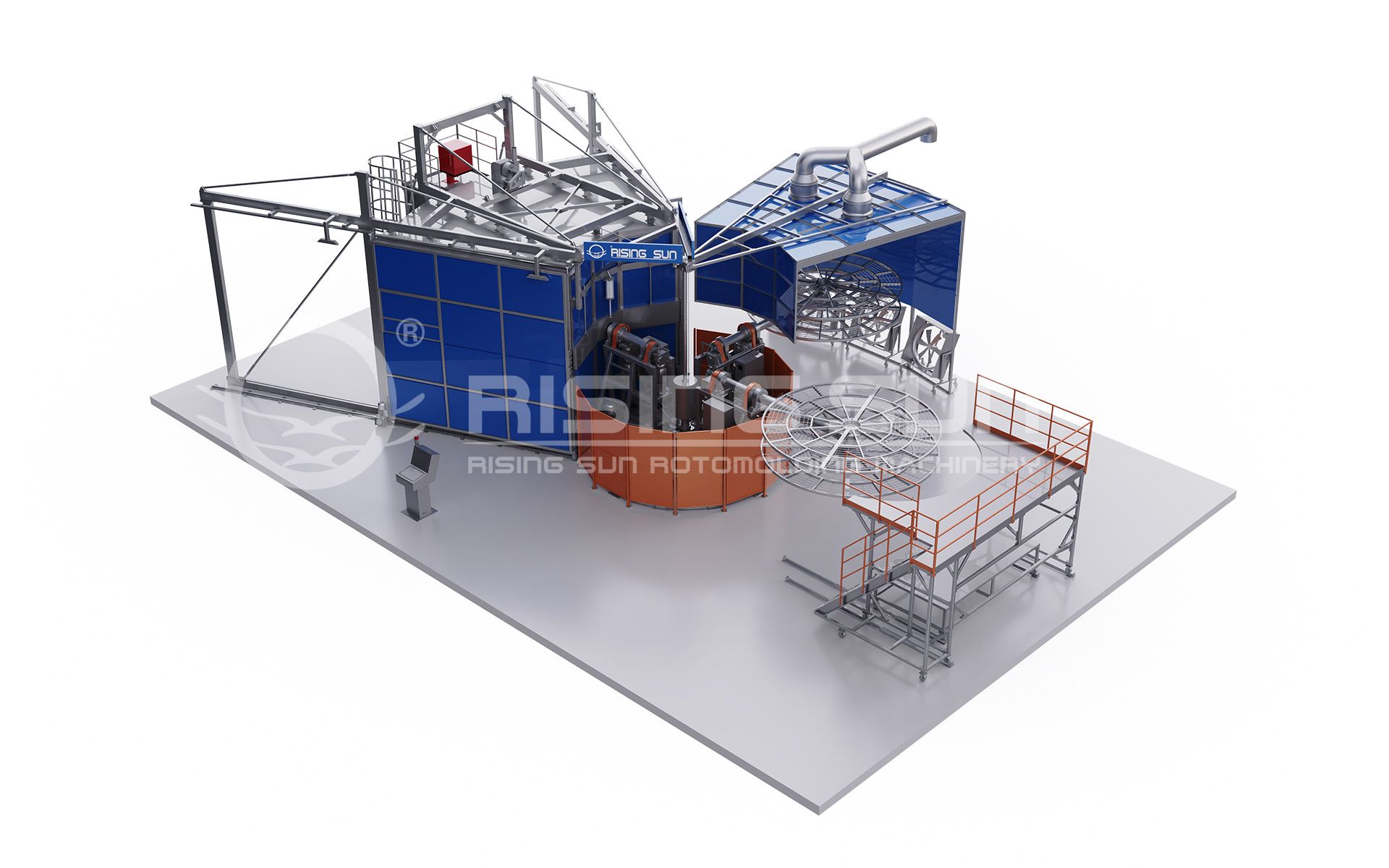
Finding a supplier for stationary oven carousel rotomolding machines is rarely a simple checklist task. A weak choice can quietly drain your production timeline, inflate maintenance costs, and leave you with equipment that never quite fits your part geometry. This guide cuts through the usual sales talk and focuses on practical selection criteria—from oven uniformity and arm load capacity to after-sales responsiveness. Along the way, we'll reference what makes suppliers like Rising Sun worth a closer look, so you can approach your next purchase with your eyes open instead of crossing your fingers.
Where a Supplier’s Oven Temperature Mapping Data Hides
Supplier oven temperature mapping data rarely sits in a single validation file; it spreads across email threads, obsolete share folders, and long qualification reports where only a screenshot of the final graph is visible. To find the real numbers, you often have to reverse-engineer the sensor layout from an old drawing revision or a faded sticky note on the oven door.
A second hiding place is the maintenance office. Thermal strips, paper chart reels, and handwritten log sheets may contain the only record of a mid-year mapping run, while the newer electronic database shows just a pass/fail flag. Suppliers also keep raw exports on an old chart recorder or a retired laptop, and staff may not mention them until an audit exposes a gap.
Spreadsheet tabs with names like 'OVEN CHECK FINAL v2 (real)' are another trap. They can lack sensor IDs, timestamps, or placement notes, mixing empty and aborted runs with valid data. Ask for the original CSV or TXT export plus the sensor map; otherwise, you may receive a polished summary chart with no numbers underneath.
Reading Between the Lines of a Carousel Machine Warranty
Many buyers skim the coverage period and monthly payment terms, but the real story hides in clauses about "normal wear," "operator misuse," and what counts as a structural component. A five-year warranty can shrink to eighteen months for bearings, brushes, or control boards once you check the fine print.
Watch for language that ties coverage to "authorized technicians" and "factory-approved replacement parts." If you let a local mechanic swap out a relay, the manufacturer may deny a later gearbox claim because the service wasn't pre-approved. Ask for a written list of excluded components and labor rates before signing.
Also note whether the warranty covers shipping of replacement parts or only the part itself. A cracked seat frame may be free, but freight from overseas and the technician's travel time can turn a "covered" repair into a four-figure outlay. Get the warranty terms in writing and keep a log of maintenance dates, as many claims fail simply because owners cannot prove they followed the lubrication schedule.
The Mold Service Factor Most Buyers Overlook
Most buyers fixate on cavity count, steel hardness, and quoted lead time. But the real differentiator often shows up weeks later, when a minor design tweak forces a shut-off angle change. A vendor who picks up the phone, walks through the mold drawing with you, and turns the revision around in 48 hours is worth far more than the one who offered a 5% cheaper tool but disappears after final payment.
Look for a shop that treats service as part of the mold, not an add-on. Ask how they handle emergency insert replacements or whether they keep a digital twin of the tool on file. These details don't appear on a PO, but they determine whether a small issue becomes a week of downtime or a same-day fix.
Another overlooked factor is documentation. A mold without clear waterline diagrams, maintenance logs, and spare-part lists may run fine at first, but every repair becomes a guessing game. The best suppliers hand over a complete service folder without being asked—because they know the mold will outlive the initial project.
Questions That Uncover a Builder’s True Rotomolding Experience
Asking a builder about their rotomolding background often yields polished sales talk, so dig into specifics instead. Request walkthroughs of past projects that mirror yours in geometry, wall thickness, and material. If they hesitate to share exact mold designs or cycle-time data, that's usually a sign the hands-on experience isn't there.
Tooling questions separate occasional molders from dedicated ones. Ask how they design for shrink, draft, and corner radii on complex hollow parts, and whether they build molds in-house or outsource. A builder who can explain venting, parting lines, and secondary cooling without pausing has probably solved problems that only show up after hundreds of cycles.
Finally, probe their troubleshooting instincts. Present a real defect—like warpage after demolding or uneven wall thickness near a boss—and ask what they'd adjust first. Their answer should mention process variables, mold temperature, or powder distribution rather than blaming the material alone. That kind of specific, unprompted reasoning reveals whether the experience is genuine or just claimed.
Why Your Resin Supplier Should Know About Your Machine Choice
Your resin supplier is not just a vendor—they are a partner in your production process, and that partnership stalls the moment they are left guessing about your equipment. Different machines apply different shear forces, barrel temperatures, and injection speeds, all of which can alter how a resin flows, cures, or degrades. When your supplier knows the exact make, model, and configuration of your machine, they can recommend formulations that prevent short shots, warpage, or surface defects before those problems ever reach your production floor.
Consider how a high-cavitation hot runner system behaves nothing like a cold sprue setup, or how an all-electric press differs from a hydraulic one in fill time consistency. If your supplier only has a generic idea of your operation, they may suggest a material that worked in a lab setting but falls apart under your specific screw design or mold temperature range. Sharing machine details gives them the context to tune melt viscosity, additive packages, or even regrind ratios so the resin arrives ready for your reality rather than a hypothetical one.
This exchange also saves you downtime and reduces trial-and-error waste. A supplier who knows your barrel size, nozzle type, and clamp tonnage can preemptively flag compatibility issues—like a flame-retardant grade that requires a corrosion-resistant screw or a glass-filled material that demands a hardened check ring. The result is fewer rejected batches, faster mold qualification, and a supply chain that operates on shared technical understanding instead of guesswork.
How a Factory Visit Reveals More Than Any Spec Sheet
Spec sheets reduce a product to a tidy column of numbers, but standing on the factory floor tells you how those numbers came to be. You notice whether workers pause to recalibrate tools on their own or wait until a supervisor walks past. You see if raw materials are stacked haphazardly near a damp wall or stored with the kind of care that suggests someone actually owns the outcome. None of that fits into a tolerance range, yet it shapes every unit that leaves the loading dock.
A visit also exposes the rhythm of production in a way a PDF never can. Machines may run at the advertised cycle time, but only in person do you catch the fifteen-minute jam that stops the line every other shift. You might spot a worker improvising a fix with tape, which tells you more about maintenance budgets than any uptime percentage. Those small, unglamorous moments reveal whether a facility is coasting on past certifications or genuinely keeping its processes tight.
Perhaps most telling is the attitude in the building. When you ask a line operator about a tricky weld, they either point to a laminated procedure chart or explain, with tired pride, how they solved the problem last winter. That second answer cannot be printed on a spec sheet, but it often predicts how the factory will behave when your order runs late or a design changes at the last minute.
FAQ
Look beyond glossy brochures. A capable supplier will openly discuss cycle time calculations based on your part's wall thickness and material, and will have a track record of installing machines that run consistently at high temperatures without warping the oven structure.
Request detailed photos or videos of the carousel arm alignment, oven door sealing, and bearing housings. Ask about the grade of steel used for the oven panels and whether the carousel drive uses direct gear motors or chain systems—direct drives tend to require less maintenance over time.
Many buyers focus on warranty duration but ignore response time for software faults, availability of spare arms and burners, and whether the supplier can remotely access the control system for diagnostics. Ask for a list of customers you can contact who have had machines for over five years.
Wattage alone doesn't guarantee energy efficiency. The insulation material, density, and how the panels are installed affect heat retention and temperature uniformity. A supplier using ceramic fiber blanket with proper sealing will often outperform a higher-wattage oven with thin rock wool insulation.
Inquire about the encoder type and whether the machine uses a servo or variable frequency drive for indexing. Also ask for the repeatability specification in degrees—anything above ±0.5° can cause uneven wall thickness on complex parts, so tighter is better.
Ask for examples of non-standard arm configurations they have built, such as offset arms or multiple mold stations per arm. A supplier that only offers fixed center distances may force you to redesign tooling, which adds cost and delays.
Don't compare only the purchase price. Calculate energy consumption per kilogram of molded product, expected maintenance hours per year, and the cost of common spare parts like seals and burner nozzles. A machine that costs 15% more upfront can break even within two years if its oven insulation and drive system are superior.
If they avoid discussing thermal expansion of the carousel arms, have no references from customers running 24/7 shifts, or cannot explain how their control system compensates for ambient temperature changes, walk away. Serious suppliers address these without prompting.
Conclusion
Smart buyers don't stop at the datasheet when choosing a stationary oven carousel rotomolding machine. Oven temperature mapping data often hides in calibration frequency and sensor placement details—ask where thermocouples sit during a cycle, not just whether the oven reaches a setpoint. A warranty that covers the frame but excludes carriage bearings, chains, and gas train components tells you more about the builder's confidence than any marketing line. Likewise, the mold service factor is easy to overlook: if the carousel arms and spiders aren't designed for repeated mold changes and thermal cycling, your real-world throughput will suffer long before the first major repair.
Experience shows up in the questions a supplier can't answer with a brochure. Press them on previous installations with similar mold weights, how they handled a mid-cycle power loss, and what happens when a mold warps slightly. That conversation often separates integrators from true machine builders. Bring your resin supplier into the selection early—material flow characteristics, peak internal air temperature, and cooling rates all interact with the carousel's indexing and oven design. Finally, a factory visit reveals what no spec sheet can: whether frames are stress-relieved before machining, how wire harnesses are routed, and if the assembly team can walk you through their own QC reject log. That ground-level evidence is worth more than any polished sales deck.
Contact Us
Contact Person: Sharon Zhu
Email: [email protected]
Tel/WhatsApp: 8615712666272
Website: https://www.risingsunroto.com