

Three-Phase Current Transformer Supplier: What to Look for Before You Buy
2026-09-03
Most procurement teams spend hours comparing datasheets for three-phase current transformers, yet still end up with units that underperform in the field. The gap usually isn't the hardware—it's the supplier. Before you sign off on another purchase, it's worth asking sharper questions about accuracy class under real loads, thermal margins, and after-sales support. Xiasen has seen these oversights derail projects, and this guide lays out the criteria that actually matter.
Accuracy claims that don't drift when the load gets ugly
Real-world electrical loads rarely behave like the clean resistive banks used in datasheet testing. Motors inrush, switching power supplies draw current in sharp spikes, and phase-controlled dimmers chop the waveform into jagged fragments. Under these conditions, many instruments quietly lose their footing—their internal references shift, their measurement algorithms fall behind, and the numbers on the display start to wander. A spec that holds true on a lab bench can collapse in the field without warning. The ugly load is where accuracy goes to die, unless the instrument was designed from the start to anticipate the abuse. That means input stages with wide dynamic range, fast over-range recovery, and true RMS conversion that does not rely on ideal sine assumptions. It also means calibration routines that are stable across temperature swings and power supply ripple, not just in a climate-controlled room.
The problem with most accuracy statements is that they are static guarantees for a static world. But a load that fluctuates between 0.2 and 3 times its nominal rating, with a crest factor that spikes well above 3, will reveal every shortcut in the signal chain. Cheap analog front-ends saturate on transients and then take seconds to settle, skewing subsequent readings. Digital filters tuned for 50 or 60 Hz can produce wild errors when the fundamental frequency shifts even a few hertz under heavy load. And any instrument that averages over a fixed window will smear transient events into misleading averages. The best designs treat drift as an enemy that attacks specifically when the load gets nasty—they use high common-mode rejection, galvanic isolation, and adaptive sampling rates that speed up when the waveform gets complex. Accuracy then becomes not a single number, but a behavior that stays flat across a broad map of ugly operating points.
Users rarely read the fine print until a bad measurement costs them money or safety. So a meaningful claim must survive not only a sine wave, but a square wave from an inverter, a dimmer at 30% conduction angle, and a motor starting under load. The instruments that hold their accuracy in these scenarios are the ones with real headroom in their ADC resolution, low-noise references, and robust power supply rejection. They also tend to have self-diagnostics that monitor internal drift and flag when conditions push beyond a safe envelope. In the end, accuracy that does not drift under ugly loads is less about a printed tolerance and more about an engineering culture that refuses to hide behind idealized test conditions.
Insulation ratings tested closer to your actual overvoltage conditions
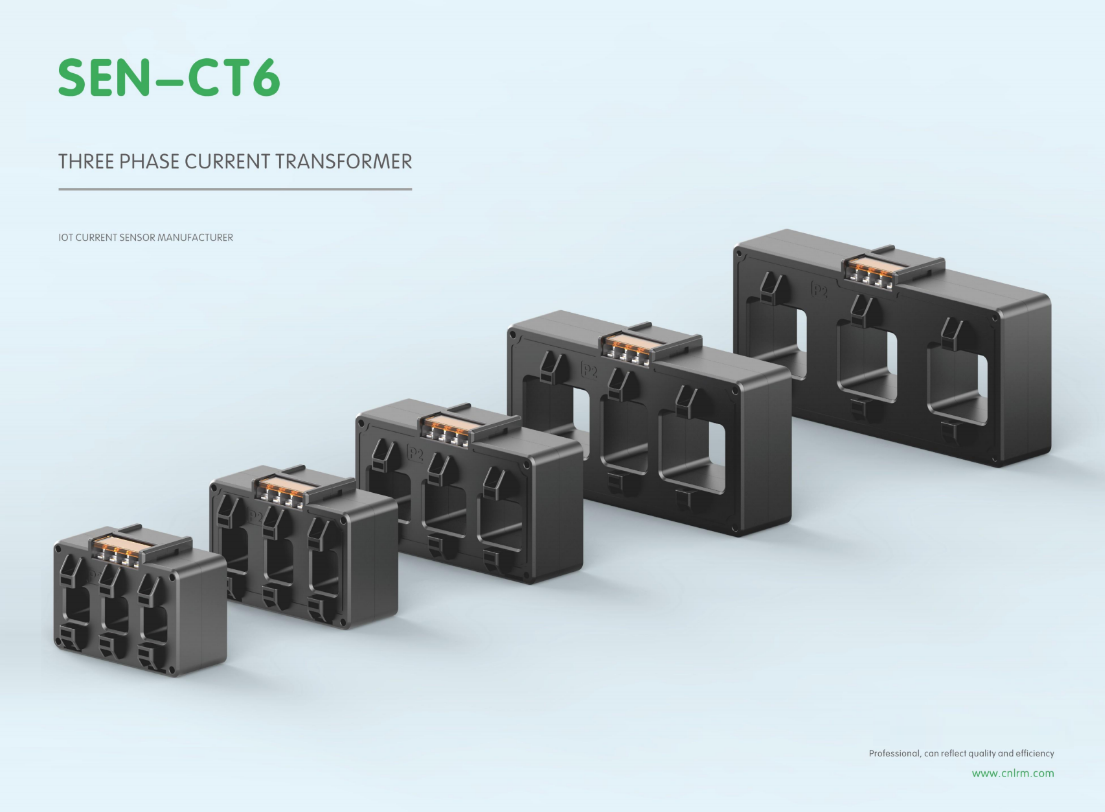
Most insulation ratings still come from clean laboratory impulses that look nothing like the messy spikes on your power lines. Instead of trusting those idealized numbers, this testing approach replicates the actual overvoltage shapes seen in real installations—steep-fronted transients, ringing after switching events, and repetitive surges that wear down dielectric margins over time.
By pulling voltage waveforms directly from operating environments or standards that reflect field stress, the ratings reflect how insulation behaves under repeated thermal and electrical strain, not just a single clean strike. That means the published voltage withstand level is closer to what your equipment will see on a bad day on the grid, so you can choose insulation with less guesswork and fewer oversized safety factors.
The result is a rating that doesn't just look good in a datasheet. It holds up when the actual overvoltage arrives with harmonics, polarity reversals, and frequencies you'd never get from a routine test bench. Engineers get a clearer margin between normal operating voltage and failure threshold without sacrificing reliability.
Can the supplier customize ratios and mounting without a six-week wait?
Many manufacturers treat custom ratio changes or non-standard mounting patterns as special orders that drag on for over a month. This supplier has built a different workflow. By keeping a modular gearbox platform and common housing blanks in stock, they reconfigure internal gear sets and adapt mounting flanges within days, not weeks. You specify the exact ratio and mounting orientation, and their engineering team confirms feasibility within 24 hours. Short-run CNC and flexible assembly lines then handle the rest, so you never sit idle waiting for a six-week lead time.
What often causes the delay elsewhere is the need to cast or machine entirely new housings. Here, the mounting interface is machined from a pre-qualified blank, and ratio changes come from swapping a limited set of precision-ground gears that are already on the shelf. Whether you need a 7.3:1 ratio with a B5 flange or a 15.8:1 with a NEMA 42 face, the parts exist ahead of your order. This drastically shortens the path from request to shipment, often landing in the two-week range for fully custom combinations.
The real difference is that this supplier treats customization as a standard process rather than an exception. Their quoting tool lets you pick non-catalog ratios and mounting styles without triggering a red flag or a manual engineering review cycle that burns weeks. Prototype quantities get the same priority as production runs. So if your application can't tolerate a six-week wait, you don't have to compromise on the exact mechanical interface or gear reduction you need.
Core materials and winding practices that won't shorten the unit's life at full load
The core stack matters more than most datasheets admit. Grain-oriented silicon steel with low magnetostriction keeps hysteresis losses in check, but it's the lamination thickness and coating that decide whether the unit can hold full load without creeping into thermal runaway. Thinner laminations—0.23 mm instead of the usual 0.35 mm—reduce eddy current heating at the edges, while an inorganic phosphate coating stops burrs from creating shorted paths between sheets. If the core bolts and clamping plates aren't stress-relieved after machining, even premium steel will develop hot spots along the bolt holes after a few hundred hours at rated power.
On the winding side, the trick isn't just using high-purity copper or aluminum—it's how the turns are laid down and insulated. Enameled wire with a double or triple coat of polyester-imide survives the repeated thermal expansion that full load brings, but only if the winding tension stays consistent. Loose turns vibrate and rub through insulation; overly tight turns crack the enamel at the corners. Layer insulation should be rated for at least 200°C continuous, and interleaved paper or Nomex strips between layers prevent voltage stress from concentrating at the end turns. Vacuum pressure impregnation with a low-viscosity varnish fills microscopic voids, so heat conducts out instead of forming internal hotspots that quietly age the insulation.
A practice many overlook is keeping the winding start and finish leads away from the core edges. At full load, the magnetic fringing flux near the air gap or core ends induces extra eddy currents in the copper, and if a lead runs through that zone it becomes a local heating element. Spacing the outermost turns back by half a centimeter or adding a flux shield made of copper foil around the gap can add years to the unit's life without increasing the footprint. These choices—lamination grade, winding tension, lead placement—show up not in the catalog specs but in how quietly the unit holds full load after a decade of thermal cycling.
Type test paperwork you can trace to a real lab, not a rebranded PDF
When you ask for type test paperwork, you want more than a glossy one-sheet with a logo slapped on it. Real documentation comes from a physical laboratory where technicians actually ran the tests, logged the data, and signed off on each result. Look for a street address, a phone number that rings to an engineer, and a unique report number that ties back to an internal quality system. If the only thing you can find online is a downloadable PDF with no lab accreditation mark or contact details, chances are someone just renamed someone else's file.
A legitimate type test report will mention the exact equipment used, the serial numbers of the sample components, and the conditions under which the test was performed—temperature, humidity, load cycles, even the date the instrument was last calibrated. That level of specificity is hard to fake. Rebranded PDFs tend to skip the messy details because they don't have them. They keep everything vague enough to pass a quick glance but fall apart the moment you ask for raw data or a retest. Before you rely on any certificate, call the lab and ask them to confirm the report ID. Five minutes on the phone can save you from a failed installation.
Another telltale sign: genuine paperwork often includes notes, handwritten initials, or a revision history that shows the report evolved during the testing process. It might have a correction page, a graph with a slightly off-axis label, or a photo of the test setup that looks like it was taken with an old phone. Those imperfections are not flaws—they are evidence of actual work. A rebranded PDF, on the other hand, is usually too clean, too symmetrical, with perfectly rounded corners on every chart and a suspicious absence of any human touch. Trace it to a real lab, and you'll sleep better knowing the numbers were earned, not copied.
Post-sale support when a current transformer fails in the field
When a current transformer goes down in the field, the first thing that matters is getting a clear picture of what actually happened. Rather than forcing a generic return process, our support team asks for the fault signature, installation photos, and load conditions from the site. That often reveals whether the failure stems from a wiring short, an open secondary under load, insulation breakdown, or a mismatch between the CT ratio and the connected relay. If the unit is still under warranty, we handle the replacement paperwork in the background while you focus on restoring service.
A replacement alone rarely solves the underlying issue, so we also walk your crew through a quick field checklist before the new transformer is energized. This includes verifying burden, checking secondary grounding, confirming polarity, and making sure no test switch is left in a shorting state. In cases where downtime is critical, we can ship a compatible unit from the nearest regional stock and coordinate with a local technician for a same-week swap.
After the replacement is installed, we keep the case open for a short monitoring window. You receive direct contact with an engineer rather than a ticket queue, so any unusual readings or trip events can be reviewed without starting over. If the failure pattern suggests a batch or design issue, we flag it for our quality team and share the findings with you, helping prevent the same problem from appearing on other feeders.
FAQ
Look for IEC 61869 compliance, UL listing if you're in North America, and ISO 9001 for quality management. Reputable suppliers also provide type test reports from independent labs. Ask for these documents early—if they hesitate, that's a red flag.
Request the full accuracy curve, not just the class designation like 0.5 or 0.2S. A trustworthy supplier will share burden vs. accuracy data and actual test certificates for the specific model. If they only quote a single number without context, dig deeper.
Ask whether they use grain-oriented silicon steel or nanocrystalline cores for your frequency range, and confirm insulation class (E, B, F, or H) matches your operating temperature. Also, enquire about partial discharge testing—low PD levels indicate better long-term reliability.
Send over a rough drawing with your busbar size, primary current range, and VA burden. A capable supplier will come back with a dimensioned proposal, not just a price. If they can't do custom ratios, terminal types, or mounting brackets, you're probably dealing with a reseller rather than a manufacturer.
Extremely low prices often mean lighter cores, thinner wire, or skipped testing. Watch for vague delivery dates, unwillingness to share factory audit reports, or quotes that omit accuracy and thermal ratings. Also, ask about minimum order quantities—if one supplier demands huge volumes and another doesn't, the difference often reflects production flexibility.
Yes, if the order volume justifies it. A virtual tour can reveal whether they actually wind coils in-house or just assemble imported parts. Look for clean winding areas, proper impregnation or epoxy encapsulation equipment, and a dedicated test bench for ratio and polarity checks.
Expect at least a written warranty covering accuracy drift and insulation failure, plus technical support for installation questions. Good suppliers keep traceability records for each batch, so if you have a field issue, they can identify the specific production run. Ask about replacement lead times—some promise 24-hour dispatch for standard models.
Request a breakdown of tooling, testing, and freight charges. Some suppliers quote low unit prices but charge separately for type tests or custom terminals. Compare total cost of ownership, including failure replacement and downtime risk. A slightly higher upfront cost often pays off with lower failure rates in metering or protection circuits.
Conclusion
When you're comparing suppliers for three-phase current transformers, the specs on paper rarely tell the whole story. You need to ask whether the stated accuracy holds up under distorted or unbalanced loads, not just under clean lab conditions. Many units drift once harmonics and power factor swings enter the picture. Insulation ratings deserve the same scrutiny: look for test voltages that reflect your real overvoltage events, not just generic standards. And if you need a specific ratio or custom mounting, find out early whether the supplier can turn that around in days instead of the usual six-week wait.
Beyond the datasheet, pay attention to how the transformer is built. Core materials and winding methods directly affect temperature rise and lifespan at full load, so ask for evidence of long-term testing rather than marketing claims. Type test documentation should trace back to an actual accredited laboratory, not a scanned PDF that changes hands without verification. Finally, consider what happens after installation: if a unit fails in the field, does the supplier offer troubleshooting help, replacement stock, or root cause analysis? A supplier that disappears after the invoice is paid can cost you far more than a slightly lower unit price.
Contact Us
Contact Person: Liu Mengyang
Email: [email protected]
Tel/WhatsApp: 8618727589233
Website: https://www.cnlrm.com/en/