

Tissue Rewinding Machine Solutions for Efficient Production
2026-11-02
Tissue production lines live or die by their rewinding speed and consistency. A small inefficiency here can ripple into major losses downstream. DAXIN has spent years refining rewinding machine solutions that directly target these pain points. Whether you're dealing with jumbo rolls or delicate bathroom tissue, the right rewinder makes all the difference. Here's what you need to know about achieving truly efficient production.
Why Faster Rewinding Alone Won't Fix Your Output Bottleneck
It's tempting to think that speeding up the rewind will somehow unlock extra throughput. Most of the time, though, the rewind isn't the part that's holding you back. The real bottleneck sits at the output stage—the print head, the cutting blade, the data write—and that stage runs at its own fixed pace. Crank the rewind as fast as you like, and you'll simply pile up material in the buffer while final output stays exactly where it was.
This mistake comes from a fuzzy view of how systems actually move work through them. Throughput is dictated by the slowest component, not by the flashiest auxiliary action. Double your rewind speed but leave the output rate untouched, and you've only added stress to the buffer—more jams, more misalignments, more downtime. A better move is to time every stage and find the one that consistently lags behind the rest.
Fixing an output bottleneck demands a different kind of attention. Start by examining what limits the output unit itself: mechanical speed, thermal cooldown, software latency? Then ask whether you can run multiple outputs in parallel or upgrade that specific module. Sometimes a minor tweak—like streamlining the output path or cutting changeover time—delivers far more than any rewind upgrade ever could. Ultimately, you have to target the real constraint, not the easiest knob to turn.
The Overlooked Role of Web Tension in Roll Consistency
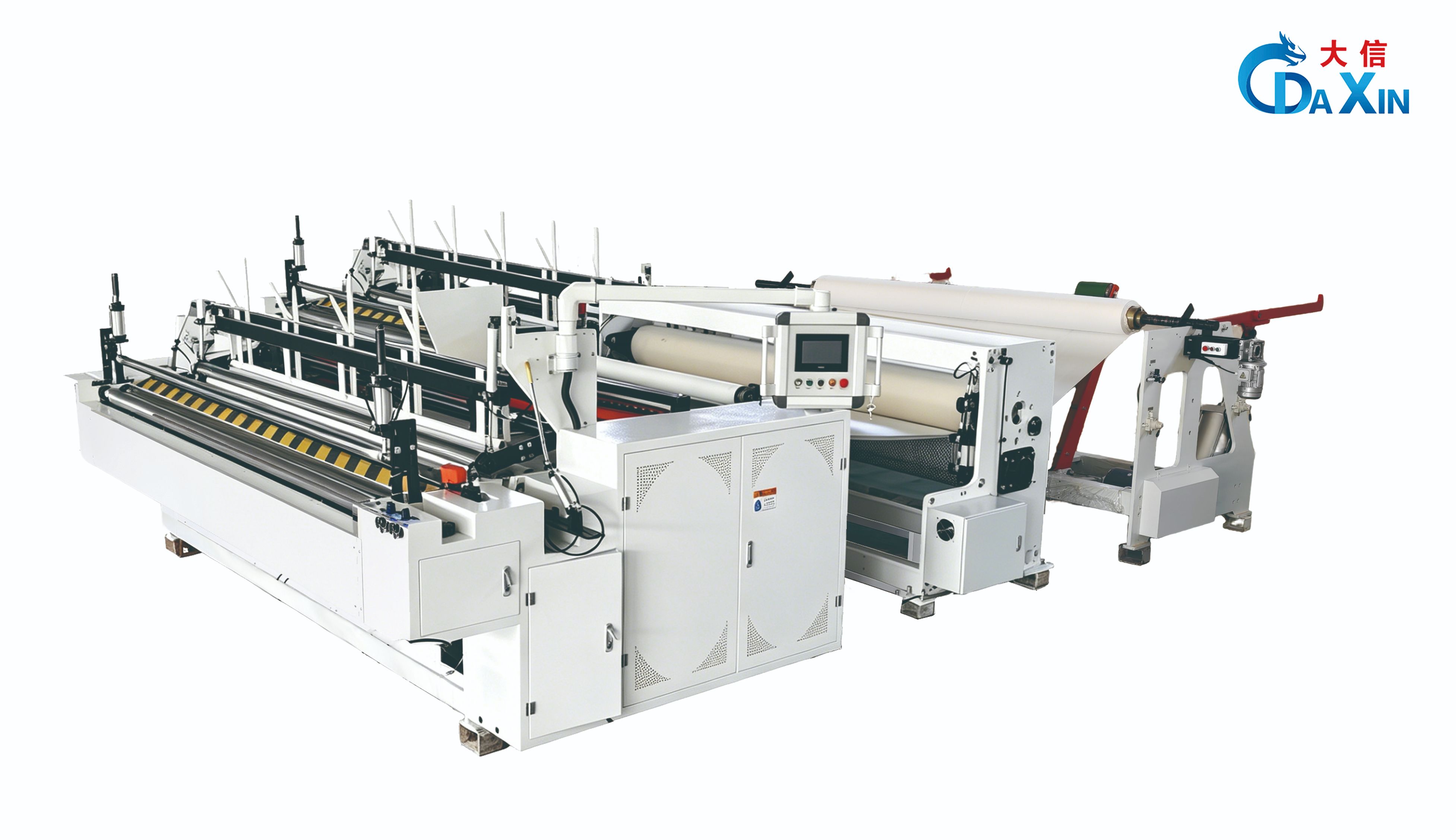
Many converters assume that once the slitting blades are set and the winder parameters are locked in, roll consistency takes care of itself. In practice, however, the tension profile across the web often drifts subtly during a run, and these small variations compound into noticeable differences in roll hardness, edge alignment, and even telescoping. Operators who only monitor average tension values on a screen miss the localized spikes and sags that develop as the parent roll diameter shrinks or as the web guides compensate for minor tracking issues. It is this dynamic, position-dependent tension behavior that frequently separates uniform, customer-ready rolls from those that arrive with soft centers or crushed edges.
A more pragmatic approach involves mapping tension at several points across the web and correlating those readings with the finished roll profile. For instance, a slight tension drop near one edge might only become visible after the roll has aged for a day, manifesting as a star pattern or a loose layer that shifts in transit. By logging lateral tension data alongside winding torque and nip load, operators can identify the exact combination that produces a stable roll for a given substrate, whether that is a lightweight film or a heavy paperboard. This goes beyond simply tightening or loosening the overall tension; it means reshaping the tension curve so that the center and edges build density at the same rate.
Overlooked tension inconsistencies also interact with other variables, such as moisture absorption, static charge, and core straightness, which can amplify the effect of a small tension error into a rejectable defect. Rather than chasing these downstream symptoms, process engineers can run short trials where only the cross-web tension profile is changed while all other parameters stay fixed. Comparing the resulting roll hardness profiles, layer slip counts, and edge quality usually reveals that modest adjustments in tension gradient yield far greater consistency improvements than any single change to speed, pressure, or slitting depth. In short, web tension is not a background setting; it is an active shaping tool for roll structure, and paying attention to its spatial and temporal nuances pays off in every roll that leaves the floor.
Choosing Rewinder Cores That Prevent Wrinkling and Breakage
Start with core runout. A core that is even slightly out of round will produce a repeating tension spike on every revolution, and on lighter films or tissue that spike is often enough to start a wrinkle at the nip. Specify a maximum total indicated runout of 0.010 inch (0.25 mm) or less for high-speed rewinders, and ask your core supplier for a straightness check on a sample batch. Moisture is the other quiet culprit: paperboard cores can swell unevenly after sitting in a humid plant, changing diameter by a few thousandths and steering the web off track. If your site has wide humidity swings, switch to a sealed or moisture-resistant core surface, or move up to a composite core for the most demanding grades.
Surface grab matters more than most operators realize. Too slick, and the first wrap slips during a flying splice or start-up, pulling the web sideways and creating a hard fold that can snap under tension. Too rough, and you imprint the pattern into the first few layers of film or coated paper. For most films and coated grades, a medium-grit textured surface with a steady coefficient of friction between 0.4 and 0.6 gives enough bite without marking. For tissue and nonwovens, an embossed or lightly tacky surface works better to hold the tail. Equally important is crush strength: a core that flattens under chuck pressure goes oval mid-roll, and that ovality shows up as wandering edges and diagonal wrinkles. Match the core's minimum flat crush strength to your heaviest roll weight, and don't stack cores on their sides before use—that can introduce permanent ovality before the core even reaches the rewinder.
Simple Control Layouts That Cut Training Time on the Floor
A well-thought-out control layout does half the teaching for you. When every button, switch, and dial sits exactly where an operator's hand naturally goes, new hires stop hunting for the right control and start learning the process itself. Grouping functions by sequence rather than by electrical convenience means someone can watch a cycle once and then repeat it without asking which switch comes next.
Color coding and physical shape differences push this even further. A green start button that's always next to a red stop button, a raised ridge on the jog dial, a guard bar that doubles as an emergency stop—these small touches turn memorization into muscle memory. Trainers spend less time repeating basic steps, and trainees gain confidence on their first shift instead of their third week.
The payoff shows up quickly on the floor. When a layout is simple enough to explain in five minutes, you can move people between stations without losing a day to retraining. It also cuts down on early mistakes that come from confusion, which keeps both the new operator and the equipment safer while they get up to speed.
What Daily Maintenance Checks Actually Extend Rewinder Life
Most rewinder failures trace back to skipped checks that take less than ten minutes. Start with the roll surfaces: dried adhesive, paper dust, and edge trim debris build up on idler rolls, lay-on rolls, and spreader rolls within a single shift. Wipe them down with a lint-free cloth and isopropyl alcohol at every roll change, and use a brass scraper only if residue has hardened. A scratched or dented roll will transfer surface defects to the web and force the tension control system to compensate, wearing out bearings and side frames much faster than normal.
Tension calibration deserves a daily glance, not a monthly audit. Hang a known weight from the load cell or compare the displayed tension against a handheld meter before startup. Drift of even a few percent pushes the rewinder to run either too slack or too tight, which overheats clutch packs and shortens motor brush life. Watch the finished roll edges while the machine ramps up: a slight star pattern or offset layers usually means the core chucks or guide rails have developed play. Tightening those clearances now avoids a full re-alignment job later.
Lubrication and air systems are where daily checks pay off quietly. Look at the oil sight glasses on gearboxes and bearing housings, but don't top up unless the level dropped—over-greasing blows seals and attracts grit. Listen for hissing around lay-on roll cylinders and brake calipers; a small leak causes pressure swings that hammer the bearings every time the roll kisses the core. Keep the electrical cabinet filter and cooling fan clean too, because heat ages VFD capacitors and servo drives faster than mechanical wear. Write down the readings, even if they look normal. A trend that shifts by a small amount each day tells you a failure is coming weeks before it happens.
Switching Between Tissue Grades Without Sacrificing Line Speed
A common bottleneck in tissue converting comes when the line has to shift from, say, a 2-ply ultra-soft bathroom tissue to a 3-ply kitchen towel. The instinct is to throttle back while operators manually tweak embossing pressure, rewinder tension, and tail threading. That slowdown isn't a law of physics—it's a legacy of equipment designed around fixed setups. Newer lines break this pattern by treating grade changes as recipe-driven events, not rebuilds.
The key is decoupling mechanical adjustments from line speed. Servo-controlled embossing stations can swap roll patterns or clear debris without stopping rotation, and auto-correcting calendering gaps adjust in milliseconds based on incoming sheet caliper. On the winding side, closed-loop tension control holds the sheet stable while the core chuck accelerates to match the new grade's diameter and density targets. Because these changes happen in parallel with the main drive, the line never leaves its production curve.
Tissue mills that implement this approach typically see grade transitions shrink from 20–30 minutes of ramp-up waste to under five minutes at full speed. The real payoff, though, is scheduling freedom. A plant can run short batches of premium facial tissue between long runs of commercial toweling without accumulating off-spec rolls. Operators stop dreading the changeover alarm—they hardly notice it.
FAQ
Many lines suffer from slow speed changes when switching roll diameters, plus wrinkles from uneven tension. The solution here includes automatic tension control and quick-change mandrels, which cut downtime noticeably and keep the web flat even at high speeds.
Instead of forcing operators to tweak settings for every grade, the machine stores parameter recipes for basis weight and softness. You pick a recipe on the touch panel, and the servo drives adjust nip pressure, winding tension, and speed profile automatically.
Daily checks on the slitting blades and the web guide sensors prevent most surprises. The modular design lets you swap out worn rollers or belts in under ten minutes, and the self-diagnostic system flags lubrication intervals before they become problems.
Yes, the flying splice feature lets you change parent rolls without stopping the line. Combined with precise length measurement and automatic tail gluing, waste drops to roughly 0.5 percent per shift compared to older manual methods.
Absolutely. The cantilevered unwind stands and interchangeable ring rollers support diameters from 90 to 150 mm. Changing product type takes about fifteen minutes, and the core feeder adjusts to different inner core sizes without extra parts.
Factories report an average output increase of 18 to 22 percent, mainly from faster acceleration rates and fewer jams. One operator can supervise two machines because the HMI alerts only require intervention for loading parent rolls or clearing a rare splice miss.
A closed-loop load cell system monitors nip force in real time and adjusts it within milliseconds. For low-density tissue, the center winding mode applies torque through the core, so the outer layers never get compressed while the inner layers stay tight enough to avoid telescoping.
Light curtains around the unwind and rewind sections stop motion instantly if an operator enters the danger zone. Interlocked guards on the slitting area prevent access until blades are fully stopped, and emergency stop buttons are spaced every two meters along the frame.
Conclusion
On many tissue converting lines, operators assume that installing a faster rewinder will automatically lift overall output, but this rarely solves the real bottleneck. The problem often lies in how the machine handles tension, cores, and grade changes rather than raw speed. Inconsistent web tension, for instance, produces rolls that vary in hardness and diameter, leading to rejects at the packaging stage or complaints from downstream users. Selecting the right rewinder core matters just as much: cores with improper surface friction or dimensional tolerances cause wrinkling, telescoping, and unexpected breaks that force frequent stops. A well-designed control layout further reduces downtime by making key functions obvious and intuitive, so new operators reach full productivity in days instead of weeks. Taken together, these factors show that efficient rewinding is less about maximum speed and more about stable, repeatable operation.
Daily maintenance also plays a decisive role. Simple checks, such as monitoring nip roll wear, verifying air shaft bladder integrity, and cleaning tension load cells, prevent small drift from turning into major defects or unplanned shutdowns. When the line must switch between tissue grades, the difference between a smooth transition and a slow, loss-making one often comes down to how quickly the tension profile and core chucking settings can be adjusted. Machines that store grade-specific recipes and use direct-acting tension controls let crews change over without sacrificing line speed or producing scrap rolls. Ultimately, the most productive tissue rewinding solution is not the one with the highest rated speed on paper; it is the one that keeps rolls consistent, changeovers short, and operator interventions rare. By focusing on tension, cores, controls, and maintenance, converters gain more usable output from the same floor space and labor hours.
Contact Us
Contact Person: Sam Xie
Email: [email protected]
Tel/WhatsApp: 86-18938538530
Website: https://www.daxin321.com/