
Top 10 Aromatic Carbonyl Intermediates Every Organic Chemist Should Know
2026-11-02
The difference between a stalled route and a clean scale-up often comes down to which aromatic carbonyl intermediate you reach for—and how well you understand its behavior. This list of ten is not just a memory aid; it is a survival kit for synthesis planning. From classic Friedel-Crafts partners to modern C–H activation handles, each entry has earned its place through years of real-world use. At DSL Chemicals, we see these intermediates as the unsung heroes behind many commercial molecules. Consider this your working cheat sheet—because the next time a route stalls, the solution may already be sitting on your bench.
Why Benzaldehyde and Its Derivatives Are the Gateway to Aromatic Carbonyl Chemistry
Benzaldehyde's carbonyl sits directly on the ring, and that conjugation quietly reshapes its reactivity. Unlike saturated aldehydes, the partial positive charge at the carbonyl carbon is tempered by resonance into the aromatic system, so nucleophiles approach a slightly less electrophilic center. Yet this same delocalization stabilizes the tetrahedral intermediate enough to favor pathways like the benzoin condensation, where two benzaldehyde molecules stitch together through an umpolung step that feels almost like a magic trick the first time you run it.
The derivatives push this chemistry further. Electron-withdrawing groups at the para position, as in 4-nitrobenzaldehyde, pull electron density away and make the carbonyl noticeably more reactive toward amines and hydride donors, while electron-donating groups do the opposite. Swap the aldehyde for a methyl ketone or extend the conjugation to cinnamaldehyde, and you keep the aromatic ring's influence while unlocking Michael additions and aldol variants that don't work as cleanly with simple aliphatic substrates.
What makes benzaldehyde a true gateway is how forgiving it is in practice. The parent compound is a liquid that survives on the bench, many derivatives are crystalline solids easy to purify by recrystallization, and the products often retain enough aromatic character to be followed by TLC under a UV lamp. From a first Grignard addition to a multi-step synthesis of a pharmaceutical intermediate, the same aromatic carbonyl logic keeps reappearing, which is why most synthetic chemists end up reaching for these compounds without a second thought.
The Reactive Acyl Chlorides and Anhydrides You Meet in Every Advanced Synthesis Course
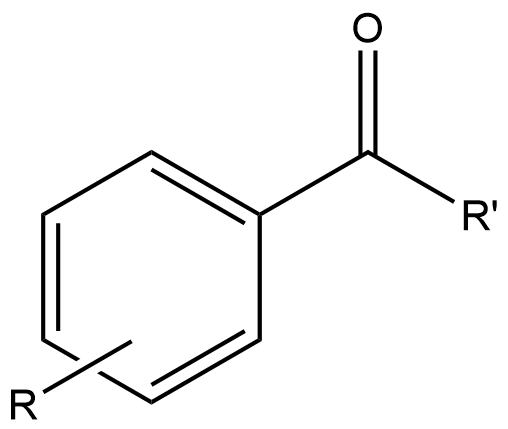
Acyl chlorides sit at the sharp end of carboxylic acid derivative reactivity, and any advanced synthesis course will throw them at you early. The moment you add an amine or an alcohol, the chloride leaves as HCl, often with enough heat to remind you why you cooled the flask. Acetyl chloride and benzoyl chloride are the workhorses here—small, pungent, and unforgiving if moisture sneaks in. Because the carbonyl carbon is so electrophilic, you can run these substitutions at room temperature or below, which is a godsend when your substrate hates heat.
Anhydrides, on the other hand, feel almost polite by comparison. Acetic anhydride still reacts readily with nucleophiles, but the leaving group is acetate, not chloride, so the mixture stays less acidic and easier to handle. You will see it used to protect alcohols as acetates or to close rings in polyketide work. Trifluoroacetic anhydride deserves special mention: it does not just acylate, it activates carboxylic acids in situ, turning a sluggish acid into a mixed anhydride that attacks even weak nucleophiles. That dual role makes it a favourite in peptide coupling on the benchtop.
What separates a smooth prep from a fuming mess is usually the order of addition. Add the acyl chloride slowly to a cold solution of your nucleophile and a tertiary amine base—never the other way around unless you enjoy acid clouds and polymeric tar. Anhydrides are more forgiving, but they still reward careful stoichiometry and dry glassware. Quenching is the final ritual: pour the reaction into ice-cold bicarbonate, stir until the hissing stops, and only then extract. Respect these reagents’ hunger for water, and they will convert alcohols, amines, and even enolates with remarkable predictability.
Quinones, Ketenes, and Other Surprising Intermediates That Defy Simple Classification
Quinones often get filed under electron-poor alkenes, but that label misses half the story. The carbonyl oxygens can coordinate Lewis acids, the C=C bond can act as a dienophile, and the ring itself can shuttle between fully aromatic and fully quinonoid states depending on the redox partner. In practice, a single quinone can serve as an oxidant, a Michael acceptor, a ligand, or a reversible hydrogen carrier, sometimes within the same cascade. That behavioral range makes strict classification more of a hindrance than a help.
Ketenes are stranger still. The central carbon sits at the junction of a C=C and a C=O, creating a polarized cumulene that reacts at either terminus. Add a chiral catalyst or a carefully tuned nucleophile, and you can get [2+2] cycloadditions, esterifications, or unexpected rearrangements. Because the polarity flips depending on the substituents, ketenes blur the usual boundary between electrophilic and nucleophilic synthons. They are best treated as shape-shifting linchpins rather than well-behaved intermediates.
Beyond these, ortho-quinone methides, acylnitroso species, and nitrile oxides push the same theme. Each one carries multiple reactive sites that can be activated independently, so their outcomes depend heavily on subtle changes in solvent, temperature, or additives. Calling them “unusual” intermediates undersells their synthetic value; what really matters is that they refuse to obey the neat labels organic chemists often reach for first.
How Electron-Poor Rings Turn Ordinary Carbonyls into Unusually Stable Intermediates
A fleeting tetrahedral intermediate is usually the last thing a carbonyl compound wants to hold onto. Yet place that carbonyl next to an electron-poor aromatic ring and the picture changes sharply. Pyridine-2-carboxaldehyde, for instance, forms a remarkably stable hydrate in water, while benzaldehyde barely hydrates at all. The difference comes down to how the ring pulls electron density away from the carbonyl region, reshaping the energy landscape of every addition step.
Mechanistically, the effect combines resonance and inductive withdrawal. An electron-poor ring offers low-lying π* orbitals that can accept negative charge from an oxygen anion or an sp3-hybridized carbon in the intermediate. Instead of that charge localizing on a single atom, it spreads across the ring, lowering the intermediate's energy relative to the starting carbonyl. This effect becomes especially pronounced with pyrimidines, triazines, and nitro-substituted arenes, where multiple heteroatoms or strong acceptors amplify the delocalization. The carbonyl carbon becomes more electrophilic, yet the tetrahedral adduct it forms is no longer a high-energy species waiting to collapse; it can sit in a shallow well, occasionally isolated or observable by routine spectroscopy.
Practical consequences follow. Catalytic cycles that rely on carbonyl activation can be tuned by choosing an electron-poor ring as a covalent or supramolecular handle, slowing down breakdown steps and extending intermediate lifetimes. Medicinal chemists have exploited the same stabilization to mask reactive aldehydes as hydrates or hemiaminals in prodrug strategies. Rather than being a nuisance, the abnormal stability of these ordinary-looking carbonyl adducts offers a handle for controlling reactivity in everything from enzyme inhibitors to new materials.
From Friedel-Crafts to Cross-Coupling: The Reaction Pathways These Intermediates Dominate
Friedel-Crafts alkylation and acylation rely on the generation of a highly electrophilic carbocation or acylium ion, which then attacks an electron-rich aromatic ring. This intermediate dictates both the feasibility and the positional outcome of the reaction; electron-donating substituents stabilize the Wheland intermediate, steering substitution to ortho and para positions, while deactivating groups often shut the pathway down altogether. The dominance of this cationic intermediate explains why Friedel-Crafts chemistry struggles with strongly deactivated arenes and why polyalkylation is a persistent side reaction.
Cross-coupling, by contrast, shifts the mechanistic spotlight to organometallic intermediates, especially those involving palladium, nickel, or copper. Oxidative addition, transmetalation, and reductive elimination each pass through discrete metal-bound species whose stability and reactivity govern the overall transformation. Unlike the fleeting carbocations of Friedel-Crafts reactions, these organometallic intermediates can be tuned through ligand design and reaction conditions, enabling selective C–C bond formation even on substrates that would be unreactive or unselective under classical electrophilic aromatic substitution.
The thread connecting these two worlds is the central role of a well-defined intermediate in steering bond formation. Friedel-Crafts pathways lean on a single high-energy cationic species, whereas cross-coupling proceeds through a sequence of metal complexes that collectively control oxidation state, geometry, and migratory aptitude. Recognizing this distinction helps chemists choose between direct electrophilic functionalization and transition-metal-catalyzed coupling when planning a synthesis, and it underscores how the nature of the dominant intermediate shapes the scope and limitations of each method.
The Most Overlooked Aromatic Carbonyl Intermediates That Deserve a Spot in Your Lab Notebook
When you flip through a well-worn lab notebook, certain entries jump out: the solvent system that finally separated two stubborn spots, the exact temperature where a coupling stopped giving black tar. But aromatic carbonyl intermediates rarely get that treatment. They're usually scribbled in the margin as a fleeting notation—'acyl radical?', 'ketene?', 'quinone methide?'—then forgotten after the reaction works or fails. Yet these species often hold the key to selectivity puzzles, side-product formation, or even a completely different mechanistic pathway that would have saved three weeks of optimization.
Take ortho-quinone methides, for instance. They show up in everything from lignin degradation to DNA alkylation, but bench chemists tend to treat them as a nuisance rather than a tunable intermediate. A single note about the half-life of a particular o-QM in wet acetonitrile—say, 40 minutes at room temperature versus days under anhydrous conditions—changes how you design trapping experiments. Similarly, acylnitroso species from hydroxamic acid oxidations are often invoked but rarely characterized. Jotting down the telltale blue-green color that appears at -20°C and fades by 0°C could prevent a misassigned Diels-Alder adduct.
The real value emerges when you start cross-referencing these marginal observations. A ketene intermediate that lingered just long enough to trap with an alcohol in one project might explain the unexpected ester impurity in a seemingly unrelated amide coupling months later. The overlooked aromatic carbonyl intermediate is not just a mechanistic curiosity—it's a predictive tool. Give it a dedicated section in your notebook, even if it's just a table of half-lives, characteristic colors, or trapping efficiencies. Future you will stop wasting time re-deriving what past you already glimpsed.
FAQ
The shortlist typically includes benzaldehyde, benzoyl chloride, benzoic anhydride, methyl benzoate, benzamide, benzophenone, anthraquinone, 1,4-naphthoquinone, aryl ketimines, and cinnamaldehyde derivatives. Each one shows up repeatedly in both academic and industrial settings because of their predictable electrophilicity and the way the aryl group tunes reactivity.
The ring can either donate or withdraw electron density through resonance and induction. For example, in benzaldehyde the phenyl group stabilizes the partial positive charge on the carbonyl carbon less effectively than an alkyl group would, making it more susceptible to nucleophilic attack. Electron-donating substituents on the ring reduce electrophilicity, while electron-withdrawing groups increase it.
Because they are highly reactive acylating agents. Benzoyl chloride reacts readily with alcohols, amines, and even water, which makes it ideal for introducing benzoyl protecting groups or building esters and amides. Benzoic anhydride offers similar reactivity with a milder profile, producing carboxylic acid as a byproduct instead of HCl, which can be advantageous in acid-sensitive systems.
Benzaldehyde is a workhorse in benzoin condensation, aldol reactions, and Strecker synthesis. Acetophenone derivatives are common substrates for Friedel-Crafts acylation, Grignard additions, and reductions to chiral alcohols. Both classes also serve as precursors for heterocycles like imidazoles, oxazoles, and pyrazoles.
Quinones such as anthraquinone and 1,4-naphthoquinone are unique because they contain two conjugated carbonyl groups embedded in an aromatic framework. This makes them excellent electron acceptors and redox-active species. They appear in dye synthesis, biologically active natural products, and as catalysts in oxidative processes.
Benzamide is relatively stable and often used as a directing group in C–H activation or as a precursor to nitriles. Methyl benzoate, on the other hand, is more electrophilic and easier to hydrolyze or reduce. The difference arises from the leaving group ability and the resonance donation from nitrogen versus oxygen, which affects the carbonyl's susceptibility to nucleophiles.
In pharmaceutical synthesis, benzaldehyde derivatives are routinely used to construct chiral amines via asymmetric reductive amination or to form imines that undergo addition by organometallics. For example, the synthesis of many beta-lactam antibiotics starts from a benzaldehyde-derived Schiff base. In materials chemistry, anthraquinone intermediates are key to producing anthraquinone dyes and redox flow battery electrolytes.
Several are lachrymators or skin irritants, especially benzoyl chloride and benzaldehyde. Benzoyl chloride reacts violently with water and alcohols, releasing HCl gas, so it must be handled under anhydrous conditions. Quinones can act as redox cyclers and may be toxic or mutagenic, requiring careful waste disposal. Proper ventilation, personal protective equipment, and quenching protocols are non-negotiable.
Conclusion
Benzaldehyde and its ring-substituted variants are the entry point, but they are not just teaching examples. The formyl group sits at a sweet spot: conjugation with the ring attenuates the carbonyl's electrophilicity enough to avoid spontaneous hydration, yet the carbon remains reactive toward cyanide, amines, and enolates. From there, the acid chloride and anhydride tier—benzoyl chloride, p-toluoyl chloride, phthalic anhydride, mixed benzoic anhydrides—takes over whenever you need a fast acylation. These species feed acylium ions in Friedel-Crafts chemistry, but the same benzoyl chlorides are increasingly converted into acylpalladium intermediates under cross-coupling conditions. That continuity between classical electrophilic aromatic substitution and modern catalytic cycles is easy to miss if you treat each reaction separately.
Then come the oddballs. 1,4-Benzoquinone is formally an aromatic carbonyl, but its dominant mode is conjugate addition and reversible redox, which is why it shows up in electron-transfer chains and Diels-Alder reactions rather than simple acyl transfers. Diphenylketene is even stranger: the carbonyl carbon is the site of attack, but the adjacent cumulated double bond makes dimerization and [2+2] addition the default paths. Electron-poor rings flip the usual behavior—4-nitrobenzaldehyde, pentafluorobenzoyl chloride, and perfluorophenyl esters stabilize tetrahedral or anionic intermediates long enough to enable reactions that fail on plain benzaldehyde. The truly overlooked names rarely appear in top-ten lists: 2-formylbenzoic acid exists in a lactol equilibrium, aryl chloroformates act as masked aroyl donors, and aroyl azides are one-step away from isocyanates in Curtius rearrangements. Together with the benzaldehyde derivatives, acyl halides, anhydrides, quinones, ketenes, and electron-poor variants, these ten intermediates cover the mechanistic ground every organic chemist should recognize.
Contact Us
Contact Person: Wei Zhang
Email: [email protected]
Tel/WhatsApp: 862163529955
Website: https://www.dslchem.com