

Top 10 Medium Voltage Switchgear Solutions for Reliable Power Distribution
2026-08-26
Medium voltage switchgear often gets treated as a boring spec-sheet item—until something trips and a whole line goes dark. That's why we stripped away the jargon and looked at what actually keeps power flowing. The result is this list of ten solutions, including Deepwill, that stand out for their engineering and real-world dependability. Here's what made the cut.
Vacuum Interrupters: The Quiet Migration Away From SF6
For decades, sulfur hexafluoride has been the invisible workhorse inside switchgear, valued for its arc-quenching and insulating properties. But its global warming potential—tens of thousands of times that of carbon dioxide—has pushed utilities and manufacturers to reconsider what they once took for granted. Vacuum interrupters, long used in medium-voltage equipment, are now stepping into roles that were previously off-limits, and they're doing so without much fanfare.
The shift is less about dramatic breakthroughs and more about steady engineering progress. Vacuum bottles offer a clean break: no gas to leak, no decomposition byproducts to manage, and no end-of-life recovery headaches. The arc simply stretches, diffuses, and dies in a near-perfect vacuum. That simplicity translates into lower maintenance and a smaller environmental footprint over the product's entire life cycle.
As voltage ratings climb and manufacturing techniques improve, vacuum interrupters are becoming the default choice in many new installations. The migration is quiet because it happens inside sealed chambers, hidden from view, but the cumulative effect is profound—a slow unwinding of dependence on a gas that no longer fits the industry's long-term plans.
Compact Switchgear Designed Around Human Access, Not Just Footprint
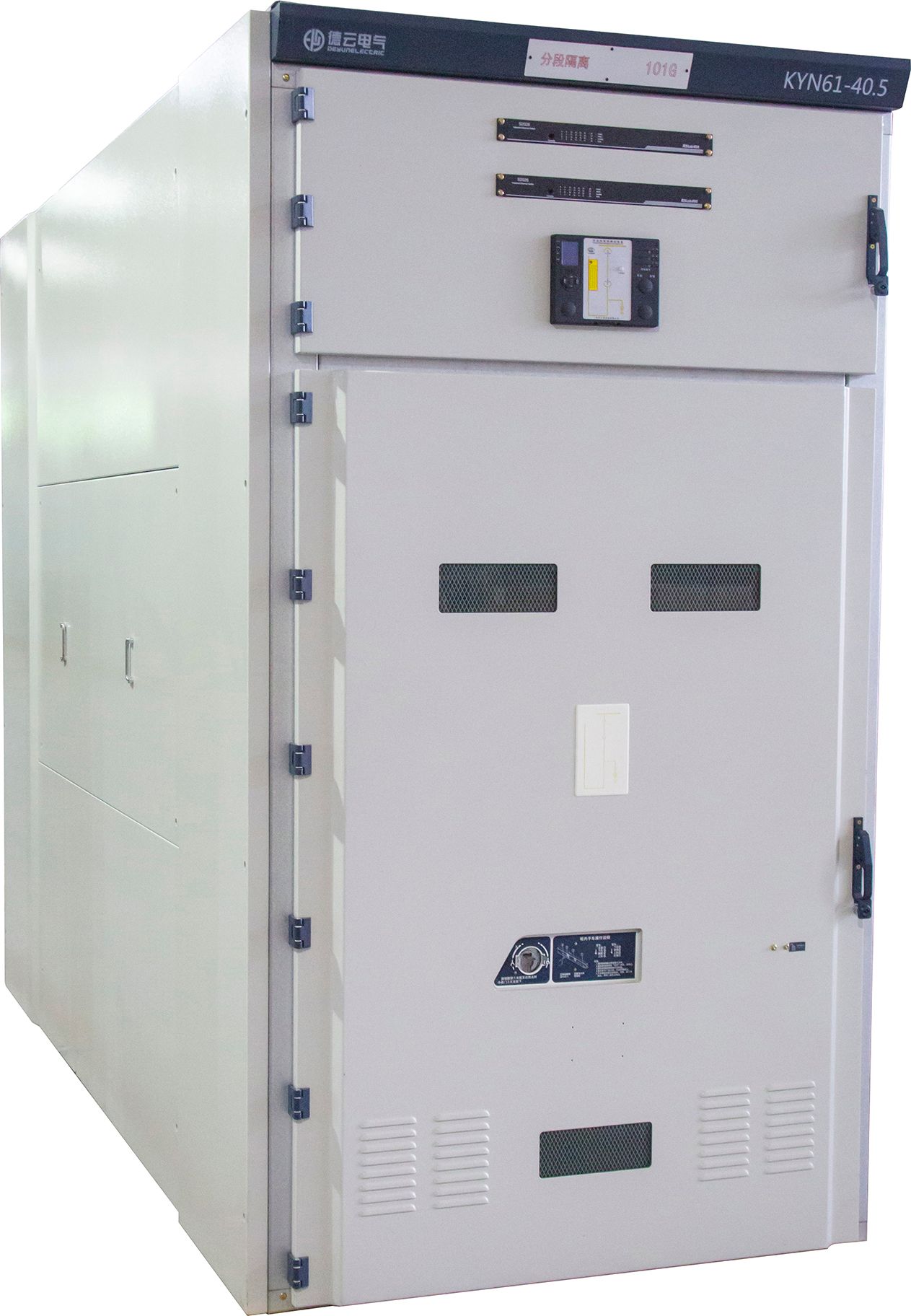
Most compact switchgear designs chase a smaller footprint on paper, but the real cost shows up later when a technician has to squeeze into a cramped aisle or work blind behind a fixed panel. Gear that shrinks the enclosure without thinking about how a human body actually moves through it ends up turning routine maintenance into a contortion act. The result is longer outages, more dropped tools, and a safety record that quietly erodes because nobody can reach the breaker comfortably.
This lineup flips that logic. Instead of starting from the floor plan and forcing the gear into whatever space is left, the enclosure depth, door swing, and internal bay spacing were all set by standing a technician in front of a mock-up with a torque wrench in hand. Front-access terminations land at chest height, not knee level. Cable compartments open wide enough to pull a full reel through without shaving insulation off the lugs. And the low-voltage control section slides out as a single tray so you can test relays on a bench rather than hunched over a live panel.
The footprint is still tight enough for retrofit rooms and containerized substations, but that no longer comes at the expense of working clearance. Because every draw-out unit rolls forward on rails with a built-in service position, one person can isolate, inspect, and re-rack a breaker without calling for a second set of hands. The time saved on each inspection adds up fast across a fleet of switchrooms, and fewer forced postures mean fewer back strains and near misses. Compact, in this case, means dense but not hostile to the people who keep it running.
Sensors That Predict Insulation Failure Before It Trips a Relay
A new class of embedded sensors does more than log temperature swings inside motor windings and switchgear. They continuously profile the dielectric stress across insulation surfaces, tracking microscopic partial discharge patterns that appear weeks before a ground fault develops. Instead of waiting for a current spike to trip a protective relay, maintenance teams get a clear, early warning that lets them schedule a repair during planned downtime—not after an unplanned outage.
These sensors pair high-frequency current transformers with edge-based spectrum analysis, comparing harmonic signatures against a learned baseline for each asset. When corona or surface tracking begins, the signal drifts outside normal tolerance long before insulation resistance drops enough to matter. The result is a shift from reactive shutdowns to condition-based replacement, cutting both repair costs and the risk of arc-flash incidents in aging electrical infrastructure.
Arc-Resistant Enclosures: Rethinking What Safety Data Actually Shows
Most of the safety data attached to arc-resistant enclosures comes from controlled laboratory tests, where the setup, fault current, and duration are carefully scripted. Real arc flashes rarely follow that script. A breaker that clears in three cycles on a test bench might take twice as long in a facility with aging relays or compromised coordination settings. That gap between lab results and field behavior is where a lot of supposed safety margins quietly disappear. Instead of treating a single pass/fail certification as the final word, engineers are starting to ask what the data actually implies for their specific operating conditions—including things like enclosure age, gasket wear, and whether the room itself can handle the pressure wave without turning into shrapnel.
Rethinking the data also means looking past the headline claim of “arc-resistant” and digging into the underlying failure modes. Some enclosures perform admirably in a bolted-fault test but crack open during an arcing ground fault, which is far more common in real switchgear. Others rely on plenum systems or vents that work beautifully when new but become clogged with dust or blocked by nearby equipment. The data sheets won’t tell you that a thin layer of conductive debris can turn a supposedly safe enclosure into a pressure cooker. When you start cross-referencing maintenance logs, incident reports, and thermal imaging from actual sites, a different picture emerges: the enclosures that protect people best are not necessarily the ones with the most impressive test scores, but the ones whose safety features survive years of imperfect operation. That’s the conversation worth having—not whether a box passed a standard, but whether it stays safe when nobody is watching.
Modular Bus Systems That Let You Expand Without Rewiring Everything
Most industrial control setups force you to rip out wiring every time you add a new module. Modular bus systems flip that script. You plug in another slice, and the backplane handles power and data automatically. No rat's nest, no downtime tracing cables, no shouting at schematics. The physical connectors are designed so each segment locks into the next, carrying the same communication lines along the rail.
What really sets these systems apart is how they treat expansion as a native feature rather than an afterthought. Instead of reserving spare terminals or leaving slack loops, you simply append a unit and it registers on the network. Think of it like adding a book to a shelf that already has the wiring embedded in the shelf itself. Diagnostics stay live across the whole run, so a fault in one node doesn't darken the rest.
In practice, maintenance teams love the fact that a replacement or upgrade happens in minutes. You pop out a failed section, slot in a new one, and the address assignment either auto-negotiates or stays fixed by position. That cuts the usual guesswork around DIP switches and termination resistors. For growing production lines, it means you never have to choose between a costly pre-wired cabinet and a brittle custom harness.
Digital Twins and the Disappearing Manual Inspection Checklist
The manual inspection checklist has long been the quiet backbone of industrial maintenance—a clipboard of boxes to tick, a ritual repeated shift after shift. But it suffers from a fundamental flaw: it is a snapshot, not a stream. By the time a technician finishes the last item, the first reading may already be outdated. Digital twins are changing this. Instead of relying on periodic human checks, a living virtual replica of the physical asset continuously mirrors its condition, pulling data from sensors in real time. The checklist, once a static document, becomes a dynamic yardstick that never stops measuring.
Consider a pump in a chemical plant. With a traditional checklist, an operator might note vibration, temperature, and pressure once per shift. A digital twin, however, compares these values against a simulated ideal state thousands of times per minute. Drift that would be invisible between manual rounds is caught the moment it appears. The twin doesn’t just record what is—it predicts what should be, flagging even subtle anomalies that human senses or infrequent readings would miss. The manual checklist dissolves into the background, replaced by an always-on audit that requires no pen, no paper, and no walking route.
This disappearance isn’t about cutting corners; it’s about shifting human attention to where it matters. When routine checks are automated, technicians stop being data collectors and become decision-makers. They respond to targeted alerts rather than hunting through pages of checkboxes. The result is less downtime, fewer overlooked failures, and a maintenance culture that acts on evidence rather than habit. The manual inspection checklist isn’t so much eliminated as absorbed into a smarter, continuous process—one that finally matches the speed and complexity of modern assets.
FAQ
Start with the actual operating environment and load profile, not just a datasheet. Look at the expected short-circuit current, ambient temperature range, humidity, altitude, and whether the equipment will face dusty or corrosive conditions. Then examine the switchgear's internal arc classification and how well it limits damage during a fault. Breaker technology matters too: vacuum interrupters generally need less maintenance, while SF6 designs offer compact footprints but come with environmental handling requirements. Finally, consider if the manufacturer can provide local support, spare parts, and retrofit options ten or fifteen years down the road.
Many newer designs use arc-resistant enclosures that channel the pressure and hot gases away from the operator via a dedicated exhaust system. Instead of just containing the blast, they redirect it to a safe area, which lowers the incident energy at the front of the panel. Some manufacturers also add fast-acting light and current sensors that trip the breaker in a few milliseconds, reducing the total energy released. A lower arc flash rating means workers can wear lighter PPE and still stay protected, but it requires careful coordination with upstream protection settings.
Continuous monitoring catches small problems before they become failures. Temperature sensors on busbar joints and cable terminations can show a loose connection that would otherwise overheat and degrade insulation. Partial discharge sensors listen for tiny electrical discharges inside the insulation, giving an early warning of voids or contamination. By tracking vacuum interrupter wear, operating cycle counts, and coil currents, maintenance teams can switch from fixed calendar intervals to actual condition-based work. This not only extends equipment life but also avoids unnecessary invasive inspections.
SF6 is an incredibly potent greenhouse gas, and regulations around its use and reporting are tightening in many regions. Utilities and industrial plants are looking for ways to reduce their environmental footprint without sacrificing performance. Modern SF6-free alternatives use vacuum interrupters combined with solid insulation or clean air, and they can match the compact dimensions and reliability of traditional gas-insulated designs. The upfront cost may be slightly higher, but avoiding SF6 handling training, leak monitoring, and end-of-life gas recovery often makes the total life cycle cost competitive.
Smart sensors give you visibility into what's happening inside the switchgear without opening the door. For example, a sudden rise in partial discharge activity across several feeders can point to a developing insulation problem that scheduled maintenance can fix before it trips. Vibration and temperature trends on breaker mechanisms reveal lubrication issues or worn components. These sensors push data to a central dashboard, so an operator can spot an abnormal pattern at 2 a.m. and schedule a repair during the next planned outage instead of dealing with a surprise failure at peak load.
Air-insulated switchgear uses ambient air as the insulating medium, which makes each panel wider and taller but simplifies maintenance because you can visually inspect most components. Gas-insulated switchgear uses SF6 or a clean-air mixture under slight pressure to achieve the same dielectric strength in a much smaller footprint, often half the volume of an air-insulated equivalent. This makes gas-insulated designs attractive for cramped urban substations or offshore platforms. The trade-off is that gas handling and leak detection add complexity, while air-insulated gear tends to be more forgiving and cheaper to maintain over the long run.
Modular designs break the lineup into standardized, pre-engineered sections that arrive at the site fully tested. Instead of assembling and wiring every panel on site, crews only need to bolt the sections together and connect the main busbars. That cuts installation time dramatically and reduces the chance of wiring errors. Expansion works the same way: you de-energize the existing lineup, add a new section on the end, and extend the busbar rather than replacing the whole board. Modular gear also lets you replace a single damaged section without taking the entire substation out of service.
A solid program starts with thermal imaging during peak load to find hot spots at busbar joints and cable connections. Then check the mechanical operation of breakers and grounding switches, since lubrication degrades and springs lose tension over time. Perform partial discharge testing every few years to catch insulation aging before it leads to a flashover. Keep detailed records of every operation, fault, and repair so you can spot trends. Finally, don't forget the environment: keep the switchgear room clean, dry, and free of dust, because contamination is a leading cause of tracking and surface flashover.
Conclusion
Medium voltage switchgear is quietly entering a new era where safety and reliability are no longer about adding more layers of routine checks, but about rethinking how equipment is built and watched. Vacuum interrupters are replacing SF6-based breakers in many installations, driven as much by maintenance realities as by environmental pressure. The move isn't flashy; it shows up in fewer gas refills and cleaner arc interruption. At the same time, compact switchgear is being designed around the way technicians actually move, reach, and inspect, rather than shrinking the footprint for its own sake. Cable compartments, lever placements, and viewing windows are now shaped by human access. Sensors embedded in critical insulation points are shifting the conversation from reactive trips to early warnings—tracking partial discharge and thermal drift long before a relay would ever pick up the fault.
Arc-resistant enclosures are also forcing a fresh look at what safety test data really means; pressure relief paths and door latching systems are evaluated under conditions that match real fault scenarios, not just lab pass/fail criteria. Modular bus designs let a facility expand capacity without tearing out and rewiring existing sections, which keeps downtime low and reduces the chance of introducing new wiring faults. Perhaps most telling is the rise of digital twins: the paper-based manual inspection checklist is fading as live models of the gear track thermal profiles, contact wear, and environmental conditions continuously. Together these approaches point to a simple shift—reliable power distribution is less about heroic intervention and more about designing switchgear that tells you what it needs before something breaks.
Contact Us
Contact Person: Julion
Email: [email protected]
Tel/WhatsApp: 8617351370631
Website: https://www.deyunelectric.com