

Top 5G Core Network Innovations Transforming Connectivity in 2025
2026-05-25
As 2025 unfolds, the 5G core network is undergoing a revolution that will redefine how we connect. From ultra-low latency to network slicing, the innovations on the horizon promise to transform industries. But what are the top five breakthroughs driving this change? Join us as we explore these game-changers, with insights from IPLOOK, a leader in mobile core solutions.
Slicing Networks for Custom Experiences
Network slicing takes a single physical infrastructure and partitions it into multiple virtual networks, each tailored to specific needs. This approach allows operators to offer distinct experiences—like ultra-reliable low-latency for autonomous vehicles or high bandwidth for streaming—without building separate hardware for every use case. The result is a more efficient, cost-effective way to serve diverse demands simultaneously.
For end users, slicing means that the network adapts to what they’re doing rather than forcing one-size-fits-all connectivity. A gamer on a mobile device, a factory running IoT sensors, and a surgeon performing remote procedures can all share the same physical towers yet feel like they’re on a private, optimized connection. This customization happens dynamically, shifting resources as needs change throughout the day.
Enterprise clients find particular value in slicing because they can order a network segment with precise guarantees around speed, latency, and reliability. Instead of over-provisioning for peak moments, businesses get exactly what their application requires, often with real-time dashboards that let them monitor and adjust their slice. It transforms connectivity from a commodity into a tailored service that supports innovation without the overhead of dedicated infrastructure.
Service-Based Architecture Streamlines Operations
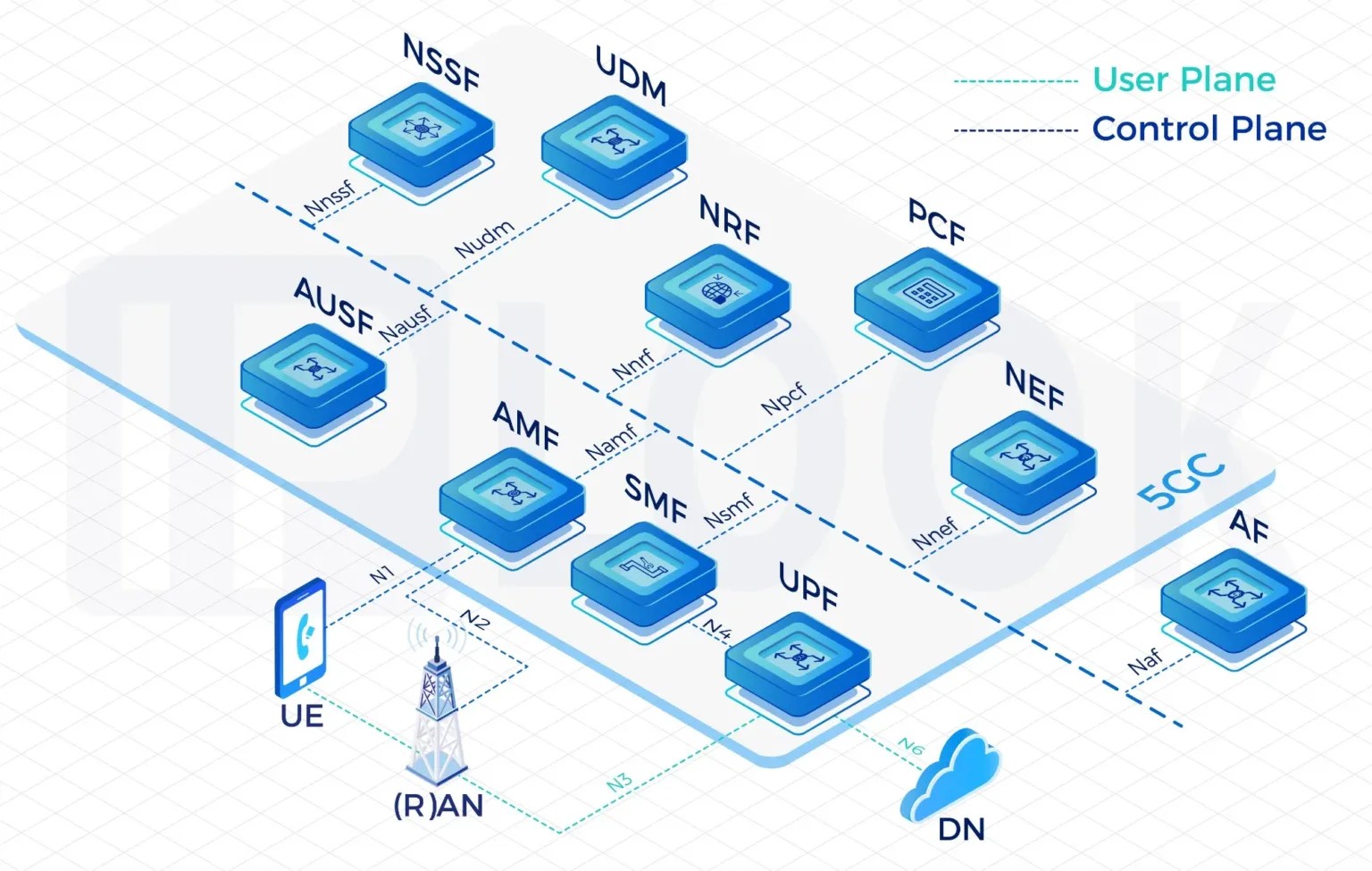
Breaking a monolithic application into independent, self-contained services fundamentally changes how teams manage day-to-day operations. Each service owns a specific business capability, which means updates, scaling, and troubleshooting become isolated events rather than system-wide risks. Teams can deploy a new feature by updating a single container without touching the rest of the stack, drastically reducing downtime and the fear of unintended side effects. This independence also simplifies capacity planning: a service handling high traffic can be scaled horizontally on its own, while quieter components stay lean, optimizing resource usage without overspending.
Operational clarity improves when each service is treated as a product with its own release cycle and monitoring. Developers gain deep ownership, knowing exactly what their code does and how it performs in production. When an alert fires, the blast radius is contained, and root cause analysis becomes faster because the system is broken down into manageable chunks. Logs, metrics, and traces are naturally scoped to a specific service, avoiding the noise of a monolith’s interconnected mess. Over time, this structure encourages a culture of continuous improvement, where small, frequent releases keep the entire platform healthy and adaptable without bureaucratic overhead.
Operational resilience also gets a boost when services are designed to fail gracefully. Circuit breakers, retries with exponential backoff, and health checks become standard patterns that protect the whole system from cascading failures. Instead of hoping one massive codebase stays up, you build a network of cooperating but autonomous units that collectively deliver a robust experience. This modularity turns operational challenges into routine housekeeping, freeing teams from firefighting and letting them focus on building new value.
Edge Computing Redefines Latency
Latency has always been the invisible bottleneck in digital experiences. Edge computing rewrites this narrative by pushing computation closer to the point of data generation—think factory floors, retail shelves, or even a moving vehicle. Instead of sending every heartbeat signal to a distant cloud, decisions happen locally in milliseconds. This isn’t just an incremental improvement; it’s a fundamental shift that turns real-time responsiveness from a luxury into a baseline expectation.
The transformation is most striking in environments where a split-second delay could cascade into serious consequences. Autonomous systems, for instance, no longer rely on round-trip cloud queries to interpret sensor data. Processing unfolds at the edge, slashing the time between perception and action to near zero. Similarly, immersive augmented reality applications overlay digital information onto physical surroundings without perceptible lag, creating seamless interactions that feel instantly intuitive.
What truly sets edge computing apart is how it blends raw speed with contextual awareness. Local nodes don’t just compute faster—they understand the immediate environment in ways a centralized server never could. A smart traffic camera can adjust light patterns based on current pedestrian flow, not yesterday’s averages. This marriage of low latency and localized insight opens doors to innovations that simply weren’t possible when every bit of data had to take a cross-country journey before meaning could be extracted.
AI-Driven Automation Powers Self-Healing Cores
Modern networks are beginning to behave less like rigid structures and more like living organisms. At the heart of this shift are self-healing cores, systems that lean on AI-driven automation to detect anomalies, isolate faults, and reroute traffic before a human operator even notices a flicker on the dashboard. The automation doesn't just follow static rules—it learns from patterns of degradation, predicts where stress will accumulate, and acts preemptively. This silent orchestration keeps services humming while traditional monitoring would still be gathering logs.
What makes these cores truly autonomous is the feedback loop between machine learning models and the underlying infrastructure. Instead of waiting for a threshold breach, the system continuously refines its understanding of "normal" by observing flow telemetry, latency spikes, and application-layer signals. When something drifts out of bounds, the automated response is surgical: spinning down a faulty container, shifting a BGP route, or scaling resources in a different region. Engineers are freed from pager fatigue because the core not only heals but also documents its own reasoning, making post-mortems a matter of reading narratives rather than piecing together scattered alerts.
Skeptics worry about handing over control, but the real power lies in the blend of intent-based policies and real-time autonomy. Operators set guardrails—like acceptable latency budgets or mandatory geographic redundancy—and the AI agent explores the safest, fastest way back to a steady state within those boundaries. The result isn't just faster recovery; it's a system that molds itself to traffic patterns, anticipates maintenance windows, and gradually reduces the number of incidents that require any kind of manual intervention at all.
Cloud-Native Designs Scale on Demand
The real magic behind cloud-native architectures lies in their ability to expand precisely when needed—without the lag of traditional provisioning. By decoupling services and containerizing workloads, platforms like Kubernetes orchestrate resources in real time, spinning up instances to meet spikes and winding them down just as gracefully. This isn't just about handling load; it's about doing so with minimal waste, ensuring that every compute cycle serves a purpose and costs stay tightly bound to actual demand.
What sets this apart from older scaling methods is the emphasis on horizontal expansion rather than simply beefing up a single server. Stateless microservices, designed from the ground up to be ephemeral, can be replicated across clusters in seconds. Event-driven triggers and auto-scaling policies make decisions based on live metrics—queue depth, request latency, CPU throttling—rather than static thresholds. The result is a system that breathes with its traffic, offering consistent performance whether there's a quiet Tuesday morning or a viral product launch.
This on-demand nature also reshapes how teams think about capacity planning. Gone are the days of over-provisioning for peak loads that rarely materialize. Instead, organizations can adopt a lean baseline, trusting that the underlying orchestration will bridge the gap the moment it's needed. It's a shift from reactive scrambling to proactive, automated scaling—one that turns unpredictable traffic from a risk into a non-event.
Unified Data Management Simplifies Subscriber Insights
Telecom operators often wrestle with fragmented subscriber data scattered across billing systems, network logs, and customer care platforms. This disjointed landscape not only slows down decision-making but also hides valuable patterns that could drive personalized services. Unified data management bridges these silos, bringing everything into a single, coherent repository where every interaction and connection point becomes visible.
With a consolidated view, analysts can trace a subscriber’s journey seamlessly—from initial sign-up and usage behavior to service disruptions and upgrade patterns. Instead of stitching together reports from half a dozen tools, teams get immediate clarity on trends like churn risk or content preferences. The result is faster, more accurate insights that fuel everything from network optimization to targeted marketing campaigns.
Moreover, when data governance and quality controls are embedded into the unified layer, the insights become trustworthy and actionable in real time. Operational teams can automate anomaly detection, while marketers craft offers based on fresh behavior rather than stale exports. This shift not only slashes operational overhead but also turns subscriber analytics into a genuine competitive lever, helping providers stay attuned to evolving user expectations.
FAQ
The primary innovations include service-based architecture (SBA) with cloud-native design, network slicing for tailored services, edge computing integration for low latency, AI-driven network automation, enhanced security with zero-trust frameworks, and converged charging systems for flexible monetization.
Network slicing allows operators to create multiple virtual networks on a single physical infrastructure, each optimized for specific use cases like massive IoT, ultra-reliable low-latency communications, or enhanced mobile broadband. This ensures guaranteed performance, resource isolation, and customized quality of service for different applications.
Cloud-native architecture, using microservices and containers, brings agility, scalability, and resilience. It enables faster deployment of new features, independent scaling of network functions, and automated healing, reducing operational costs and accelerating time-to-market for new services.
By distributing user plane functions closer to the edge, data processing happens near the source, slashing round-trip delays. This is critical for autonomous vehicles, augmented reality, industrial automation, and remote surgery, where milliseconds matter.
AI and machine learning are embedded for predictive analytics, anomaly detection, and self-optimizing networks. They automate tasks like traffic steering, resource allocation, and fault management, leading to more efficient operations and proactive maintenance.
The 5G core incorporates stronger authentication protocols, encrypted signaling, and zero-trust principles. Network functions are isolated, and there’s native support for lawful interception and security edge protection proxies (SEPP) for cross-network security.
Converged charging unifies online and offline charging for all services, enabling real-time billing and flexible rating. This allows operators to offer innovative models like network-as-a-service, quality-on-demand, and event-based charging, opening up revenue beyond flat-rate data plans.
SBA replaces traditional point-to-point interfaces with a service-based interface (SBI) using HTTP/2 and RESTful APIs. It simplifies integration, allows network functions to be discovered and consumed as services, and fosters a plug-and-play ecosystem, accelerating innovation and vendor diversity.
Conclusion
The 5G core network is undergoing a profound transformation in 2025, driven by innovations that make connectivity more adaptable, intelligent, and efficient. Network slicing has emerged as a game-changer, enabling operators to partition a single physical network into multiple virtual slices tailored to specific use cases—from ultra-reliable low-latency communications for autonomous vehicles to massive IoT deployments. This customizability is underpinned by a service-based architecture that replaces rigid, monolithic structures with modular, reusable network functions, streamlining operations and accelerating service rollout. Meanwhile, edge computing is redefining latency by pushing data processing closer to endpoints, slashing response times for immersive AR/VR and industrial automation. These advances collectively ensure that networks no longer just connect devices but dynamically adapt to the diverse demands of modern digital ecosystems.
Complementing this architectural agility, AI-driven automation is powering self-healing cores that predict and resolve faults before they impact users, slashing downtime and operational costs. Cloud-native designs further amplify scalability, letting core functions scale on demand in a matter of seconds to handle traffic spikes without overprovisioning. Finally, unified data management has simplified subscriber insights by breaking down silos and providing a coherent, real-time view of user behavior and network conditions, enabling smarter policy decisions and personalized services. Together, these five innovations are not just enhancing connectivity—they are reshaping the very fabric of how networks sense, think, and act, propelling the 5G core into an era of autonomous, user-centric performance that will define the next decade of digital transformation.
Contact Us
Contact Person: Shimmy
Email: [email protected]
Tel/WhatsApp: 85253392231
Website: https://www.iplook.com