

Top Corn Processing Machine Features That Improve Yield and Reduce Waste
2026-11-24
Every percentage point of yield lost in corn processing doesn’t just hit your output—it quietly eats into margins. Yet many operators still rely on machines that crush too much germ, leave starch in the fiber, or over-soak kernels. This guide breaks down the features that actually move the needle: from degermination precision to moisture control and screen design. Along the way, we’ll look at how equipment from PINGLE puts these principles into practice, so you can judge upgrades by what they save, not just what they promise.
In-Line Moisture Equalizing That Prevents Brittle Fracture
Brittle fracture in polymer and paper webs rarely starts as a material defect. More often, it is the result of moisture migrating unevenly through the sheet after drying or coating. Edges give up water faster than the center, and the resulting stress concentration turns a routine slitting or folding operation into a crack initiation point. In-line moisture equalizing addresses this by conditioning the web immediately before tension-critical processes, bringing surface and core moisture into closer balance while the line is still moving.
The equipment does not simply add water or dry the sheet. It uses a controlled atmosphere and web path that encourage moisture to redistribute across the thickness and width. Sensors read local dielectric or near-infrared response, and the equalizing zone adjusts dwell time or humidity accordingly. Because this happens seconds before cutting, creasing, or cold forming, the material retains enough ductility to absorb localized stress without fracturing.
Operators typically notice fewer edge cracks at startup and during grade changes, along with more stable dimensions after sheeting. In cold storage or low-humidity plants, the benefit becomes even more visible because the web leaves the process with less built-in moisture imbalance. That extra margin is what keeps a brittle edge from becoming a full-width tear.
Gap-Adjustable Degerminators That Keep Germs Whole for Recovery
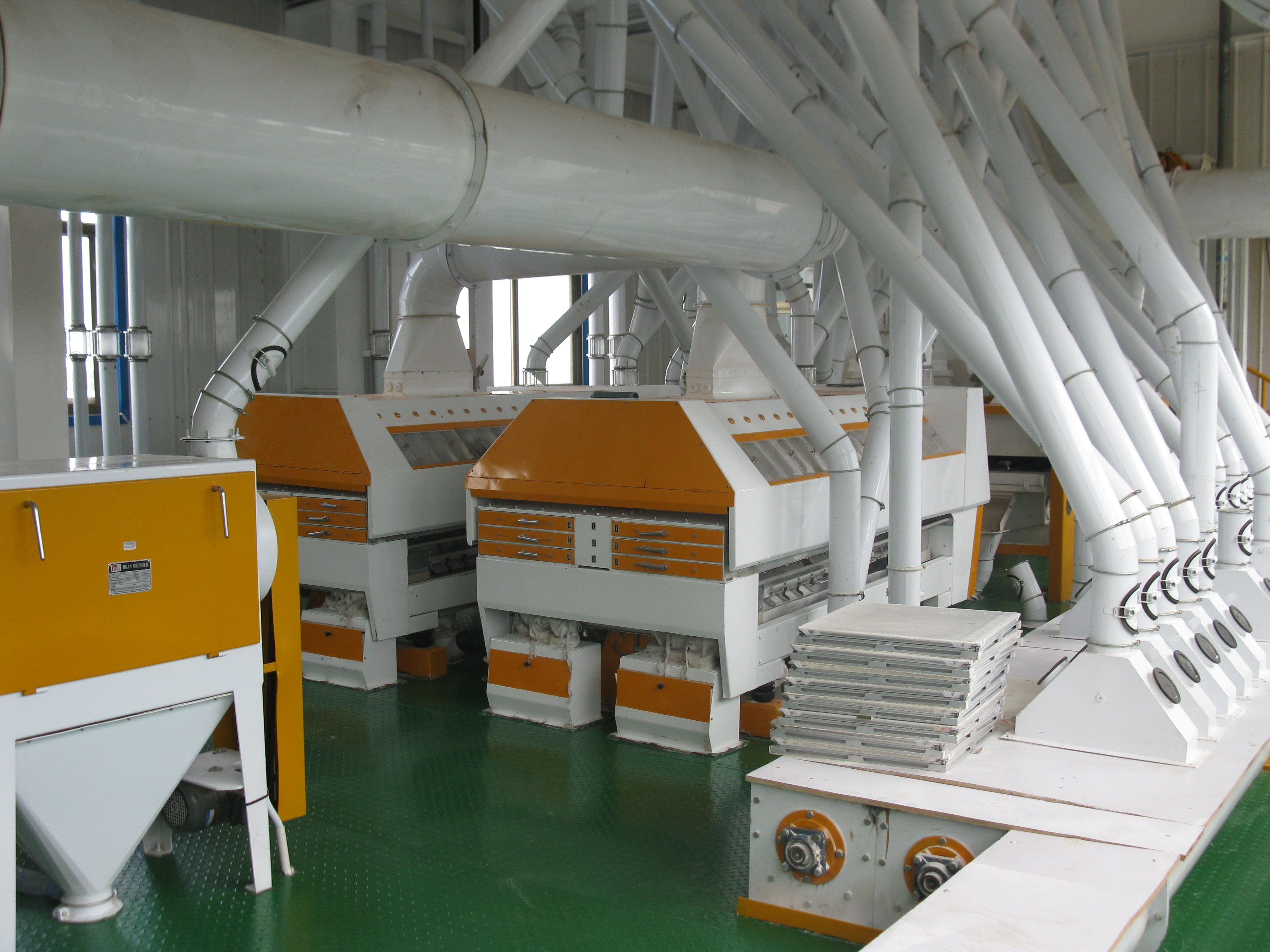
Most degerminators tear through whatever enters the chamber, leaving behind fragments that are useless for further study. This unit works on a different principle. The clearance between the contact surfaces is adjustable in fine increments, so the mechanical action removes surface contamination without rupturing cell walls or internal membranes. What comes out still looks like a microbe, not a smear.
The gap setting is direct and repeatable. A marked dial lets operators shift from one cell size to another without rebuilding the flow path or swapping internals. Because the chosen position can be returned to after cleaning or between production lots, the treatment stays stable across long runs instead of drifting with tool wear or guesswork.
That intact condition makes recovery practical. Samples remain viable enough for plating, isolation, or downstream reseeding rather than being reduced to debris. In a workflow where the goal is separation and collection, the ability to preserve whole organisms turns the degerminator into a preparation step rather than a destructive endpoint.
Air Classification Zones That Remove Hulls Without Losing Flour
在面粉加工中,空气分级的核心并非简单地把物料吹散,而是利用颗粒在气流中的终端速度差异进行选择性分离。当磨碎的物料进入分级区,较轻的胚乳颗粒会随气流上升,而较重的麸皮和胚芽则因惯性较大被甩向器壁或直接沉降。关键在于控制分级区的气流速度和旋转叶轮的离心力,让麸皮被有效拦截的同时,细小的面粉颗粒不会随粗料流失。这种分离方式对软质小麦尤其有效,因为其胚乳与麸皮的密度差更明显。
实践中,操作人员需要根据小麦品种和研磨细度调整分级轮转速与进风量。转速过高会把部分中等大小的面粉颗粒也甩出去,造成提取率下降;转速过低则麸皮混入面粉,导致灰分升高。一些现代设备在分级区设置了可调节的二次进风口,形成气幕将贴壁的麸皮重新吹回分离路径,而面粉颗粒则穿过气幕进入细粉收集区。这样即使进料波动,也能在去除外壳的同时把面粉损失控制在很低的水平。
与传统平筛或圆筛相比,空气分级不需要频繁更换筛网,也不会因为筛孔堵塞而降低产量。它通过连续的空气动力学调整来适应不同粒度的物料,使得面粉厂能够在同一生产线上处理多种小麦原料。最终得到的面粉灰分更低、色泽更均匀,同时麸皮中残留的面粉量显著减少,整体出粉率得以提升。对于希望提高高附加值面粉比例的企业来说,这种分级区设计是一个值得关注的改进方向。
Roll Speed Differentials That Shear Corn Instead of Crushing It
Most processors think of roll speed as a single setting—crank it up for capacity, slow it down for harder stalks. But the real damage happens when the differential is wrong. If both rolls turn at nearly the same peripheral speed, they grip the stalk and crush it lengthwise, tearing fibers and leaving a ragged butt that feeds poorly into the chopper. A properly mismatched pair of rolls, usually with the top roll running 15–25% faster than the bottom, applies a shear force that snaps the stalk between two moving surfaces instead of mashing it. That clean break matters more than any horsepower number on the spec sheet.
The reason shearing beats crushing comes down to how corn fails under load. Standing corn is a tube of vascular bundles wrapped in a waxy rind—strong in tension, weak in shear. When rolls run at different speeds, the faster roll pulls the stalk downward while the slower roll holds it back, creating a scissor-like tear along the natural grain of the plant. Crushing, by contrast, flattens the tube and spreads the load across the entire width, which wastes energy and leaves bent, half-separated husks that wrap around augers. You can hear the difference in the field: sheared corn makes a crisp, rhythmic pop, while crushed corn sounds like someone stepping on wet cardboard.
Dialing in the right differential is not a set-and-forget job. Wet, green stalks early in the season tolerate—and often need—a wider gap in roll speed to initiate the shear cleanly without plugging. Dry, brittle stalks later on respond better to a tighter differential, because too much speed difference just shatters the stalk into short chunks that blow out the back. Check the roll wear pattern too: if you see polished bands instead of a uniform matte finish, the differential has been too low for too long and the rolls have been polishing the stalks instead of cutting them. Adjust the gap and differential together, and the header will start eating corn the way it was built to.
Self-Cleaning Screen Decks That Keep Mesh Open During Long Runs
Screen blinding usually starts small: a few damp fines wedge into the openings, then the layer builds until airflow or throughput drops. These decks approach the problem differently. Instead of relying on a scheduled shutdown or manual brushing, the screen surface flexes at a controlled frequency to dislodge particles before they can lock into place. The mesh stays open because the cleaning action works continuously, not as a reaction after performance has already fallen off.
On long runs, the real test is whether the deck holds its stroke without losing tension or wandering. The best versions keep the amplitude tight across the full width, so the edges clear as reliably as the center. That consistency matters more than raw vibration force—too much movement can bounce material away from the openings or accelerate wear. When the tension and flex pattern are dialed in, operators spend less time watching pressure drops and more time feeding material at a steady rate.
Quick-Release Access Panels That Turn Changeovers Into Minutes
Most line stoppages don't come from the main process itself; they come from the small delays that stack up when operators have to hunt for tools, remove a dozen fasteners, or work around a guard that wasn't designed for frequent entry. These quick-release panels remove that friction. A quarter-turn latch or spring-loaded hinge lets a technician drop the panel in seconds, reach the fill head, sensor, or guide rail, and have the line back in motion before the next scheduled cycle catches up.
The real gain shows up in packaging halls and food plants where product changeover happens several times a shift. Because the panels swing clear or lift off without loose hardware, there is no tray of bolts waiting to fall into a conveyor or get lost under a washdown drain. That means fewer foreign-object risks, less time spent rechecking the machine, and a cleaner handoff between crews.
Over a month, those minutes turn into extra production hours. The design also encourages more frequent inspection and sanitation because access no longer feels like a penalty. When a panel comes off without effort, operators actually use the access point instead of working around it.
FAQ
Precise shelling chambers that adapt to cob size, adjustable clearance settings, and low-crack kernel handling make the biggest difference. These keep kernels intact and pull more usable product from every ear instead of letting good grain slip away.
Closed-loop separation and re-threshing stages do most of the work. Material that is not fully shelled on the first pass gets routed back through the system rather than being discharged with cob waste, so very little usable corn leaves the line.
Gentle auger speeds, rubber-lined contact points, and controlled drop heights help a lot. When kernels face fewer hard impacts, fewer of them shatter, and a larger share ends up as whole premium corn instead of cracked fragments.
In most commercial operations, yes. Real-time moisture feedback lets the machine adjust pressure and speed before kernels crack or clog. That helps avoid losses from overdrying and prevents wet material from jamming the line.
Adjustable airflow removes husks, silk, and dust without blasting away lighter kernels. Calibrated air channels keep the processing stream cleaner and reduce the amount of good grain that gets carried off with debris.
If it has quick-change screens and adjustable concave settings, it can. That flexibility allows operators to match the gap to the incoming corn instead of running a fixed setting that either leaves kernels on the cob or grinds them too aggressively.
Easy-access inspection panels, self-cleaning sieves, and wear indicators on shelling bars all help. When operators can quickly spot and correct uneven wear, throughput and kernel quality stay consistent instead of slowly falling off.
Conclusion
The yield gains in a corn milling line often come from how gently the kernel is handled before it ever reaches a screen. In-line moisture equalizing stops dry, brittle corn from shattering into dust, while gap-adjustable degerminators keep germs whole enough to recover oil and meal rather than sending them out with the waste. Roll speed differentials reinforce that same approach: the rolls shear the endosperm away instead of crushing the kernel, which limits fines and keeps more usable material in the main stream. Air classification zones then lift off hulls without carrying flour along, so the separation step adds value instead of eroding it.
On longer shifts, the equipment has to stay just as consistent. Self-cleaning screen decks keep mesh openings clear as fibrous material builds up, preventing the uneven cuts and pressure spikes that force operators to slow down or stop. Quick-release access panels cut the time spent on changeovers to a few minutes, which matters when switching between corn varieties or adjusting grind profiles. None of these features depends on running the mill harder. They work by keeping the kernel intact, separating components at the right point, and removing the routine frictions that quietly turn good corn into lost yield.
Contact Us
Contact Person: Jiakuo Wu
Email: [email protected]
Tel/WhatsApp: +86-13011566087
Website: https://www.pinglemachine.com