

Wholesale Power Transmission Tension Tower Solutions for Reliable Grid Infrastructure
2026-11-16
Every reliable grid starts with structures that can carry tension, weather, and time without compromise—yet not all transmission tension towers are built to the same standard. As utilities and contractors look for wholesale power transmission tension tower solutions that hold up under real-world demand, the conversation is shifting from generic supply to engineering-backed dependability. Anbang has been part of that shift, providing transmission infrastructure designed for the pressures modern networks face. In this post, we explore what separates a dependable tension tower from the rest, why wholesale sourcing matters for project timelines and budgets, and where the next opportunities in grid infrastructure are emerging.
When a Tower Stops Being a Commodity
The moment a tower stops being treated as a commodity, the conversation around it shifts from price per square foot to something harder to measure. Its worth is no longer determined only by floor plates, lease terms, or resale value, but by the way it anchors a corner, holds a shadow across a street, or gives people a fixed point in a changing skyline. That kind of value accumulates slowly and cannot be packaged into a standard offering memorandum.
What was once interchangeable with a dozen other buildings begins to develop a specific biography. The elevators carry the rhythm of certain commutes, the loading dock remembers the habits of long-term tenants, and the façade weathers in a pattern particular to one climate and one decade. These details make the tower less liquid, but they also make it legible to the people who pass it daily.
Ownership changes meaning at this stage. A commodity can be flipped, rebranded, and optimized without much loss. A tower that has stopped being a commodity demands a more custodial approach, because squeezing short-term returns tends to erase the very texture that gives it standing. The asset becomes less about what it can be sold for and more about what it can continue to hold.
Buying Tension Towers as a System, Not a Part
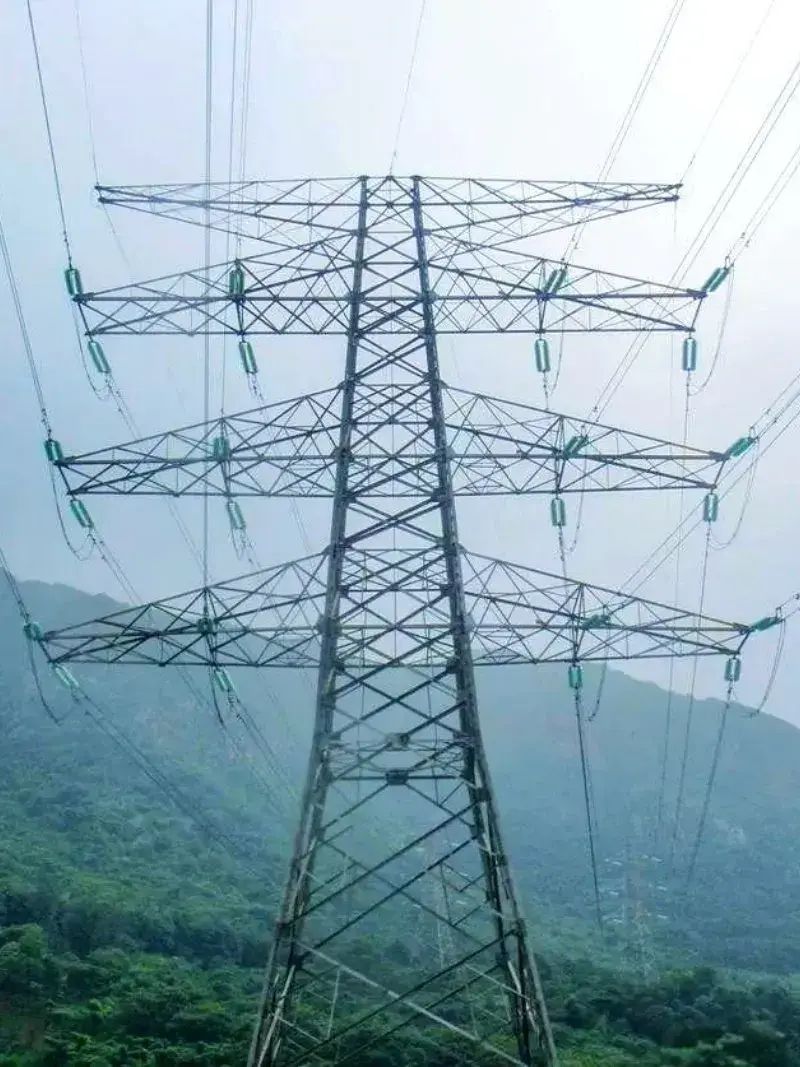
Most procurement teams still treat tension towers like oversized hardware: pick a voltage class, compare tensile ratings, and push for the lowest per-ton price. That approach quietly erodes project margins because the tower cannot be isolated from its foundations, conductor behavior, or the terrain it stands on. A structure that looks cheaper on paper often demands deeper anchorages, tighter stringing tolerances, or additional dampers once wind and ice loads are modeled together. Buying the tower as a system means evaluating how the body, crossarms, and base plate interact as a load path, not as a catalog of welded joints.
The practical shift starts before a single drawing is approved. Ask suppliers to walk through failure modes beyond the design load: what happens under unbalanced longitudinal tension, galloping conductors, or a broken insulator string? A system-minded vendor will discuss leg slope adjustments, foundation uplift sharing, and erection sequencing without being prompted. They will also propose small changes—relocating a step bolt, widening a climbing face, altering a splice plate—that reduce installation hours or inspection bottlenecks. Those details rarely appear in a bid tabulation, yet they determine whether the tower behaves like a coordinated assembly or a stack of mismatched parts.
Field feedback closes the gap between intent and reality. After the first few towers go up, contractors notice whether bolt holes align without reaming, whether the anti-climb guards fit without field welding, and whether the ground wire peak actually sheds ice the way the model predicted. A system purchase includes a feedback loop: the manufacturer adjusts hole tolerances, revises the stub angle template, or changes packaging so the next batch erects faster. Price per ton still matters, but it becomes one line in a larger equation that weighs foundation volume, erection crew time, outage windows, and long-term inspection access. That is the difference between buying a part and buying performance.
Corrosion Starts Earlier Than You Think
Most people assume corrosion only becomes a problem once visible rust appears, but the process begins far earlier, often in environments that look perfectly benign. Moisture films thin enough to escape notice, trace salts from handling or airborne chlorides, and microscopic defects in protective coatings all set the stage long before any orange bloom shows up. Steel surfaces, for instance, can harbor active corrosion cells under paint edges or inside crevices where oxygen levels differ, quietly eating away at the substrate while the exterior still looks intact.
The early stages are driven by electrochemical activity that requires only a tiny electrolyte layer, sometimes just a few molecules thick. Temperature swings and condensation cycles provide exactly that, even indoors or in supposedly dry storage. Once a microclimate forms between a fastener and its hole, or beneath a gasket and a flange, the corrosion rate can accelerate rapidly without any obvious warning sign. By the time staining or pitting becomes visible, a significant portion of the material’s cross-section may already be compromised, making repair far more costly than if the issue had been caught during the invisible incubation period.
Understanding this head start matters for anyone responsible for asset longevity, because mitigation works best when applied before the first rust spot appears. Surface preparation, compatible material selection, and barrier coatings all target the hidden initiation phase rather than reacting to full-blown deterioration. Inspections that rely only on visual cues miss the window when intervention is cheapest and least disruptive. In practice, treating corrosion as an ongoing electrochemical event, not a later cosmetic flaw, shifts the timeline from damage control to genuine prevention.
How Real Load Data Changes Tower Selection
Tower selection often starts with a clean set of assumptions: uniform weight, balanced distribution, and steady operating conditions. But once you feed actual load data into the process, the picture shifts quickly. A tower that looked adequate on paper can become marginal when you see how loads spike during startup, shift unevenly during production, or concentrate on one side under wind and thermal movement. Real data tends to expose the gap between ideal geometry and the way a structure actually works day to day.
What changes is less about swapping one model for another and more about how you read the demands. Instead of relying on broad safety factors, you start paying attention to load cycles, peak combinations, and the frequency of off-center conditions. This often leads to a taller mast section, a heavier base plate, or a different leg profile, not because the old choice was wrong, but because the real numbers demand a different margin. The selection becomes more specific and less generic.
In practice, using real load data also makes the conversation with structural engineers more direct. You are no longer comparing catalog ratings alone; you are looking at measured stress ranges, deflection limits, and fatigue behavior under actual use. That shift tends to produce a tower that fits the site, the equipment, and the operating rhythm, rather than a one-size-fits-all solution that only works in a specification sheet.
Supply Chain Speed Without Sacrificing Weld Quality
Welding consumables often arrive in waves that don’t match the pace of the floor. When a line slows because filler metal is stuck in transit, the usual fix is to overstock or switch to whatever is available. Both choices quietly eat into margin and consistency. We took the opposite approach: shorten the replenishment loop without touching the alloy chemistry, packaging, or batch controls that welders depend on.
Our regional hubs are stocked by production forecasts, not just past sales, so a shift in demand shows up as a pull signal rather than a panic order. That means the wire or electrode arriving Tuesday is the same specification as the one from last month, with the same lot traceability. Welders don’t adjust parameters mid-job, and quality teams don’t chase paperwork.
The real measure isn’t a shorter delivery promise; it’s fewer interruptions at the weld cell. When material shows up before the hopper runs low, nobody has to choose between waiting or running an unapproved substitute. Speed shows up in the schedule, not in the weld settings.
What Grid Reliability Actually Demands from a Tension Tower
Grid reliability rarely shows up as a single dramatic event. For a tension tower, it accumulates in thousands of small load cycles, uneven conductor tensions, and the slow work of temperature swings. A tower that holds the line in still air can still be losing margin at bolted joints or in the buried steel if those stresses were never accounted for as a system.
That is why the structure has to be treated less as a static frame and more as a load-transferring device with weak points that move over time. Longitudinal pulls from a broken conductor, ice shedding, or uneven span lengths arrive at the cross-arm and travel through the body to the foundation. If any connection along that path behaves differently from the design assumption, the next extreme weather event will find it.
Reliability also depends on details that are easy to overlook: bolt torque after thermal cycling, galvanizing wear at contact surfaces, drainage around the base, and the angle of the tension string relative to the tower body. These are not maintenance formalities. They are the difference between a tower that survives one severe storm and one that stays in service for decades without forcing an outage.
FAQ
Tension towers are placed at angles, dead-ends, or long straight stretches where conductors need to be pulled tight and anchored. Unlike suspension towers that mainly carry vertical weight, these structures handle heavy mechanical loads from conductor tension, so they use stronger steel members, more bolts, and deeper foundations.
Wholesale supply tends to mean the manufacturer keeps standard designs in stock but can also adjust plate thickness, bolt patterns, and base dimensions for specific projects. It moves the relationship from one-time buying toward longer-term planning, which often shortens lead times and lowers the cost per ton.
Terrain has a bigger influence than many people realize. Rocky ground may require unequal leg extensions to avoid excessive grading. High-wind areas need a narrower body profile and reinforced gusset plates to resist fatigue. In corrosive zones, hot-dip galvanizing plus extra coating at bolt holes and welds helps prevent early deterioration.
No, they are typically delivered as bolted steel sections. This makes galvanizing more thorough, allows flat packaging, and keeps transport practical for remote line routes. The erection crew then assembles the lattice body, crossarms, and peak on site using detailed drawings.
Look for structural steel that meets recognized grades such as ASTM A36 or an equivalent, and high-strength bolts of Grade 8.8 or better. Galvanizing should follow a clear standard, often with a minimum average coating thickness around 85 to 100 microns, with no bare spots on edges or connection points.
Most established suppliers offer both. Standard designs cover common line angles and voltage classes, while custom work can address unusual conductor bundles, tight right-of-way limits, or extreme ice loads. Sharing the line's loading conditions and foundation assumptions early helps the supplier run structural checks without delaying fabrication.
Beyond material certificates, ask for prototype or full-scale test reports when available. It also helps to check the fabricator's experience with similar voltage levels and terrain. Consistent hole alignment, strong galvanizing adhesion, and clean weld profiles reduce assembly errors that can turn into maintenance problems later.
The answer depends on whether the design is already proven or still needs engineering. Standard lattice bodies and crossarms can often enter production within a few weeks after drawing approval. Custom designs with special leg extensions or heavier steel may add review time, so a realistic range is often 8 to 14 weeks before dispatch.
Conclusion
Treating a tension tower as a standard commodity overlooks the ways small design choices ripple through line performance, maintenance, and long-term outage risk. When procurement teams buy these structures as a complete system instead of isolated parts, they can align foundation details, conductor attachment hardware, and coating requirements before the first drawing is finalized. That early coordination matters because corrosion often begins in hidden interfaces, crevices, and bolt holes long before visible rust appears on the surface. Real load data, rather than generic assumptions, frequently shifts selection toward a heavier or differently configured tower, and those adjustments are far cheaper to make before production begins than after structures arrive on site.
Reliable grid infrastructure depends on more than a competitive unit price. A short lead time means little if rushed fabrication introduces weld defects that pass undetected until a line is under mechanical stress. Wholesale power transmission tension tower programs need suppliers who can maintain weld consistency and dimensional control while still responding quickly to changing project schedules. Ultimately, what the grid requires from a tension tower is predictable behavior under ice, wind, and dynamic line loads, along with a coating system that protects the steel for decades rather than just until the warranty expires. That is the difference between buying steel and buying certainty for a transmission corridor.
Contact Us
Contact Person: antor khan
Email: [email protected]
Tel/WhatsApp: 8613863903569
Website: https://www.qdabtower.com/