

How Maintenance Practices Extend the Life of Brick Making Machinery Moulds?
2026-03-17
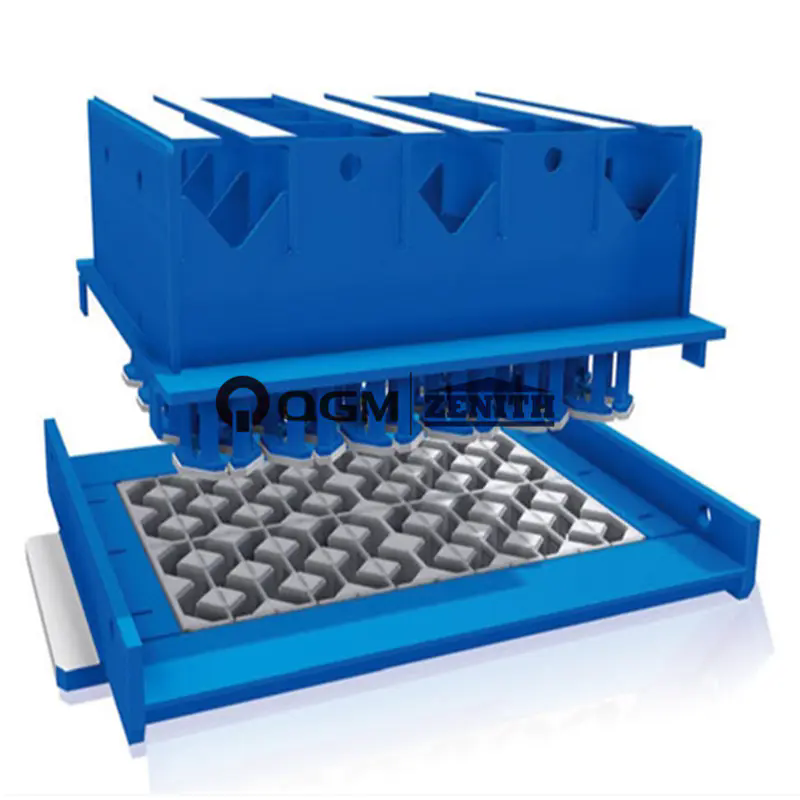
In modern block and brick production lines, the durability of mould systems directly influences output consistency, product quality, and operational costs. For manufacturers relying on high-frequency production cycles, proper maintenance is not optional but a core part of daily operations. The performance of Brick Making Machinery Mould depends on how well it is protected from wear, corrosion, and deformation.
From our experience in our factory, many premature failures are not caused by material defects but by improper handling, insufficient lubrication, or delayed inspection. In regions where continuous production is common, especially in Southeast Asia and the Middle East, moulds often operate under high pressure and temperature variations, making routine care even more critical.
Fujian Quangong Mould Co.,Ltd has observed that consistent maintenance schedules can extend mould lifespan by more than 40 percent. This directly reduces replacement frequency and ensures stable brick dimensions, which is essential for construction compliance in many local markets.
How Do Cleaning and Lubrication Practices Prevent Premature Wear?
One of the most overlooked aspects of mould care is proper cleaning after each production cycle. Residual concrete, fly ash, or cement particles can accumulate inside the cavity and create micro-abrasions. Over time, this leads to uneven surfaces and dimensional inaccuracies in finished products.
Our maintenance teams recommend using compressed air combined with non-corrosive cleaning agents to remove debris. In our factory, we emphasize immediate cleaning after shutdown to prevent material hardening. This is especially important in tropical climates where humidity accelerates bonding of residues.
Lubrication is equally important. Applying the correct release agent ensures smooth demoulding and reduces friction between mould surfaces and raw materials. A well-lubricated Brick Making Machinery Mould not only improves efficiency but also minimizes stress concentration points that can lead to cracking.
| Maintenance Task | Recommended Frequency | Key Benefit |
| Surface Cleaning | After each shift | Prevents residue buildup |
| Lubrication Application | Daily | Reduces friction and wear |
| Deep Cleaning | Weekly | Maintains cavity precision |
Fujian Quangong Mould Co.,Ltd continuously refines lubrication recommendations based on real production data to ensure compatibility with different raw materials and environmental conditions.
What Role Do Material Selection and Surface Treatment Play in Longevity?
The structural integrity of moulds begins with material selection. High-grade alloy steel combined with advanced heat treatment processes significantly improves resistance to deformation and fatigue. In high-output plants, this becomes a decisive factor in maintaining consistent product quality.
Our factory applies carburizing and quenching techniques to enhance surface hardness while maintaining internal toughness. This balance ensures that the Brick Making Machinery Mould can withstand repeated compaction forces without cracking or warping.
Surface treatments such as nitriding or chrome plating further improve corrosion resistance. These treatments are particularly beneficial in coastal regions where salt exposure accelerates oxidation.
| Parameter | Specification Range | Performance Impact |
| Material Type | Alloy Steel | High strength and durability |
| Surface Hardness | 58-62 HRC | Wear resistance |
| Heat Treatment | Carburizing and Quenching | Improved fatigue resistance |
| Surface Treatment | Nitriding or Chrome Coating | Corrosion protection |
Fujian Quangong Mould Co.,Ltd integrates these technologies to ensure that every mould meets the demands of high-volume production environments.
How Can Regular Inspection and Alignment Reduce Operational Failures?
Routine inspection is essential for identifying early signs of wear, such as micro-cracks, deformation, or misalignment. These issues often develop gradually and can be corrected if detected early. Ignoring them, however, can lead to sudden breakdowns and costly downtime.
Our factory recommends checking mould alignment with the press system on a weekly basis. Misalignment can cause uneven pressure distribution, which accelerates wear on specific sections of the mould. This not only shortens service life but also affects the quality of the bricks produced.
Using precision measuring tools ensures that tolerances remain within acceptable limits. A properly aligned Brick Making Machinery Mould maintains uniform density and shape across all produced units, which is critical for meeting local construction standards.
In our operations, we emphasize preventive maintenance rather than reactive repairs. This approach significantly reduces unexpected failures and improves overall production efficiency.
Why Do Storage and Handling Practices Matter for Long-Term Performance?
Even when not in use, moulds require proper storage conditions to prevent damage. Exposure to moisture, dust, or direct sunlight can degrade surface quality and lead to corrosion. In many regions, improper storage is a major cause of reduced mould lifespan.
Our factory uses controlled storage environments with low humidity and protective coatings applied before long-term storage. Proper handling during transportation is equally important. Dropping or mishandling moulds can cause structural damage that is not immediately visible but affects performance during operation.
Using designated racks and protective covers ensures that each Brick Making Machinery Mould remains in optimal condition when reintroduced into production.
FAQ: How Maintenance Practices Extend the Life of Brick Making Machinery Moulds?
Q: How often should moulds be maintained to ensure maximum lifespan?
A: Maintenance should be performed daily for cleaning and lubrication, with weekly inspections for alignment and wear. Regular schedules prevent minor issues from developing into major failures and ensure consistent production quality.
Q: What are the most common causes of mould damage in brick production lines?
A: The most common causes include improper cleaning, lack of lubrication, misalignment, and exposure to harsh environmental conditions. Addressing these factors through structured maintenance practices significantly extends mould life.
Q: Can proper maintenance really reduce operational costs in the long term?
A: Yes, effective maintenance reduces the frequency of mould replacement, minimizes downtime, and improves production efficiency. This leads to lower overall operational costs and better return on investment for manufacturers.
Conclusion: How Can You Maximize the Value of Your Mould Investment?
Extending the service life of moulds requires a combination of proper cleaning, lubrication, material selection, inspection, and storage practices. By implementing these strategies, manufacturers can achieve higher efficiency, better product consistency, and reduced operational costs.
Our team at Fujian Quangong Mould Co.,Ltd is committed to providing high-performance solutions tailored to real production needs. If you are looking to improve durability and efficiency in your production line, contact our factory today to get customized technical support and a competitive quote.