Article Summary
Square head bolts remain an important fastening solution in industrial equipment, machinery, timber structures, restoration projects, and specialized construction applications. Their distinctive four-sided heads offer practical advantages in certain installation environments, including straightforward wrench engagement, compatibility with traditional hardware, and a classic industrial appearance.
However, selecting the wrong bolt dimensions, thread specifications, material, or surface finish can lead to installation difficulties, premature corrosion, loose connections, and unnecessary maintenance costs. This guide explains how square head bolts work, which specifications matter most, how to choose suitable materials, and what industrial buyers should check before placing an order.
01 / Product Fundamentals
1. What Are Square Head Bolts?
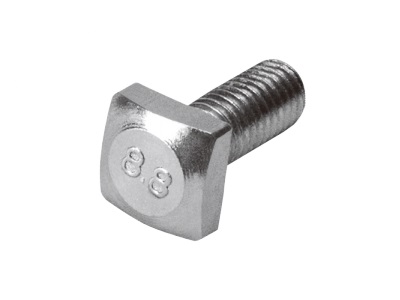
Square head bolts are threaded fasteners featuring a four-sided, square-shaped head and a cylindrical threaded shank. They are designed to create secure mechanical connections between two or more components. Depending on the application, they can be installed with square nuts, hex nuts, washers, or compatible threaded holes.
Unlike conventional hex head bolts, square head bolts have four flat sides. This geometry gives the head a distinctive appearance and allows it to be engaged with an appropriate wrench. In certain applications, the square head can also fit into a matching recess or be held against rotation by a surrounding structure.
Before hexagonal fasteners became widely adopted across modern manufacturing, square head bolts were common in machinery, structural assemblies, and traditional construction. They continue to be specified today because some equipment designs, replacement requirements, and architectural projects depend on their particular geometry.
Basic Components of a Square Head Bolt
-
Square head: The four-sided upper section used for wrench engagement or positioning.
-
Shank: The cylindrical section connecting the head to the threaded portion.
-
Thread: The helical profile that creates engagement with a nut or internally threaded component.
-
Threaded length: The portion of the bolt carrying external threads.
-
Bearing surface: The underside of the head that contacts the connected material.
Purchasing insight: A square head bolt is not defined by its head shape alone. Thread diameter, pitch, head dimensions, length, material, mechanical properties, and applicable standards must all match the intended assembly.
02 / Design Advantages
2. How Does Their Design Improve Fastening?
The square head is the defining characteristic of this fastener. Although hex bolts are more common in many modern applications, square head bolts still offer several useful design features.
2.1 Four Flat Sides for Wrench Engagement
The four flat surfaces provide clear contact areas for suitable wrenches. This makes the bolt head relatively straightforward to grip during installation and removal. In applications where the surrounding structure provides enough clearance, square head bolts can be a practical fastening option.
2.2 Compatibility with Traditional Assemblies
Older machinery, historical buildings, timber structures, and replacement components may have been designed specifically for square head fasteners. Using a different head configuration can affect fit, appearance, or accessibility. Matching the original fastener geometry helps maintain the intended assembly design.
2.3 Potential Anti-Rotation Function
When a square head is installed in a suitably designed square recess or constrained space, the surrounding geometry can help prevent the bolt from rotating. This can simplify tightening from the opposite side.
However, this function depends on the design and dimensional accuracy of the mating components. A standard square head bolt should not automatically be treated as a self-locking fastener.
2.4 Distinctive Industrial Appearance
Square head bolts are frequently selected for restoration work and exposed architectural assemblies. Their traditional appearance can complement timber structures, vintage machinery, and industrial-style construction.
Important consideration: Square head bolts are not universally stronger than hex head bolts. Actual load capacity depends on material, strength grade, thread engagement, dimensions, manufacturing quality, and installation conditions.
03 / Industrial Applications
3. Where Are Square Head Bolts Commonly Used?
Square head bolts are suitable for applications where traditional fastening geometry, specific assembly requirements, or compatibility with existing components matters. Their applications extend across several industrial and construction sectors.
3.1 Industrial Machinery and Equipment
Some industrial machines use square head bolts to connect housings, mounting brackets, support structures, and mechanical components. Replacement fasteners must match the original dimensions and thread specifications to avoid assembly problems.
3.2 Timber Construction and Wooden Structures
Timber buildings, wooden bridges, outdoor structures, and heavy-duty wooden connections may use square head bolts as part of their fastening systems. The bolt diameter, length, washer dimensions, and wood properties should be considered together to reduce the risk of excessive compression or connection failure.
3.3 Historical Restoration Projects
Restoring older buildings, bridges, agricultural equipment, and vintage machinery often requires fasteners that closely resemble original components. Square head bolts can preserve the traditional appearance while providing a functional mechanical connection.
3.4 Utility and Infrastructure Equipment
Certain utility applications use square head machine bolts to secure structural components, mounting assemblies, and wooden support members. The exact bolt design should be selected according to the applicable engineering requirements and environmental exposure.
3.5 Agricultural and General Mechanical Applications
Agricultural machinery and general-purpose mechanical equipment may require square head bolts for maintenance, repair, and replacement. Their suitability depends on vibration, loading conditions, exposure to moisture, and the original equipment specifications.
|
Application
|
Typical Requirement
|
Important Selection Factor
|
|
Industrial machinery
|
Reliable mechanical fastening
|
Thread accuracy and strength
|
|
Timber structures
|
Secure wood-to-wood or wood-to-metal connections
|
Length and bearing area
|
|
Historical restoration
|
Traditional appearance and dimensional compatibility
|
Head geometry and finish
|
|
Utility equipment
|
Durable outdoor fastening
|
Corrosion resistance
|
|
Agricultural equipment
|
Resistance to operating conditions
|
Material and mechanical properties
|
04 / Technical Specifications
4. Which Dimensions Should Buyers Check?
Dimensional compatibility is one of the most important considerations when sourcing square head bolts. Even a small difference in thread pitch, head width, or bolt length can prevent correct installation.
4.1 Nominal Diameter
The nominal diameter identifies the basic size of the threaded portion. Metric products commonly use designations such as M6, M8, M10, M12, and M16. Inch-series products use fractional inch sizes.
Buyers should confirm the thread diameter rather than relying only on the external head dimensions.
4.2 Thread Pitch
Thread pitch is the distance between corresponding points on adjacent threads in metric fasteners. Inch-series threads are commonly identified by threads per inch (TPI).
Using the wrong pitch can damage mating threads, create poor engagement, or prevent the bolt from being installed.
4.3 Width Across Flats
This measurement represents the distance between two opposite flat sides of the square head. It determines whether the selected wrench or mating recess fits correctly.
4.4 Head Height
Head height affects the amount of space required above the mounting surface. It can also influence the available wrench engagement area.
4.5 Overall Length and Thread Length
For conventional bolts with a head that sits on top of the assembly, length is generally measured from the underside of the head to the end of the bolt. Thread length determines how much of the shank can engage with the nut or threaded hole.
|
Specification
|
Meaning
|
Why It Matters
|
|
Nominal diameter
|
Basic thread diameter
|
Ensures thread compatibility
|
|
Thread pitch / TPI
|
Thread spacing
|
Prevents mismatched engagement
|
|
Width across flats
|
Distance between opposite head faces
|
Ensures wrench and recess compatibility
|
|
Head height
|
Vertical head dimension
|
Controls installation clearance
|
|
Overall length
|
Underside of head to bolt end
|
Provides sufficient fastening depth
|
|
Thread length
|
Length of threaded portion
|
Determines available thread engagement
|
For reference, standards such as ASME B18.2.1 cover dimensional requirements for several inch-series bolt types, including square head bolts. JIS B 1182 specifies characteristics of steel square head bolts for general use. Always confirm the exact standard and edition required by your project.
05 / Material Selection
5. Which Materials Are Suitable for Square Head Bolts?
Material selection affects strength, corrosion resistance, service life, and total fastening cost. The right choice depends on the working environment and mechanical demands of the application.
5.1 Carbon Steel
Carbon steel is widely used in general-purpose fastening applications because it offers a practical balance of mechanical performance, availability, and cost.
Different carbon steel grades provide different mechanical properties. Buyers should specify the required strength class or applicable material standard rather than assuming that all carbon steel bolts have the same load capacity.
5.2 Alloy Steel
Alloy steel can provide improved mechanical properties through appropriate material selection and heat treatment. It is suitable for applications requiring higher strength or more demanding mechanical performance.
For critical assemblies, the specified strength class, heat-treatment condition, and inspection requirements should be clearly documented.
5.3 Stainless Steel
Stainless steel square head bolts are often selected for applications where corrosion resistance and appearance are important.
-
304 stainless steel: Commonly used in general industrial and outdoor applications where moderate corrosion resistance is sufficient.
-
316 stainless steel: Often preferred for environments involving greater chloride exposure, including many coastal and marine applications.
Stainless steel selection should also consider temperature, chemical exposure, mechanical loading, and possible galling during installation.
5.4 Other Materials
Depending on the design, specialized square head fasteners may also be manufactured from brass, aluminum, or other engineering materials. These materials can be useful when electrical, weight, conductivity, or specific environmental requirements influence the choice.
|
Material
|
Main Characteristics
|
Potential Applications
|
|
Carbon steel
|
Versatile and economical
|
General machinery and construction
|
|
Alloy steel
|
Available in higher strength grades
|
Demanding mechanical assemblies
|
|
304 stainless steel
|
General corrosion resistance
|
Industrial and outdoor equipment
|
|
316 stainless steel
|
Improved resistance in many chloride environments
|
Marine and chemical-related applications
|
|
Brass
|
Corrosion resistance and electrical conductivity
|
Specialized electrical and mechanical assemblies
|
|
Aluminum
|
Lightweight construction
|
Weight-sensitive assemblies
|
Technical reminder: Material selection and strength classification are not interchangeable. A corrosion-resistant stainless steel fastener is not automatically suitable for every high-load application. Check the mechanical properties of the exact grade.
06 / Surface Protection
6. How Do Surface Finishes Affect Performance?
Surface treatment can improve corrosion resistance, change appearance, and influence friction during installation. The best finish depends on the operating environment, base material, and required performance.
6.1 Plain Finish
Plain or untreated fasteners have no additional protective coating. They may be appropriate for indoor applications or situations where a separate corrosion-control system is provided.
6.2 Zinc Plating
Zinc plating provides a protective coating commonly used for general corrosion protection. It is frequently selected for indoor machinery, equipment assemblies, and applications with moderate environmental exposure.
6.3 Hot-Dip Galvanizing
Hot-dip galvanizing applies a thicker zinc coating and is often specified for outdoor structural applications. However, coating thickness can affect thread fit, so the bolt, nut, and coating specifications should be coordinated.
6.4 Black Oxide
Black oxide provides a dark appearance and limited corrosion protection when used with appropriate supplementary oil or protective treatment. It is generally more suitable for controlled environments than highly corrosive outdoor conditions.
6.5 Other Protective Treatments
Depending on the application, other coatings or treatments may be available, including nickel plating, specialized corrosion-resistant coatings, and passivation for suitable stainless steel products.
When choosing a finish, buyers should consider coating compatibility, dimensional effects, environmental exposure, and any applicable restrictions concerning coating processes.
07 / Purchasing Guide
7. How to Choose the Right Square Head Bolts
Choosing the correct fastener requires more than comparing product prices. A systematic selection process helps reduce compatibility problems, avoid unnecessary replacement costs, and improve assembly reliability.
Step 1: Identify the Application
Determine where the bolt will be installed and what components it needs to connect. Consider whether the application involves machinery, timber, outdoor structures, restoration, or another specialized assembly.
Step 2: Confirm the Required Dimensions
Measure the existing bolt or review the engineering drawing. Record nominal diameter, thread pitch, head width, head height, overall length, and thread length.
For replacement projects, measuring an existing fastener can be useful, but worn or damaged components should not be treated as the only source of dimensional information.
Step 3: Select the Appropriate Material
Evaluate working loads, temperature, humidity, chemical exposure, and expected service life. Select the material and mechanical property class according to the actual engineering requirements.
Step 4: Specify the Surface Finish
Choose a finish that matches the environment. For outdoor installations, consider whether a more substantial corrosion-protection system is necessary. Confirm that the selected coating is compatible with the threads and mating components.
Step 5: Check Applicable Standards
Identify whether the project requires ASME, JIS, ASTM, DIN, or another standard. Do not assume that products with similar dimensions under different standards are automatically interchangeable.
Step 6: Evaluate Supplier Capabilities
Before placing a bulk order, confirm that the supplier can meet the required specifications, production tolerances, material requirements, packaging conditions, and delivery schedule.
Buyer tip: If you are sourcing a non-standard square head bolt, sending a technical drawing with dimensions, material requirements, thread details, and surface treatment is usually more effective than describing the product by name alone.
08 / Installation and Maintenance
8. Installation and Maintenance Best Practices
Even correctly manufactured square head bolts can perform poorly if they are installed incorrectly. Proper installation helps maintain connection integrity and reduces the risk of thread damage or premature failure.
8.1 Inspect Before Installation
Check each fastener for damaged threads, corrosion, cracks, deformed heads, and coating defects. Confirm that the bolt matches the specified diameter and pitch.
8.2 Use Compatible Nuts and Washers
The nut must match the bolt's thread specification and mechanical requirements. Suitable washers can help distribute bearing loads and protect contact surfaces, especially in timber and softer materials.
8.3 Avoid Cross-Threading
Start the nut carefully and ensure that it engages correctly before applying significant tightening force. Cross-threading can damage both components and compromise the connection.
8.4 Apply the Correct Tightening Procedure
Use the tightening torque and installation procedure specified by the equipment manufacturer or engineering design. Torque requirements depend on factors such as bolt material, lubrication, coating, thread condition, and joint design.
8.5 Inspect Connections During Service
For equipment exposed to vibration, weather, or repeated loading, establish an appropriate inspection schedule. Look for corrosion, loosening, deformation, and damage to connected components.
Do not automatically retighten every fastener without checking the manufacturer's instructions. Some assemblies require specific inspection or replacement procedures.
09 / Procurement Risk Management
9. Common Purchasing Mistakes to Avoid
Industrial buyers can reduce sourcing risks by checking several details before confirming an order.
Mistake 1: Choosing by Nominal Diameter Alone
Two bolts with the same nominal diameter may have different thread pitches, head dimensions, lengths, or standards. Always verify the complete specification.
Mistake 2: Ignoring Environmental Conditions
Using an unsuitable material or finish can result in premature corrosion. Consider moisture, salt exposure, chemicals, and temperature before selecting a product.
Mistake 3: Assuming All Square Heads Are Identical
Square head dimensions can vary between standards and product designs. The width across flats and head height must be checked against the assembly requirements.
Mistake 4: Overlooking Thread Compatibility
Metric threads, UNC threads, and UNF threads are not interchangeable simply because their diameters appear similar. Confirm the exact thread designation.
Mistake 5: Focusing Only on Unit Price
A low purchase price may not represent the lowest total cost. Consider product consistency, inspection documentation, packaging, shipping, lead time, and replacement risks.
Mistake 6: Failing to Confirm Sample Specifications
For customized or large-volume orders, evaluate a sample against the approved drawing and requirements before authorizing mass production whenever the project allows.
10 / Supplier and Quality Assurance
10. What Should Buyers Check When Evaluating a Square Head Bolt Supplier?
Supplier evaluation is an important part of industrial procurement. A reliable supplier should be able to communicate technical requirements clearly and provide products that consistently match the approved specifications.
10.1 Manufacturing and Inspection Capabilities
Ask whether the supplier can control the critical dimensions, thread quality, head geometry, and surface finish required by your project. For specialized orders, confirm whether production can follow customer drawings.
10.2 Material Traceability
For applications requiring documented material control, ask about material certificates and batch identification. The required documentation should be agreed upon before production.
10.3 Dimensional Inspection
Inspection should cover important dimensions, including thread diameter, pitch, head width, head height, and overall length. Critical applications may require additional mechanical testing or inspection according to the applicable specification.
10.4 Production Consistency
Consistency between batches matters, especially for distributors, equipment manufacturers, and industrial buyers who need repeat orders. Discuss inspection procedures, packaging, and product identification with the supplier.
10.5 Communication and Delivery
Clear communication helps avoid errors involving drawings, quantities, material substitutions, and delivery arrangements. Before confirming an order, make sure both parties agree on the product specification and acceptance requirements.
For buyers interested in learning more about the company behind the products, visit Jiamei's official website to learn more about its company background and business information.
11 / Frequently Asked Questions
11. Frequently Asked Questions About Square Head Bolts
Q1. What is the main difference between square head bolts and hex head bolts?
Square head bolts have four flat sides, while hex head bolts have six. The head geometry affects wrench compatibility, available installation space, and compatibility with existing assemblies. Neither design is automatically stronger than the other.
Q2. Are square head bolts suitable for heavy-duty applications?
Yes, provided the selected bolt meets the application's required material, strength grade, dimensions, and mechanical specifications. Load capacity should be verified through the relevant engineering requirements rather than head shape alone.
Q3. What materials are commonly used for square head bolts?
Common materials include carbon steel, alloy steel, and stainless steel such as 304 and 316. Brass and aluminum may also be available for specialized applications.
Q4. Can square head bolts be customized?
Depending on manufacturing capabilities, customization may include head dimensions, bolt diameter, length, thread specifications, materials, surface finishes, and other drawing-based requirements. Confirm the available options with your supplier.
Q5. Are square head bolts available in metric and imperial sizes?
Yes. Square head bolts can be specified in metric and inch-based dimensions. Buyers should identify the required measurement system and thread series before ordering.
Q6. Which standards apply to square head bolts?
Applicable standards depend on the product design and market. Examples include ASME B18.2.1 for relevant inch-series bolt dimensions and JIS B 1182 for steel square head bolts for general use. Always verify the exact product scope and current project requirements.
Q7. Which surface finish is best for outdoor square head bolts?
The choice depends on exposure conditions. Hot-dip galvanizing is commonly considered for outdoor carbon steel fasteners, while suitable stainless steel grades may be preferred in certain corrosive environments. The correct solution should account for the complete assembly and service conditions.
Q8. How can I measure an existing square head bolt?
Measure the nominal thread diameter, thread pitch, width across flats, head height, overall length from beneath the head, and threaded length. A thread gauge and caliper can help improve measurement accuracy.
Q9. What information should I provide when requesting a quotation?
Provide the product name, drawing or sample, dimensions, thread specification, material, strength requirements, surface finish, order quantity, packaging requirements, and destination. This helps the supplier evaluate your request more accurately.
Q10. How can buyers ensure consistent quality in bulk orders?
Confirm the approved product specifications, inspection criteria, material requirements, and batch documentation before production. Where appropriate, evaluate pre-production samples and establish agreed inspection procedures for repeat orders.
Final Thoughts
Choosing the Right Square Head Bolts for Reliable Connections
Square head bolts continue to serve important roles in machinery, construction, timber structures, restoration, and specialized industrial applications. Their distinctive geometry makes them particularly useful when a project requires compatibility with traditional fasteners or a specific assembly design.
For successful procurement, buyers should evaluate the complete specification rather than focusing on appearance or price alone. Dimensions, thread compatibility, material properties, surface protection, manufacturing consistency, and supplier capabilities all contribute to the performance of the final connection.
Whether you need standard square head bolts for equipment maintenance or customized fasteners for a specialized project, accurate technical information is the starting point for finding the right product.
Note: Product dimensions, materials, mechanical properties, and applicable standards should always be confirmed against the latest relevant specifications, approved drawings, and actual application requirements.