

Why Are Engineers Turning to Bonded Neodymium Magnet Solutions for Modern Precision Devices?
2026-03-16
When we speak with product engineers and purchasing managers in industries such as automotive electronics, robotics, and consumer devices, one question appears again and again: how can manufacturers achieve compact magnetic performance without sacrificing design flexibility? Over the past decade, our team at Ningbo New-Mag magnetics Co.,Ltd has observed a growing shift toward Bonded Neodymium Magnet technology. This shift did not happen overnight. It came from real engineering challenges such as miniaturization, precision assembly requirements, and cost-effective large-scale manufacturing.
From our experience working with global OEM clients, the appeal of the Bonded Neodymium Magnet lies in its ability to combine strong magnetic performance with manufacturing versatility. Instead of forcing designers to adapt their products to rigid magnet shapes, bonded magnet technology allows us to adapt the magnet to the product.
What Problems Do Traditional Magnet Materials Create for Modern Product Design?
Many engineers initially approach us after encountering limitations with conventional sintered magnets. While traditional magnets provide strong magnetic force, they can introduce several design and manufacturing challenges.
In our daily collaboration with equipment manufacturers, we frequently encounter these issues:
- Complex shapes are difficult or expensive to produce using traditional sintered magnets
- Brittle materials increase breakage risk during machining or assembly
- Magnetization direction limitations restrict product design flexibility
- Secondary processing adds additional manufacturing steps
- Weight constraints in compact electronics create performance trade-offs
When product engineers need greater design freedom, they often begin exploring alternatives such as the Bonded Neodymium Magnet, which addresses many of these challenges through a different production process.
How Does Bonded Neodymium Magnet Technology Improve Design Flexibility?
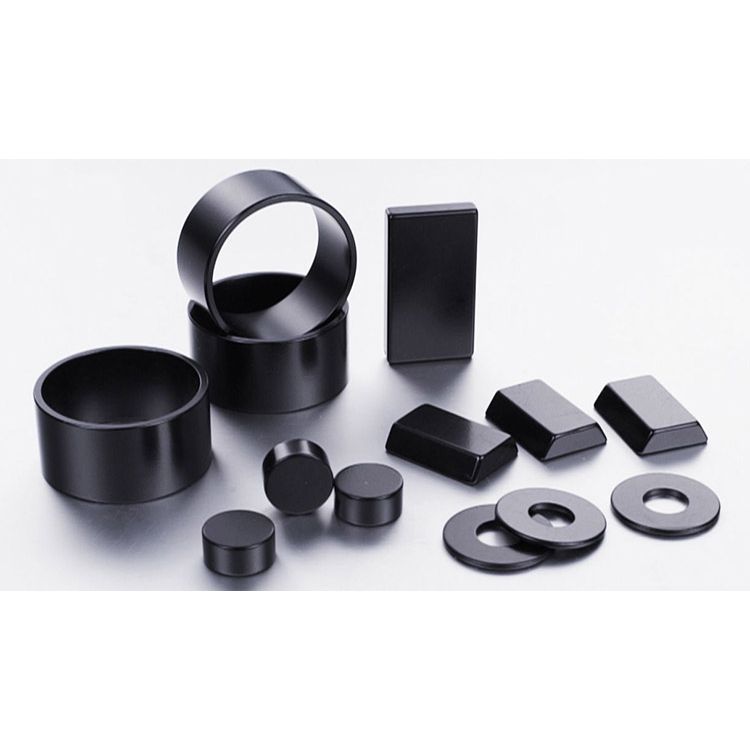
Unlike traditional magnets that require sintering and complex machining, the Bonded Neodymium Magnet is produced by combining neodymium magnetic powder with polymer binders and forming the material through compression molding or injection molding. This manufacturing method changes the design possibilities dramatically.
From our own manufacturing perspective, the biggest advantages become clear during early product development stages.
- Complex shapes can be molded directly without expensive machining
- Thin-wall or intricate structures become achievable
- Multi-pole magnetization patterns can be integrated into the design
- Dimensional accuracy improves due to molding processes
- Assembly efficiency increases because fewer secondary operations are required
Because of these characteristics, the Bonded Neodymium Magnet has become particularly attractive in applications such as precision motors, sensors, automotive components, and medical devices.
Why Do Compact Motors and Sensors Benefit from Bonded Neodymium Magnet Materials?
One of the most common discussions we have with engineers focuses on space limitations. As devices become smaller and more integrated, every millimeter matters. The Bonded Neodymium Magnet offers a unique combination of magnetic strength and geometric adaptability that helps overcome these constraints.
In practice, this means we can support customers developing:
- Automotive sensor systems
- Brushless DC motors
- Robotics actuators
- Smart home devices
- Consumer electronics motors
- Industrial automation equipment
Because molded magnets can integrate multiple poles and custom geometries, engineers often achieve better system performance while reducing component count.
What Performance Characteristics Should Engineers Expect from Bonded Neodymium Magnet Materials?
When customers evaluate magnet materials, they typically compare magnetic strength, temperature resistance, durability, and production cost. From our experience supplying OEM customers worldwide, the Bonded Neodymium Magnet offers a balanced performance profile.
| Performance Factor | Bonded Neodymium Magnet Characteristics |
| Magnetic Strength | Moderate to high magnetic performance suitable for compact motor systems |
| Manufacturing Flexibility | Supports complex shapes and multi-pole magnetization |
| Mechanical Durability | Less brittle than sintered magnets, reducing breakage risk |
| Corrosion Resistance | Polymer matrix offers inherent protection against oxidation |
| Mass Production | Highly suitable for automated large-scale manufacturing |
These characteristics explain why many manufacturers transitioning to high-volume production prefer the Bonded Neodymium Magnet over traditional materials.
How Do We Support Custom Magnet Development for OEM Applications?
Every application has different requirements, and our role as a manufacturer goes beyond supplying standard magnet shapes. At Ningbo New-Mag magnetics Co.,Ltd, we work closely with engineers during the design phase to ensure that the magnet material, structure, and magnetization pattern match the final product's performance goals.
Our development process usually involves several steps:
- Understanding the product structure and magnetic requirements
- Recommending appropriate Bonded Neodymium Magnet material grades
- Optimizing magnet geometry for space efficiency
- Designing magnetization patterns for motor or sensor performance
- Producing prototype samples for testing
- Scaling up for mass production once validation is complete
This collaborative approach helps customers shorten development cycles while reducing manufacturing risks.
Could Bonded Neodymium Magnet Technology Be the Future of High-Precision Magnetic Components?
As industries continue moving toward automation, electrification, and miniaturized electronics, magnet technology must evolve alongside product design trends. Over the years, we have watched the demand for Bonded Neodymium Magnet solutions steadily grow across multiple sectors.
From automotive electric systems to smart robotics, engineers are searching for magnetic materials that provide both reliable performance and manufacturing adaptability. Bonded magnet technology offers exactly that balance.
If your team is exploring ways to improve motor efficiency, reduce component complexity, or enable innovative product designs, the Bonded Neodymium Magnet may be the solution worth evaluating.
Our engineers at Ningbo New-Mag magnetics Co.,Ltd would be glad to discuss your application requirements and help you determine the most suitable magnet solution. If you would like to learn more about customized magnet development or request technical support, please contact us today and send us your project details. Our team is ready to support your next generation of magnetic products.