
Why Expanded PTFE Sheet and Tape Are Ideal for Corrosive Media Applications?
2026-04-02
What Makes PTFE-Based Sealing Materials Resistant to Aggressive Chemicals?
In chemical processing, oil and gas refining, and wastewater treatment, sealing materials are constantly exposed to aggressive media such as strong acids, alkalis, hydrocarbons, and oxidizing agents. Under these conditions, material failure can result in leakage, downtime, and costly maintenance. This is where Expanded PTFE Sheet and Tape stand out due to their unique molecular structure and inert characteristics.
Polytetrafluoroethylene, commonly known as PTFE, is widely recognized in industrial sealing applications for its exceptional chemical resistance. When expanded into a micro-porous structure, the material gains enhanced flexibility and conformability without compromising its chemical stability. Our products are engineered to perform in highly corrosive environments where conventional gasket materials fail.
At Ningbo Kaxite Sealing Materials Co., Ltd., our factory focuses on developing sealing solutions that meet international standards such as ASTM and DIN. Our engineering team continuously optimizes formulations to ensure our materials maintain integrity even under extreme pH conditions and high temperatures.
How Does Expanded Structure Improve Sealing Performance in Corrosive Systems?
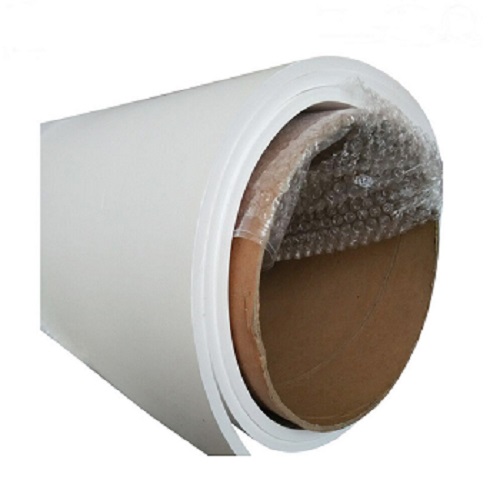
The expansion process transforms standard PTFE into a fibrous, multi-directional structure that enhances compressibility and recovery. This allows the material to adapt to flange irregularities, ensuring a tight seal even on worn or uneven surfaces. In corrosive systems, where flange corrosion is common, this adaptability is critical.
Expanded PTFE Sheet and Tape provide excellent creep resistance and low cold flow, which are essential for maintaining long-term sealing performance. Compared to traditional rubber or fiber gaskets, our materials offer superior dimensional stability under load and temperature cycling.
Our factory has refined the expansion process to achieve uniform density distribution. This ensures that our products deliver consistent sealing performance across the entire gasket surface, reducing the risk of leakage in critical applications such as chemical pipelines and storage tanks.
| Property | Expanded PTFE | Rubber Gasket | Compressed Fiber |
| Chemical Resistance | Excellent | Moderate | Limited |
| Temperature Range | -240°C to +260°C | -20°C to +120°C | -50°C to +200°C |
| Creep Resistance | High | Low | Medium |
| Service Life | Long | Short | Medium |
Why Are Expanded PTFE Materials Preferred in Industrial Sealing Standards?
Industrial buyers prioritize reliability, compliance, and lifecycle cost. Expanded PTFE Sheet and Tape meet the expectations of industries that require non-contaminating and chemically inert materials, such as food processing, pharmaceuticals, and semiconductor manufacturing.
Our solutions comply with FDA requirements for food-grade applications and are suitable for use in clean environments. In addition, our products are compatible with a wide range of flange standards including ANSI, JIS, and EN systems, making them versatile across global markets.
Kaxite has established a reputation for delivering consistent quality through strict raw material selection and in-process quality control. Our factory ensures traceability and batch consistency, which is critical for EPC contractors and OEM clients.
What Key Technical Parameters Should Engineers Consider When Selecting PTFE Sealing Materials?
Selecting the right sealing material involves evaluating several performance parameters including tensile strength, density, compressibility, and thermal stability. Our engineering approach focuses on providing detailed technical data to support informed decision-making.
Expanded PTFE Sheet and Tape are designed to meet demanding industrial requirements, offering a balance between flexibility and mechanical strength. Our products are suitable for both static and semi-dynamic sealing conditions.
| Parameter | Typical Value |
| Density | 0.7 – 1.0 g/cm³ |
| Tensile Strength | 10 – 15 MPa |
| Elongation | 100 – 150% |
| Operating Temperature | -240°C to +260°C |
| pH Range | 0 – 14 |
| Compression Ratio | 30 – 50% |
Our factory supports customization based on flange size, pressure class, and application medium. Whether used in aggressive acid lines or high-temperature steam systems, our sealing materials deliver dependable performance.
How Do These Materials Reduce Maintenance Costs and Improve Operational Safety?
Leakage in corrosive systems can lead to safety hazards, environmental damage, and unplanned shutdowns. By using Expanded PTFE Sheet and Tape, operators can significantly reduce the frequency of maintenance and gasket replacement.
Our products provide excellent sealing reliability, minimizing fugitive emissions and ensuring compliance with environmental regulations. This is particularly important in industries such as petrochemical processing, where emission control is strictly regulated.
Ningbo Kaxite Sealing Materials Co., Ltd. works closely with industrial clients to optimize sealing solutions that improve operational efficiency. Our factory emphasizes long-term performance, helping customers lower total cost of ownership through reduced downtime and extended service intervals.
FAQ
Why Expanded PTFE Sheet and Tape are suitable for highly corrosive environments?
Expanded PTFE materials are chemically inert and resistant to almost all industrial chemicals across a full pH range. Their microstructure allows them to maintain sealing integrity even when exposed to strong acids, alkalis, and solvents, making them ideal for long-term use in aggressive environments.
How do Expanded PTFE Sheet and Tape compare to traditional gasket materials in lifespan?
Compared to rubber or compressed fiber gaskets, expanded PTFE offers significantly longer service life due to its resistance to chemical degradation, thermal aging, and creep. This results in fewer replacements and lower maintenance costs over time.
Can Expanded PTFE Sheet and Tape be used in high-temperature applications?
Yes, these materials can operate in a wide temperature range from extremely low to high temperatures without losing their sealing properties. Their thermal stability ensures consistent performance even in fluctuating thermal conditions.